
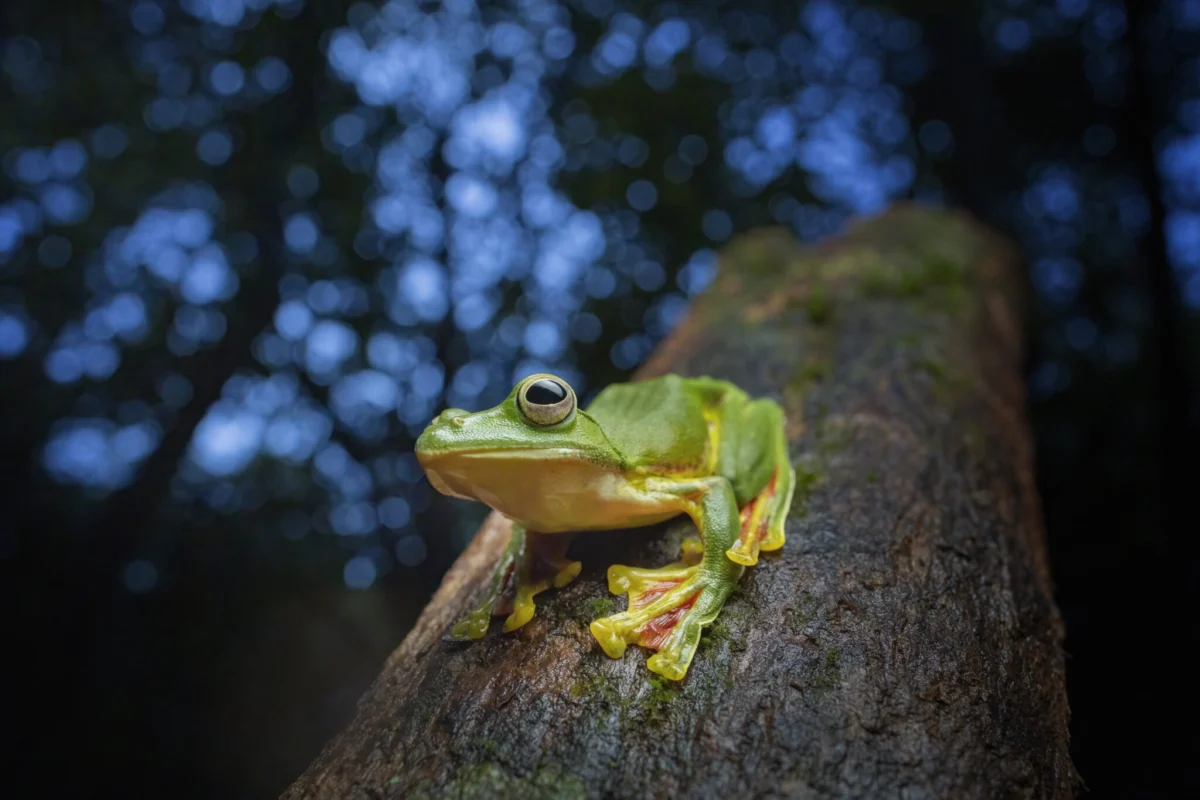
The captivating discipline of wide-angle macro photography offers a profound lens into the unseen intricacies of nature, seamlessly merging the intimate details of minute subjects with the grandeur of their surrounding habitats. This innovative photographic approach transcends traditional macro limitations by employing wide-angle optics at remarkably close focusing distances, thereby immersing the viewer not just in the subject’s immediate presence but also within its broader ecological narrative. The result is a visually striking image that functions as both a detailed portrait and an environmental landscape, fostering a deeper connection and understanding of the delicate balance between an organism and its ecosystem. By presenting subjects like the Hump-nosed pit viper or the Malabar gliding frog within their natural settings, these images invite audiences to experience the world from a unique, ground-level perspective, transforming a mere photograph into a compelling story.
The Art of Immersive Storytelling
At its core, wide-angle macro photography is a powerful storytelling tool in nature documentation. Unlike conventional macro photography, which often isolates a subject against a blurred background, this technique intentionally includes the surrounding environment, providing crucial context. For instance, an image of a vibrant insect amidst the dew-kissed foliage of a rainforest not only highlights the insect’s intricate patterns but also communicates its dependence on that specific microhabitat. This contextual richness is invaluable for both scientific documentation and public engagement. According to a 2023 survey by the International League of Conservation Photographers (ILCP), images that effectively convey habitat context are 35% more likely to evoke an emotional response and inspire conservation action compared to isolated subject shots. This immersive quality transports the viewer into the scene, making them feel part of the subject’s world and fostering a sense of empathy and wonder.

Technically, wide-angle macro photography entails utilizing a wide-angle lens with a low minimum focusing distance (MFD) to achieve magnified reproductions. While many such setups may not achieve the strict 1:1 magnification ratio typically associated with "true macro" lenses, the term "wide-angle macro" has become widely accepted to describe this distinctive style of imagery. This approach represents a significant evolution in macro photography, moving beyond mere magnification to embrace the broader environmental narrative.
Evolution of a Niche: A Historical Perspective
The journey into wide-angle macro photography can be traced back to the early 2000s, when photographers began experimenting with combining wide-angle lenses with close-up filters or extension tubes to achieve unique perspectives. Initially, these experiments were often fraught with optical challenges, including severe distortion and loss of sharpness. However, as lens technology advanced, particularly with the introduction of specialized wide-angle macro lenses boasting native 1:1 or greater magnification and exceptionally short minimum focusing distances, the technique became more accessible and refined.
The rise of digital photography, especially mirrorless camera systems, further democratized this niche. Features like advanced autofocus, animal eye detection, and focus tracking—which were once the realm of high-end DSLRs—became standard, significantly simplifying the process of capturing sharp images of often-skittish subjects. The ability to instantly review images on tilt screens also allowed photographers to fine-tune compositions and lighting in challenging field conditions, accelerating the learning curve for many aspiring wide-angle macro enthusiasts. This chronological progression from experimental hacks to sophisticated, purpose-built equipment underscores the technique’s growing recognition as a vital genre within nature photography.

Essential Gear for the Expedition
Embarking on a wide-angle macro photography expedition requires a carefully curated set of tools designed to meet the unique demands of capturing both intricate details and expansive environments.
Camera Body:
While the adage "the best camera is the one you already own" holds true, modern camera bodies offer distinct advantages. Any DSLR or mirrorless camera can serve as a starting point, but contemporary mirrorless systems, such as the Sony Alpha series, Canon R series, or Nikon Z series, come equipped with features that significantly streamline the wide-angle macro workflow. Animal eye detection and advanced focus tracking are game-changers for maintaining critical focus on dynamic subjects. Live view and tilt-screens are invaluable for composing shots from extremely low angles without requiring the photographer to contort into uncomfortable positions. Additionally, cameras boasting high dynamic range, robust weather sealing (essential for humid rainforests), and high burst rates provide greater flexibility and reliability in diverse and challenging field conditions. For instance, a camera with 15+ stops of dynamic range can help balance the bright background and flash-lit foreground, a common challenge in this genre.
Lens: The Crucial Element:
The lens is arguably the most critical piece of equipment. Standard wide-angle lenses designed for landscape photography typically have MFDs that are too long to achieve the necessary magnification for macro work. What’s required is a wide-angle lens with an exceptionally low minimum focusing distance (MFD), ideally offering true macro capabilities (1:1 reproduction ratio). Brands like Laowa, Venus Optics, and some specialized offerings from major manufacturers have introduced lenses specifically designed for this purpose, often featuring focal lengths in the 15mm to 24mm range with MFDs as short as a few centimeters. A short MFD is paramount, as it allows the photographer to get close enough to the subject to fill the frame while still capturing the expansive background, ensuring the subject doesn’t get lost in the environmental context.

Flash: Illuminating the Scene:
An external flash is an indispensable tool, even for daytime wide-angle macro photography. When shooting at narrow apertures (e.g., f/11 to f/16) to ensure both subject and environment are in focus, natural light often becomes insufficient, leading to underexposure. A flash provides the necessary illumination to compensate for this light loss and freeze motion. Key features to look for in a flash include:
- ETTL (Evaluative Through The Lens) and Manual Modes: ETTL offers quick, automatic exposure, while manual mode provides precise control for complex lighting scenarios.
- Fast Recycle Time: Crucial for capturing multiple shots of active subjects.
- High Guide Number (e.g., 60+): Indicates power, allowing for effective illumination even at wider apertures or from slightly further distances.
- High-Speed Sync (HSS) Capability: Enables flash use at shutter speeds faster than the camera’s native sync speed, useful for balancing flash with bright ambient light or achieving shallower depth of field.
- Remote Operation Functionality: Allows for off-camera flash placement, which is vital for creative lighting and avoiding harsh shadows.
Diffuser: Softening the Light:
A diffuser is essential for softening harsh highlights, especially on wet or glistening subjects often found in macro environments (e.g., amphibians, insects after rain). While standard macro diffusers (typically 90-100mm) exist, they are often designed for telephoto macro lenses and may not be suitable for wide-angle setups due to their size and potential to appear in the frame.
Solutions for wide-angle macro diffusers include:
- Smaller Diffusers: Dome diffusers or mini softboxes are easier to manage but may offer less diffusion.
- Custom/Adapted Diffusers: Many photographers create DIY diffusers or adapt larger ones. Techniques include:
- Elevating the Diffuser: Using a trigger mounted on the camera to raise the flash and diffuser, preventing the diffuser’s edges from entering the wide frame.
- Disc-Style Diffusers: These can provide effective top-lighting.
- Off-Camera Flash with Diffuser: While challenging for a solo photographer, this setup allows for maximum control over light direction and quality.
The principle remains: the larger the diffusion surface relative to the subject, the softer the light. However, practical constraints like not disturbing the subject often necessitate a trade-off.
Protective Clothing and Field Gear:
Successful wide-angle macro photography often means getting low and dirty. Essential protective gear includes:

- Rain Gear: High-quality waterproof jackets and pants for both the photographer and equipment, especially in rainforest environments.
- Proper Footwear: Waterproof hiking boots with good grip for navigating uneven, wet terrain.
- Leech Guards/Gaiters: Crucial in tropical environments to protect against leeches, snakes, and other ground-dwelling creatures, allowing for confident movement.
- Insect Repellents: To ward off mosquitoes and other biting insects that can disrupt concentration and comfort.
- Headlamp/Torch: Essential for night shoots, providing hands-free illumination.
Mastering Light: Day vs. Night Strategies
The time of day significantly influences the approach to wide-angle macro photography, particularly when considering the habitat context.
Shooting During the Day:
The primary objective of showcasing a subject within its environment is best achieved in daylight, where the habitat’s details and colors are naturally visible. However, one of the most considerable challenges arises when attempting to photograph nocturnal creatures, such as many reptiles and amphibians, in their natural habitat. These subjects are often most active and photogenic at night, making it difficult to capture their surroundings effectively without specialized lighting. Traditional flash photography at night typically results in a well-lit subject against a dark, featureless background, which undermines the core principle of wide-angle macro.
To overcome this, thorough research into the location, local species, and their diurnal behaviors is paramount. Collaborating with local naturalists or guides can provide invaluable insights into the best times and locations to find subjects in suitable lighting conditions. Ethical considerations are also paramount; wildlife photographers, including this guide’s author, strongly advocate against the practice of captivating animals for photography, even temporarily. The authenticity of an "in situ" capture—where the animal is photographed undisturbed in its natural state—is a non-negotiable principle for responsible nature photography.

Shooting During the Night:
Photographing nocturnal subjects with a wide-angle lens presents a unique set of lighting challenges. Without careful planning, the resulting image might resemble a traditional macro shot: a brightly lit subject against a predominantly black or dark background, devoid of environmental context. This is where advanced lighting techniques become crucial.
The "hack" to illuminate both the subject and its nocturnal background involves using multiple flashes or constant light sources.
- Multiple Flash Setup: A common approach is to use a master trigger on the camera to wirelessly fire multiple slave flashes strategically positioned around the scene. One flash, typically diffused, illuminates the primary subject, while others are placed further back to light the background elements, such as foliage, tree trunks, or rock formations. This creates depth and reveals the habitat.
- Constant Lights: Alternatively, powerful LED constant lights can be used to illuminate the background. These lights offer the advantage of "what you see is what you get," allowing for easier real-time adjustment of illumination. However, they typically require more power and can be bulkier than flashes.
Balancing the intensity of the subject flash with the background illumination is key to achieving a natural-looking image that truly tells the story of the nocturnal environment.
Framing and Composition
Effective framing and composition are vital for maximizing the storytelling potential of wide-angle macro photography. While many standard compositional rules apply, specific considerations enhance the unique immersive quality of this genre.

- Balance Subject, Foreground, and Background: The primary objective is to showcase the subject within its environment. This means intentionally composing the shot to include elements in the foreground (e.g., leaves, twigs) that lead the eye towards the subject, and a background that provides rich contextual information without distracting from the main subject. Incorporating multiple layers or depth elements, such as branches receding into the distance or patterns on the forest floor, adds visual interest and a sense of three-dimensionality.
- Experiment with Angles: Wide-angle lenses exaggerate perspective, making low or high angles particularly impactful. Shooting from a very low vantage point can include the forest canopy or an expansive sky, giving a grander sense of scale. Conversely, shooting from a slightly elevated angle might highlight the intricate patterns of the forest floor or the subject’s interaction with the ground. Experimentation can add drama and creativity.
- Leading Lines and Natural Framing: Utilize natural elements to guide the viewer’s eye. A curving branch, a line of moss, or even a blade of grass can serve as a leading line pointing directly to the subject. Incorporating natural frames, such as a gap in the foliage or an arch of roots, can effectively isolate and highlight the subject while still keeping it rooted in its environment.
Challenges and Tips to Overcome
Despite its immense potential, wide-angle macro photography presents several inherent challenges that require careful consideration and technical skill.
1. Distortion: Wide-angle lenses, by their nature, exaggerate perspective. This can make foreground subjects appear disproportionately large and distort elements at the edges of the frame. While this can be used creatively to create a sense of drama or scale, it can also look unnatural if not composed thoughtfully.
- Tip: Experiment with different focal lengths (if using a zoom wide-angle) and subject placement within the frame to control distortion. Keep critical elements away from the extreme edges.
2. Depth of Field (DoF): At macro distances, the depth of field becomes incredibly shallow, even with a wide-angle lens. Achieving sharpness across both the subject and a significant portion of the background can be difficult.

- Tip: Use the narrowest aperture possible (e.g., f/11 to f/22) to maximize DoF. However, be mindful of diffraction, which can cause overall image softness at very small apertures (typically f/16 and beyond on APS-C, or f/22 on full-frame). A balance must be struck based on the specific lens and desired effect. Focus stacking, where multiple images at different focal planes are merged, is an advanced technique to achieve extreme DoF.
3. Lens Flare and Corner Softness: Wide-angle optics, especially when pushed to their limits or combined with extension tubes/adapters, can suffer from reduced sharpness at the edges and increased susceptibility to lens flare.
- Tip: While extension tubes can increase magnification, they often compromise optical quality. Prioritize lenses designed for wide-angle macro. Use a lens hood and position the light source carefully to minimize flare.
4. Blocking Light: When working extremely close to a small subject with a wide lens, the camera body or lens itself can cast unwanted shadows.
- Tip: This is where a well-designed diffuser and off-camera flash setups become critical. Experiment with the angle of your flash and diffuser to ensure even, shadow-free illumination.
5. Balancing Lighting: Macro subjects often require intense, close lighting (usually flash), while the wide background needs natural, even exposure from ambient light or supplementary flashes. Achieving a harmonious balance in one frame is complex.
- Tip: This is a key skill. Use your flash to expose the subject, and your camera’s ambient settings (ISO, shutter speed, aperture) to expose the background. High-speed sync (HSS) can be useful for balancing a bright background with flash. Blending multiple exposures in post-processing is another option.
6. Working Distance: Wide-angle macro setups often demand extremely short minimum focusing distances, sometimes just a few centimeters from the front element of the lens to the subject. This makes it challenging to position the camera without disturbing the subject or its environment.

- Tip: Patience and slow, deliberate movements are crucial. Utilize features like tilt screens for easier composition at awkward angles. Sometimes, a smaller, more maneuverable diffuser is preferable to a larger, more effective one if the latter impedes access.
7. Size of the Gear: While larger diffusers generally provide softer, more even light, an oversized setup can easily disturb sensitive subjects or become unwieldy in dense vegetation.
- Tip: It’s a trade-off. A smaller, custom-built, or adaptable diffuser might be more effective in certain field conditions where stealth and minimal disturbance are paramount. Assess the subject’s behavior and the environmental constraints.
8. Stability: Shooting at such close distances with a wide-angle lens demands precise focus and steady positioning. Any slight movement from the photographer or the subject is significantly magnified, leading to blurry images.
- Tip: Use a sturdy tripod whenever possible, especially for static subjects or focus stacking. For handheld shots, a high shutter speed (e.g., 1/250s or faster) and bracing oneself against a stable surface can help.
The Broader Canvas: Impact and Future Implications
Wide-angle macro photography sits at the intersection of scientific documentation, artistic expression, and environmental advocacy. By revealing not just the fine details of tiny subjects but also the rich environments they inhabit, it offers a holistic view of nature that traditional photography often misses. This technique profoundly impacts conservation efforts by creating highly engaging imagery that underscores the interconnectedness of species and their habitats. Images that vividly depict a rare amphibian in its specific wetland or a camouflaged reptile nestled among rainforest leaves can powerfully communicate the urgent need for habitat preservation. Conservation organizations and scientific journals increasingly seek out such contextual photographs for their educational and persuasive value.

Moreover, the continued evolution of camera and lens technology promises to further enhance the capabilities of wide-angle macro photographers. Advancements in sensor technology for low-light performance, improved in-body image stabilization, and increasingly sophisticated autofocus systems will make it easier to capture high-quality images in challenging conditions. The demand for specialized wide-angle macro lenses with even greater optical precision and innovative features is likely to grow, driving further innovation from manufacturers.
In essence, wide-angle macro is more than a technical pursuit; it’s a philosophical approach to nature photography. It’s about connecting the smallest wonders of nature with the larger world they thrive in, fostering appreciation, understanding, and ultimately, inspiring action to protect these delicate ecosystems. By mastering the balance between intimacy and expanse, photographers can create images that are both personal and expansive, capturing not only what a creature looks like but also where it truly belongs in the grand tapestry of life.
