
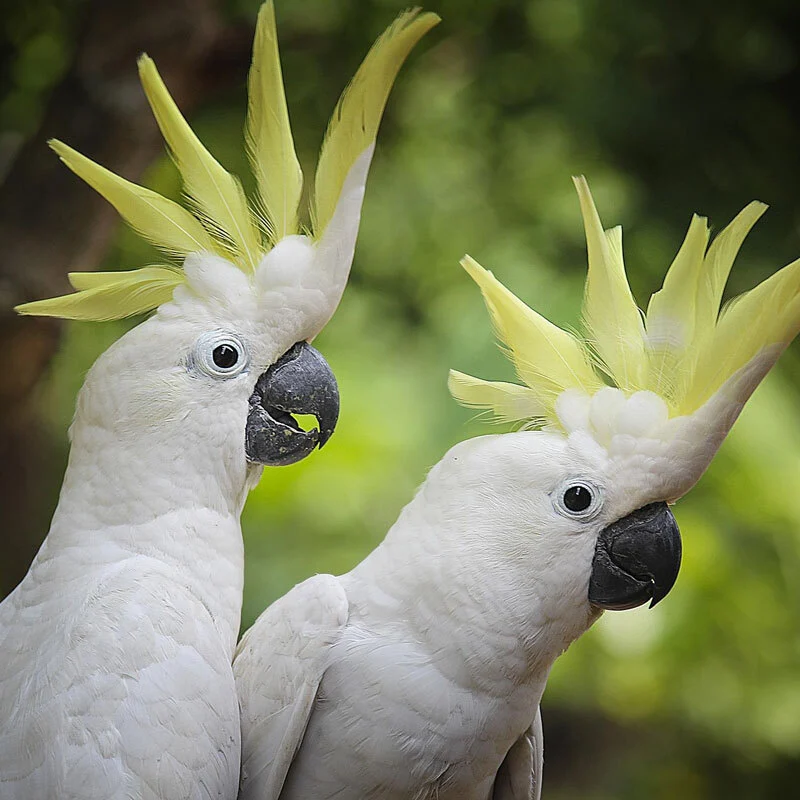
Researchers are increasingly uncovering the sophisticated cognitive abilities of birds, revealing a complexity in their daily lives that often mirrors human behaviors. A recent groundbreaking study published in PLOS Biology sheds light on how wild cockatoos in urban environments learn and adopt new behaviors, particularly in their food choices, by observing and imitating members of their social groups. This research not only highlights the intelligence of these avian species but also draws fascinating parallels to how humans navigate social trends and information dissemination.
The study, conducted by a collaborative team of five researchers from prestigious institutions including the University of Konstanz in Germany, The Australian National University, the University of California, Davis, and The University of Sydney in Australia, aimed to explore the nuances of social learning in wild parrot populations. Their specific focus was to understand the mechanisms by which these birds develop an interest in novel food sources, a critical aspect of survival and adaptation in dynamic urban ecosystems.
The Power of Observation: Birds Learning from Their Peers
The core finding of the research is the significant role of observation in the adoption of new behaviors. In a controlled experiment, researchers introduced almonds in their shells, colored blue and red, to specific groups of cockatoos. These colored almonds served as a proxy for new, unfamiliar food items. Initially, only a select group of four birds in each observed roost was trained to accept these colored almonds. The subsequent behavior of the wider flock was then meticulously monitored.
The results were striking. Cockatoos that had not been directly exposed to the colored almonds but had observed the trained birds readily accepted the new food choices without significant hesitation. This suggests a rapid assimilation of information through visual cues and social demonstration. In another experimental setup, a roost situated further from the initial observation group initially showed little interest in the colored almonds. However, the dynamic shifted dramatically when a bird from another, already engaged roost arrived. This newcomer immediately began consuming the colored almonds, and within minutes, the hesitant birds in the observed roost began to follow suit. This indicates that the presence of an informed individual, even from an external group, could trigger widespread adoption of the new behavior.
This social contagion of food preference extended across the monitored populations. Over the course of a 20-day experimental period, a total of 349 cockatoos across five marked roosts actively consumed and seemed to enjoy the colored almonds. Their willingness to try these novel items was a direct result of observing and evaluating the actions of their flock mates.
Generational Influence: Youth Leading the Way in Behavioral Adoption
An intriguing aspect of the study, echoing observations in human societies, was the differential rate of adoption between younger and older birds. The research indicated that younger cockatoos adapted to the new behaviors, such as trying the colored almonds, more quickly than their older counterparts. This suggests that younger individuals are often more open to novelty and readily influenced by observed behaviors, setting a precedent for the flock.
Conversely, older birds tended to adopt the new behavior more cautiously, often waiting to observe the actions of their younger flock members before engaging themselves. This dynamic implies an indirect influence of the younger generation on the older generation, a reversal of the commonly perceived direction of influence in many social structures. This finding underscores the complex intergenerational social dynamics at play within these wild bird communities.
Societal Ripples: The Spread of Information in Avian Communities
The study’s findings strongly suggest that ongoing societal behavioral changes within a group can indeed lead to broader acceptance of similar behaviors by others. The proximity of roost communities played a significant role in the speed of adaptation. Closer roosts were observed to adopt the new behaviors more rapidly, indicating that the ease of social interaction and information exchange directly impacts the diffusion of innovations. This mirrors human societal patterns where information and trends spread more quickly through tightly interconnected communities.
Background and Context: Urban Adaptations and Avian Cognition
The increasing urbanization of natural habitats presents a unique set of challenges and opportunities for wildlife. Birds, particularly those inhabiting urban environments, are constantly exposed to novel stimuli, including human-made structures, altered food landscapes, and increased social interactions with both conspecifics and other species. Understanding how these birds adapt to such environments is crucial for conservation efforts and for appreciating their cognitive flexibility.
The study by the international research team delves into a specific area of avian cognition: social learning. Social learning, the process by which individuals learn by observing others, is a fundamental mechanism for acquiring knowledge and skills across a wide range of species, from primates to fish. In birds, social learning is known to play a role in foraging strategies, predator avoidance, and song acquisition. This research specifically focuses on the transmission of novel food preferences, a behavior directly linked to survival and foraging efficiency.
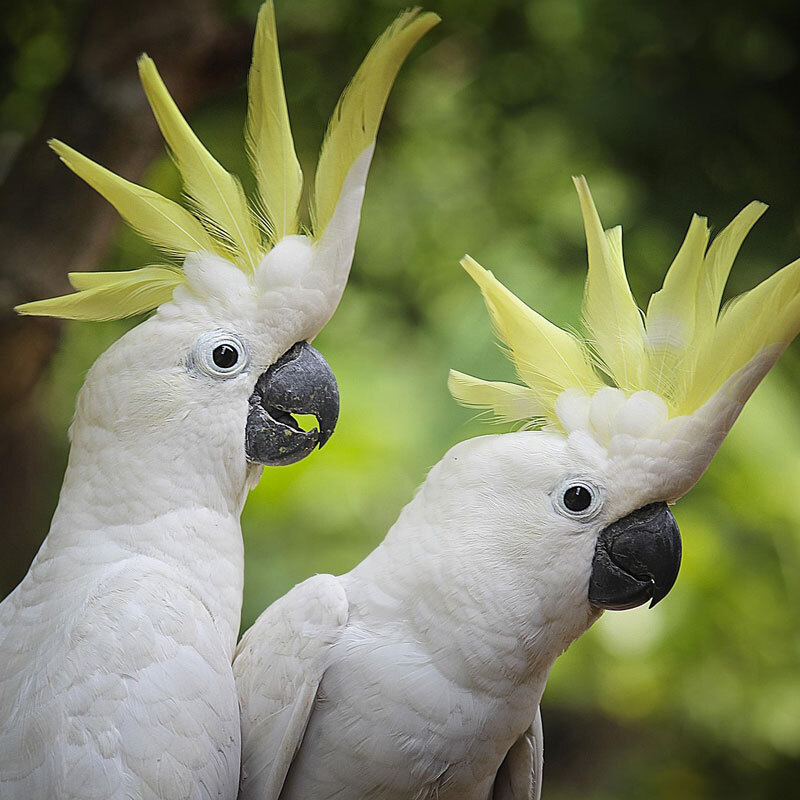
The choice of cockatoos for this study is particularly relevant. Sulphur-crested cockatoos ( Cacatua galerita), the species observed, are highly intelligent and social birds known for their adaptability to urban and semi-urban environments across Australia. Their complex social structures and propensity for flocking make them ideal subjects for studying social learning dynamics. Previous research has already established their capacity for problem-solving and tool use, further emphasizing their cognitive prowess.
Timeline and Chronology of the Study
While the exact start date of the field observations is not specified, the experimental phase of the study, involving the introduction of colored almonds and the monitoring of behavioral changes, spanned a period of 20 days. This duration was sufficient to observe the initial adoption of the new food by trained birds, the subsequent influence on observing individuals, and the eventual widespread acceptance across multiple roosts. The publication of the findings in PLOS Biology represents the culmination of this extensive research effort, making the results accessible to the scientific community and the broader public.
Supporting Data and Methodological Rigor
The study’s robust methodology is a key factor in the validity of its findings. The use of colored almonds provided a clear, observable, and controllable variable for introducing novelty. The researchers meticulously documented the behavior of individual birds and entire roosts, employing systematic observation techniques. The sample size of 349 cockatoos across five marked roosts provided a statistically significant dataset. The collaborative nature of the research, involving institutions from different countries, suggests a broad scope and rigorous peer review process leading up to publication.
The choice of academic journal, PLOS Biology, a highly respected open-access journal, further indicates the quality and significance of the research. Open-access publication ensures that the findings are freely available to researchers worldwide, facilitating further investigation and replication.
Broader Impact and Implications: Beyond the Bird Feeder
The implications of this research extend far beyond understanding the feeding habits of cockatoos. It provides compelling evidence for the sophisticated social intelligence of birds and their capacity for complex information processing and transmission.
- Understanding Urban Ecology: The study offers valuable insights into how urban wildlife adapts to changing environments. The ability of cockatoos to quickly adopt new food sources through social learning is a crucial adaptation that allows them to thrive in human-dominated landscapes, often utilizing resources that might be otherwise inaccessible or unfamiliar. This knowledge can inform urban planning and wildlife management strategies, aiming to create more harmonious coexistence between humans and urban wildlife.
- Cognitive Evolution: The parallels drawn between avian and human social learning raise fundamental questions about the evolution of cognition. The study suggests that certain cognitive mechanisms for social learning might be conserved across diverse species, highlighting convergent evolution or a shared ancestral trait. Further research could explore the neural underpinnings of this behavior in birds and compare it to similar processes in mammals.
- Conservation Strategies: For species facing habitat loss or environmental change, the ability to learn and adapt quickly through social mechanisms is paramount. Understanding these social learning networks could be vital for reintroduction programs or for mitigating human-wildlife conflict. For instance, if a new, beneficial food source becomes available, understanding how it spreads through a population could be key to ensuring its uptake.
- Public Perception of Birds: Such studies challenge the often-held perception of birds as simple creatures driven solely by instinct. By demonstrating complex learning behaviors akin to human social dynamics, the research can foster a greater appreciation for the intelligence and sentience of birds, potentially leading to improved welfare standards and conservation efforts.
The finding that younger birds often lead the way in adopting new behaviors also has implications for understanding social dynamics. This "youthful innovation" phenomenon, observed in human cultures, suggests that age-related openness to change and social influence are not exclusive to humans.
Future Directions and Unanswered Questions
While this study provides significant advancements, it also opens avenues for further exploration. Future research could investigate:
- The specific cues birds use to assess the reliability of information from other individuals.
- The potential for negative social learning, where birds might learn to avoid beneficial resources based on the negative experiences of others.
- The role of individual differences in personality and social status within the flock on the speed and efficacy of social learning.
- How these social learning mechanisms are affected by other environmental factors, such as noise pollution or the presence of predators.
In conclusion, the research published in PLOS Biology offers a compelling and sophisticated look into the minds of wild cockatoos. It moves beyond simplistic notions of animal behavior to reveal a world of complex social interactions, adaptive learning, and remarkable parallels with human societal patterns. As researchers continue to unravel the intricacies of avian cognition, it becomes increasingly clear that our feathered neighbors possess a depth of understanding and social intelligence that continues to surprise and inform us.
