
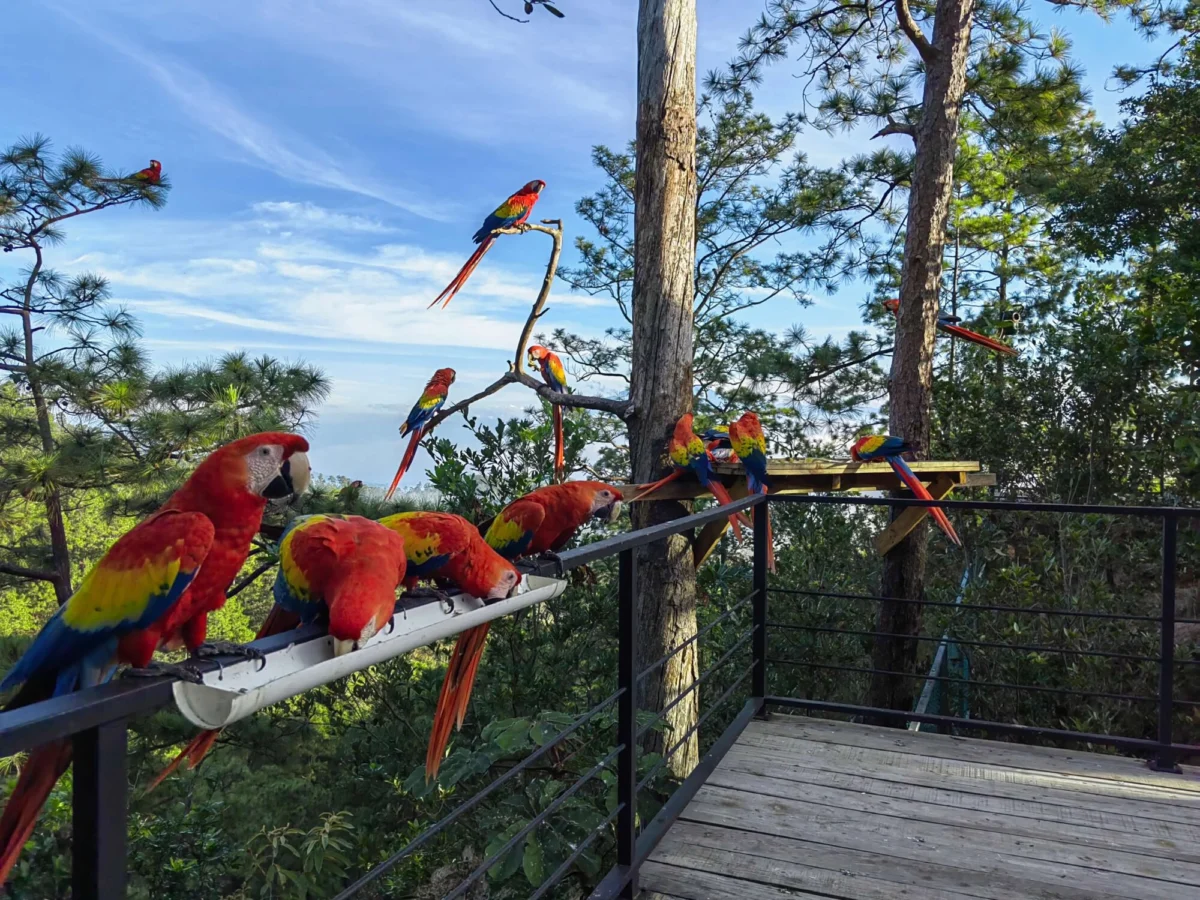
In the heart of Central America, where ancient Mayan ruins whisper tales of a bygone era and vibrant biodiversity paints the landscape, a remarkable conservation effort is unfolding. The story of the scarlet macaw, a breathtaking symbol of the region’s natural heritage, is taking a new turn as a grassroots initiative in Guatemala seeks to transform a borderland often marked by apprehension into a sanctuary for these magnificent birds. This narrative, underscored by a pivotal moment in 2018, highlights the intricate interplay between conservation, community, and cultural identity, demonstrating that the flight path of a wild creature knows no human-defined boundaries, yet its survival is inextricably linked to the embrace of those on the ground.
The Spark of an Encounter: A Scarlet Macaw’s Journey and a Village’s Response
The year 2018 marked a significant, albeit brief, encounter that would ultimately galvanize a conservation movement. A flash of incandescent scarlet, vibrant yellow, and profound blue streaked across the sky above Esquipulas, a Guatemalan municipality nestled close to the Honduran border. The spectacle was a scarlet macaw ( Ara macao), a creature likely having ventured from the celebrated reintroduction programs flourishing in Copán Ruinas, Honduras. For the family who witnessed this avian marvel from below, it was a moment of pure, unadulterated awe. However, for the wider village community, the appearance of such a rare and striking bird was perceived as a novelty, an opportunity for capture rather than a sign of ecological success. Tragically, the immediate response from some local residents was to attempt to capture the wild bird, intending to keep it as a pet. Fortunately, the resourceful macaw managed to evade its pursuers and, it is believed, never returned to the immediate vicinity.
This single, fleeting encounter served as a stark awakening. It underscored a fundamental truth: conservation efforts, by their very nature, transcend the arbitrary lines drawn on maps. While human borders are rigidly defined, the imperative for survival, for both wildlife and the ecosystems they inhabit, is a universal constant. This realization has ignited a passionate, volunteer-driven endeavor in Guatemala. The objective is clear and compelling: to cultivate a network of protective communities that welcome these magnificent birds when they venture across the border, rather than view them as potential prizes to be caged or exploited. This initiative aims to transform a narrative of apprehension into one of guardianship, ensuring that the success of conservation programs in neighboring Honduras can find fertile ground and enduring support in Guatemala.
The Copán Success Story and the Border Risk: A Tale of Two Nations
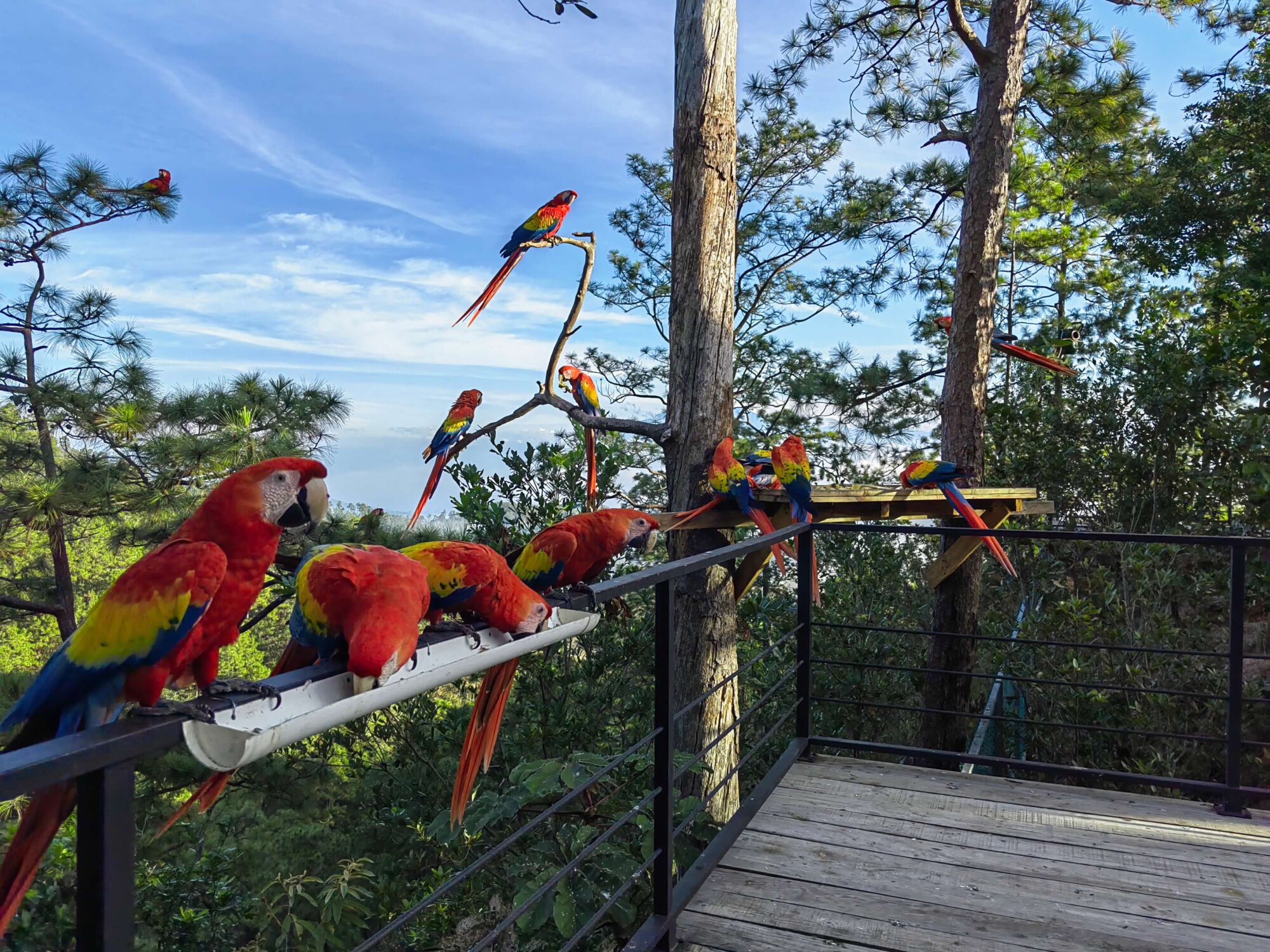
Just a mere fifteen-minute journey from the Guatemalan frontier lies the historic town of Copán Ruinas, Honduras. This locale is renowned not only for its awe-inspiring ancient Mayan archaeological site but also as the home of Macaw Mountain, a sanctuary and breeding center, and its dedicated partner non-governmental organization, PRO ALAS. For years, this dynamic duo has been at the forefront of a remarkably successful initiative focused on the reproduction, rehabilitation, and release of scarlet macaws. Their tireless efforts have seen over 150 wild macaws reintroduced to the skies, a testament to their unwavering commitment and the efficacy of their conservation strategies.
The flourishing macaw population in Honduras, a direct result of these dedicated programs, has inevitably led to an increase in inter-country migration. As more birds venture across the border into Guatemala, they encounter a starkly different reality. On this side of the border, the challenges are immediate and significant. Reports of children pelting the birds with stones and adults attempting to capture them for the lucrative, albeit illegal, pet trade are distressingly common. This juxtaposition highlights a critical gap: the phenomenal conservation success achieved in Honduras is not yet mirrored by widespread environmental awareness and protection in the bordering Guatemalan communities. To truly safeguard the future of these majestic birds, the lessons learned and the methodologies employed by Copán’s environmental education program must be effectively replicated and integrated into Guatemalan society.
Apples, Coloring Books, and Local Pride: Cultivating a New Generation of Guardians
Fueled by a sense of urgency born from the risks faced by migrating macaws, a dynamic young Guatemalan biologist, Christian Chinchilla, has emerged as a pivotal figure in this conservation narrative. Chinchilla has forged a vital alliance with the Parrot Conservation Corps of One Earth Conservation (OEC). Equipped with specialized training acquired through an OEC course and a modest seed of funding, a grassroots initiative has taken flight. Operating entirely on the dedication and unpaid hours of volunteers, Christian and his girlfriend have embarked on a mission to fundamentally shift mindsets within the border village of Caparjá, Guatemala.
Understanding that lasting change begins with respect and collaboration, the team prioritized building a strong foundation of community engagement before directly addressing the children. They meticulously partnered with Plan Trifinio, a tri-national governmental development agency, and the Municipality of Camotán. This collaboration culminated in a crucial field trip that proved instrumental in their outreach efforts. Local village leaders and primary school teachers were personally escorted to Macaw Mountain in Honduras. This immersive experience allowed them to witness firsthand the breathtaking beauty and profound ecological significance of the scarlet macaws, fostering a sense of shared responsibility and pride.
With the enthusiastic endorsement and blessing of the community leaders, the project then transitioned to the local classrooms. The educational approach was designed to be engaging and accessible, incorporating elements that resonated with the children’s daily lives. This included the distribution of coloring books adorned with vibrant illustrations of macaws, the sharing of nutritional information about the birds’ preferred fruits, and interactive storytelling sessions that wove the macaws into the fabric of local folklore. The response from the children was nothing short of electric. They were not merely absorbing abstract biological facts; they were connecting with the very birds they had observed soaring above their own homes. This educational intervention was transforming them from potential threats to the macaws into enthusiastic advocates and future guardians. The tangible impact was evident in the shift from fear and exploitation to fascination and protection.
Reclaiming a Mayan Legacy: The Macaw as a Symbol of Identity
The significance of this conservation work extends far beyond the immediate protection of a species; it is deeply intertwined with the cultural identity of the region. The border area is the ancestral homeland of the indigenous Chortí Maya population, a people whose presence has spanned both sides of this geographical divide for generations. A poignant reminder of this shared heritage can be found just across the border at the Copán Ruins archaeological site. This UNESCO World Heritage site, constructed by the ancestors of the Chortí people, is adorned with ancient stone glyphs, statues, and intricate sculptures that are replete with depictions of macaws. For centuries, these magnificent birds were revered as powerful symbols representing the sun, the sky, and the spiritual realm.
By educating Chortí children in Guatemala about the scarlet macaws, this project is achieving more than just teaching scientific principles. It is facilitating a profound reconnection between a living, breathing symbol of their heritage and a contemporary generation. It is helping to reclaim a vibrant aspect of their ancestral identity, reinforcing the notion that these birds are not mere wildlife but integral components of their cultural narrative. This cultural resonance imbues the conservation effort with a deeper meaning, fostering a sense of ownership and a long-term commitment to protection. The macaws, once a fleeting curiosity, are becoming living embodiments of a proud and enduring legacy.
Running on Fumes, But Hope on the Horizon: Government Recognition and Future Prospects
Despite the undeniable success of the initial school visits and the burgeoning enthusiasm within the Caparjá community, the project soon encountered a familiar and frustrating obstacle: the depletion of its initial funding. Currently, the entire conservation campaign is being sustained solely by the extraordinary dedication and unwavering commitment of Christian Chinchilla and his girlfriend. They continue to volunteer their time and resources, working tirelessly to maintain community momentum and ensure that the educational efforts do not falter.
However, their arduous yet impactful work has not gone unnoticed. Their dedication has captured the attention of prominent figures within the Guatemalan government. Through the persistent advocacy of Plan Trifinio, the Vice President of Guatemala, Dr. Karin Herrera, personally undertook a visit to Macaw Mountain in Honduras. Deeply impressed by the project’s visionary approach to bridging borders and fostering cross-national cooperation for conservation, she pledged governmental support for the initiative. The team is now eagerly anticipating the formalization of this support in the coming months, which they believe will provide the much-needed stability and resources to expand their reach and deepen their impact.
Building a Safe Haven: How You Can Contribute to Macaw Conservation
While the promise of long-term governmental aid offers a beacon of hope for the future, the scarlet macaws continue their border-crossing journeys today. Immediate bridge funding is urgently required to reignite the vital school visit program and to complete the primary education campaign across the remaining border villages. This crucial financial injection will ensure that the momentum generated thus far is not lost and that the vital message of conservation reaches every corner of the affected region.
Once the anticipated government funding is secured, the team plans to strategically reallocate these larger institutional resources towards critical long-term conservation goals. These include comprehensive habitat protection initiatives, meticulous nesting monitoring programs, and community-led reforestation efforts in collaboration with the villagers. The overarching aim is to create a sustainable ecosystem where both macaws and the local communities can thrive.
The collective goal is clear: to ensure that when a scarlet macaw gracefully crosses the sky from Honduras into Guatemala, it is met not with fear or capture, but with a welcoming sanctuary, a supportive community, and a new generation of children armed with knowledge and a profound commitment to its protection. This endeavor represents more than just wildlife conservation; it is an investment in cross-border cooperation, cultural preservation, and the enduring power of education to shape a more sustainable future for all.
In recognition of these critical efforts, this month’s donation from Lafeber will be directed towards supporting the expansion of these vital educational programs in Guatemala. The dedicated individuals involved are striving to achieve conservation outcomes akin to those successfully demonstrated by the scarlet macaw project operating just across the border in Honduras. Their work, initiated and continuously supported by One Earth Conservation, serves as a powerful example of how localized passion, coupled with strategic partnerships and international support, can indeed make a profound difference in the fight to protect our planet’s precious biodiversity.
