
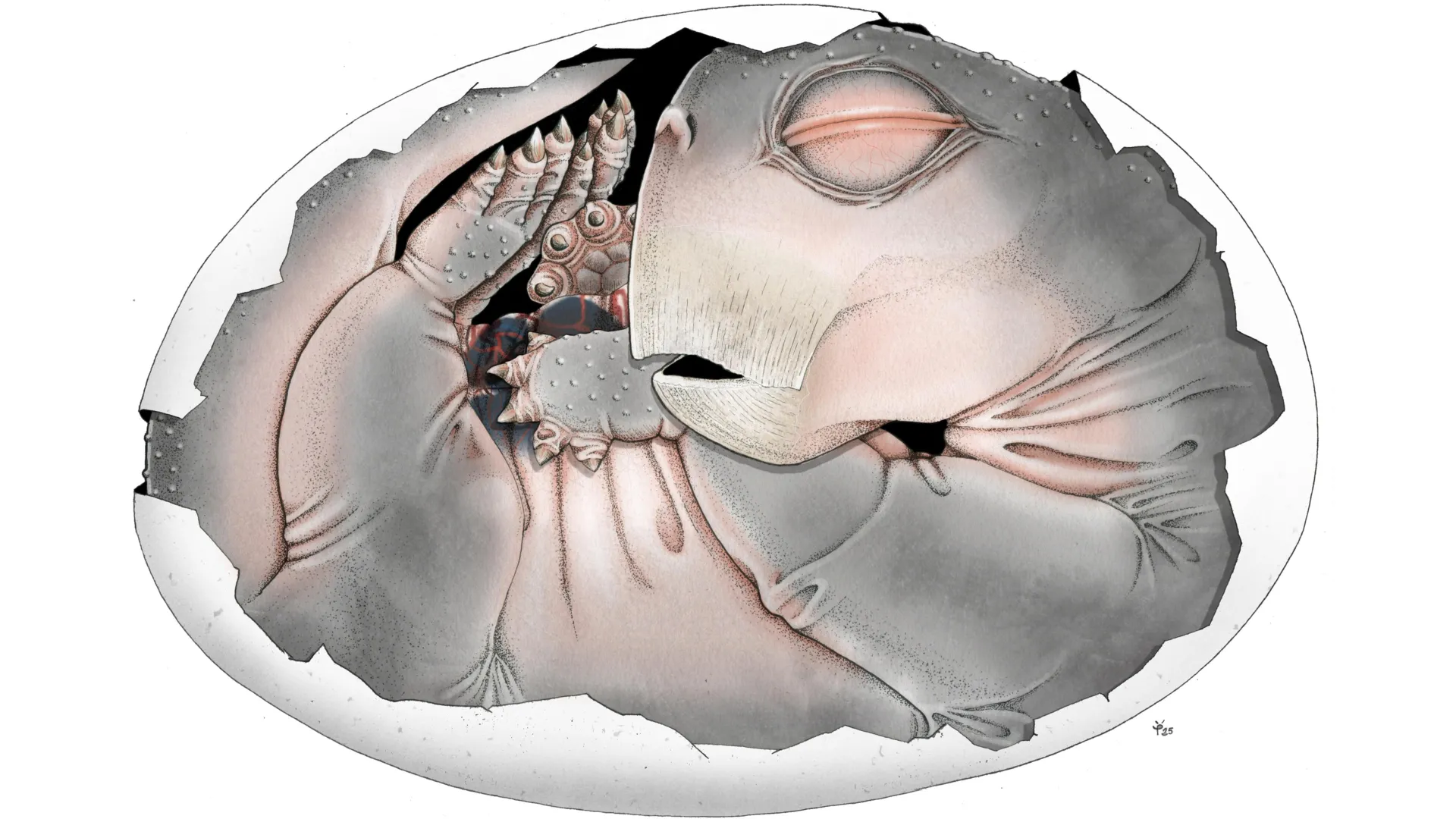
A groundbreaking fossil discovery is providing unprecedented insight into one of Earth’s most remarkable survival stories, simultaneously resolving a scientific mystery that has puzzled paleontologists for decades. The find, detailed in new research published in PLOS ONE, confirms that Lystrosaurus, a resilient plant-eating ancestor of mammals, laid soft-shelled eggs, a reproductive strategy that proved instrumental in its unparalleled dominance following the devastating End-Permian Mass Extinction approximately 252 million years ago. This cataclysmic event, known as "The Great Dying," obliterated the vast majority of life on the planet, yet Lystrosaurus not only endured but flourished amidst extreme heat, environmental instability, and prolonged droughts, solidifying its place as a testament to evolutionary adaptability.
The Ancient Enigma of Mammal Ancestor Reproduction
For generations, scientists have grappled with a fundamental question regarding the evolutionary lineage leading to mammals: Did our ancient ancestors, the synapsids, lay eggs? While modern mammals are characterized by live birth (or, in the case of monotremes like the platypus and echidna, hard-shelled eggs), the reproductive methods of their distant forebears remained largely conjectural due to a glaring absence of fossil evidence. The discovery of an approximately 250-million-year-old egg containing a Lystrosaurus embryo finally provides a definitive answer: yes. This unprecedented fossil represents the first confirmed egg ever found from a mammal ancestor, offering a critical piece to the puzzle of early mammal evolution.
The primary reason these ancient eggs have proven so elusive is now understood to be their soft-shelled nature. Unlike the robust, mineralized eggs of dinosaurs and many modern reptiles and birds, which readily fossilize due to their calcified outer layers, soft-shelled eggs are highly perishable. Composed mainly of organic membranes, they tend to decay rapidly before the intricate processes of fossilization can preserve them. This inherent fragility makes the preservation of a soft-shelled egg containing an embryo an exceedingly rare geological occurrence, underscoring the extraordinary significance of this particular find.
A Glimpse into the Past: The Lystrosaurus Fossil’s Long Journey
The journey of this remarkable fossil from discovery to definitive identification spans nearly two decades, highlighting the patience and technological advancements crucial to modern paleontology. The specimen was initially uncovered during a field excursion in 2008, led by Professor Jennifer Botha of the Evolutionary Studies Institute at the University of the Witwatersrand, South Africa. It was her skilled preparator and exceptional fossil finder, John Nyaphuli, who first identified a small nodule that initially revealed only tiny flecks of bone. As Nyaphuli meticulously prepared the specimen, a perfectly curled-up Lystrosaurus hatchling gradually emerged.
Professor Botha harbored an immediate suspicion that the animal had died within an egg, a revolutionary idea at the time given the lack of supporting evidence for therapsid eggs. However, the technology available nearly 17 years ago was insufficient to definitively confirm the presence of an eggshell or to precisely ascertain the embryo’s developmental stage within it. The fossil, therefore, remained a compelling enigma, awaiting the advent of more sophisticated analytical tools.
Unlocking Secrets with Advanced Technology: Synchrotron X-ray CT Scanning
The definitive confirmation of Professor Botha’s long-held suspicion came through the application of cutting-edge imaging techniques, specifically synchrotron X-ray computed tomography (CT) scanning. An international team, spearheaded by Professor Botha, Professor Julien Benoit (Evolutionary Studies Institute, University of the Witwatersrand), and Dr. Vincent Fernandez (ESRF – The European Synchrotron, France), utilized the powerful X-rays and unparalleled resolution capabilities available at the ESRF, one of the world’s most advanced synchrotron radiation facilities.
Synchrotron X-ray CT scanning works by firing incredibly intense, focused beams of X-rays through a specimen, capturing thousands of detailed images from various angles. These images are then computationally reconstructed to create a high-resolution 3D model of the fossil’s internal structure without causing any damage. This non-invasive method allowed researchers to "see" inside the delicate specimen in remarkable detail, revealing structures and textures that would be invisible or impossible to discern with conventional methods.
Dr. Fernandez emphasized the excitement of this technological application, stating, "Understanding reproduction in mammal ancestors has been a long-lasting enigma and this fossil provides a key piece to this puzzle. It was essential that we scanned the fossil just right to capture the level of detail needed to resolve such tiny, delicate bones." The precision of the synchrotron allowed the team to not only confirm the presence of the embryo but also to identify subtle anatomical features critical for understanding its development.
The Crucial Clues: Mandibular Symphysis and Developmental Stage
The detailed scans uncovered an especially important clue regarding the embryo’s developmental status. Professor Benoit’s analysis focused on the mandibular symphysis—the point where the two halves of the lower jaw (mandible) meet and fuse. "When I saw the incomplete mandibular symphysis, I was genuinely excited," Professor Benoit recounted. He explained that in many vertebrates, including Lystrosaurus, the mandible is initially formed as two separate halves that must fuse together before the animal can effectively feed. The fact that this fusion had not yet occurred in the fossilized embryo provided irrefutable evidence that the individual was still in a pre-hatching stage and would have been incapable of feeding itself. This observation, combined with the clear presence of a surrounding organic membrane, definitively established that the Lystrosaurus had died within its egg.
The End-Permian Mass Extinction: A World Remade
To fully appreciate the significance of Lystrosaurus‘s survival strategy, it is essential to understand the catastrophic backdrop against which it unfolded: the End-Permian Mass Extinction. Occurring approximately 252 million years ago, this event is widely recognized as the most severe biotic crisis in Earth’s history, earning it the ominous moniker "The Great Dying."
Earth’s Greatest Catastrophe
The primary trigger for this global catastrophe is believed to be the massive eruption of the Siberian Traps large igneous province, a colossal volcanic event that lasted for hundreds of thousands of years. These eruptions released immense quantities of greenhouse gases, including carbon dioxide and methane, into the atmosphere. This led to rapid and extreme global warming, with average global temperatures soaring by as much as 8-10 degrees Celsius. The increased atmospheric CO2 also caused widespread ocean acidification, severely impacting marine organisms with calcium carbonate shells or skeletons.
Furthermore, the warming oceans experienced widespread deoxygenation (anoxia), leading to the expansion of oxygen-depleted zones and the proliferation of anaerobic bacteria that produced toxic hydrogen sulfide. This noxious gas would have poisoned marine ecosystems and potentially even affected terrestrial life. The combined effects were devastating: an estimated 90% of all marine species, including trilobites and many brachiopods, became extinct. On land, approximately 70% of all terrestrial vertebrate species vanished, along with vast numbers of insects and plants, fundamentally reshaping the tree of life.
The Post-Extinction World
The world that emerged from the End-Permian extinction was a stark and desolate landscape. Ecosystems were severely disrupted, characterized by extreme climatic fluctuations, prolonged droughts, and widespread instability. Food chains collapsed, biodiversity plummeted, and the planet entered a prolonged period of recovery, often referred to as the "Permian-Triassic biotic crisis interval," lasting for several million years. It was in this incredibly harsh and unpredictable environment that Lystrosaurus not only survived but thrived, a feat that has long puzzled paleontologists and now begins to be understood through its reproductive strategy.
Lystrosaurus: The Ultimate Survivor
Lystrosaurus was a dicynodont, a group of synapsids that are distant relatives and ancestors of modern mammals. These animals were distinct from reptiles and represented a crucial branch in the evolutionary tree leading to us. Lystrosaurus itself was a barrel-chested, pig-like herbivore, typically ranging from roughly the size of a small dog to a large pig, characterized by a short, sturdy skull, a beaked mouth, and often a pair of tusks.
Dominance in a Desolate Landscape
Its success in the post-extinction world was unparalleled. Fossil records indicate that Lystrosaurus became the dominant terrestrial vertebrate across vast swathes of Pangaea, accounting for up to 90% of all land vertebrate fossils found in early Triassic deposits in some regions. This remarkable dominance in a desolate landscape suggests a suite of highly adaptive traits. It was likely a generalist feeder, capable of consuming a wide variety of tough, drought-resistant plants that survived the extinction. Its powerful limbs and compact body may have allowed it to burrow, providing refuge from extreme heat and predators, and potentially enabling it to aestivate (a form of torpor) during prolonged droughts.
The Reproductive Strategy Revealed
The discovery of its soft-shelled egg and the insights into its embryonic development add a critical dimension to understanding Lystrosaurus‘s winning formula. The study reveals that Lystrosaurus produced relatively large eggs compared to its body size. This characteristic is highly significant: in modern animals, larger eggs typically contain more yolk, a nutrient-rich substance that provides sustenance for the developing embryo. Such yolk-rich eggs allow for extended embryonic development, enabling the young to reach a more advanced stage before hatching and reducing their reliance on immediate parental care or external food sources. This strongly suggests that Lystrosaurus did not feed its young with milk, a defining characteristic of later mammals.
Furthermore, these large, yolk-rich eggs offered another crucial advantage in the parched, post-extinction world: enhanced resistance to desiccation. Their substantial volume would have provided a greater buffer against moisture loss, a critical factor in the dry and unstable climate following the mass extinction.
The findings also indicate that Lystrosaurus hatchlings were likely precocial, meaning they were born at an advanced stage of development. Precocial young are typically well-developed at birth or hatching, capable of self-feeding, ambulation, and avoiding predators almost immediately. For Lystrosaurus, this would have meant that the hatchlings were not vulnerable, helpless creatures requiring extensive parental protection. Instead, they would have been mini-adults, able to quickly fend for themselves, find food, and evade the limited predators that existed.
In essence, Lystrosaurus thrived by employing a reproductive strategy that optimized for speed and independence in an unpredictable world. By producing large, robust eggs that nourished advanced embryos, and by giving rise to precocial young, Lystrosaurus could grow fast and reproduce early, maximizing its chances of survival and population growth in an environment where resources were scarce and conditions volatile.
Broader Implications and Scientific Context
This discovery extends far beyond merely confirming egg-laying in an ancient animal; it reconfigures our understanding of early synapsid biology and provides profound insights into evolutionary resilience.
Resolving a Paleontological Mystery
The unequivocal evidence of soft-shelled eggs in Lystrosaurus decisively resolves a long-standing paleontological mystery. It establishes a clearer picture of the reproductive continuum from early tetrapods to mammals, highlighting that egg-laying was a dominant mode of reproduction for our synapsid ancestors for millions of years. This discovery helps to bridge the gap between early amniotes (animals laying eggs with an amnion, a protective membrane) and the diverse reproductive strategies seen in modern mammals.
Insights into Evolutionary Adaptability
The Lystrosaurus saga serves as a compelling case study in evolutionary adaptability. Its combination of physiological resilience (e.g., burrowing, generalist diet) and a highly effective reproductive strategy (large, yolk-rich, drought-resistant eggs, and precocial young) allowed it to navigate and dominate an ecosystem ravaged by the most severe extinction event in Earth’s history. This research underscores that survival during extreme global crises is often predicated on a multifaceted approach involving physiological robustness, behavioral flexibility, and finely tuned reproductive strategies.
Lessons for Modern Crises
As scientists continue to study ancient life and its responses to past environmental upheavals, a broader pattern is emerging, one with critical relevance to contemporary challenges. The Lystrosaurus story offers a deep-time perspective on resilience and adaptability in the face of rapid climate change and ecological crisis. Understanding how past organisms survived global upheaval provides invaluable insights for predicting how species today might respond to ongoing environmental stress, biodiversity loss, and climate shifts. This makes the Lystrosaurus egg discovery not just a breakthrough in paleontology, but also highly relevant to current biodiversity and climate challenges, informing conservation efforts and ecological forecasting.
Expert Voices and Future Research
The lead researchers have articulated the profound impact of this discovery on the scientific community and its broader implications.
Professor Julien Benoit emphasized the dual significance of the find: "This research is important because it provides the first direct evidence that mammal ancestors, such as Lystrosaurus, laid eggs, resolving a long-standing question about the origins of mammalian reproduction. Beyond this fundamental insight, it reveals how reproductive strategies can shape survival in extreme environments: by producing large, yolk-rich eggs and precocial young, Lystrosaurus was able to thrive in the harsh, unpredictable conditions following the end-Permian mass extinction." He added, "In a modern context, this work is highly impactful because it offers a deep-time perspective on resilience and adaptability in the face of rapid climate change and ecological crisis. Understanding how past organisms survived global upheaval helps scientists better predict how species today might respond to ongoing environmental stress, making this discovery not just a breakthrough in paleontology, but also highly relevant to current biodiversity and climate challenges." Reflecting on the technical aspects, Benoit noted, "The opportunity to work at the European Synchrotron Radiation Facility alongside beamline scientists was also an unforgettable part of the journey. The cutting-edge data we generated there allowed us to ‘see’ inside the fossil in extraordinary detail, ultimately revealing that the embryo was still at a pre-hatching stage. That moment, when the pieces all came together, was incredibly rewarding."
Professor Jennifer Botha highlighted the personal and historical significance of the discovery: "What makes this work especially exciting is that we were able to quite literally follow in John Nyaphuli’s footsteps, returning to a specimen he discovered nearly two decades ago and finally solve the puzzle he uncovered. At the time, all we had was a beautifully curled embryo, but no preserved eggshell to prove it had died within an egg. Using modern imaging techniques, we were able to answer that question definitively." She further underscored the unique nature of the find within South African paleontology: "It is also thrilling because this discovery breaks entirely new ground. For over 150 years of South African paleontology, no fossil had ever been conclusively identified as a therapsid egg. This is the first time we can say, with confidence, that mammal ancestors like Lystrosaurus laid eggs, making it a true milestone in the field."
This monumental discovery is expected to stimulate further research into the reproductive strategies of other early synapsids and tetrapods. Paleontologists may now specifically target sites and geological formations known for preserving delicate organic materials, hoping to uncover more examples of soft-shelled eggs. The application of advanced imaging technologies, as demonstrated by this study, will undoubtedly continue to play a pivotal role in revealing hidden details within seemingly unassuming fossils, continually enriching our understanding of life’s intricate journey through Earth’s deep past.
