
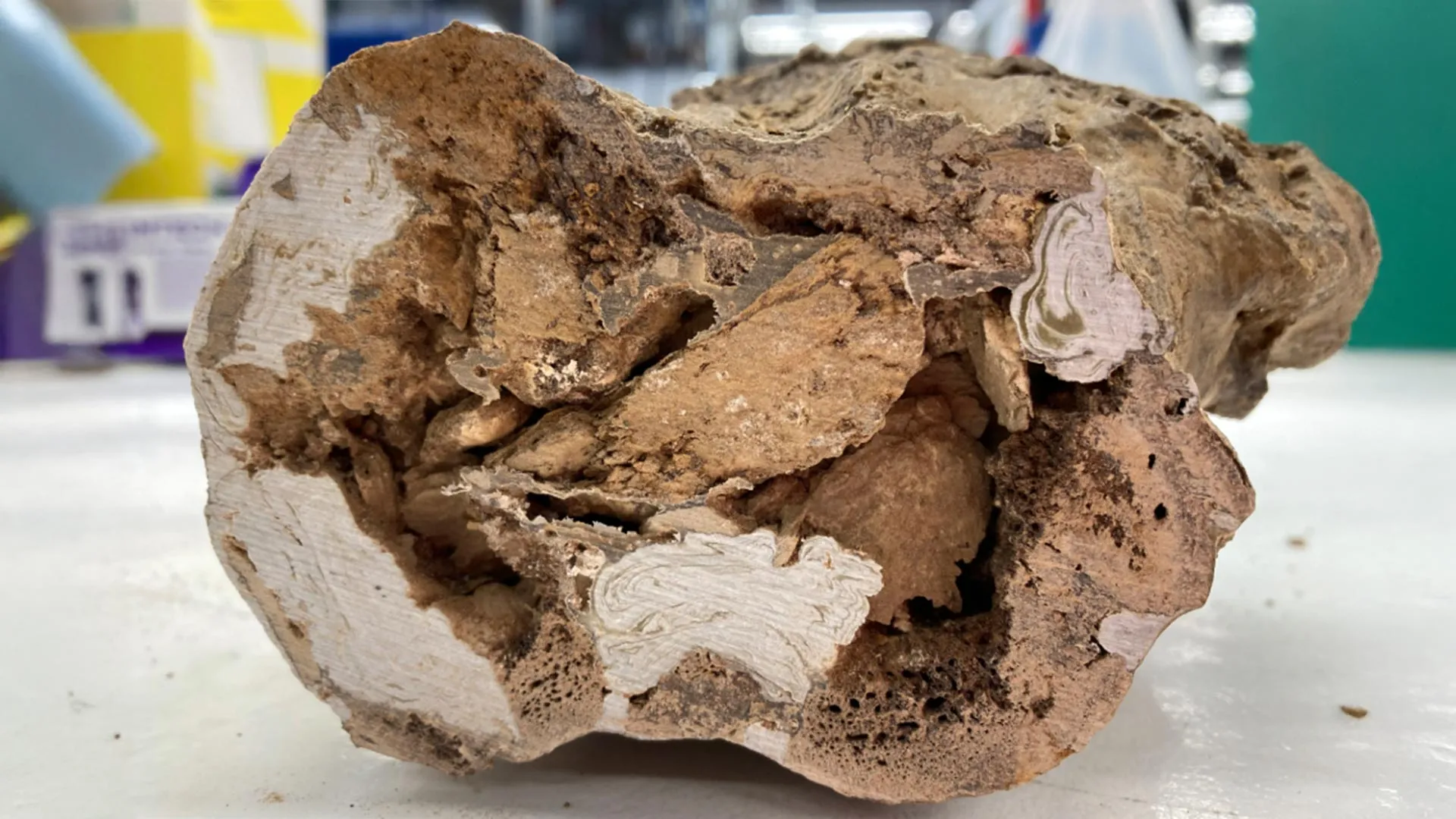
For decades, scientists believed dinosaur fossils were little more than mineralized rock, with any original biological material long since destroyed by time, rendering them inert geological records. But an extraordinary study, centered on a remarkably preserved Edmontosaurus fossil, is now challenging that deeply entrenched assumption in a major and profound way. Researchers led by the University of Liverpool have uncovered compelling evidence suggesting that traces of original organic molecules, including the crucial structural protein collagen, still persist inside dinosaur bones dating back an astonishing 66 million years. This groundbreaking discovery adds powerful and unprecedented new support to a controversial idea that has sharply divided paleontologists for more than three decades, sparking intense debate and skepticism within the scientific community.
A Molecular Window into the Mesozoic Era
The fossil at the heart of this pivotal study is a substantial 22-kilogram Edmontosaurus sacrum, a complex bone structure forming part of the dinosaur’s hip region. This specimen was meticulously recovered from South Dakota’s renowned Hell Creek Formation, a geological treasure trove famous for its exceptionally well-preserved late Cretaceous period fossils. Edmontosaurus, a large, herbivorous duck-billed dinosaur, was a common inhabitant of the ancient North American landscape, living alongside iconic predators like Tyrannosaurus rex right up until the catastrophic asteroid impact that marked the end of the Cretaceous Period.
The scientific team employed a sophisticated array of advanced laboratory methods to scrutinize the fossil. These techniques included high-resolution protein sequencing, which allowed them to identify the specific amino acid chains that make up proteins, and several forms of mass spectrometry, which can detect and identify molecules based on their mass-to-charge ratio with incredible precision. Through this rigorous analysis, scientists successfully detected remnants of collagen deeply embedded within the fossilized bone matrix. Collagen, the primary structural protein found in bone tissue, cartilage, skin, and connective tissues, is particularly significant. Its complex, triple-helical structure and ubiquitous presence in vertebrate anatomy make it one of the hardest biomolecules to credibly explain away as mere modern contamination when identified in such an ancient context.
Further reinforcing these findings, researchers from the University of California, Los Angeles (UCLA) independently identified hydroxyproline, a distinctive amino acid that is almost exclusively found in collagen. The presence of hydroxyproline acts as a strong molecular fingerprint, providing crucial corroboration that the degraded protein fragments found were genuinely original collagen components from the dinosaur itself, rather than environmental contaminants or microbial biofilms. According to the research team, this represented an essential confirmation, solidifying the case for endogenous collagen fragments within the fossil.
Professor Steve Taylor, chair of the Mass Spectrometry Research Group at the University of Liverpool’s Department of Electrical Engineering & Electronics, articulated the profound implications of their work: "This research shows beyond doubt that organic biomolecules, such as proteins like collagen, appear to be present in some fossils. Our results have far-reaching implications. Firstly, it refutes the hypothesis that any organics found in fossils must result from contamination, moving the conversation forward from one of possibility to one of demonstrated reality."
The Protracted Debate: Soft Tissues in Dinosaur Fossils
Claims of preserved soft tissues and proteins in dinosaur fossils have been a source of intense scientific contention since the early 2000s, igniting what has become one of paleontology’s most spirited and often acrimonious debates. Prior to this period, the prevailing scientific dogma held that organic molecules, being inherently unstable, could not possibly survive the immense timescales involved in fossilization—tens of millions of years. The understanding was that all original biological material would inevitably degrade and be replaced by minerals during the fossilization process, leaving only mineralized replicas of bones and teeth.
This long-standing paradigm began to crack in 2005 with the groundbreaking work of paleontologist Mary Schweitzer and her colleagues. They reported the astonishing discovery of what appeared to be flexible, fibrous soft tissue structures, including what resembled blood vessels and osteocytes (bone cells), inside the femur of a 68-million-year-old Tyrannosaurus rex fossil from the very same Hell Creek Formation. This finding was met with both excitement and extreme skepticism. Many scientists argued vehemently that the reported materials were either modern contamination, artifacts of the experimental process, or complex bacterial biofilms that had infiltrated the bone, rather than authentic, original dinosaur molecules.
Subsequent studies by Schweitzer’s team and others identified possible collagen and additional blood vessel-like structures in a growing number of dinosaur specimens, including hadrosaurs closely related to Edmontosaurus. These discoveries, while compelling, continued to fuel the controversy, with critics demanding ever more rigorous proof to rule out contamination and diagenetic alteration (changes occurring during fossilization). The scientific community remained largely divided, with a significant portion unwilling to accept the possibility of ancient protein survival without overwhelming, multi-faceted evidence.
The new Edmontosaurus analysis stands out precisely because it directly addresses these long-standing criticisms through its exceptional methodological rigor. The researchers utilized multiple, independent testing methods—including advanced microscopy to visualize structures, sophisticated chemical analysis to identify molecular components, and precise protein sequencing to determine molecular identity—to examine the very same fossil specimen. This multi-pronged approach was specifically designed to rule out contamination and strengthen the case that the identified molecules were genuinely endogenous, original to the dinosaur itself, and not later intrusions. The findings were formally published in the prestigious journal Analytical Chemistry in 2025, under the unequivocal title, "Evidence for Endogenous Collagen in Edmontosaurus Fossil Bone."
Why This Discovery Matters: A Paradigm Shift in Paleontology
The implications of discovering proteins surviving for tens of millions of years are truly transformative for paleontology and our understanding of extinct life. If robust biomolecules like collagen can endure such immense geological timescales, scientists may gain an entirely new and unprecedented way to study extinct animals, moving beyond the macroscopic study of bone morphology to the microscopic world of molecular biology.
-
Unlocking Evolutionary Relationships: Tiny molecular traces, even degraded fragments, could potentially reveal intricate evolutionary relationships between dinosaur species that are often difficult or impossible to identify from bones and teeth alone. Traditional phylogenetics relies heavily on shared anatomical features, which can sometimes be convergent (evolving independently) or obscured by incomplete fossil records. Molecular data offers an independent line of evidence, much like DNA analysis has revolutionized modern biology, allowing paleontologists to construct more accurate "family trees" for dinosaurs. For instance, subtle differences in collagen sequences might delineate relationships between different hadrosaur species or clarify their connections to other ornithischian dinosaurs.
-
Insights into Dinosaur Physiology and Biology: Beyond evolutionary links, researchers may learn vastly more about dinosaur growth rates, aging processes, metabolic physiology, and even common diseases. Proteins are the workhorses of cells, involved in virtually every biological process. Identifying specific proteins could offer clues about dinosaur diet (e.g., enzymes related to digestion), environmental adaptations, or even reproductive strategies. For example, the presence of certain stress proteins might indicate periods of environmental hardship, while variations in bone collagen structure could hint at different bone remodeling rates or stress resistance.
-
Revisiting Historical Collections: Professor Taylor highlighted a particularly exciting and immediate implication: scientists may now need to revisit fossil samples collected over the past century. He suggested that cross-polarized light microscopy images, taken decades ago and stored in museum archives, could contain overlooked evidence of preserved collagen within ancient bones. "These images may reveal intact patches of bone collagen, potentially offering a ready-made trove of fossil candidates for further protein analysis," Taylor explained. This could dramatically expand the pool of specimens available for molecular study without requiring new, arduous fossil expeditions, potentially accelerating new discoveries. "This could unlock new insights into dinosaurs, for example revealing connections between dinosaur species that remain unknown, or clarifying aspects of their biomechanics," he added.
The Enduring Mystery of Molecular Survival
The discovery of ancient proteins also raises one of the most fascinating and challenging scientific questions: how did these complex molecules survive for so long, defying conventional wisdom about organic decay? Proteins, like all biomolecules, are inherently unstable and normally break down over time, especially across geological timescales involving millions of years. Yet, these findings, coupled with earlier work, suggest that some fossils are indeed capable of preserving microscopic biological structures under specific, albeit rare, conditions.
Scientists are increasingly investigating various hypotheses to explain this extraordinary molecular longevity. One leading theory explores whether intricate mineral interactions inside bone may help shield fragments of collagen from complete decay. The highly organized crystal structure of hydroxyapatite, the mineral component of bone, could potentially encase and protect protein fragments, slowing down hydrolysis and microbial degradation. Recent studies exploring fossil biomolecules suggest that certain burial environments, characterized by rapid burial, anoxic (oxygen-free) conditions, and specific geochemical compositions (such as the presence of iron, which Schweitzer’s team hypothesized can act as a preservative), may create stable microenvironments that dramatically slow chemical breakdown.
The Hell Creek Formation, from which this Edmontosaurus sacrum was recovered, is already famous for its exceptional preservation. Some Edmontosaurus specimens discovered over the last century have retained remarkably detailed skin impressions, muscle scars, and other soft tissue features, earning them the evocative nickname "dinosaur mummies." These extraordinary fossils have long hinted at unique preservation conditions. More recent paleontological research has continued to uncover surprisingly detailed soft tissue preservation in other Edmontosaurus specimens, including evidence of fleshy structures and preserved skin anatomy, further underscoring the potential for biomolecule retention.
Beyond Stone Replicas: Fossils as Molecular Time Capsules
Together, these discoveries are profoundly reshaping how scientists think about fossils. For generations, fossils were primarily viewed as impressive stone replicas of ancient bones and teeth, offering morphological insights into the size, shape, and structure of extinct organisms. The new molecular evidence, however, compels a more nuanced and exciting perspective. Researchers are beginning to see some fossils not just as inert geological records, but as potential "molecular time capsules" that still preserve tangible, albeit degraded, traces of prehistoric biology millions of years later.
This paradigm shift opens up thrilling avenues for future research. Scientists will undoubtedly intensify efforts to identify more such "molecular fossils" across different species and geological periods, refine techniques for extracting and analyzing these delicate biomolecules, and delve deeper into the complex taphonomic processes that enable their long-term survival. The ability to peer into the molecular fabric of dinosaurs promises to revolutionize our understanding of these magnificent creatures, offering an unprecedented level of detail about their lives, evolution, and ultimately, their place in the grand tapestry of Earth’s history. The age of molecular paleontology has truly dawned.
