

Woodpeckers, with their distinctive drumming and acrobatic feats, are more than just charming backyard visitors; they are a testament to nature’s extraordinary engineering and resilience. These avian architects possess a remarkable suite of adaptations that enable them to thrive in an environment that would be utterly punishing for most other species. Their ability to repeatedly strike hard surfaces at high velocities, excavate nesting cavities, and forage for food in tree bark showcases a level of biological fortitude that inspires awe and scientific curiosity.
The Engineering Marvel of the Woodpecker Skull
The most striking example of a woodpecker’s resilience lies in its head and skull. When a woodpecker is excavating a nest or foraging for insects, its head can impact a tree’s surface at speeds approaching 13 miles per hour. The resulting force, estimated to be around 10 G-forces, is substantial enough to cause severe brain injury in many animals, including humans. For comparison, the human brain is significantly more susceptible to concussions at these speeds than a woodpecker’s. The idea of a bird repeatedly and forcefully impacting a solid object with its head, like running headfirst into a tree at full sprint, conjures an image of extreme danger.
However, woodpeckers are not simply enduring this process; they are biologically equipped to withstand it. Scientific investigations have revealed a sophisticated design within their skulls that acts as a natural shock-absorbing system. The woodpecker skull is characterized by its lightweight, yet incredibly strong, structure. It is composed of spongy, air-filled bone that provides cushioning. This skeletal framework is further reinforced by an intricate meshwork of bony support struts, offering exceptional structural integrity.
Crucially, the size of a woodpecker’s brain relative to its skull is also a key factor in its ability to survive these impacts. The brain is relatively small within the skull, minimizing the space for it to move and rattle during severe jolts. This tight fit prevents excessive cranial movement, thereby significantly reducing the risk of damage to neural tissues. This unique cranial architecture is a prime example of evolutionary adaptation, where form and function are exquisitely intertwined to meet the demands of a specialized lifestyle.
The Ever-Sharp, Self-Repairing Beak
Beyond the skull’s protective capabilities, the woodpecker’s beak itself is a marvel of biological engineering. One might assume that the constant, high-impact pecking would quickly wear down the beak to a useless state. While wear does occur, woodpeckers possess specialized cells at the tip of their beaks that are constantly regenerating and replacing lost material. This continuous renewal process ensures that the beak remains strong, resilient, and, remarkably, self-sharpening with every forceful blow. The chisel-like shape, maintained by this constant replenishment, is perfectly suited for its primary functions: excavating wood and probing for insects hidden within bark.
The exact mechanisms and rate of this cellular regeneration are areas of ongoing scientific study. Researchers have analyzed the keratinous material that forms the beak, identifying unique protein structures and cellular processes that contribute to its durability and self-sharpening properties. This biological innovation allows woodpeckers to maintain the effectiveness of their primary tool throughout their lives, a crucial advantage for their survival and foraging success.
Built-in Safety Gear: The Woodpecker’s Protective Systems
The intense activity of woodpecking generates a significant amount of airborne debris, posing a risk to the bird’s sensory organs. To mitigate this hazard, woodpeckers have evolved their own sophisticated, built-in safety equipment.
Nasal Protection: Tufts of stiff feathers grow over their nostrils, acting as a natural "dust mask." These feather tufts effectively prevent small wood particles and debris from entering the respiratory system, safeguarding against irritation and potential infection. This is a critical adaptation, as damage to the delicate nasal passages could compromise breathing and overall health.
Ocular Protection: In a remarkable display of evolutionary foresight, woodpeckers possess a specialized "third eyelid." This transparent nictitating membrane sweeps across the eye, much like a windshield wiper, clearing away dust and debris during excavation. This protective layer shields the cornea from abrasion and impact, ensuring clear vision and preventing eye injuries while they are actively engaged in their woodworking endeavors. This adaptation is akin to a bird wearing integrated safety goggles, allowing them to work with precision and without undue risk to their vision.

The Woodpecker’s Role in Ecosystems
Beyond their fascinating biological adaptations, woodpeckers play a vital role in their respective ecosystems. Their excavating activities create cavities in trees that serve as essential nesting sites for a variety of other bird species, including chickadees, wrens, and bluebirds, as well as for mammals like squirrels and bats. These "secondary cavity nesters" often lack the ability to create their own nesting holes and rely on the abandoned work of woodpeckers. Thus, woodpeckers are considered "ecosystem engineers," shaping their environment in ways that benefit numerous other species.
Furthermore, by drilling into trees in search of insects, woodpeckers help to control populations of wood-boring beetles and other pests that can damage or kill trees. This natural pest control benefits forest health and can have economic implications for forestry. Their foraging also contributes to the decomposition process, as they expose insect larvae and other organic matter to the elements and to other scavengers.
Attracting Woodpeckers to Your Backyard
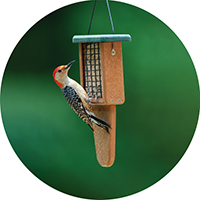
For bird enthusiasts, observing woodpeckers up close can be a rewarding experience. Their distinctive appearance, energetic movements, and the sounds of their drumming make them captivating subjects for backyard bird feeders. Several types of food are particularly effective in attracting a variety of woodpecker species.
Suet: High-energy suet is a perennial favorite, especially during colder months when natural food sources are scarce. Look for suet cakes specifically formulated with added ingredients like nuts, seeds, and insects that woodpeckers enjoy. No-melt suet options are also available, which hold their shape better in warmer weather.
Peanuts: Shelled peanuts, offered in mesh feeders or as part of a suet mix, are a highly attractive food source for many woodpeckers, including Downy, Hairy, and Red-bellied woodpeckers. The high fat and protein content of peanuts provides essential energy.

Bark Butter and Nut-Based Blends: Specialized products like "Bark Butter," a high-energy food spread made from peanut butter and cornmeal, are designed to mimic the natural food sources woodpeckers seek on tree bark. Blends rich in tree nuts, such as WBU’s TreeNutty Plus Blend, are also excellent choices.
Seed Cylinders: For a longer-lasting and less messy feeding option, consider a dedicated Woodpecker Cylinder. These dense, compressed seed and nut formulations provide a continuous food source that can attract a wide array of woodpecker species.
By offering a diverse and appropriate food selection, backyard observers can significantly increase their chances of attracting these fascinating birds and witnessing their remarkable adaptations firsthand. The presence of woodpeckers in a backyard not only provides entertainment but also signifies a healthy and inviting environment for a range of avian and other wildlife.
A Legacy of Resilience and Wonder
The woodpecker’s journey from evolutionary niche to backyard attraction is a compelling narrative of survival, adaptation, and ecological importance. These birds, often overlooked in their tireless work, embody a profound resilience that has allowed them to conquer the challenges of their arboreal existence. Their unique biological machinery, from the shock-absorbing skull to the self-sharpening beak and built-in safety gear, serves as a constant reminder of the ingenious solutions that nature can devise. For those who watch them, woodpeckers offer not just a glimpse into the natural world, but a profound appreciation for the incredible toughness and wonder that can be found in even the most familiar of creatures. Their continued presence in our ecosystems and backyards is a testament to their enduring strength and the vital roles they play.
