
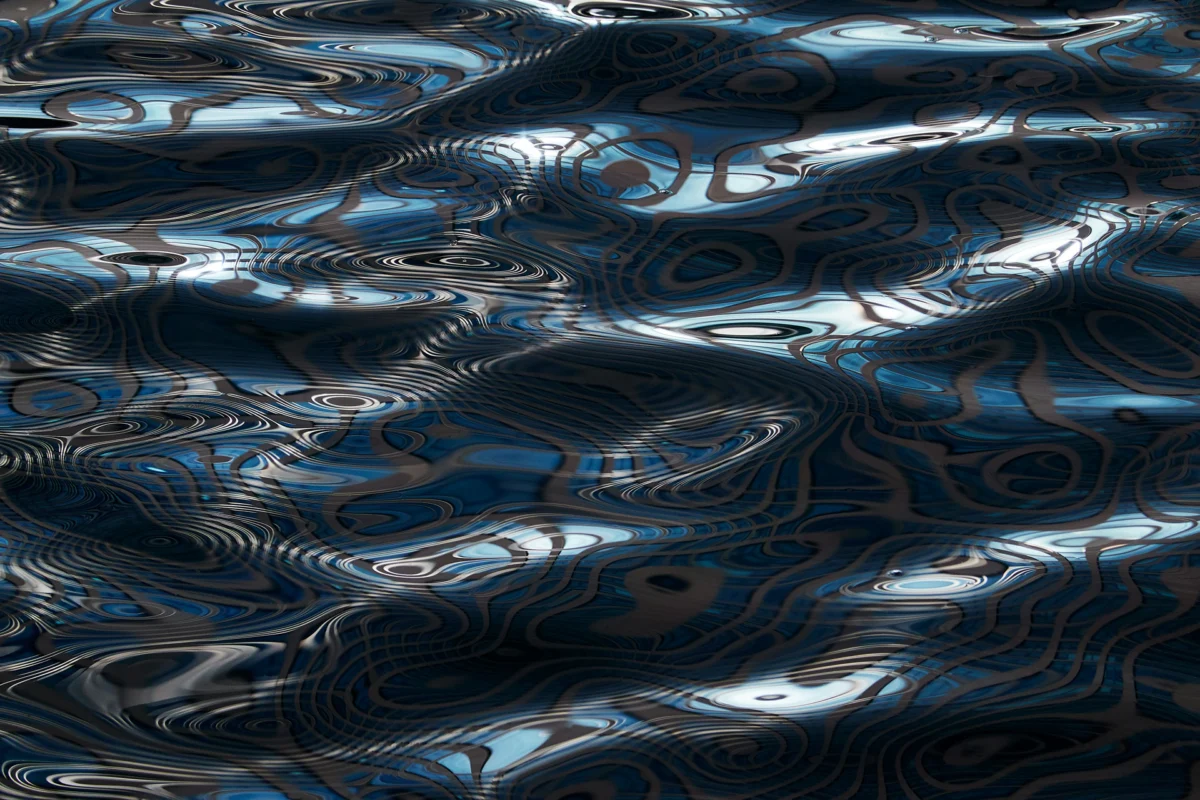
For over a decade, a remarkable photographic series titled "Fleeting Reflections" has challenged conventional notions of abstract photography, demonstrating that profound artistic depth can be found not in exotic locales or extensive digital manipulation, but in persistent observation of an urban environment. The creator of this acclaimed body of work routinely surprises audiences by revealing that the ethereal, painterly images – often mistaken for complex Photoshop creations – are, in fact, captured entirely in-camera. These captivating visuals are the result of light interacting with glass, steel, and water in London’s Canary Wharf, meticulously recorded as single frames or carefully layered multiple exposures, a testament to attention, repetition, and, above all, time.
The genesis of "Fleeting Reflections" lies in a philosophy that prioritizes engagement with a subject over technological prowess. While many photographers focus on equipment and settings, the true engine behind this series is the symbiotic relationship between a specific place, unwavering persistence, and disciplined practice. This approach runs counter to a prevalent narrative in photography that often emphasizes the pursuit of the spectacular or the technically complex, instead advocating for a deep, sustained interaction with the immediate environment.
The Foundational Pillars of Abstract Observation

The "Fleeting Reflections" project, which has culminated in two published books and multiple gallery exhibitions, is built upon three fundamental pillars identified by the photographer over years of dedicated practice: accessibility, repeatability, and patience. These principles, while seemingly straightforward, form a rigorous framework for generating a substantial and distinctive body of work, particularly within the realm of nature and abstract photography. They suggest that creative potential is less about geographical grandeur and more about the intensity and duration of one’s gaze.
Accessibility: Unlocking the Everyday Landscape
A quiet myth often pervades nature photography: the belief that one must journey to dramatic, remote, or pristine wildernesses to capture truly worthwhile images. "Fleeting Reflections" stands as a powerful refutation of this idea. The entire series has largely emerged from a mere square mile of water, nestled amidst the towering skyscrapers of Canary Wharf. This financial district, renowned globally for its modern architecture of glass and steel, is reimagined by the photographer not as a concrete jungle, but as an elaborate arrangement of light sources. These imposing structures project vibrant colours and stark lines onto the water’s surface, which in turn becomes a dynamic canvas. Wind, rain, and passing vessels continuously sculpt this reflected light into an ever-changing spectacle of waves, ribbons, and fractured patterns.
The critical advantage of Canary Wharf for this project is its inherent accessibility. The photographer can reach this location with ease, allowing for frequent, informal visits without the logistical burdens of travel. There is no need for flights, expensive permits, extended time off work, or arduous pre-dawn hikes. This practical accessibility means that creative opportunities are not limited to grand expeditions but can be seized within a mere 40-minute window, or during conditions conventionally deemed "bad." The photographer frequently visits during rain, observing how the water’s surface transforms into a texture akin to hammered metal, revealing entirely new visual possibilities.

This seemingly mundane aspect of accessibility is, in fact, absolutely fundamental. Without the practical ability to engage with a subject frequently, it becomes impossible to cultivate the deep familiarity required to move beyond superficial observations. The ease of regular access allows for an honest and sustained study of the subject, enabling the photographer to perceive nuances and transient phenomena that would otherwise remain hidden. This emphasis on local exploration resonates with a growing movement in photography that champions finding beauty in the immediate surroundings, reducing environmental impact associated with travel, and fostering a deeper connection to one’s own community. It highlights that the most profound artistic insights often stem from a prolonged, intimate dialogue with a specific, familiar place, rather than a fleeting encounter with the exotic.
Repeatability: The Ever-Changing Canvas
The second pillar of "Fleeting Reflections" is repeatability – the deliberate choice of a subject that possesses an inherent capacity for continuous transformation, offering new surprises and possibilities with each encounter. The docks of Canary Wharf exemplify this quality in abundance. The visual tapestry they present is never truly static; each visit unveils a unique permutation of light, form, and texture.
Consider the stark contrasts: a calm morning might yield long, glassy pulls of colour, reflecting the pristine facades of the towers with liquid serenity. A gusty afternoon, however, shatters these identical reflections into serrated lines, evoking the iconic waveform imagery found on the album cover of Joy Division’s Unknown Pleasures. The passage of a boat can momentarily smear and distort the reflections into something reminiscent of a hand-drawn abstraction. Even more ephemeral are the iridescent interference patterns created by diesel slicks on the water’s surface, which might last only a few minutes before vanishing forever, never to reappear in the exact same configuration.

This constant variability means that the photographer can revisit the "same" scene hundreds or even thousands of times and still genuinely feel engaged in creating new work. It’s an exercise in sustained observation, where one might remain rooted in a single spot for hours, witnessing a particular patch of water cycle through a myriad of personalities. At this point, the subject is no longer merely architecture or a body of water; it becomes a study of dynamic behaviour – the interplay of light, liquid, and atmospheric forces.
While in-camera techniques, such as fast burst rates to freeze micro-moments or multiple exposure modes to layer gestures and enhance abstraction, are employed, their significance is secondary to the subject itself. These techniques are merely tools that become powerful because the repeatable nature of the environment consistently offers a fresh palette of raw material. The colours shift with the changing weather, the geometry bends and warps with the wind’s caprice, and the overall mood of the scene transforms with the ebb and flow of the tide. Without the inherent repeatability of the subject, the photographic output would likely be limited to mere "postcards" – singular, static representations. With it, however, one can cultivate a rich, evolving, and cohesive body of work that speaks to the transient beauty of the world.
Patience: The Unseen Engine of Creation
The final and arguably most underestimated pillar of the "Fleeting Reflections" project is patience. It is a discipline that permeates every stage of the creative process, from conceptualization to the final presentation, and is far from a passive waiting game; it is an intensely active form of engagement.

Patience begins long before the shutter button is pressed. It involves the often-frustrating wait for the confluence of the right weather conditions and available personal time. The quality of light—whether it’s the harsh glare of direct sun on still water or the soft, diffuse illumination of a drizzly day—dictates the visual outcome. Not every combination yields useful results. It is common for the photographer to walk for miles, meticulously checking various angles and light interactions in the water, only to find nothing that aligns with the day’s specific conditions. This initial phase demands an acceptance of unpredictability and a commitment to returning another day.
Even when conditions are promising, patience transforms into a physical exercise. The photographer might stand at a single location for up to four hours, capturing as many as 3,000 frames of what a casual passerby might dismiss as "the same scene." This seemingly obsessive dedication is driven by the search for that elusive instant where colour, rhythm, structure, and tension coalesce into a perfect, harmonious composition. Such moments cannot be rushed or forced; they demand an unwavering presence and an acute sensitivity to subtle shifts in the environment. This profound level of sustained attention allows the artist to transcend superficial observation and connect with the deeper, fleeting patterns of the scene.
The exercise of patience continues relentlessly in the post-capture phase. Upon returning home, thousands of near-identical images are downloaded, initiating a slow, deliberate sifting process on the iMac. This is where intellectual discipline becomes paramount. The photographer moves through the vast collection purposefully, seeking the precise frame where every element aligns perfectly, rejecting the overwhelming majority. The "keep rate" is, by conventional standards, brutally low, highlighting the meticulous and discerning eye required to distill the essence of the fleeting moments.
Furthermore, the processing approach is equally restrained, reflecting a philosophical commitment to honesty. Working primarily in Capture One, the photographer employs only global adjustments such as levels, clarity, sharpness, and contrast. There is an explicit rejection of manipulating shapes or forms in Photoshop. The intent is not to "create" new forms digitally, but rather to "reveal" what was already inherently present in the water. This choice underscores a profound dedication to authenticity, allowing the photographer to state, with integrity, "this happened." In an era where digital manipulation is commonplace, this adherence to in-camera capture and minimal post-processing offers a refreshing and impactful counter-narrative, grounding the abstract in verifiable reality.

Finally, there is the longest form of patience: the patience to allow the work itself to mature. The "Fleeting Reflections" project was not publicly showcased in any significant way for many years. The photographer consistently returned to Canary Wharf, shooting, refining, and learning to distinguish what felt essential from what constituted mere visual noise. It took approximately seven years before the collection was deemed coherent and strong enough to be presented to a publisher. This extensive period of gestation and self-critique ultimately led to the publication of the first book, Fleeting Reflections, in 2017 by Triplekite. This milestone was followed by exhibitions at the Greenwich Gallery in 2017 and the Anise Gallery in London in 2019, and a second volume, Fleeting Reflections II, in 2023. These achievements, while significant, are merely the visible tip of an immense iceberg. Beneath them lie thousands of hours of walking, watching, waiting, shooting, editing, rejecting, and continually returning to the subject, a testament to an obsessive dedication that belies any notion of quick or smooth success.
Broader Implications for the Photographic Community
The profound insights gleaned from the "Fleeting Reflections" project offer invaluable lessons for photographers across all genres. The primary takeaway is a liberating one: truly personal and distinctive photographic work does not necessitate dramatic landscapes or exotic, far-flung locations. Instead, it underscores the transformative power of a deep, sustained engagement with one’s immediate surroundings.
The principles of accessibility, repeatability, and patience are transferable to virtually any aspiring photographer. One is encouraged to identify a location that is easily and frequently reachable – perhaps a local canal, a harbour wall, a marsh on the outskirts of town, or even the transient patterns of rainwater pooling in a car park. The key is to commit to returning to this chosen subject repeatedly, observing it across all moods, seasons, and weather conditions, until one can intuitively predict its responses and anticipate its fleeting transformations.

This initial dedication then gives way to the "slow work": the disciplined practice of walking, waiting, refining one’s vision, and maintaining a rigorous honesty in the editing process. Patience, in this context, is not a passive virtue but a highly active and intentional decision. It represents a conscious investment of oneself in understanding a subject for as long as it takes to truly grasp its essence. Over time, this deep-seated patience becomes palpably visible within the photographs themselves. While viewers may initially be drawn to the compelling interplay of colour and shape, what they are ultimately perceiving is the profound attention, the sustained observation, and the meticulous dedication that underpins every single frame.
In an increasingly fast-paced world, where instant gratification and digital wizardry often dominate, "Fleeting Reflections" serves as a powerful reminder of the enduring value of slowness, persistence, and genuine presence in artistic creation. It advocates for a more mindful approach to photography, demonstrating that the most impactful narratives can often be found not by chasing the extraordinary, but by uncovering the extraordinary within the ordinary, through the lens of unwavering commitment and profound patience. This body of work not only enriches the aesthetic landscape but also provides a compelling blueprint for how contemporary photographers can cultivate depth and originality in their own practices, regardless of their geographical constraints or technical arsenal.
