
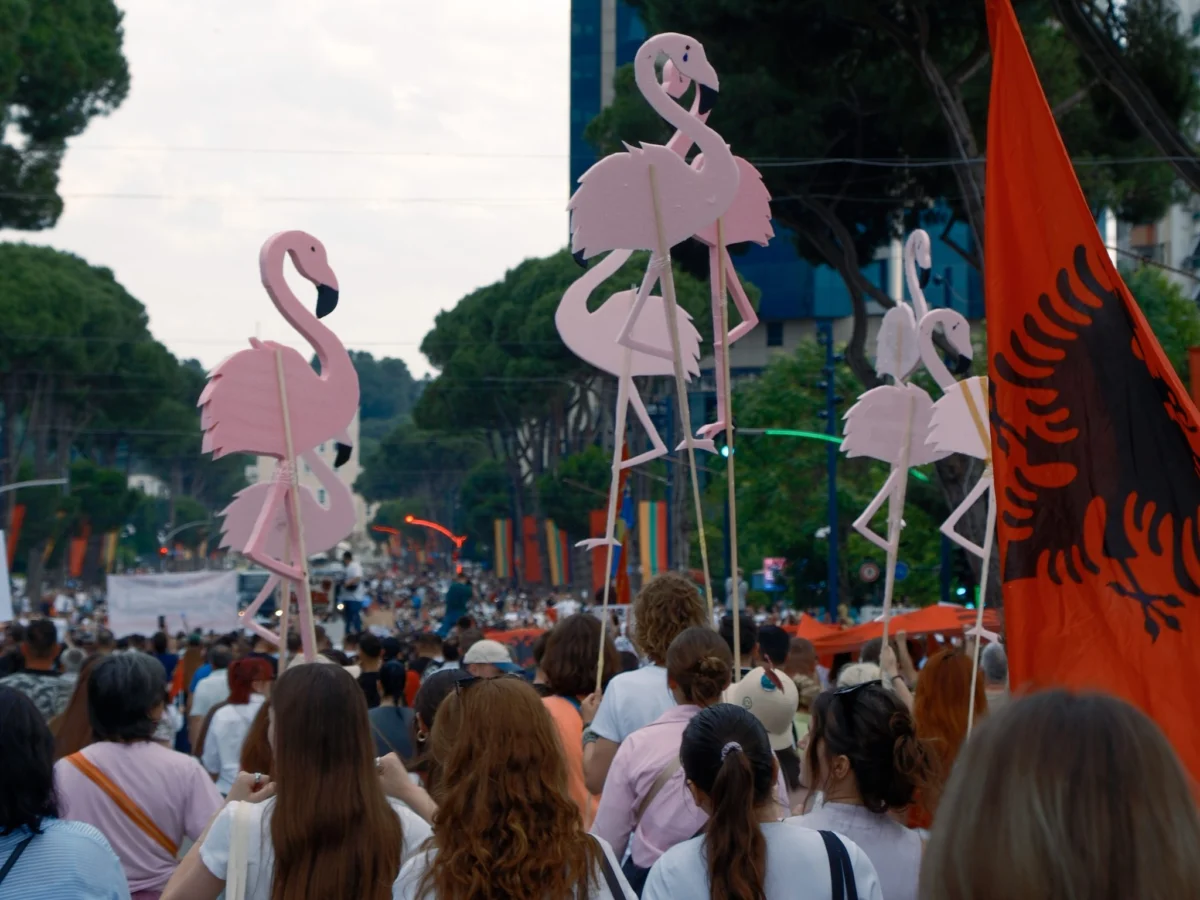
STRASBOURG – The European Parliament today adopted a pivotal resolution on the 2025 Commission Report on Albania, delivering a stern message regarding ongoing developments within the ecologically critical Vjosa-Narta Protected Area. The resolution unequivocally states that the rule of law and adherence to EU environmental standards are non-negotiable conditions for Albania’s eventual accession to the European Union. This decisive action by MEPs calls for the immediate repeal of Albania’s controversial 2024 amendments to the Law on Protected Areas, legislation widely perceived as having enabled the degradation of one of the Mediterranean’s most significant natural sites and having ignited the largest popular protests Albania has witnessed in a generation.
The Parliament’s resolution goes further, demanding an "immediate moratorium on new permitting procedures, construction works and development interventions within protected areas until incompatible provisions of Albania’s amended Law on Protected Areas are repealed and full compliance with EU nature protection standards is ensured." This robust stance underscores a profound concern within the EU legislature that Albania’s current trajectory in environmental governance directly contradicts its aspirations for European integration.
The Heart of the Controversy: Vjosa-Narta Protected Landscape Under Threat
The Vjosa-Narta Protected Landscape, situated along Albania’s Adriatic coastline, is not merely a regional natural asset; it is recognized as part of the last intact delta system in the Mediterranean. Its ecological significance is immense and globally recognized. The area serves as a vital sanctuary, hosting over 200 bird species, many of which are migratory, traversing one of Europe’s most critical migratory corridors. Beyond avian diversity, it provides essential habitat for more than 70 endangered species, including emblematic and critically threatened marine mammals such as the Mediterranean monk seal (Monachus monachus) and the Loggerhead sea turtle (Caretta caretta). These species are not only indigenous to the area but also fall under strict protection mandates within EU Member States like Greece, Italy, and Croatia, highlighting the transboundary implications of environmental damage in Vjosa-Narta. The health of this ecosystem, therefore, has far-reaching consequences beyond Albania’s borders, impacting the wider Mediterranean biodiversity and the integrity of EU nature conservation efforts.
The protected status of Vjosa-Narta was established to safeguard its unique mosaic of lagoons, salt marshes, sand dunes, and coastal forests, which collectively provide invaluable ecosystem services ranging from flood regulation and climate resilience to supporting local fisheries and ecotourism. The area is a designated Important Bird and Biodiversity Area (IBA) and a Ramsar site, underscoring its international importance as a wetland habitat.
A Legislative Battle: Albania’s Amended Laws and Their Impact
At the core of the current crisis are Albania’s legislative changes, particularly the 2024 amendments to the Law on Protected Areas. Critics argue that these amendments fundamentally undermine the protective framework for natural sites by permitting large-scale tourism infrastructure, including resorts and hotels, within previously sacrosanct protected zones. Furthermore, these changes are accused of stripping away key environmental oversight mechanisms, effectively weakening regulatory control and accountability.
Compounding these concerns is Albania’s Law on Strategic Investments. This legislation, designed to fast-track significant economic projects, utilizes accelerated permitting procedures that environmental advocates fear risk bypassing thorough environmental scrutiny, especially in sensitive ecological areas like Vjosa-Narta. The confluence of these two legal instruments creates a pathway for rapid, potentially irreversible development without adequate environmental safeguards, directly conflicting with the principles of sustainable development and the environmental acquis – the body of common rights and obligations that is binding on all EU Member States and accession countries.
Chronology of Escalation: From Airport Construction to "Flamingo Revolution"
The environmental degradation in Vjosa-Narta is not a sudden occurrence but rather a cumulative process marked by several controversial projects.
- November 2021: Construction of the Vlora International Airport began within the broader Vjosa-Narta Protected Landscape. This project immediately drew criticism from environmental groups and international experts who warned of its detrimental impact on the area’s unique biodiversity, particularly its migratory bird populations. Despite ongoing protests and expert warnings, the airport project proceeded, setting a concerning precedent for development within protected zones.
- 2024: Amendments to the Law on Protected Areas are enacted. These changes are seen as a legislative enabler for further large-scale development, paving the way for the current wave of construction.
- Early May 2024 (or May 2026, as some reports indicate, though 2024 is more contextually logical given ongoing events): Construction activities intensify within the protected area, proceeding without published project plans, environmental impact assessments (EIAs), public consultations, or valid permits. This direct violation of established legal procedures and international best practices ignited widespread public outrage.
- Past 18 Days (leading up to the Parliament’s vote): More than 100,000 Albanians take to the streets in a massive popular uprising, globally dubbed the "Flamingo Revolution." These unprecedented protests are a direct response to the illegal clearing of forests, ancient dunes, and critical protected habitats in the Vjosa-Narta area. The sheer scale and sustained nature of these demonstrations underscore a deep-seated public concern for environmental protection and democratic governance.
- June 15 (specific year not given, but context suggests recent): European Commissioner Kos issues a statement indicating that the European Commission had received assurances from the Albanian government that an environmental impact assessment would be carried out. This statement was met with skepticism and criticism from environmental groups, who pointed out that illegal works had already taken place, often without permits or transparency, rendering a post-facto EIA largely ineffective in preventing initial damage.
- Today: The European Parliament adopts its resolution, taking a firm stance that directly challenges the Albanian government’s actions and, by implication, contrasts with the European Commission’s earlier, more measured response.
The "Flamingo Revolution": A Nation Mobilizes for Nature and Democracy
The "Flamingo Revolution" represents a watershed moment in Albanian civil society and environmental activism. Drawing over 100,000 participants to the streets of Tirana and other cities, the protests are not merely a reaction to a specific construction project but a broader popular uprising against perceived governmental overreach, lack of transparency, and disregard for environmental laws. The moniker itself, referencing one of the iconic bird species of the Vjosa-Narta wetlands, symbolizes the deep connection between the Albanian people and their natural heritage.
Organized largely by local environmental groups, youth activists, and concerned citizens, the protests have highlighted a growing awareness of environmental issues in Albania and a demand for greater accountability from public institutions. The scale of mobilization suggests a maturing civil society capable of exerting significant pressure on national policy, a crucial component for any country aspiring to join the European Union, which places a high value on democratic participation and robust civil society engagement.
EU Institutions Divided: Parliament’s Firm Stance vs. Commission’s Cautious Approach
The European Parliament’s adopted resolution starkly highlights a divergence in approach between two key EU institutions. While Commissioner Kos indicated a willingness to accept assurances from the Albanian government regarding future EIAs, the Parliament’s vote reflects a much stronger, more critical position. MEPs have effectively sided with civil society and environmental organizations, emphasizing that commitments must be demonstrated through action, not just promises, and that environmental damage cannot be retroactively justified or mitigated.
This contrast is significant. The Parliament, as the directly elected body representing EU citizens, often adopts a more principled and rights-based stance on issues like environmental protection and the rule of law. Its resolution sends an "unambiguous message," as noted by Anouk Puymartin of BirdLife Europe, that accession cannot proceed while foundational EU values are being undermined. The Parliament’s decision effectively puts more pressure on the European Commission to adopt a tougher line in its dealings with Albania, potentially influencing future progress reports and pre-accession assistance. This internal EU dynamic underscores the complex interplay of political will, democratic representation, and diplomatic engagement in the enlargement process.
Albania’s EU Accession Path: A Critical Juncture
Albania formally applied for EU membership in 2009 and was granted candidate status in 2014. Accession negotiations officially opened in July 2022. The path to full membership is arduous, requiring extensive reforms and alignment with the EU’s vast body of laws, known as the acquis communautaire. The current controversy directly impacts two crucial clusters of the accession process: Cluster 1 on the Rule of Law and Fundamental Rights, and the Environmental Acquis.
The rule of law pillar demands a robust legal framework, transparent governance, and independent institutions, all of which are challenged by the alleged illegal construction, lack of permits, and bypass of environmental scrutiny in Vjosa-Narta. The environmental acquis, encompassing directives like the Birds and Habitats Directives (which protect species like the Mediterranean monk seal and Loggerhead sea turtle), requires high standards of nature protection, environmental impact assessment, and public participation in environmental decision-making. Albania’s actions in Vjosa-Narta are seen by the Parliament as a direct contradiction of these fundamental commitments.
Failure to address these concerns could significantly impede Albania’s progress towards EU membership. The Parliament’s resolution serves as a clear warning that continued disregard for environmental protection and rule of law principles will have tangible consequences for its accession prospects, potentially leading to delays in opening or closing negotiation chapters, or even a halt in the process.
Regional Ripple Effects: Western Balkans on Watch
Beyond Albania, there are growing concerns that other Western Balkan accession countries are closely observing the situation and might consider similar legislative changes or development strategies that prioritize economic growth over environmental protection. The Parliament’s unequivocal vote today sends a strong signal across the region: such a path is fundamentally incompatible with EU membership aspirations. This creates a precedent, affirming that adherence to environmental standards and the rule of law is a universal expectation for all prospective members, not a flexible condition. It is a message intended to deter other nations from enacting legislation that could compromise their natural heritage and undermine their EU integration efforts.
Voices from the Frontline: NGO Perspectives
The immediate reactions from the environmental organizations at the forefront of the fight underscore the significance of the European Parliament’s intervention.
Joni Vorpsi, Head of Policy and Advocacy, PPNEA (Protection and Preservation of Natural Environment in Albania): "The European Parliament’s call for an immediate moratorium is exactly what is needed in our fight to protect Vjosa-Narta. It gives Albanian authorities the time and the clarity to align with EU standards on nature protection and avoid irreversible mistakes that would set back Albania’s EU path. We want Albania in the European family, and that is precisely why we cannot afford to get this wrong." Vorpsi’s statement highlights the dual objective of the environmental movement: protecting nature and ensuring Albania’s European future, emphasizing that these goals are inextricably linked. PPNEA has been actively campaigning for Vjosa-Narta for years and has been a central organizing force behind the current protests.
Anouk Puymartin, Head of Policy, BirdLife Europe: "Today the European Parliament has stood with the thousands of Albanians on the streets of Tirana. This vote sends the unambiguous message that you cannot join the EU while bulldozing protected wetlands and bypassing your own laws. Protecting Vjosa-Narta, and respecting the Birds and Habitats Directives, are a fundamental condition of EU accession. The Albanians protesting in Tirana already knew that defending nature and defending democracy are the same fight. Today, the European Parliament said so too." Puymartin’s remarks powerfully connect environmental defense with democratic principles, recognizing the protests as a manifestation of both. BirdLife Europe, a prominent conservation organization, has been a key international partner in advocating for the protection of Vjosa-Narta. Both PPNEA and BirdLife Europe were present in Strasbourg ahead of and during the vote, actively lobbying MEPs and providing expert input.
Looking Ahead: The Path to Compliance and Conservation
The European Parliament’s resolution marks a critical turning point. It places immense pressure on the Albanian government to reconsider its current development strategies and legislative framework. The call for an "immediate moratorium" is a direct challenge that demands a pause in all contested construction and permitting processes within protected areas.
For Albania, the path forward requires a demonstrated commitment to aligning with the EU acquis, particularly in environmental protection and the rule of law. This will necessitate a transparent review and potential repeal of the controversial 2024 amendments to the Law on Protected Areas and a re-evaluation of the Law on Strategic Investments to ensure they do not circumvent environmental safeguards. It also demands genuine public consultation, robust environmental impact assessments conducted independently, and accountability for past illegalities.
The stakes are high, not only for Albania’s European aspirations but also for the irreplaceable natural heritage of the Vjosa-Narta Protected Landscape. The resolution offers Albania a clear opportunity to demonstrate its commitment to European values, secure its environmental future, and solidify its place within the European family. The international community, civil society, and the watchful eyes of the European Parliament will be closely monitoring the Albanian government’s response in the coming months.
