

The remarkable adaptations that enable woodpeckers to endure a demanding lifestyle, characterized by intense percussive activity, are a testament to avian evolutionary ingenuity. These birds, often a familiar and entertaining presence at backyard feeders, possess a suite of specialized physical and physiological traits that allow them to thrive in an environment that would be insurmountable for most other avian species. Their ability to excavate cavities in trees, a process involving repeated high-speed impacts, highlights their extraordinary resilience and unique biological engineering.
The Pounding Peril: Anatomical Marvels for a Tough Life
Woodpeckers are renowned for their distinctive drumming behavior, which involves hammering their beaks against tree trunks and branches. This activity, crucial for foraging, nest building, and communication, subjects their heads to extreme forces. Studies have indicated that during cavity excavation, a woodpecker’s head can strike a tree’s surface at speeds reaching up to 13 miles per hour. The resultant impact force, estimated at approximately 10 G’s, is immense. For comparison, this level of acceleration would be devastating to the brain of most other birds, and the human brain is significantly more susceptible to concussion at such speeds – a human running head-first into a solid object at 13 mph would likely sustain severe and life-altering injuries.
The survival of woodpeckers through this continuous, high-impact activity is attributed to a complex array of adaptations, primarily centered around their cranial structure. Unlike the rigid skulls of many animals, a woodpecker’s skull is characterized by its lightweight, spongy, air-filled bone. This unique composition, while appearing delicate, is remarkably strong due to an intricate internal meshwork of reinforcing bony support struts. This structural design effectively dissipates and absorbs the shock of each impact, much like a sophisticated shock-absorption system.
Furthermore, a crucial element of their cranial resilience lies in the relative size of their skull to their brain. A woodpecker’s skull is notably small in proportion to its brain volume. This anatomical arrangement minimizes the space within the skull, thereby reducing the potential for the brain to rattle and suffer damage during the violent oscillations experienced during pecking. This snug fit acts as a natural cushioning mechanism, protecting the vital neural tissue from the repeated concussive forces.
Sustaining the Chisel: Bill Regeneration and Self-Sharpening
The relentless hammering of a woodpecker’s beak against hard wood raises a logical question: why doesn’t their bill wear down to a useless stub? The answer lies in a remarkable process of continuous regeneration and self-sharpening. While it is true that the bill does experience wear, specialized cells at the tip of the beak are constantly at work, replacing the material lost with each strike. This ongoing cellular activity ensures that the chisel-shaped bill remains robust and resilient.
Moreover, the abrasive action of wood against the beak actually contributes to its sharpness. The repeated impacts, rather than dulling the bill, create a self-sharpening effect. This ensures that the tool remains effective for its primary functions of excavating wood, extracting insects, and signaling. This continuous renewal and sharpening mechanism is a critical factor in their ability to perform their ecological roles effectively over their lifespan.
Protective Measures: Nature’s Safety Gear
The act of excavating wood inevitably generates a significant amount of airborne debris, including wood chips and dust. To safeguard their sensory organs, woodpeckers have evolved a sophisticated set of protective mechanisms, akin to specialized dust masks and safety glasses.
Nasal Protection: Tufts of stiff, bristle-like feathers grow around their nostrils. These feather tufts act as a natural filter, preventing fine particles of wood and dust from entering the nasal passages. This is crucial for maintaining respiratory health and preventing irritation or blockage of the airways.
Ocular Protection: Woodpeckers possess a unique adaptation in the form of a transparent nictitating membrane, often referred to as a third eyelid. This membrane can be drawn across the eye, similar to a retractable visor, providing a protective shield against flying debris. This secondary eyelid moves horizontally across the eye and is transparent enough to allow the bird to see while it is engaged, ensuring that excavation can continue unimpeded by potential eye injuries. This dual protection system underscores the evolutionary pressure to adapt to the harsh conditions of their foraging and nesting behaviors.

Ecological Significance and Backyard Attraction
The presence of woodpeckers in an ecosystem is indicative of a healthy environment, particularly one with mature trees that provide suitable foraging and nesting opportunities. These birds play a vital role in forest ecosystems by controlling insect populations, thereby preventing significant damage to trees. Their abandoned cavities also provide essential nesting sites for numerous other bird species, as well as small mammals, contributing to biodiversity.
For backyard enthusiasts, woodpeckers offer a captivating glimpse into the natural world. Their energetic activities and distinctive calls can bring a unique vibrancy to any garden. Attracting a variety of woodpecker species to one’s yard is achievable through the provision of appropriate food sources and habitat features.
Dietary Preferences and Feeder Strategies:
Woodpeckers exhibit a varied diet, though many species are particularly attracted to high-energy foods. Common dietary components include insects, larvae, seeds, nuts, and fruits. In backyard settings, specialized feeders and food offerings can effectively draw them in:
- Suet: High-fat suet cakes are a perennial favorite for many woodpecker species, especially during colder months when natural food sources may be scarce. Products like "no-melt dough" offer a convenient and mess-free option for suet feeding.
- Bark Butter and Peanut Products: Specially formulated "Bark Butter" products, often made from a blend of suet, cornmeal, and peanut butter, are highly palatable to woodpeckers. Shelled peanuts and peanut-based seed blends are also excellent attractants.
- Seed Cylinders: Dedicated "Woodpecker Cylinders" are formulated with ingredients that specifically appeal to these birds, providing a convenient and long-lasting food source.
- Tree Nuts and Seeds: Blends rich in tree nuts, such as the "TreeNutty Plus Blend," offer a good source of protein and fat.
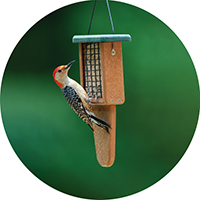
Providing these food sources in accessible locations, often on tree trunks or specialized feeders designed to accommodate their clinging habits, can significantly increase the likelihood of attracting a diverse array of woodpeckers, including species like the Downy, Hairy, Red-bellied, and Northern Flicker.

Broader Implications and Conservation Considerations
The study of woodpecker adaptations offers valuable insights into biomechanics, material science, and evolutionary biology. The intricate design of their skulls and bills has inspired research in fields ranging from helmet design to the development of shock-absorbent materials. Understanding these adaptations can inform conservation strategies by highlighting the importance of providing suitable habitat, particularly mature forests with a variety of tree species that can support woodpecker populations and their ecological functions.
The continued presence of healthy woodpecker populations serves as an indicator of a healthy environment. Threats to their habitat, such as deforestation, habitat fragmentation, and the use of pesticides that reduce insect prey, can have cascading negative effects on both woodpecker populations and the broader ecosystems they inhabit. Therefore, conservation efforts focused on preserving natural landscapes and promoting sustainable forestry practices are crucial for ensuring the long-term survival of these fascinating birds. The ongoing scientific exploration of their unique biology not only enriches our understanding of the natural world but also underscores the interconnectedness of species and their environments.
