
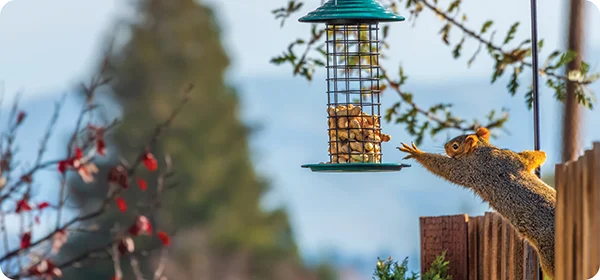
The persistent challenge of sharing backyard bird feeders with an array of wildlife, from agile squirrels to flocks of "nuisance" birds, is a familiar predicament for many nature enthusiasts. While the desire to provide sustenance for feathered friends is commendable, the inevitable arrival of uninvited guests can test the patience of even the most dedicated hobbyist. Fortunately, a growing body of expertise and innovative solutions are available to help reclaim feeders and ensure a harmonious coexistence between humans and the natural world in our backyards. This article delves into practical strategies and expert insights for managing these common backyard wildlife encounters, drawing upon the knowledge base of organizations dedicated to backyard bird feeding.
The Age-Old Dilemma: Sharing the Buffet
At its core, the issue stems from a fundamental aspect of animal behavior: the drive to find food. For many wild creatures, particularly squirrels and certain bird species, a backyard bird feeder represents an easily accessible, high-value food source. This abundance, while beneficial to the intended avian visitors, can quickly become a source of frustration for homeowners. The sheer volume of seed consumed by squirrels, coupled with their potential to damage feeders, and the displacement of smaller, preferred bird species by larger, opportunistic flocks, necessitates proactive management.
The phenomenon is not new. For decades, as more individuals have embraced backyard bird feeding as a hobby and a way to connect with nature, the challenges of wildlife competition have evolved. Early attempts at managing these encounters often involved reactive measures. However, a shift towards more proactive and humane solutions has gained traction, driven by a greater understanding of wildlife behavior and the development of specialized products designed to deter unwanted visitors without causing harm. Organizations like Wild Birds Unlimited have been at the forefront of educating the public on these effective strategies.
Strategic Defense: Baffling Squirrels and Other Mammals
Squirrels, with their remarkable agility and problem-solving capabilities, are often the most significant mammalian challenge for bird feeder enthusiasts. Their ability to leap considerable distances and climb various surfaces makes them formidable adversaries. However, the strategic deployment of baffles can prove highly effective.
Pole-Mounted Feeder Solutions
For feeders mounted on poles, the installation of a "stovepipe baffle" is a widely recommended solution. These smooth, metal cylinders, typically at least 6 inches in diameter, are designed to prevent squirrels from ascending the pole. Crucially, their placement is key to their efficacy. The baffle should be positioned at least five feet above the ground. Furthermore, the entire pole system should be situated at a minimum of 10 feet away from any potential launching points, such as trees, bushes, fences, or other structures. This buffer zone ensures that squirrels cannot jump from an adjacent surface onto the pole or directly onto the feeder. When installed correctly, this setup effectively transforms a pole-mounted feeder into a squirrel-proof bird feeder.
Hanging Feeder Defenses
Feeders hung from trees, accessible only from above, present a different set of challenges. In these scenarios, a "domed squirrel baffle" is often the preferred method. This baffle is installed directly above the feeder, suspended from the hanging mechanism. Its design obstructs squirrels from climbing down the hanging chain or wire, effectively blocking their access to the feeder. While these feeders are typically tube or hopper style, the domed baffle provides an overhead barrier that squirrels find difficult to circumvent.
Exclusion Cages: A Physical Barrier
Another robust method for deterring squirrels and larger nuisance birds involves the use of exclusion cages. These cages, available in various sizes and dimensions, are retrofitted around existing feeders. They feature openings large enough for smaller birds to pass through but too small for squirrels or larger avian species to access the feeding ports. This physical barrier creates a protected feeding zone for the intended smaller visitors. The effectiveness of these cages lies in their ability to selectively allow access based on size, thereby preserving the feeding opportunities for desirable bird species.

Addressing Avian Competition: Favoring Desired Species
While squirrels are a common concern, the congregation of certain bird species can also disrupt the intended purpose of backyard feeders. These "nuisance" birds, by definition, are those that gather in such numbers or by such means that they prevent preferred bird species from feeding and rapidly deplete the available food supply. The key to managing these situations lies in a nuanced approach to food selection and feeder design.
Strategic Food Choices
The type of birdseed offered plays a pivotal role in attracting some species while discouraging others. For instance, cracked corn and millet are highly attractive to many larger, less desirable bird species. By avoiding these seeds and opting for alternatives, enthusiasts can subtly shift the demographic of their feeder visitors.
- Safflower Seed: This small, white seed is a notable example of a food that appeals to many native songbirds, such as cardinals, chickadees, and finches, while being largely ignored by blackbirds and starlings. Its bitter taste, imperceptible to many favored species, acts as a deterrent to the more opportunistic birds.
- Pure Suet: While suet blends often contain ingredients that attract a wide variety of birds, including starlings, pure suet cakes are a more selective offering. These are particularly attractive to woodpeckers, nuthatches, and titmice, while starlings tend to bypass them. Offering pure suet can therefore encourage the presence of these more sought-after species.
Feeder Engineering for Selectivity
Beyond food choices, the design of the feeders themselves can be engineered to favor smaller birds. Many modern feeders incorporate features that make them less accessible to larger species.
- Weight-Sensitive Feeders: These innovative feeders feature a mechanism that closes off the feeding ports when a certain weight is applied. This effectively prevents heavier birds, such as starlings or grackles, from feeding while allowing smaller birds, whose weight does not trigger the mechanism, to access the seed.
- Caged Feeders: Similar in principle to the exclusion cages for squirrels, feeders with integrated cages are designed with mesh openings that permit small birds to enter but exclude larger ones.
- Perch Design: Feeders with short perches, or even no perches at all, can also contribute to selectivity. Shorter perches make it more difficult for larger birds to balance and feed, while smaller birds can more easily perch on or cling to the feeder.
Expert Guidance and Resources
Navigating the complexities of backyard wildlife management can be daunting. Fortunately, resources and expert advice are readily available. Certified Bird Feeding Specialists, often found at specialized stores like Wild Birds Unlimited, are trained to provide personalized recommendations based on the specific challenges and desired outcomes of individual backyard habitats. These specialists can offer hands-on demonstrations of various solutions and help select the most appropriate products.
Furthermore, educational platforms such as podcasts offer accessible and in-depth information on a range of bird feeding topics. For instance, episodes dedicated to "Critter Solutions" provide listeners with practical tips and insights from experienced professionals, further empowering them to create successful and enjoyable backyard feeding experiences.
The Broader Impact: Fostering Biodiversity and Connection
Effectively managing wildlife at backyard feeders has implications that extend beyond simply enjoying a clear view of a cardinal. By implementing these strategies, individuals contribute to a more balanced ecosystem within their immediate environment. Ensuring that smaller, native bird species can access food without constant competition allows for healthier populations and greater biodiversity.
Moreover, these efforts foster a deeper connection with nature. The process of observing wildlife, understanding their behaviors, and implementing thoughtful solutions creates a more rewarding and educational experience for the entire household. It transforms a potential point of conflict into an opportunity for learning and appreciation. The ability to attract and sustain a variety of bird species, while coexisting peacefully with other local wildlife, underscores the positive impact that informed and engaged individuals can have on their local environment. The ongoing evolution of critter solutions reflects a growing societal awareness of our role in supporting and respecting the natural world, even within the confines of our own backyards.
