
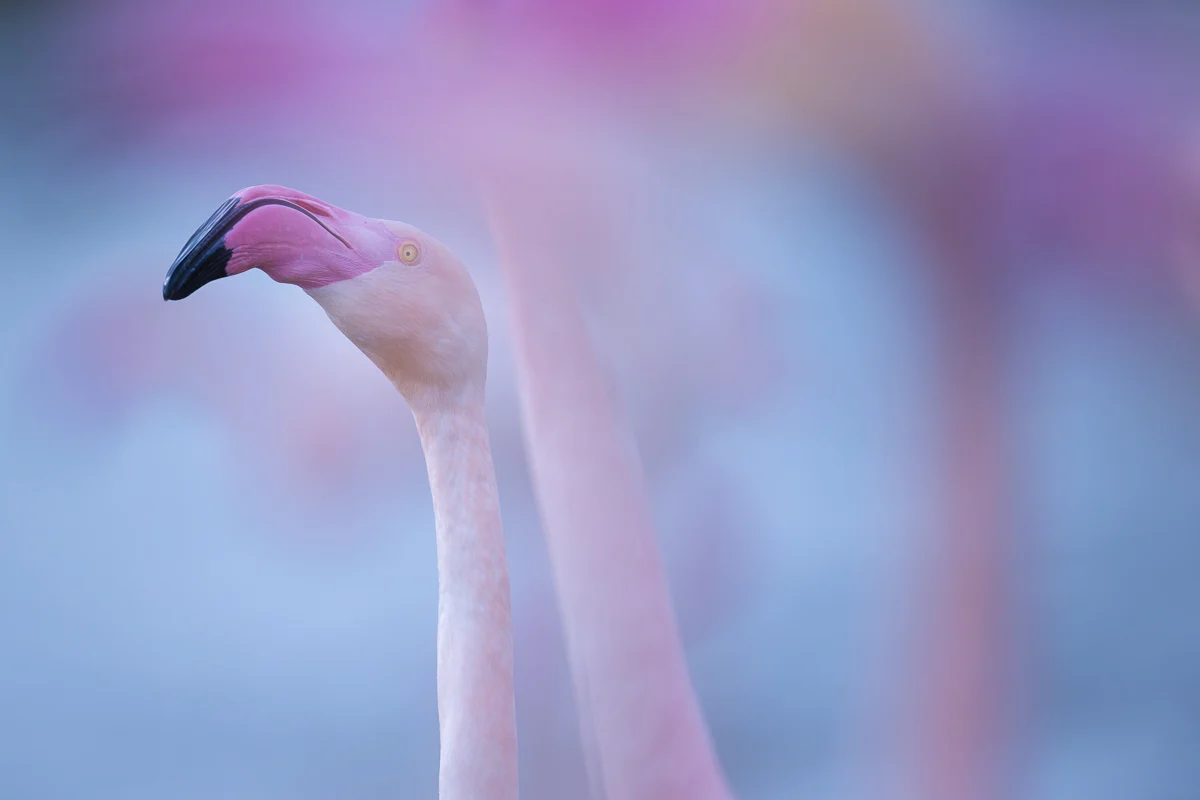
In the nuanced world of photography, what lies outside the sharp plane of focus often plays a more profound role than merely serving as background. The deliberate application of foreground blur in wildlife imagery is emerging as a sophisticated artistic technique, transcending mere compositional aesthetics to imbue photographs with depth, emotion, and an almost painterly quality. This approach challenges the conventional pursuit of absolute sharpness across an entire frame, instead leveraging optical softening to guide the viewer’s eye, evoke specific moods, and suggest emotional layers that pure clarity might fail to convey. At its essence, photography is the art of transforming fleeting moments into enduring, meaningful images, and foreground blurs serve as subtle yet potent tools in this transformative process, elevating a simple scene into an expressive narrative.
The Artistic Legacy of Soft Focus: A Brief History

While foreground blur might seem like a contemporary trend in wildlife photography, the artistic use of soft focus has a rich history in the broader photographic landscape. Dating back to the late 19th and early 20th centuries, the Pictorialist movement famously embraced soft focus and painterly effects to elevate photography from mere documentation to a fine art. Pioneering photographers like Alfred Stieglitz and Edward Steichen often employed techniques that diffused light and softened edges, seeking to evoke emotion and subjective interpretation rather than objective reality. This historical context underscores a fundamental truth: photographic expression is not solely dependent on technical sharpness but on the artist’s ability to manipulate light, focus, and composition to communicate a deeper message. The modern application of foreground blur in wildlife photography echoes this artistic lineage, consciously moving beyond clinical observation to embrace a more evocative and interpretive style.
Technical Foundations: Mastering the Art of Diffusion
Achieving effective foreground blur is not accidental; it relies on a firm understanding of photographic optics. The primary technical factors at play include aperture, focal length, and the distances between the camera, the foreground element, and the subject. A wider aperture (smaller f-number, e.g., f/2.8, f/4) creates a shallower depth of field, rendering elements outside the focal plane more blurry. Telephoto lenses, commonly used in wildlife photography, inherently compress perspective and contribute to a more pronounced background and foreground blur due to their longer focal lengths. Crucially, the distance of the foreground element from the camera is paramount: the closer the element is to the lens and the further the subject is from that element, the more pronounced and ethereal the blur will appear. This interplay of variables allows photographers to control the degree of abstraction, from a subtle haze to an almost painterly wash of colour and form. Manual focus often becomes indispensable when employing foreground blurs, as autofocus systems can struggle to lock onto the intended subject through a deliberately blurred obstacle. While this might lead to a slight perceived reduction in overall sharpness, the artistic gain in mood and atmosphere often far outweighs this minor technical trade-off.

Mystery and Revelation: The Psychological Impact of Foreground Blurs
Foreground blurs are a deliberate photographic technique involving the strategic placement of an object or element between the camera and the main subject. This element, rendered out of focus, creates soft, ethereal blurs that partially drape over the subject without diminishing its visual weight. Far from being a distraction, these blurs enhance the image by adding layers of depth, space, and a profound sense of mystery and emotional nuance.
When skillfully executed, foreground blurs serve as visual pathways, guiding the viewer’s gaze along a meticulously composed trajectory. The main subject remains the focal point of this journey, yet the presence of the blurs introduces subtle cues about the environment, the prevailing mood, or even the narrative context of the scene. It transforms the photograph from a mere compositional trick into a powerful storytelling tool, inviting viewers to engage more intimately with the image. This technique can also infuse an image with a painterly quality, evoking a sense of authenticity and artistic intent, much like a canvas meticulously built up by an artist. The partial obscuration creates a sense of discovery, as if the viewer is peering through a natural veil, reinforcing the wildness and often the elusive nature of the subject.

Working with the Environment: Natural Elements as Artistic Tools
Wildlife photographers are often at the mercy of their environment, and the beauty of foreground blurs lies in their ability to harness natural elements creatively. Experimentation with readily available components is key. This can include plant-based elements such as branches, leaves, flowers, or tall grasses, which can form a soft, organic filter. Water, snow, geological features like rocks or sand dunes, other animals, or even dynamic interplay of light and shadow can also be utilized. These elements can either highlight the intended subject or, conversely, eliminate distracting elements from the frame.
Consider the striking photograph of vultures. Captured at a feeding site in the Pyrenees, the only available foreground elements were the birds themselves. The precise overlap of a blurred vulture in the foreground, framing a sharper subject, is a testament to opportunistic composition. While such perfect alignment is rare, the principle encourages photographers to experiment in situations where multiple animals offer possibilities for layered imagery.

Similarly, the image of a Pyrenean capercaillie at its forest lek exemplifies this technique’s power. Soft blurs, created by local shrubs and underbrush, form a natural filter between the bird and the lens. This layer of vegetation not only softens the composition but adds depth and atmosphere, subtly framing the capercaillie without overpowering it. The scene is further enhanced by the low, crepuscular light of early morning – light that casts long shadows and imbues the forest with quiet mystery. In such fleeting moments, when light, subject, and environment align, photography transcends mere documentation to become a compelling narrative.
An image focusing on a goshawk, by contrast, demonstrates a masterful interplay of light and shadow. Through carefully adjusted exposure and a warm white balance, the atmosphere becomes rich and almost tactile. The contrast between illuminated and shaded areas reinforces a sense of three-dimensionality, sculpting the subject within its environment. Beyond its aesthetic appeal, this technique serves a crucial compositional purpose: it naturally guides the viewer’s eye toward the focal point, allowing the image to communicate with both clarity and profound depth. Photographs that skillfully incorporate foreground blurs often lean towards minimalism, yet still convey a strong sense of the surrounding environment. They can even hint at the subject’s relationship with its habitat or suggest the specific moment of capture, thereby revealing insights into the animal’s behaviour and habits. This subtle layering of visual cues allows the viewer to intuit more than what is explicitly shown, fostering a more immersive and interpretive experience of the scene.
The Photographer’s Role: Control, Ethics, and the Art of Waiting

A critical aspect of employing foreground blurs revolves around the degree of control a photographer can exert over the setting. In certain situations, particularly when photographing less skittish species from a hide, the environment might offer natural elements that can be creatively incorporated, or the scene can even be subtly modified to align with an artistic vision. This allows for meticulous planning and execution of a shot. However, in many wildlife photography scenarios, such control is absent. The photographer must approach subjects cautiously, always prioritizing ethical considerations to avoid disturbing the animal. Often, the most effective strategy is patient waiting – the art of observation and anticipation becomes an essential part of the creative process.
These "photographic hunts," characterized by their reactive and often serendipitous nature, are deeply appealing to many wildlife photographers. The unpredictability of the wild, combined with the innate behaviour of the animals, creates a unique interaction that enriches the photographic journey. For many, without this element of genuine wildlife observation, photography would lose much of its inherent appeal. While this approach demands a high tolerance for failure, it frequently yields the most significant and rewarding images. The image of razorbills, for instance, likely captures such a spontaneous moment, where the blurred foreground element organically presented itself, adding a layer of authenticity to the wild encounter.
Genre Suitability: Where Blurs Thrive and Where They Fade

The effectiveness of foreground blurs varies significantly across different photographic genres. It finds its most harmonious application in portrait photography, where the softness of an ethereal atmosphere often aligns perfectly with the intended meaning and emotional resonance of the image. The deliberate softening can enhance the subject’s expression, draw attention to subtle details, and create a sense of intimacy.
Conversely, in highly dynamic scenes – such as birds in flight, mammals in pursuit, or other fast-paced action shots – the speed at which events unfold can render this technique nearly impossible to apply. The brief window of opportunity for capturing the peak action often leaves little room for deliberate compositional intervention with foreground elements. In such cases, the priority shifts to capturing sharp detail and decisive moments, making the precise placement and focus on a foreground blur a secondary, if not entirely absent, consideration. The image of a kite, likely captured in a dynamic moment, showcases that while blurs can occur naturally in such scenes, their deliberate application as a primary compositional tool is far more challenging.
Types of Blur: Shaping the Viewer’s Experience

The strategic placement of objects used to create foreground blurs offers a spectrum of artistic control. Objects can be positioned very close to the camera, increasing the level of abstraction and creating a dreamlike, impressionistic effect. Alternatively, placing elements closer to the subject maintains more of their inherent form, allowing them to contribute valuable content to the photograph, especially if they are contextually relevant.
Photographers can also create "veils" that subtly cover the entire image, lending a consistent soft atmosphere. Another approach involves using blur to partially obscure specific parts of the animal, often while carefully preserving the subject’s gaze – a powerful technique to maintain connection with the viewer while adding intrigue. A third distinction involves seeking "look-throughs," where the camera is aimed through a small, natural opening in the foreground, creating a framed effect. When a "look-through" isn’t feasible, "look-overs" involve filling the bottom of the frame with a blurred foreground, anchoring the composition while adding depth. The image of a fallow deer beautifully demonstrates how foreground elements can partially obscure the subject, inviting the viewer to look closer and complete the scene in their mind’s eye.
Broader Impact and Implications for Wildlife Photography

The increasing adoption of foreground blurs by leading wildlife photographers signals a significant shift in the aesthetic priorities of the genre. Historically, wildlife photography often prioritized scientific accuracy and documentary clarity. While these remain vital, there is a growing recognition that evocative, artistic imagery can be equally, if not more, effective in connecting audiences with the natural world. By adding emotional depth and a sense of wonder, these photographs can foster a stronger appreciation for wildlife and conservation efforts. When an image resonates emotionally, it transcends mere information to become a powerful advocate for its subject.
For aspiring photographers, mastering foreground blurs offers a pathway to developing a distinctive artistic voice. It encourages a deeper engagement with the environment, demanding creative problem-solving and an eye for subtle compositional opportunities. The technique is also remarkably versatile, being fully compatible with other creative photographic approaches such as over- or underexposure, manipulating movement with shutter speed, backlighting, double exposures, and abstraction. This compatibility allows photographers to layer multiple artistic techniques, creating images that are truly unique and impactful. The image of a song thrush, for instance, might combine subtle foreground blur with interesting light, illustrating how complementary techniques build complexity and narrative.
Conclusion: An Invitation to Experiment

Foreground blurs represent a creative technique with broad applicability and considerable artistic appeal. There are virtually no limitations to their use, provided the photographer can exert some degree of control over their position relative to the subject and its environment. Creativity often blossoms through trial and error, particularly within familiar surroundings. However, foreground blurs also allow for significant improvisation and inspiration in diverse contexts, offering a fresh and original perspective on even frequently photographed species.
This technique has been embraced by masters, visionaries, and influential photographers who infuse their work with a unique aesthetic. It encourages a departure from rigid adherence to technical perfection, instead advocating for a more intuitive and expressive approach to capturing the wild. By learning to see beyond the sharp edges and embracing the subtle power of diffusion, photographers can unlock new dimensions of storytelling and emotion in their wildlife imagery. The invitation, therefore, is extended to all photographers: give foreground blurs a try, and discover the profound impact they can have on your visual narratives.
