
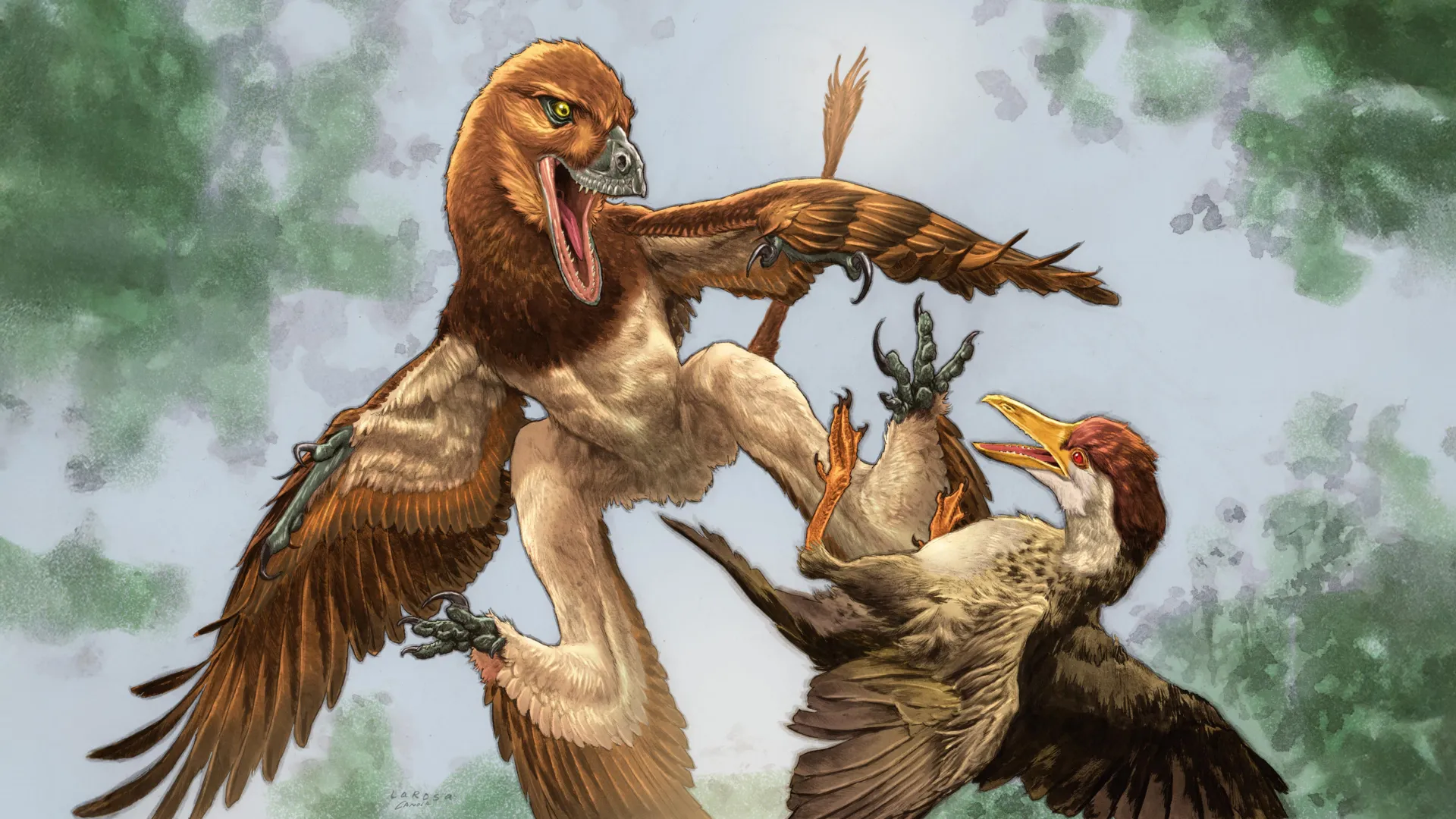
A groundbreaking discovery in the fossil-rich Changma Basin of northwestern China has unveiled a previously unknown dinosaur species, Jian changmaensis, which paleontologists now believe provides a definitive answer to a decades-old enigma: the origin of hundreds of prehistoric bird remains found compressed into pellet-like masses. For years, scientists at this remarkable site had unearthed these peculiar clusters of shattered avian bones, strongly resembling the regurgitated pellets produced by modern owls, indicating the presence of a larger, avian-predating animal. However, direct evidence of such a predator had remained elusive, leaving a critical gap in the understanding of the ancient ecosystem. The recent identification of Jian changmaensis, a formidable feathered relative of Velociraptor, published in the Annals of Carnegie Museum, not only introduces a significant new species to the paleontological record but also reconstructs a crucial predator-prey dynamic that shaped the early evolution of birds in the Cretaceous period. This discovery offers profound insights into the complex food webs of Mesozoic China and refines our understanding of the diverse forms and behaviors of feathered dinosaurs.
The Enigma of the Bird Bone Accumulations
The Changma Basin, situated in China’s Gansu province, has long been celebrated as an exceptionally rich fossil lagerstätte, particularly renowned for its exquisitely preserved avian fossils dating back to the Early Cretaceous period, approximately 120 million years ago. Paleontological expeditions to this site have yielded an unparalleled abundance of early bird specimens, providing a crucial window into the initial diversification and ecological roles of avialans – the lineage leading to modern birds. Amidst these avian treasures, researchers repeatedly encountered perplexing concentrations of fragmented bird bones. These accumulations were not random scatterings but organized masses, often tightly compressed and exhibiting a characteristic pattern of breakage. The most striking resemblance was to the indigestible remains regurgitated by extant birds of prey, such as owls, hawks, and falcons, known as pellets. These modern pellets typically contain bones, fur, feathers, and other hard parts of their prey that cannot be digested, offering a precise record of their diet. The discovery of similar structures in the ancient Changma sediments strongly suggested that a powerful predator, likely a non-avian dinosaur, was preying on these early birds and processing their remains in a comparable manner.
For years, the identity of this ancient predator remained a tantalizing mystery. Scientists speculated about various carnivorous dinosaurs that might have inhabited the region, but without direct association or definitive fossil evidence within the same stratigraphic layers, any attribution remained speculative. The Changma Basin’s fossils, embedded in fine-grained lacustrine (lake) sediments, typically preserve delicate structures like feathers and soft tissues, making the presence of robust bone pellets even more intriguing. The sheer volume of bird remains, coupled with the distinctive pellet-like preservation, underscored the importance of this predator in shaping the avian community of the Changma Basin. Understanding who preyed on whom is fundamental to reconstructing ancient food webs, deciphering ecological pressures, and ultimately, comprehending the evolutionary trajectories of both predator and prey. The ongoing search for this missing predator became a central focus for researchers exploring the Changma fossil site, representing a key puzzle piece in the broader narrative of Mesozoic life.
Unveiling Jian changmaensis: The Missing Link
The long-standing mystery began to unravel with the discovery of a new, previously unknown dinosaur species from the very same fossil bed that yielded the enigmatic bird bone pellets. The specimen, comprising distinctive arm and shoulder bones, provided enough morphological detail for researchers to classify it as a new taxon. Led by senior author Jingmai O’Connor, associate curator of fossil reptiles at the Field Museum in Chicago, and corresponding author Matt Lamanna, Mary R. Dawson Curator of Vertebrate Paleontology and senior dinosaur researcher at Carnegie Museum of Natural History, the research team meticulously analyzed the fossil. Their findings, published in the prestigious Annals of Carnegie Museum, formally describe the new species, Jian changmaensis, and present compelling evidence for its role as the primary suspect behind the avian bone accumulations.
"Scientists have found these weird, broken-up clusters of bird bones at this site, and we didn’t know what made them. This new microraptor dinosaur, Jian changmaensis, is our best guess," explains O’Connor. Her reasoning is rooted in a comprehensive assessment of the available fossil evidence and ecological context. The crucial factors are multi-faceted: Jian changmaensis is the only non-avian dinosaur carnivore identified at this particular Changma site, it was significantly larger than any of the bird species found there, and its anatomical features align with the predatory capabilities required to hunt and consume such prey. This combination makes it an exceptionally strong candidate for the elusive avian predator. The robust structure of its arm and shoulder bones suggests a powerful musculature capable of grappling and subduing prey, while its classification as a dromaeosaur points to a carnivorous diet. The discovery not only identifies a new species but also resolves a significant paleontological cold case, linking a previously unknown predator to a well-documented pattern of predation in the ancient past. The implications extend beyond simply naming a new dinosaur; it fundamentally alters our understanding of the Early Cretaceous ecosystem of the Changma Basin.
A Feathered Relative of Velociraptor: Anatomy and Lifestyle
Jian changmaensis belongs to the dromaeosaurid family, a group of theropod dinosaurs famously depicted in popular culture, most notably by the genus Velociraptor. However, the scientific understanding of dromaeosaurs paints a picture far removed from their cinematic portrayals. Unlike the scaly, reptilian monsters of fiction, real dromaeosaurs, including Velociraptor and Jian, were sophisticated, feathered predators. They were typically agile, bipedal carnivores characterized by a large, sickle-shaped claw on the second toe of each foot, which they likely used to subdue prey. Their bodies were covered in feathers, ranging from downy insulation to long, wing-like structures on their limbs and tails, indicating a close evolutionary relationship with birds. This feathered integument highlights that today’s birds are, in fact, the direct descendants and only surviving lineage of dinosaurs, having successfully endured the cataclysmic asteroid impact that struck Earth approximately 66 million years ago. Long before this mass extinction event, during the Jurassic and Cretaceous periods, a vast array of bird species coexisted with a diverse menagerie of other dinosaur groups, including their dromaeosaur relatives.
Within the dromaeosaurid family, Jian changmaensis is further classified into a specialized subgroup known as microraptors. Most microraptors were relatively small dinosaurs, with some species barely exceeding the size of a modern crow. Their defining characteristic was the presence of long, symmetrical feathers on both their forelimbs and hind limbs, giving them the appearance of having "four wings." This unique morphology set them apart and has been a subject of extensive research regarding the evolution of flight. Jian changmaensis, however, stands out from its microraptor kin due to its impressive size. O’Connor emphasizes this point, stating, "Jian is one of the biggest microraptor specimens that has ever been found. The piece of its upper arm bone that we have is about 4 inches long, so the entire dinosaur probably had something like a four-foot wingspan, around the size of a barn owl." This makes Jian a significantly larger and potentially more formidable predator than other known microraptors, placing it at the apex of the local food chain for the birds it preyed upon. Its robust arm and shoulder bones, which are crucial for generating power and controlling movement in feathered limbs, further support its capacity for a predatory lifestyle. The estimated wingspan of four feet suggests an animal of considerable bulk and aerial dexterity, capable of pursuing and capturing avian prey. This larger size also positions Jian to effectively process prey in a manner that would result in the observed bone pellets, requiring a digestive system capable of handling and then regurgitating substantial bone fragments.
The Mechanics of a Four-Winged Glider
While the presence of extensive feathers on both the forelimbs and hind limbs of Jian changmaensis gives it the appearance of having four wings, scientists are careful to distinguish its aerial capabilities from those of modern birds. Like other microraptors, Jian was most likely adapted for gliding rather than true, powered flight. Powered flight, as seen in birds, requires a complex interplay of muscular strength, aerodynamic efficiency, and specialized bone structures to generate lift and thrust for sustained flight. Gliding, by contrast, relies on using aerodynamic surfaces to control a descent from a higher point, leveraging gravity and air currents for controlled movement through the air.
"Jian and the other microraptors probably weren’t capable of true, powered flight, but they could probably glide like a flying squirrel," O’Connor elaborates. This analogy provides a vivid mental image of Jian‘s probable locomotion. Modern flying squirrels use a patagium—a furry membrane stretching between their limbs and body—to create a broad surface area, allowing them to glide significant distances between trees. Similarly, Jian‘s extensive feather coverage on all four limbs would have created substantial aerodynamic surfaces, enabling it to launch from elevated positions, such as trees or cliff faces, and glide down to attack unsuspecting prey or traverse its arboreal habitat. This mode of locomotion would have provided a distinct advantage in hunting agile, arboreal birds, allowing it to approach silently and rapidly from above. The robust shoulder and arm bones, while indicative of strength, do not possess the specific anatomical hallmarks associated with the powerful downstrokes of true avian flight, further supporting the gliding hypothesis. Biomechanical studies on other microraptors have shown that their hindlimb feathers would have created significant drag, making flapping flight energetically inefficient. Instead, these structures would have been optimally configured for maximizing lift during a controlled descent. This adaptation suggests Jian was an agile predator, capable of navigating complex arboreal environments, launching surprise attacks, and likely consuming its avian prey on solid ground before regurgitating the indigestible remains.
The name Jian changmaensis itself reflects both the dinosaur’s striking appearance and its geographical origin. In Chinese mythology, "Jian" refers to a mythical winged creature, often depicted with a single wing, requiring another Jian to fly together – a poetic nod to its unique four-winged morphology and perhaps its need for an environment conducive to gliding. The species epithet, changmaensis, directly references the Changma Basin in China’s Gansu province, the very location where this pivotal fossil was unearthed. This naming convention underscores the cultural and scientific significance of the discovery, intertwining ancient lore with modern paleontological revelation.
Changma Basin: A Window into Early Bird Ecosystems
The discovery of Jian changmaensis represents a critical advancement in understanding the ancient ecosystem of the Changma Basin, an area already celebrated for its unparalleled insights into early avian evolution. Prior to this find, the fossil record at Changma primarily consisted of a staggering abundance of early bird fossils, sometimes numbering in the hundreds, alongside fragmentary remains of plants and other invertebrates. While this provided invaluable data on the diversity and morphology of early birds, the absence of a clear top predator left a significant ecological void. An ecosystem is a complex web of interactions, and the role of predators is paramount in shaping population dynamics, driving natural selection, and maintaining ecological balance.
"Jian changmaensis reveals that non-avian dinosaurs lived in what is now the Changma Basin, an area famous for its fossil birds," states Matt Lamanna. "Our team has recovered more than a hundred bird fossils at Changma, but only this single non-avian dinosaur specimen. Jian provides critical new insight into the biological history of the Changma region and the ecological context of the ancestors of today’s birds." This statement highlights the unique significance of Jian. Its solitary presence as the only identified non-avian carnivore at the site underscores its potential apex predator status within that specific environment. It was a dominant force, likely regulating the populations of the diverse bird species that flourished in the region. The discovery allows paleontologists to reconstruct a far more complete and dynamic picture of the ancient Changma landscape, imagining Jian gliding through forested areas or ambushing prey near ancient lake shores, where many of the bird fossils have been found. The context provided by Jian transforms the Changma Basin from merely a repository of avian fossils into a vibrant, interacting ecosystem where predator and prey played out their evolutionary drama. This level of detail in ecological reconstruction is rare for Mesozoic sites, making Changma and the Jian discovery particularly valuable for understanding the intricate life processes of the Early Cretaceous.
Broader Implications for Avian Evolution and Dinosaurian Diversity
Beyond its immediate impact on the Changma Basin’s ecological reconstruction, the discovery of Jian changmaensis offers profound insights into the broader narrative of avian evolution and the diversification of feathered dinosaurs. Birds, as we know them today, are the direct descendants of avian dinosaurs, a lineage that successfully navigated the geological upheavals and mass extinctions that wiped out their non-avian counterparts. Understanding the characteristics and behaviors of their close non-avian relatives, such as dromaeosaurs and microraptors, is crucial for tracing the evolutionary path that led to the unique adaptations of modern birds.
The existence of a large, gliding microraptor like Jian that preyed on early birds further complicates and enriches our understanding of the Mesozoic avian landscape. It suggests a dynamic co-evolutionary arms race between early birds developing flight capabilities and their dinosaurian predators developing counter-strategies, such as gliding or arboreal hunting. This constant pressure would have been a powerful driver of evolutionary change, contributing to the incredible diversity and specialization seen in both groups. The fact that Jian was a microraptor, a group known for its experimentation with aerial locomotion, adds another layer of complexity. It illustrates the wide array of ecological niches occupied by feathered dinosaurs and the varied evolutionary paths they explored, not all of which led to powered flight or modern birds. This discovery helps to bridge gaps in the fossil record, illustrating how different dinosaur lineages experimented with feathered wings for various purposes, from display to gliding, long before the advent of true avian flight as we understand it today.
"You cannot understand life on the planet today without looking at its origins," O’Connor stresses. "Birds are arguably the most successful group of land-dwelling vertebrate animals on Earth today. Learning about early birds and their close non-bird dinosaur relatives gives us a better understanding of what made the group of birds that survived so special." This statement encapsulates the profound significance of such discoveries. By peering into these ancient ecosystems, scientists can identify the key innovations, ecological pressures, and evolutionary advantages that ultimately allowed one lineage of dinosaurs – the birds – to thrive and diversify into the myriad forms we see across the globe today. The study of predator-prey dynamics, exemplified by Jian changmaensis and its avian prey, provides tangible evidence of natural selection at work, illustrating how constant environmental pressures refined traits and led to the astonishing biodiversity of Earth’s past and present. Jian changmaensis serves as a powerful reminder of the intricate relationships and complex evolutionary tapestry that defined the age of dinosaurs, continually shaping the biodiversity of our planet.
