
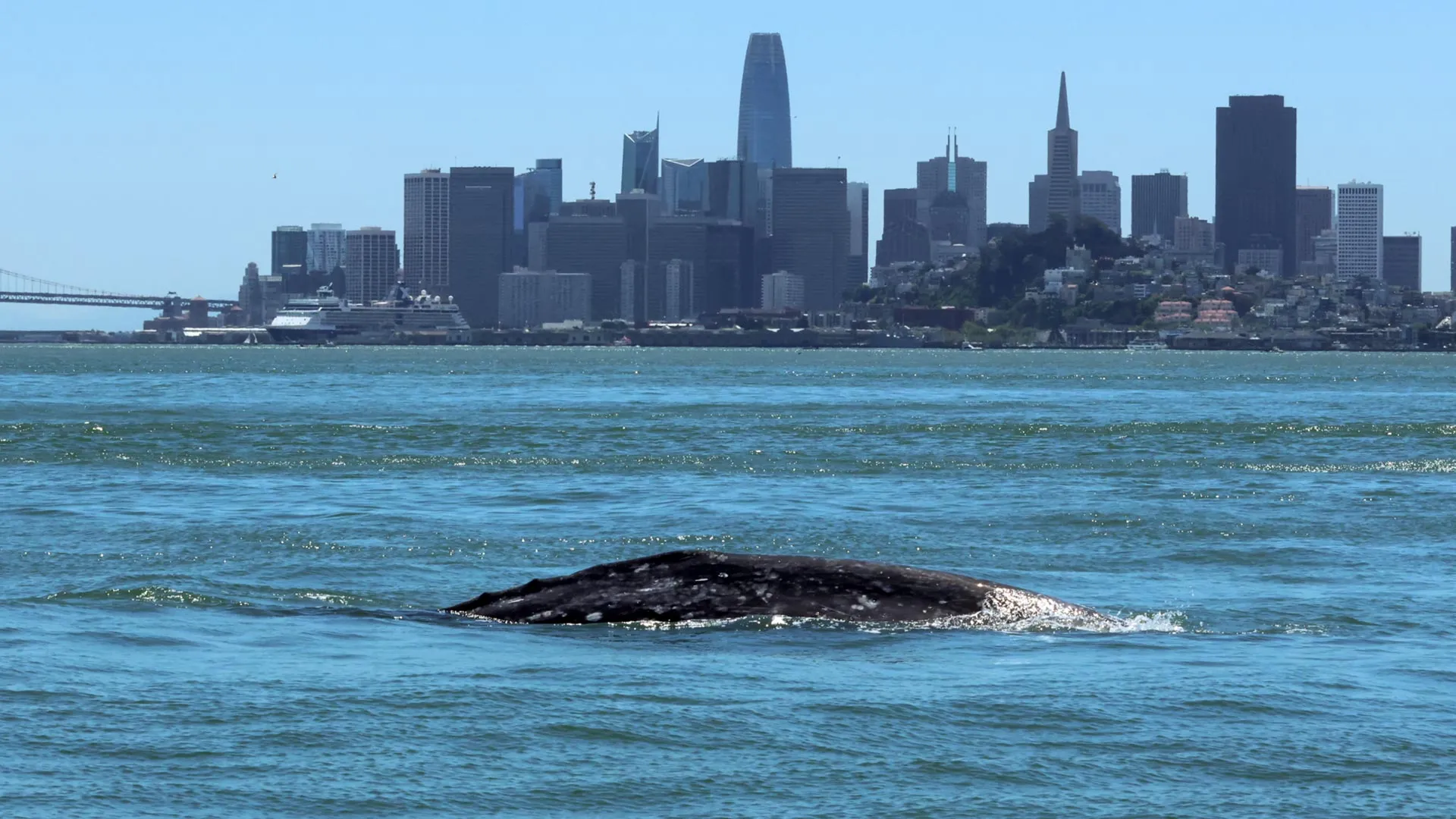
The majestic gray whale, renowned for undertaking one of the longest migrations of any mammal on Earth between the food-rich Arctic waters and the warm, sheltered lagoons of Baja Mexico, is confronting unprecedented challenges. As global climate change inexorably alters ocean conditions, these iconic cetaceans are exhibiting alarming and unexpected behaviors. In a concerning development, a growing number of gray whales have been observed deviating from their traditional migratory paths, venturing into unfamiliar and highly perilous territories, notably the intensely trafficked waters of San Francisco Bay. Research into an unusually high incidence of whale deaths within this region has revealed a stark reality: nearly 20% of the gray whales documented entering the Bay did not survive, with a significant proportion succumbing to fatal vessel strikes. This represents a critical juncture for the species, underscoring the severe pressures exerted by a rapidly changing marine environment and the direct threats posed by human activity.
The Perilous Passage Through San Francisco Bay
The inherent characteristics of gray whales, combined with the unique dynamics of San Francisco Bay, create a particularly hazardous environment for these transient visitors. "Gray whales have a low profile to the water when they surface, and this makes them difficult to see in conditions like fog which are common to San Francisco Bay," explained Josephine Slaathaug, a researcher from Sonoma State University and lead author of a pivotal article published in Frontiers in Marine Science. The challenges are compounded by the Bay’s status as a major maritime hub. "Additionally, San Francisco Bay is a highly trafficked waterway, and the Golden Gate Strait serves as a bottleneck through which all traffic and whales must enter and exit," Slaathaug added, painting a vivid picture of the constricted, high-risk environment. This confluence of factors transforms the Bay from a potential refuge into a lethal trap for many of these disoriented whales.
A Historic Migration Under Siege: The Gray Whale’s Annual Odyssey
To fully grasp the gravity of the situation in San Francisco Bay, it is crucial to understand the typical life cycle and migratory patterns of the Eastern North Pacific gray whale (Eschrichtius robustus). These magnificent animals embark on an epic annual journey spanning approximately 10,000 to 12,000 miles round trip, a testament to their endurance. Their odyssey begins in the nutrient-rich Arctic and sub-Arctic waters of the Bering, Chukchi, and Beaufort Seas, where they spend the summer months gorging on amphipods, krill, and other small invertebrates found in the sediment. These northern feeding grounds are vital for building up the thick blubber reserves necessary to sustain them through their long migration and subsequent breeding season.
As autumn approaches and Arctic ice begins to form, the whales commence their southward migration, traveling along the North American coastline to the warm, shallow lagoons of Baja California, Mexico. Here, they calve and mate during the winter months, relying almost entirely on their stored energy reserves, as feeding is rare during this period. The mothers nurse their young, and by spring, the cycle reverses, with the whales heading back north to their Arctic feeding grounds. Historically, this migration has been a finely tuned process, deeply ingrained over millennia, with specific routes and timings dictated by environmental cues and the availability of resources. San Francisco Bay was not a recognized part of this intricate, instinct-driven itinerary.
Climate Change: Reshaping Ocean Ecosystems and Whale Behavior
The primary driver behind the gray whales’ unprecedented deviation is the pervasive impact of climate change on their crucial Arctic feeding grounds. Warming ocean conditions are fundamentally disrupting the delicate balance of marine ecosystems, leading to a cascade of negative effects on the whales’ primary food sources. Melting sea ice, shifts in ocean currents, and rising water temperatures are altering the distribution and abundance of the benthic invertebrates that gray whales depend upon. Scientists have observed a significant decline in the quality and quantity of these food sources, leaving whales increasingly vulnerable to malnutrition.
This ecological upheaval has precipitated a severe decline in the Eastern North Pacific gray whale population. According to data from the National Oceanic and Atmospheric Administration (NOAA), the population has plummeted by more than half since 2016, from an estimated peak of around 27,000 individuals to approximately 14,500 by 2023. This drastic reduction prompted NOAA to declare an "Unusual Mortality Event" (UME) for gray whales along the Pacific coast of North America in 2019, a designation that triggers an intensive scientific investigation into the causes of elevated strandings and deaths. A key indicator of the population’s stress is the observed rarity of calves, signaling a significant reduction in reproductive success due to the poor physical condition of breeding females.
A New, Dangerous Chapter: Gray Whales in San Francisco Bay
The historical absence of gray whales from San Francisco Bay as a regular feeding ground makes their recent presence all the more alarming. The shift began to manifest noticeably in 2018, when whales started appearing in the Bay with increasing frequency, coinciding with a troubling rise in local whale deaths. This emergence of what researchers have termed "Bay Grays" prompted scientists to launch a dedicated effort to understand this novel behavior and determine whether these were returning individuals or desperate, one-time visitors.
The research initiative, spanning from 2018 to 2025, involved a multi-pronged approach to track and identify individual whales. Researchers meticulously built a catalog of individual whales, utilizing opportunistic sightings and photographs generously contributed by the public between 2018 and 2023. This citizen science component proved invaluable in initial data collection. From 2023 to 2025, more structured surveys were conducted, providing systematic observations. These visual records were then cross-referenced with necropsy data from stranded whales found within the region. Identification relied heavily on unique markings, scars, and pigmentation patterns on each whale’s skin, much like a fingerprint. However, researchers acknowledge a limitation: these markings can fade or become obscured after death, potentially leading to missed matches between living and deceased individuals.
Unmasking the "Bay Grays": Findings from the Research
The study yielded critical insights into the nature of these Bay Grays. In total, 114 individual whales were documented within San Francisco Bay during the comprehensive study period. A striking finding was that only four of these individuals were observed in more than one year. This low rate of return suggests that for the vast majority, the Bay is not becoming a habitual feeding ground but rather an emergency stop. Scientists hypothesize that the Bay may function as a desperate, last-resort feeding area for whales in poor physical condition. This theory is supported by observations of unusually thin individuals foraging in other nontraditional habitats along the Pacific coast, indicating a broader pattern of nutrient stress driving whales into suboptimal and often dangerous environments.
The desperate search for sustenance, however, comes at an incredibly high cost. Despite using the Bay as a potential feeding refuge, a significant number of these whales do not survive their perilous detour. Between 2018 and 2025, a grim total of 70 gray whales were found dead in the San Francisco Bay region. Of these, a staggering 30 were confirmed to have been struck by vessels, highlighting the severe risk posed by the Bay’s heavy maritime traffic. Among the remaining whales where a definitive cause of death could be determined, many displayed clear signs of malnutrition, reinforcing the hypothesis that starvation is a critical underlying factor. Researchers were able to match 21 of the 45 identifiable dead whales to individuals previously documented in their catalog, providing a direct link between Bay visitors and local fatalities.
Bekah Lane of the Center for Coastal Studies, a co-author of the study, emphasized the alarming mortality rates. "At least 18% of the individuals identified in San Francisco Bay later died in the area," Lane stated. "Our broader analysis of local strandings both inside and outside San Francisco Bay found that over 40% of these whales died of trauma from vessels." These figures underscore a dire situation where weakened whales, driven by hunger into a busy urban waterway, face a double threat of starvation and fatal collisions. It is plausible that whales already compromised by malnutrition are less agile and less able to detect and avoid oncoming ships, creating a tragic synergy of threats.
An Urgent Call for Action: Protecting Vulnerable Giants
The findings from this groundbreaking study are a clarion call for immediate and coordinated action. Scientists unequivocally emphasize the urgent need for more comprehensive research to better understand the precise mechanisms and motivations behind the whales’ use of the Bay. The phenomenon is not diminishing; in 2025 alone, a concerning 36 whales entered the area, with groups sometimes exceeding 10 individuals, suggesting an intensifying trend. More detailed satellite tracking of individuals and additional necropsies are crucial to definitively determine whether the low number of returning whales is primarily due to high mortality rates, and whether deaths are predominantly caused by starvation, vessel strikes, or, most likely, a complex combination of both. Understanding these dynamics will be critical in formulating effective conservation strategies.
Preventive measures, while challenging to implement in such a dynamic environment, are essential to mitigate the immediate threats. These could include targeted educational campaigns for commercial vessel operators, raising awareness about whale presence and safe operating procedures. Adjusting ferry routes, particularly during peak whale presence, could reduce high-speed encounters. Most significantly, implementing mandatory or voluntary speed restrictions in identified high-risk areas within the Bay and the Golden Gate Strait has proven effective in reducing vessel strike mortality for other large whale species, such as the critically endangered North Atlantic Right Whale. Such measures require careful assessment and collaboration among various stakeholders, including the U.S. Coast Guard, NOAA, port authorities, shipping companies, and environmental organizations.
Bekah Lane reiterated the primary threat: "In San Francisco Bay, the biggest threat to these whales is vessel traffic." She stressed the importance of continued monitoring to "help illuminate their distribution patterns and behaviors while within the Bay, which can impact risk." Lane concluded with a powerful statement on the efficacy of known solutions: "Route changes and speed restrictions have been found to significantly reduce vessel strike mortality to large whales, and an assessment of risk can help identify the most effective strategies to protect these animals." This underscores that while the underlying problem of climate change is global, local actions can provide immediate relief and save lives.
Broader Implications: A Canary in the Ocean’s Coal Mine
Researchers caution that despite the comprehensive nature of their study, there remain inherent gaps in understanding the day-to-day movements and precise behaviors of these whales. Satellite tagging, for instance, could provide invaluable real-time data on their duration of stay, specific foraging areas, and interactions with vessel traffic. However, even with these limitations, the current findings offer an exceptionally important snapshot of how gray whales, an iconic species, are responding in real-time to the rapidly changing environmental conditions brought about by climate change.
"This study is our best analysis of the data we collected, but it’s important to consider that we do not have the full picture of each whale’s movements on a daily timescale," Slaathaug acknowledged. "These results are an important piece of the larger puzzle of what is going on in the overall population as they attempt to adapt to climate change in real time." The plight of the "Bay Grays" serves as a poignant reminder that climate change is not a distant threat but an immediate ecological crisis forcing species to alter ancient, life-sustaining behaviors at their peril.
The San Francisco Bay phenomenon is a stark illustration of the broader challenges facing marine biodiversity worldwide. It highlights the intricate interconnectedness of global climate patterns and local human activities. The Eastern North Pacific gray whale population, having recovered from the brink of extinction due to commercial whaling in the last century, now faces a new, insidious threat. Their struggle for survival in a rapidly warming world, marked by diminishing food sources and perilous detours into human-dominated waterways, demands urgent attention. The insights gained from studying these resilient yet vulnerable creatures in San Francisco Bay offer invaluable lessons for conservation efforts globally, emphasizing the critical need for both localized protective measures and comprehensive, international action to mitigate climate change and safeguard our planet’s marine heritage.
