

Dr. Irene Pepperberg, a renowned researcher in animal cognition, has found an innovative solution to maintain her bond with her African Grey parrot, Griffin, during her travels. In a recent reflection on her work, Dr. Pepperberg detailed her experiences using video calls to connect with Griffin, a practice she initially explored a few years ago. This method, while not a complete substitute for in-person interaction, has proven to be an effective tool for mitigating the emotional impact of her absences on both herself and her highly intelligent avian companion.
The necessity for such a solution arose as Dr. Pepperberg, now 75, adjusted her professional schedule. While she has significantly reduced her travel frequency from an initial three trips per month to approximately one per month, her commitments still necessitate periods away from her laboratory and, consequently, from Griffin. Despite the presence of a dedicated team of research associates ensuring Griffin’s daily needs are met, Dr. Pepperberg prioritizes his emotional well-being and aims to prevent any feelings of abandonment.
The Logistics of Bridging the Distance
The feasibility of these video calls is heavily influenced by Dr. Pepperberg’s location. Within the United States, coordinating a call is generally straightforward. The relatively minimal time differences allow for flexible scheduling, ensuring calls can typically be made before Griffin’s 8 PM bedtime. However, international travel presents significant logistical challenges. Destinations such as Dubai, with an eight-hour time difference, or Japan, a thirteen-hour difference coupled with the complexities of the international dateline, drastically limit the available windows for communication. In these instances, Dr. Pepperberg has resorted to creative solutions, such as utilizing internet "hot spots" from colleagues’ vehicles to establish a connection. These unexpected moments have also provided amusement and a connection for her colleagues, who have reportedly enjoyed observing Griffin.
Understanding the Parrot’s Perspective: A Glimpse into Avian Cognition
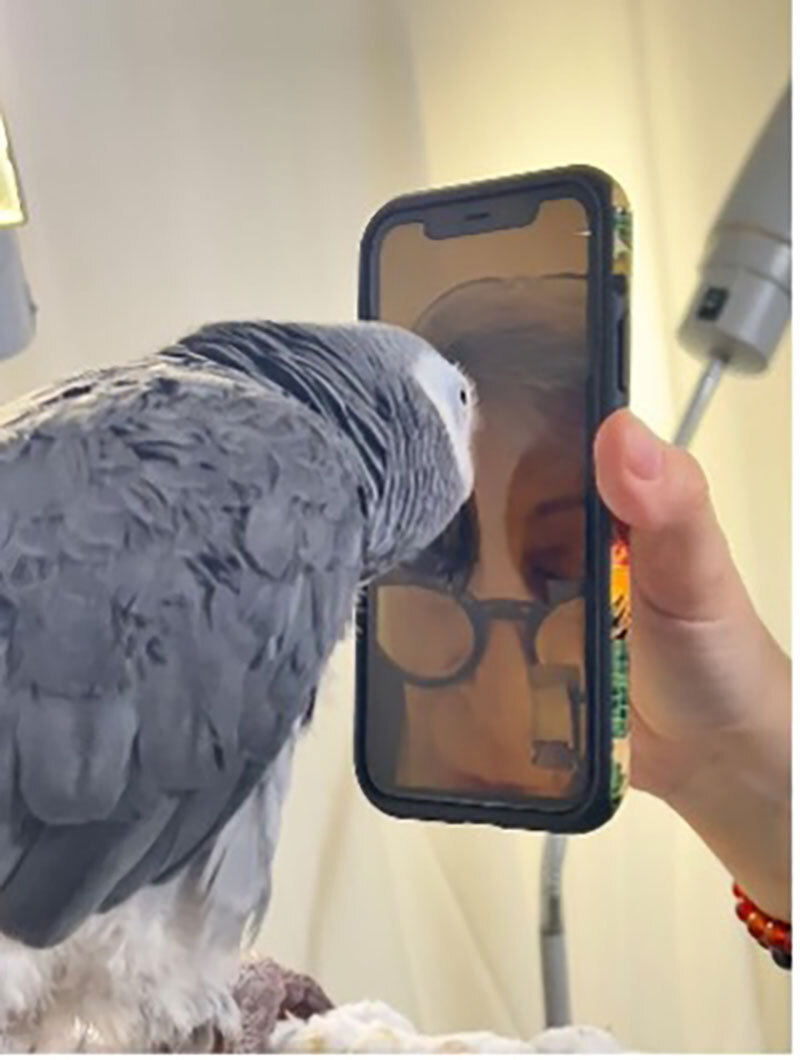
A central question surrounding these video calls is how Griffin perceives them. Dr. Pepperberg acknowledges that the precise nature of his experience remains an area of ongoing scientific inquiry. Parrots possess a visual spectrum that extends into the ultraviolet range, a capability not fully replicated by standard cell phone cameras optimized for human vision. While human faces may lack significant ultraviolet components, unlike the vibrant plumage of parrots, it is plausible that Griffin receives a reasonably accurate visual representation of Dr. Pepperberg on screen.
Furthermore, the auditory recognition of Dr. Pepperberg’s voice through the device is also subject to investigation. It is possible that Griffin associates the sounds emanating from the phone with her presence, particularly as she is the primary individual who engages him in such video interactions. Regardless of the exact sensory processing, Griffin’s behavior suggests a positive reception. He consistently leans in to touch the screen, an action interpreted as offering "kisses," and crucially, he does not exhibit aversion to the calls. This positive association is vital, as it reinforces the emotional connection and provides Dr. Pepperberg with visual reassurance of Griffin’s well-being in her absence.
An interesting behavioral adaptation observed by Dr. Pepperberg is Griffin’s learned understanding that he cannot solicit certain interactions, such as a "tickle," through the video call. This indicates a developing comprehension of the limitations of the technology and the physical absence of his primary caregiver. This cognitive grasp of the situation underscores the effectiveness of the calls in maintaining a sense of connection, even if the nature of the interaction is fundamentally altered.
Evaluating the Efficacy: Beyond the Screen
Dr. Pepperberg candidly assesses whether a video call can truly substitute for her physical presence. She emphasizes that it cannot replicate the extensive, in-person interaction Griffin typically enjoys. When she is present, Griffin spends at least an hour daily perched on her hand, receiving preening and physical affection. Additional dedicated sessions and proximity during her own snack times (though Griffin disdains her carrot snacks) are integral parts of their routine. These tactile and proximate experiences are irreplaceable by a brief video interaction.
However, Dr. Pepperberg firmly asserts that a video call is unequivocally "better than nothing." The tangible impact of these calls is evident in Griffin’s post-travel behavior. Upon her return, she is less likely to encounter the "cold wing" treatment, a form of avian social distancing, or if it does occur, its duration is significantly shortened. This suggests that the ongoing virtual contact mitigates the perceived abandonment and helps maintain the continuity of their bond. Consequently, Dr. Pepperberg actively structures her travel days around these short windows of opportunity to "phone home."
A Broader Context: Lessons from Isolation and Connection
The experience with Griffin echoes broader societal observations made during periods of enforced isolation, such as the COVID-19 pandemic. Dr. Pepperberg draws a parallel to her own experiences with Zoom calls with friends and family during that time. While acknowledging that virtual interactions could never replace the comfort and intimacy of a physical embrace, she highlights their crucial role in maintaining social connections and mitigating the psychological distress of separation. Seeing loved ones’ faces and sharing news, however mediated, provided a vital link and made challenging times more bearable.
This parallel underscores the fundamental human, and perhaps even animal, need for connection and the adaptive strategies individuals employ to fulfill this need when physical proximity is impossible. The success of Dr. Pepperberg’s video calls with Griffin, therefore, has implications not only for avian welfare but also for our understanding of interspecies communication and the psychological impact of distance on social animals.
Future Implications and Research Directions
The ongoing exploration of avian cognition by Dr. Pepperberg and her team, including the impact of technology on their social and emotional lives, holds significant implications for animal welfare, particularly for companion birds. The success of these video calls suggests potential avenues for future research:
- Sensory Perception Studies: Further investigation into how parrots process visual and auditory information from digital devices could refine our understanding of their sensory worlds and lead to the development of more effective communication tools.
- Behavioral Enrichment Programs: Video conferencing could be integrated into broader enrichment programs for birds in zoological settings or those undergoing rehabilitation, providing stimulation and maintaining social bonds during periods of human absence.
- Human-Animal Bond Research: The study of Dr. Pepperberg’s interactions with Griffin contributes valuable data to the growing field of human-animal bond research, offering insights into the complex emotional lives of our animal companions.
While the digital realm cannot fully replace the richness of in-person interaction, Dr. Irene Pepperberg’s pioneering use of video calls with Griffin demonstrates the powerful role technology can play in sustaining meaningful connections across distances, offering a testament to the enduring strength of the human-animal bond in the modern age. The consistent effort to bridge the miles, even with a digital intermediary, speaks volumes about the depth of her commitment to Griffin’s well-being and the scientific pursuit of understanding avian intelligence.
