
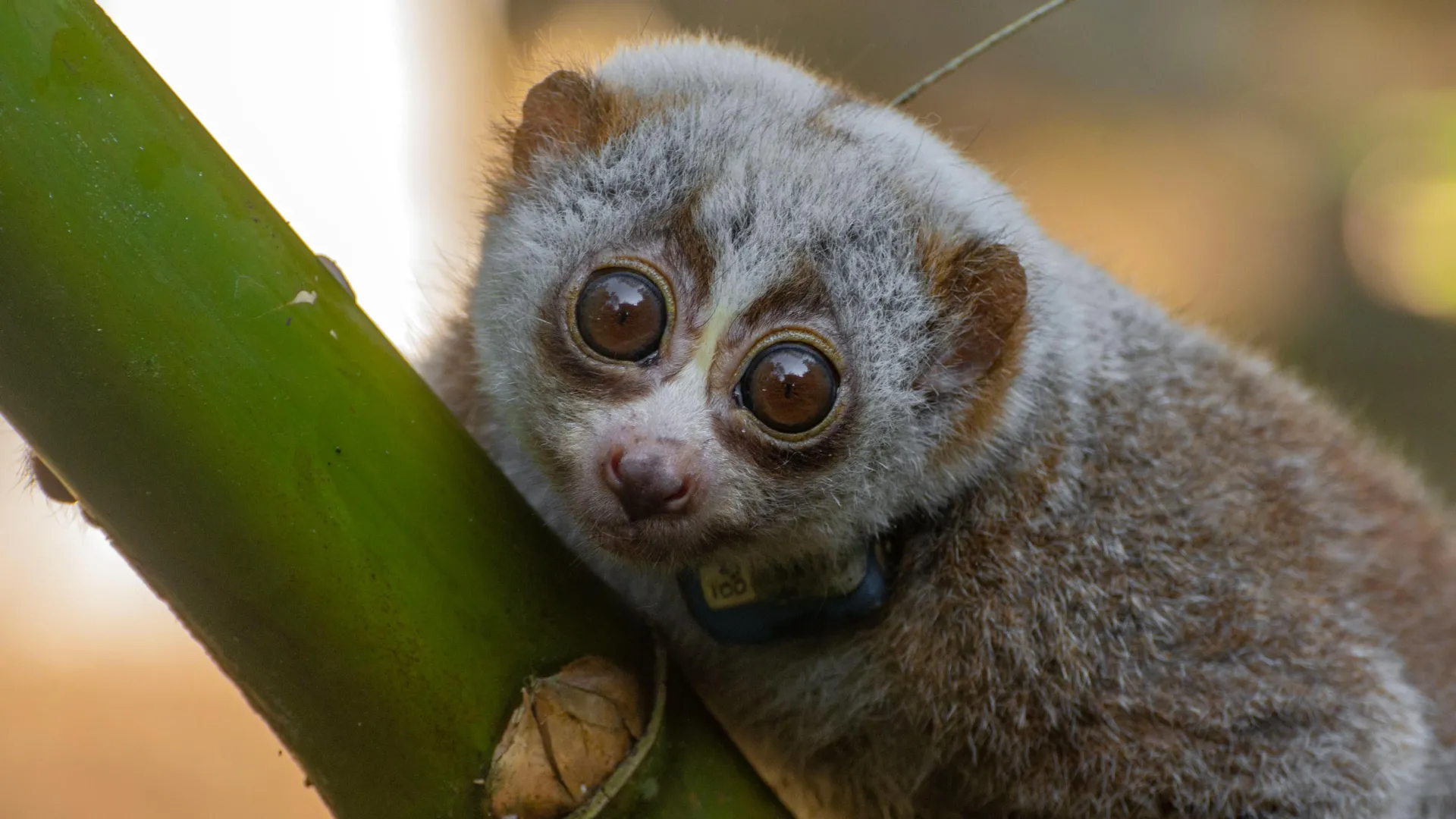
The groundbreaking findings, published recently in the esteemed journal Global Ecology and Conservation, cast a critical light on the complex realities of wildlife reintroductions. The study, spearheaded by renowned primatologist Professor Anna Nekaris OBE of Anglia Ruskin University, collaborated with experts from the conservation group Plumploris e.V. and the University of Western Australia. Their meticulous work focused on the post-release fate of Bengal slow lorises (Nycticebus bengalensis) in Bangladesh, revealing a grim prognosis for many of these vulnerable primates.
The Perilous Path Back: A Case Study of Bengal Slow Lorises
The research delved into the survival rates and behaviors of nine Bengal slow lorises following their release into a national park located in northeastern Bangladesh. This particular park had been utilized for previous wildlife release initiatives, making it a seemingly suitable candidate for the reintroduction efforts. To track their movements and monitor their adaptation, scientists fitted each loris with a radio collar, allowing for continuous observation in their natural environment.
The outcomes were stark and profoundly concerning. A mere two of the nine released animals managed to survive their return to the forest, painting a bleak picture of the program’s immediate success. A significant proportion, three individuals, perished within a mere 10 days of their release, indicating an almost immediate failure to adapt or integrate. An additional four succumbed within six months, bringing the total mortality count to seven. Researchers were able to recover four of the seven deceased animals, and the examination of their bodies provided crucial, albeit distressing, evidence: all showed clear signs of having been killed by other slow lorises, primarily through venomous bites.
The Allure and Agony of Slow Lorises: Trafficking and Unique Biology
Slow lorises, with their distinctive large eyes, seemingly gentle facial expressions, and compact size, possess an unfortunate appeal that has rendered them highly sought after in the illegal wildlife trade. This demand has tragically positioned them among the most heavily trafficked primates globally, fueling a ruthless industry that depletes wild populations and subjects these sensitive animals to immense suffering. The species’ vulnerability is underscored by their classification across all slow loris species by the International Union for Conservation of Nature (IUCN) as either Critically Endangered, Endangered, or Vulnerable. This threatened status naturally leads to frequent rescue operations and subsequent release attempts, driven by noble conservation objectives to bolster dwindling wild populations.
Beyond their captivating appearance, slow lorises possess a unique biological trait that proved central to the study’s findings: they are the world’s only known venomous primates. This venom is not passively present; it is actively delivered through specialized teeth following a precise ritual. The loris combines saliva with an oily secretion from a brachial gland located on its elbow. When threatened or engaging in territorial disputes, the loris can lick this gland, mix the secretions with its saliva, and then deliver a potent, toxic bite. This venom can cause severe pain, swelling, and in some cases, anaphylactic shock in humans, but among their own species, it proves lethal. The animals recovered during the study exhibited unmistakable bite wounds concentrated on the head, face, and digits—classic indicators of deadly territorial confrontations among slow lorises. This underscores the critical importance of understanding species-specific behaviors, particularly aggression and territoriality, before embarking on release programs.
Chronology of the Study and Unsettling Observations
The research spanned several months, commencing with the careful selection and health assessment of nine Bengal slow lorises that had been confiscated from the illegal pet trade or rescued from other perilous situations. After a period of rehabilitation (the duration of which varied among individuals), the lorises were fitted with lightweight radio collars, a standard practice for post-release monitoring. The release into the national park in northeastern Bangladesh was executed with the intention of allowing them to reintegrate into a natural ecosystem.
Following their release, the research team meticulously tracked the movements and behaviors of the collared lorises. The immediate days post-release were critical. The rapid demise of three animals within just ten days signaled an alarming lack of initial adaptation or an inability to navigate the complex social and environmental challenges of their new-old home. The subsequent deaths over the next six months further solidified the notion that these animals were struggling profoundly.
Key observations during the monitoring period revealed several crucial patterns:
- Mortality Rate: A devastating 78% mortality rate (7 out of 9) within six months.
- Captivity Duration and Survival: A direct correlation was noted between the length of time an animal spent in captivity and its post-release survival duration. Lorises that had endured longer periods in human care tended to survive for fewer days after being released, suggesting a diminished capacity for wild survival skills or increased vulnerability.
- Behavioral Discrepancies: The released lorises exhibited heightened activity levels, moving across larger areas and appearing significantly more alert than typical wild Bengal slow lorises. This hyperactivity might be interpreted as a frantic search for resources, a suitable territory, or an attempt to evade resident populations, rather than a healthy integration.
- Survival Strategy: The two surviving animals distinguished themselves by traveling across notably larger areas than their deceased counterparts. This movement pattern strongly suggests that their survival hinged on their ability to avoid established territories and successfully evade confrontations with resident slow lorises, effectively escaping potential "death traps" through dispersal.
Broader Context: Global Wildlife Trafficking and Reintroduction Challenges
The illegal wildlife trade is a multi-billion-dollar global industry, ranking among the largest transnational organized crimes alongside drug and arms trafficking. Estimates from organizations like the United Nations Office on Drugs and Crime (UNODC) and TRAFFIC suggest annual revenues in the tens of billions of dollars. Primates, particularly those with perceived "cute" or "exotic" qualities like slow lorises, are consistently high on the list of trafficked species. This massive scale of illicit trade inevitably leads to a large number of rescued animals, placing immense pressure on conservation organizations to find suitable release options.
However, the success of wildlife reintroduction programs, while a cornerstone of modern conservation, is far from guaranteed. Numerous factors complicate the process, often leading to high mortality rates even in well-planned initiatives. These challenges include:
- Loss of Wild Skills: Animals held in captivity for extended periods often lose crucial survival instincts and skills, such as foraging, predator avoidance, and navigating their natural habitat.
- Disease Transmission: Released animals can introduce diseases to wild populations, or conversely, be highly susceptible to pathogens prevalent in the wild against which they have no immunity.
- Predation: Captive-bred or long-term captive animals often lack the necessary vigilance and evasive maneuvers to avoid natural predators.
- Competition: Released individuals must compete with established wild populations for scarce resources like food, water, and suitable territory. This competition, as highlighted by the slow loris study, can turn violent and deadly.
- Habitat Suitability: The chosen release site must possess adequate resources, be free from significant human disturbance, and support a healthy ecosystem capable of sustaining additional individuals. Habitat degradation and fragmentation further limit suitable sites.
A significant disparity also exists in the monitoring intensity of released wildlife. Large, charismatic megafauna, such as big cats, elephants, or rhinos, often receive intensive, long-term monitoring post-release, supported by substantial funding and public interest. This allows conservationists to learn from successes and failures and adapt strategies. In stark contrast, many smaller species, including a vast array of amphibians, reptiles, birds, and smaller mammals like slow lorises, are frequently released with minimal to no post-release tracking. The prohibitive costs of monitoring, coupled with a lack of public engagement, mean that the true outcomes of these numerous smaller-scale releases often remain unknown, potentially masking widespread failures.
Expert Voices: Challenging Assumptions and Calling for Reform
The findings of this study have prompted a re-evaluation of current practices and a strong call for more evidence-based approaches to wildlife release. Professor Anna Nekaris OBE, Senior Author of the study and Professor of Ecology, Conservation and Environment at Anglia Ruskin University, as well as head of the renowned Little Fireface Project, articulated the core challenge: "It’s assumed that returning confiscated or rescued animals to the wild is always a positive conservation story. Our research shows that for highly territorial species like slow lorises, releasing them into areas that are already densely populated can be a death trap."
Professor Nekaris further elaborated on the pressures influencing these releases: "Many rescued endangered species are often released because the public expects it, but for animals such as the Bengal slow loris, this is not always the best course of action. Without fully understanding the animal’s behaviour, its time spent in captivity and the density of resident populations at the release site, reintroductions may do more harm than good." Her statements underscore the critical need to move beyond well-intentioned but potentially harmful practices driven by public sentiment, towards scientifically informed decision-making.
Hassan Al-Razi, Lead Author of the study and team leader of Plumploris e.V. Bangladesh, provided crucial context from the ground, highlighting systemic issues within current release programs. "Rescue and release have become an increasingly common practice in Bangladesh. Many wild animals, including slow lorises, are rescued and subsequently released back into the wild," Al-Razi noted. However, he stressed, "in many cases, these releases are conducted inappropriately. For forest-dwelling species, release sites are often selected based on logistical convenience rather than ecological suitability. As a result, certain forests have effectively become dumping grounds for rescued animals and are no longer appropriate release sites." This powerful statement paints a concerning picture of fragmented and uncoordinated efforts that, despite good intentions, inadvertently contribute to animal suffering and conservation failures. Al-Razi warned, "Although our research has focused on the Bengal slow loris and demonstrated the consequences of such practices, we believe similar patterns likely affect many other species."
Broader Impact and Implications for Global Conservation
The implications of this research extend far beyond slow lorises in Bangladesh. It serves as a potent cautionary tale for the global conservation community, prompting a necessary re-evaluation of established protocols and a paradigm shift in how wildlife releases are approached.
Rethinking Conservation Strategies: This study fundamentally challenges the simplistic "rescue and release" narrative. It emphasizes that conservation success hinges not just on the act of release, but on the meticulous planning and scientific rigor that precedes and follows it. For highly territorial and specialized species, an overcrowded or unsuitable habitat can be more dangerous than continued captivity.
Ethical Considerations: The findings raise profound ethical questions about the responsibility of conservationists. Is it truly humane to release an animal into a situation where its chances of survival are minimal, and it may face a violent end? This study suggests that in some cases, alternative solutions, such as long-term sanctuary care or relocation to genuinely suitable, unpopulated habitats, might be more ethical and effective.
Economic and Resource Implications: Inappropriate releases represent a significant waste of precious conservation resources—time, money, and dedicated effort. These resources, often scarce, could be redirected towards more impactful strategies, such as habitat protection, anti-poaching initiatives, or carefully planned and rigorously monitored reintroductions with higher probabilities of success.
Recommendations for Improvement: The researchers stress that successful wildlife releases require careful, species-specific planning. Their recommendations serve as a critical roadmap for improving future outcomes:
- Detailed Habitat Assessments: Thorough evaluation of the release site’s ecological suitability, including resource availability, existing population densities, and potential threats.
- Individual Animal Condition Assessment: Comprehensive evaluation of each animal’s health, behavioral skills, and physical fitness to determine its readiness for the wild. This includes assessing the duration of captivity and its potential impact on natural behaviors.
- Species-Specific Rehabilitation Guidelines: Development and implementation of tailored rehabilitation programs that focus on re-skilling animals for their specific natural environment and mitigating the negative effects of captivity.
- Long-Term Monitoring: Crucially, sustained post-release monitoring is essential to track survival, adaptation, and integration into wild populations. This data is vital for learning, adapting strategies, and ensuring accountability.
Call for Policy Changes and Public Awareness: The study implicitly calls for governments, wildlife authorities, and non-governmental organizations to review and update their wildlife release guidelines, prioritizing scientific evidence over expediency or public pressure. Furthermore, there is a need for greater public education to foster a more nuanced understanding of conservation challenges, moving beyond the emotional appeal of "releasing animals back to the wild" to embrace complex, science-driven solutions.
In conclusion, while the intention behind rescuing and releasing wildlife is undeniably noble and crucial for species survival, the case of the Bengal slow loris in Bangladesh serves as a critical and cautionary tale. It underscores that without comprehensive scientific understanding, meticulous planning, and rigorous post-release monitoring, even the best-intentioned efforts can inadvertently lead to tragic outcomes, turning potential sanctuaries into deadly traps. The global conservation community must heed this call to action, ensuring that future wildlife reintroductions are guided by robust science, ethical considerations, and a deep understanding of the intricate ecological and behavioral dynamics of each species.
