
The American West faces an escalating water crisis, with an unprecedentedly low snowpack dramatically raising the stakes for Western states engaged in contentious debates over how to implement drastic cuts in water usage from the beleaguered Colorado River. As existing management rules near expiration, a new agreement looms, holding the power to either offer a crucial lifeline to the river’s imperiled ecosystems or condemn them to irreversible desiccation, profoundly impacting the 40 million people and vast agricultural lands reliant on its diminishing flow.
A Century of Demand Meets a Shrinking Supply
For millennia, the Colorado River carved its majestic path through the heart of the American West, a vibrant artery flowing freely from its forested Rocky Mountain headwaters, through a labyrinth of canyons, vast deserts, and lush wetlands, ultimately reaching the Sea of Cortez. This natural grandeur sustained complex ecosystems and diverse indigenous cultures long before the arrival of European settlers. However, the 20th century ushered in an era of rapid expansion and unparalleled demand. By 1922, the seven states within the river basin—Colorado, New Mexico, Wyoming, and Utah in the Upper Basin; Arizona, California, and Nevada in the Lower Basin—formalized their claims, divvying up its flow through the landmark Colorado River Compact. This foundational agreement, alongside subsequent legislation and court decisions, collectively known as the "Law of the River," paved the way for a network of colossal dams and intricate irrigation projects that progressively tamed the river’s wild majesty, transforming it into the lifeblood of a burgeoning modern West. Today, more than 40 million people across these states and parts of Mexico depend on its waters for drinking, agriculture, and industry, a dependency that has, ironically, pushed the system to its breaking point.
The Unprecedented Megadrought and Its Dire Consequences
The demands placed upon the Colorado River have long exceeded its natural capacity, a reality starkly exacerbated by the ongoing megadrought, the most severe in at least 1,200 years. Since the turn of the millennium in 2000, average annual flows have plummeted by approximately 20 percent, a decline directly attributable to rising temperatures and altered precipitation patterns. The current year has witnessed particularly dire conditions, described by Colorado State University climate scientist Brad Udall as "stunningly bad, without any parallel in the recent historical record." Sparse winter snowfall, combined with an early spring heatwave that accelerated melt and increased evaporation, left the basin with its lowest snowpack ever recorded for April 1. This critical metric serves as a key indicator for summer runoff, painting a grim picture for the coming months. Projections indicate that as the basin continues to warm and dry, annual flows could decline by an additional 20 percent by midcentury, signaling a future of even greater scarcity.
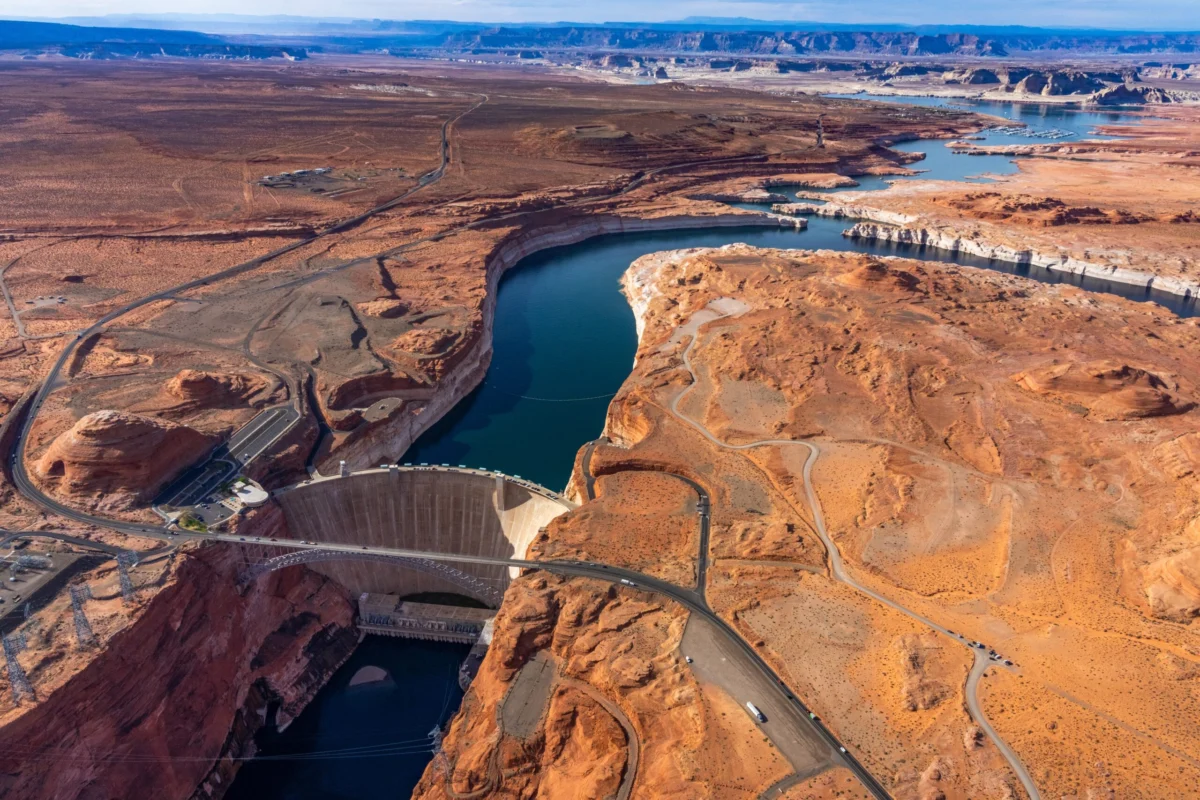
The primary buffers against these precipitation shortfalls – Lake Mead and Lake Powell, the nation’s two largest reservoirs – are now at critically low levels. Lake Mead, formed by the Hoover Dam, and Lake Powell, created by the Glen Canyon Dam in the 1960s, have seen their combined storage capacities dwindle to less than 30% in recent years, hovering near "minimum power pool" levels, below which hydropower generation becomes impossible. This unprecedented drawdown has forced water managers to brace for significant reductions across all sectors: farmers contemplating leaving fields fallow, urban residents facing increased water costs and stricter conservation mandates, and fragile ecosystems teetering on the brink. Doug Kenney, a water policy expert at the University of Colorado Boulder, aptly characterizes the situation: "It’s a crisis, but it’s such a slow-moving crisis that we all saw it coming for decades." The gradual but relentless nature of the decline has, paradoxically, made it harder for some to grasp the immediate urgency of the situation.
Navigating the "Law of the River": A High-Stakes Negotiation
The predicament arrives as a crucial deadline looms, compelling the seven basin states to set the Colorado River on a more sustainable course. The current operational guidelines for managing the river, established through a series of agreements and declarations, are set to expire this year. Consequently, the Upper Basin states (Colorado, New Mexico, Wyoming, and Utah) and the Lower Basin states (Arizona, California, and Nevada) are locked in intense negotiations to forge new rules for handling future shortages. A universal consensus exists that the existing century-old agreements, predicated on a hydrological reality that no longer exists, simply cannot meet current obligations. The core dispute centers on how to equitably share the burden of increasingly severe cutbacks.
The stakes in these negotiations are immense. If the states fail to reach a consensus, the federal Bureau of Reclamation, which oversees the dams and reservoirs, stands ready to impose its own plan. Such a federal intervention, while potentially offering a temporary solution, is widely viewed by experts like Kenney as a detrimental outcome. It could "hamstring river operations through years or decades of likely lawsuits," plunging the region into prolonged legal battles that would further delay adaptive management and exacerbate the crisis. The specter of federal intervention serves as a powerful incentive for states to find common ground, yet their divergent interests and historic entitlements make agreement exceptionally challenging.
Economic and Societal Repercussions Across the Basin
The implications of the Colorado River’s decline extend far beyond water taps, reverberating through the economic and social fabric of the entire American Southwest. Agriculture, which accounts for roughly 70-80% of the river’s water use, stands to bear the brunt of the cuts. Farmers in states like Arizona and California, cultivating crops ranging from alfalfa to almonds, face agonizing decisions about fallowing fields, reducing herd sizes, and adopting more water-efficient but costly technologies. The ripple effects will be felt across the agricultural supply chain, potentially leading to higher food prices and significant economic losses for rural communities.
Urban centers, from Los Angeles to Phoenix to Denver, are also preparing for a future of reduced allocations. Municipalities are investing heavily in conservation programs, wastewater recycling, and infrastructure improvements, but residents are increasingly facing mandatory restrictions on outdoor watering, incentives for drought-tolerant landscaping, and potentially higher water rates to fund these initiatives. The reliability of hydropower, generated by major dams like Hoover and Glen Canyon, is also at risk. As reservoir levels drop, the efficiency and capacity of these power plants diminish, threatening energy supplies and potentially leading to increased reliance on fossil fuels or higher electricity costs for millions of homes and businesses. The recreational economy, built around boating, fishing, and tourism at lakes Mead and Powell, has already suffered devastating impacts, with marinas stranded far from the water’s edge and once-bustling tourist destinations struggling to adapt.
Ecosystems on the Brink: A River’s Lifeblood
Beyond human consumption, the chronic crisis poses an existential threat to the Colorado River’s rich and diverse ecosystems, which Jennifer Pitt, Audubon’s Colorado River Program director, emphasizes are profoundly at stake. These vital habitats support dozens of types of native fish and more than 400 bird species, many of which are endangered or threatened. However, their water supplies are tenuous and often the first to be disrupted in times of scarcity, as environmental flows are frequently curtailed to prioritize human uses.
A journey along the river’s length reveals the severe ecological consequences. Consider the Dolores River, a crucial tributary in Colorado and Utah. A dam near McPhee Reservoir diverts the vast majority of its water for agricultural use before it can merge with the mainstem Colorado. Rica Fulton of Dolores River Boating Advocates highlights how large farms, holding senior water rights, receive top priority. While some water is legally allocated for downstream environmental flows to support native fish, these allocations have been drastically reduced to a mere trickle during recent droughts, shrinking critical fish habitats and draining once-prized rapids that are essential for recreation and ecosystem health.
Hundreds of miles downstream, the iconic Grand Canyon’s unique ecology also depends precariously on how states manage the river’s supplies. Here, controlled releases from Lake Powell feed the river as it flows into the Lower Basin. As Lake Powell’s water levels plummet, the water released into the canyon becomes warmer, explains Sinjin Eberle, American Rivers communications director. This temperature shift "completely changes the aquatic ecology," creating an environment more favorable to nonnative species like smallmouth bass, which prey on and outcompete native fish, critically harming species like the endangered humpback chub, a unique survivor of the Colorado River’s ancient lineage.
The river’s ultimate fate, historically, lay in its delta in Mexico, a once-vibrant mosaic of marsh and riparian forest. For decades, upstream diversions in the U.S. left the floodplain parched and barren, leading many to believe it was a "dead ecosystem," according to Osvel Hinojosa-Huerta, who has dedicated years to restoration efforts in the region. However, a testament to the power of targeted water releases and collaborative conservation, starting in 2012, the United States, Mexico, and a nonprofit coalition including Audubon agreed to release "pulse flows" of water. Coupled with intensive restoration efforts, these pulses have miraculously revived vibrant pockets of marsh and riparian forest, which now host endemic species like the Yuma Ridgway’s Rail and numerous migrant bird species. Yet, the delta’s future remains uncertain, as the current binational water-sharing agreement is also set to expire and will require renegotiation following the implementation of new U.S. management plans, as Pitt notes. The success of the delta’s revival underscores the profound impact that intentional environmental flows can have, even in a water-stressed basin.
Voices from the River: Stakeholder Perspectives
The crisis has brought together a diverse chorus of voices, all grappling with the monumental challenge of charting a sustainable future for the Colorado River. Scientists like Brad Udall offer stark warnings, grounding the policy debates in the undeniable realities of climate change. Water policy experts like Doug Kenney provide critical analysis of the legal and political complexities, highlighting the need for a paradigm shift away from outdated allocation models. Conservationists like Jennifer Pitt, Rica Fulton, and Sinjin Eberle passionately advocate for the river’s intrinsic ecological value, emphasizing that the health of the ecosystem is inextricably linked to human well-being.
Crucially, indigenous voices are increasingly central to the discourse. The Colorado River Indian Tribes (CRIT) in Arizona, whose lands directly abut the river, took a groundbreaking step in 2025 by formally recognizing the river’s "personhood." This declaration, legally defining the river as a being with its own inherent rights, represents a profound philosophical and practical shift. It’s a powerful reminder that the waterway, which winds a ribbon of life through the West, must be allowed to live, too. Chairwoman Amelia Flores articulates this perspective eloquently: "We have to consider the wholeness of what this river brings to us." This concept of "rights of nature" challenges the traditional view of the river solely as a resource to be exploited, advocating for its protection as a living entity.
The Path Forward: Innovation and Adaptation
Looking ahead, conservationists and forward-thinking policymakers hope that officials will adopt a more holistic and adaptive approach to managing the Colorado River’s health. "We’re not talking about a plumbing system. We’re not talking about a series of buckets," asserts Kenney, underscoring the river’s complex, dynamic nature. "This is a river—and it’s a magical river." While nothing can alter the fundamental reality of a diminishing water supply in a warming climate, innovative legal and technical tweaks could significantly improve outcomes. These include incentivizing water conservation through market mechanisms or financial rewards, allowing for more flexible management decisions, such as strategically timing reservoir releases to maximize ecological benefits for fish spawning or riparian health, and investing in nature-based solutions.
Potential strategies also encompass advanced water recycling technologies, more efficient irrigation techniques, and exploring augmentation strategies like desalination, though these come with their own economic and environmental costs. Demand management, where water users are compensated for reducing consumption, is another critical tool. The renegotiation of the U.S.-Mexico agreement for the delta is a key opportunity to embed ecological considerations more firmly into future management plans, building on the success of past pulse flows.
The Long-Term Imperative
The current crisis on the Colorado River is not merely a temporary drought; it is a profound reckoning with the consequences of over-allocation and a changing climate. The decisions made in the coming months will define the future of water security, environmental health, and economic stability for an entire region. Moving forward, the imperative is clear: the states and federal government must transcend traditional disputes and embrace a spirit of collaborative innovation, recognizing the river not as an infinite resource to be divided, but as a finite, living system that demands respect, stewardship, and a fundamental shift in human interaction. Only through such a transformation can the Colorado River continue to sustain life and foster prosperity across the American West for generations to come.
