
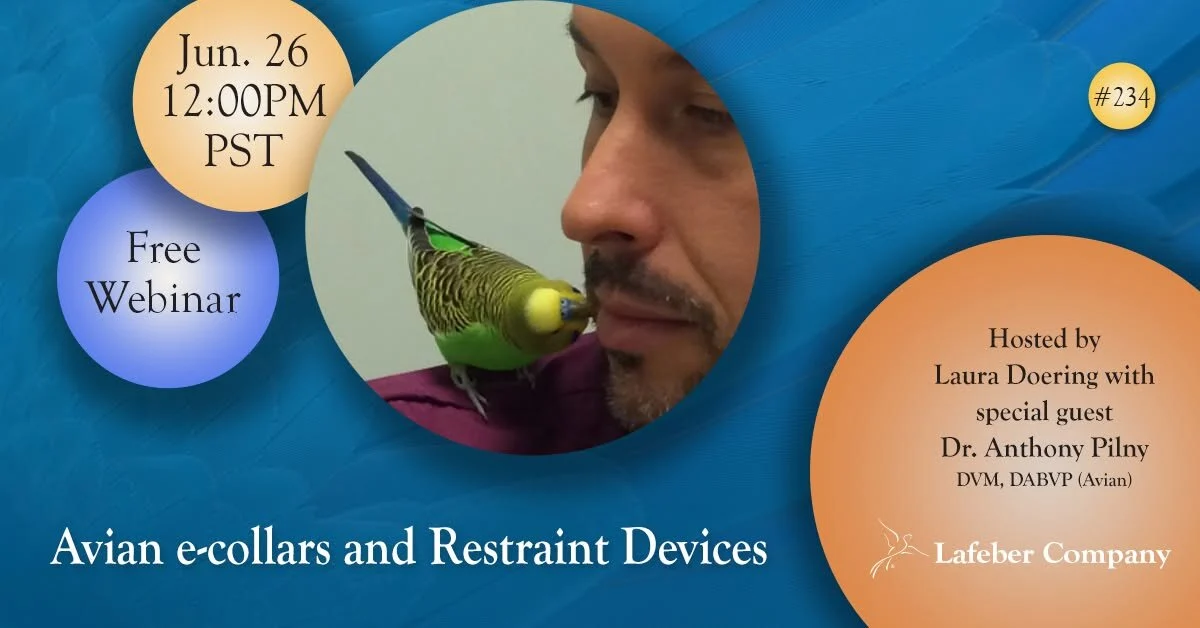
The upcoming webinar, "Avian E-Collars & Restraint Devices," scheduled for Friday, June 26, 2026, at 12:00 p.m. PDT, promises to offer critical insights into avian welfare and veterinary care. Hosted by Dr. Anthony A. Pilny, DVM, DABVP, the session will delve into the multifaceted applications and benefits of specialized collars and restraint devices for birds undergoing recovery or requiring protection from self-inflicted harm. This event is poised to be a significant resource for avian veterinarians, technicians, breeders, and dedicated pet bird owners seeking to enhance their understanding of post-operative care and injury management in avian species.
Understanding the Necessity of Avian Protective Devices
Birds, by their very nature, are sensitive creatures, and their recovery processes can be uniquely challenged by their instinctual behaviors. When faced with injuries, surgical sites, or conditions that provoke feather-picking or self-mutilation, conventional methods of protection may prove insufficient. This is where avian-specific e-collars and restraint devices become indispensable tools in the veterinary arsenal. These devices are designed not merely to prevent further harm but to facilitate a more comfortable and efficient healing environment, thereby improving the overall prognosis for the affected bird.
The webinar’s focus on these specialized tools addresses a critical aspect of avian medicine that often requires nuanced understanding. Unlike their canine and feline counterparts, birds possess distinct anatomical and behavioral characteristics that necessitate tailored approaches to restraint and post-operative care. The delicate nature of their feathers, the fragility of their bones, and their often-anxious temperament during periods of vulnerability underscore the importance of expert guidance in selecting and implementing appropriate protective measures.
Dr. Anthony A. Pilny: A Leading Voice in Avian Medicine
Dr. Anthony A. Pilny is a recognized authority in avian and exotic animal medicine. His expertise, underscored by his board certification as a Diplomate of the American Board of Veterinary Practitioners (ABVP) with a specialization in Avian Practice, positions him as an ideal presenter for this topic. Dr. Pilny’s extensive experience in diagnosing and treating a wide range of avian conditions, coupled with his commitment to advancing veterinary knowledge, ensures that attendees will receive accurate, evidence-based information. His previous contributions to avian health literature and his active involvement in veterinary education suggest a presentation style that is both informative and engaging, translating complex veterinary concepts into accessible knowledge for a diverse audience.
Webinar Content: A Deep Dive into Avian Protective Measures
The webinar is structured to provide a comprehensive overview of avian e-collars and restraint devices. Key areas of discussion will likely include:
- Types of Devices: An exploration of the various designs and materials available for avian protective collars and restraints. This could range from traditional Elizabethan collars adapted for birds to more specialized, lightweight, and bird-friendly designs. The presentation will likely differentiate between devices suitable for different species and sizes of birds, from small finches to larger parrots.
- Indications for Use: A detailed examination of the clinical scenarios where these devices are most beneficial. This includes post-surgical recovery (e.g., after wing repairs, abdominal surgeries, or beak reconstruction), management of skin lesions or infections, prevention of feather-damaging behaviors (feather-picking, self-mutilation), and protection of wounds from external contaminants.
- Application and Fitting: Practical guidance on how to properly apply and fit these devices to ensure maximum effectiveness while minimizing stress and discomfort for the bird. This is a crucial aspect, as an improperly fitted device can cause more harm than good.
- Comfort and Behavioral Considerations: Strategies for helping birds adapt to wearing these devices and for managing any associated stress or behavioral changes. This might involve desensitization techniques, environmental enrichment, and appropriate monitoring.
- Potential Complications and Mitigation: A discussion of potential issues that can arise from the use of e-collars and restraint devices, such as skin irritation, mobility impairment, or interference with feeding and drinking. The presentation will likely offer solutions and preventative measures for these complications.
- Emerging Technologies and Innovations: An overview of any new developments or research in the field of avian protective devices that may offer improved efficacy or patient comfort.
Historical Context and Evolution of Avian Care
The need for specialized protective devices for birds has evolved alongside our understanding of avian physiology and behavior. In earlier periods of veterinary history, the management of avian injuries and post-operative care was often rudimentary. Restraint might have been achieved through manual holding or basic bandaging, with limited options for preventing self-trauma. The recognition of birds’ unique vulnerabilities – such as their lightweight skeletal structure, their susceptibility to stress-induced illnesses, and their complex feathering – has driven the development of more sophisticated approaches.
The advent of specialized avian veterinary practices and the increasing popularity of pet birds as companions have spurred innovation in this field. As veterinarians gained more experience with surgical procedures on birds, the demand for effective post-operative protective measures grew. This led to the adaptation of existing designs from other animal species and, more recently, to the creation of devices specifically engineered for avian anatomy and behavioral needs. The development of lightweight, breathable materials, adjustable fastenings, and designs that minimize visual obstruction or interference with natural behaviors represents a significant advancement in avian welfare.
Supporting Data and Scientific Rationale
The efficacy of e-collars and restraint devices in avian care is often supported by observational data and case studies within veterinary literature. While large-scale randomized controlled trials may be less common in this specialized area compared to human medicine or large animal veterinary practice, the consensus among avian specialists is that these devices play a vital role in successful recovery.
For instance, studies on feather-damaging behaviors in psittacine birds often highlight the role of stress, boredom, and medical conditions. In cases where medical management addresses the underlying cause, protective devices are frequently employed as a temporary measure to break the cycle of self-trauma and allow damaged skin and feather follicles to heal. The reduction in physical damage observed during the period of device use is a key indicator of their effectiveness.
Furthermore, in surgical recovery, preventing a bird from interfering with sutures or surgical sites is paramount to avoiding infection and ensuring proper wound closure. The physical barrier provided by an e-collar or a well-applied restraint can be the deciding factor between a successful surgical outcome and a complicated recovery. While specific statistical data on the success rates of different device types might be proprietary to veterinary practices or specific studies, the widespread adoption and continued use of these tools by experienced avian practitioners serve as a testament to their clinical utility.
Broader Implications and Impact on Avian Welfare
The knowledge disseminated through this webinar has far-reaching implications for the well-being of avian populations.
- Enhanced Veterinary Care: Equipping veterinarians and veterinary technicians with up-to-date knowledge on the selection, application, and management of avian protective devices will directly translate into improved patient outcomes. This can lead to shorter recovery times, reduced pain and suffering, and a decreased likelihood of complications.
- Improved Owner Education: For bird owners, understanding the necessity and proper use of these devices is crucial. Educated owners can more effectively support their birds’ recovery at home, leading to better compliance with veterinary recommendations and a stronger human-animal bond.
- Advancement of Avian Medicine: By fostering a deeper understanding of these essential tools, the webinar contributes to the ongoing professional development of avian veterinarians. This can inspire further research and innovation in the field, ultimately benefiting all avian species under human care.
- Reduced Euthanasia Rates: In severe cases of self-mutilation or complex surgical recovery, the inability to adequately protect a bird can sometimes lead to difficult decisions regarding euthanasia. Effective use of protective devices can offer viable alternatives, potentially reducing the need for such outcomes and preserving the lives of these cherished companions.
Registration and Accessibility
The webinar is accessible through an online registration process. Interested parties are encouraged to register in advance to secure their spot. The provided link, "Register Now," directs users to the Zoom webinar registration page. The exact time of the webinar is 12:00 p.m. PDT, and attendees are advised to use the provided time zone converter link to confirm the local time in their respective regions. This proactive approach to accessibility ensures that a global audience of avian health professionals and enthusiasts can benefit from Dr. Pilny’s expertise. The availability of such online educational events underscores the commitment of organizations like Lafeber Company, a prominent name in avian nutrition and health, to advancing avian welfare through accessible knowledge dissemination. The use of platforms like Zoom further democratizes access to specialized veterinary education, breaking down geographical barriers and fostering a more informed community of avian caretakers.
In conclusion, the "Avian E-Collars & Restraint Devices" webinar represents a timely and vital educational initiative. By focusing on a critical yet often nuanced aspect of avian care, Dr. Anthony Pilny’s presentation is set to empower professionals and enthusiasts alike, ultimately contributing to the enhanced health and welfare of birds worldwide. The event serves as a testament to the continuous evolution of veterinary medicine and the dedication of its practitioners to improving the lives of all animals under their care.
