
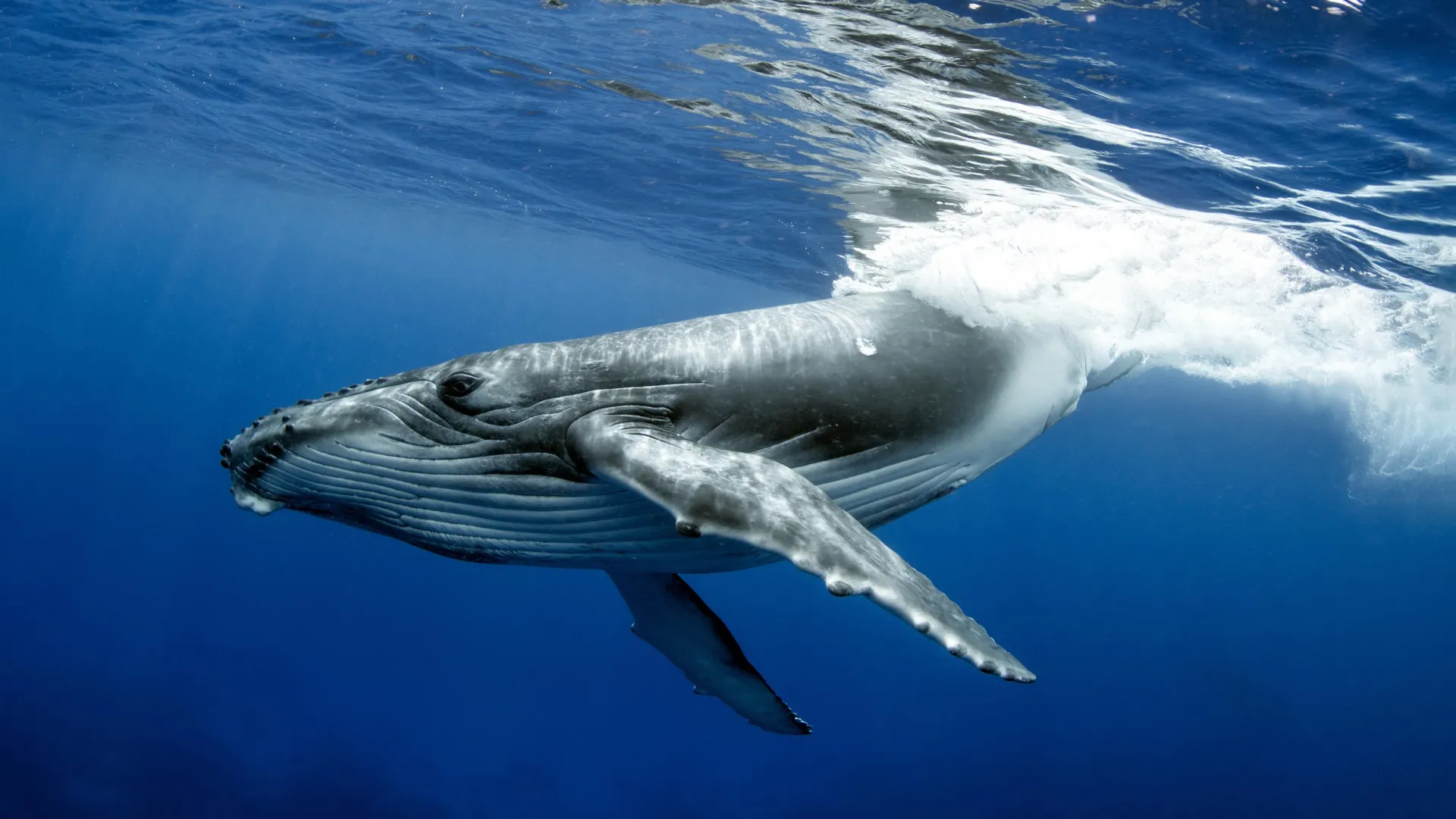
Scientists have confirmed an extraordinary and record-breaking feat of whale migration, documenting for the first time that individual humpback whales have traveled between their distinct breeding grounds in eastern Australia and Brazil, traversing more than 14,000 kilometers of open ocean. This remarkable discovery not only redefines the known limits of humpback whale movement but also provides invaluable insights into the connectivity and genetic dynamics of global whale populations, highlighting the critical role of long-term research and international collaboration in unraveling the mysteries of the marine world. The journey, spanning two major ocean basins – the Pacific and the Atlantic – marks the greatest confirmed distance ever recorded between sightings of individual humpback whales anywhere on Earth, underscoring the incredible migratory capabilities of these majestic marine mammals.
Unprecedented Journey: The Record Holders
The groundbreaking findings emerged from meticulous photographic identification efforts, where researchers compared tens of thousands of images of humpback whale tail flukes. Each fluke possesses a unique pattern of pigmentation, scars, and serrations, akin to a human fingerprint, allowing scientists to reliably identify individual whales across vast distances and extended periods. This photo-identification technique has been a cornerstone of whale research for decades, enabling scientists to track movements, estimate population sizes, and understand social structures without invasive tagging methods.
One of the two identified whales, a true oceanic voyager, was initially photographed in Hervey Bay, Queensland, Australia, in 2007. Hervey Bay is a renowned aggregation area for eastern Australian humpback whales, particularly mothers and calves. The same whale was resighted in the very same area in 2013, confirming its consistent return to its established breeding grounds. However, in an astonishing turn of events, this individual was later identified near São Paulo, Brazil, in 2019. The minimum straight-line distance between Hervey Bay and São Paulo’s coastal waters is approximately 14,200 kilometers, a journey roughly equivalent to traveling from Sydney to London. Researchers emphasized that the whale’s actual travel path was almost certainly longer, as the documented points represent only the start and end of a segment of its journey, with the precise migratory route remaining unknown.
The second whale presented an even more compelling narrative of endurance and exploration. This individual was first documented in 2003 at Brazil’s Abrolhos Bank, a critical nursery area for South Atlantic humpback whales off the coast of Bahia. At the time of its initial sighting, it was observed swimming within a lively group of nine adult whales, indicative of active breeding ground behaviors. A staggering twenty-two years later, in September 2023, the same whale was spotted alone in Hervey Bay, Australia. This extraordinary 15,100-kilometer documented movement between the Abrolhos Bank and Hervey Bay sets a new confirmed record for the longest known migration of an individual humpback whale, demonstrating an unparalleled level of inter-oceanic movement. The ability of these whales to navigate such immense distances, crossing vast stretches of open ocean without direct landmarks, speaks volumes about their sophisticated navigational instincts and physiological adaptations.
Decades of Dedication: The Science Behind the Discovery
The discovery is a testament to the power of sustained, long-term research programs and the indispensable value of international scientific collaboration. As Stephanie Stack, a Ph.D. Candidate at Griffith University and co-author of the study, articulated, "Discoveries like this are only possible because of investment into long-term multi-decadal research programs and international collaboration. These whales were photographed decades apart, by different people, in opposite parts of the world, separated by two different oceans, and yet we can connect their journey." This highlights the often-unsung efforts of researchers who dedicate years, sometimes entire careers, to collecting and cataloging data that eventually yield such profound insights.
The study, which meticulously analyzed 19,283 high-quality fluke photographs, spanned a remarkable timeframe from 1984 to 2023, encompassing data collected from both eastern Australia and Latin America. This extensive dataset was compiled through a concerted effort involving professional researchers and, crucially, a global network of citizen scientists. The integration of citizen science data, particularly through platforms like Happywhale, proved instrumental. Happywhale is an innovative global whale tracking platform that utilizes a sophisticated automated image recognition software to compare submitted photographs of whale flukes against a vast database. This technology significantly expedites the initial matching process, allowing researchers to sift through enormous volumes of images efficiently. Following automated identification, every potential match was then manually checked and verified by experienced scientists to ensure the absolute accuracy of the findings, upholding the rigorous standards of scientific research.
Dr. Cristina Castro, lead researcher from the Pacific Whale Foundation, emphasized the transformative role of public engagement in such large-scale scientific endeavors. "This kind of research highlights the value of citizen science," Dr. Castro stated. "Every photo contributes to our understanding of whale biology and, in this case, helped uncover one of the most extreme movements ever recorded." The contribution of everyday individuals, from whale watchers and tourists to recreational boaters, who capture and share images, creates a distributed network of data collection that professional researchers alone could not achieve. This collaborative model vastly expands the geographical coverage and temporal depth of scientific data, enabling discoveries that would otherwise remain elusive.
A Rarity of Great Significance: Implications for Humpback Populations
Despite the awe-inspiring distances involved, researchers underscored the extreme rarity of these transoceanic migrations. Across more than four decades of data collection, which includes nearly 20,000 individually identified humpback whales, only these two individuals were found to have traveled between the eastern Australian and Brazilian breeding regions. This represents an astonishingly low incidence rate of just 0.01 percent of the whales included in the extensive records. This rarity suggests that while such movements are possible, they are not a common feature of the typical humpback whale migration cycle, which usually involves individuals returning to the same breeding and feeding grounds annually.
However, scientists contend that even these infrequent exchanges hold profound significance for the long-term health and resilience of global humpback whale populations. Ms. Stack elaborated on this crucial point: "Despite their rarity, these exchanges matter for the long-term health of whale populations. Occasional individuals moving between distant breeding grounds can help maintain genetic diversity across populations and may even carry new song styles from one region to another – humpback whale songs are known to spread culturally across ocean basins, much like music trends in human populations."
The maintenance of genetic diversity is vital for any species’ ability to adapt to environmental changes, disease, and other stressors. Should a localized population face a severe threat, the occasional influx of genetic material from a distant, healthier population can bolster its resilience and long-term viability. Furthermore, the cultural transmission of humpback whale songs is a well-documented phenomenon, where complex vocalizations can spread across entire ocean basins. These intricate songs, believed to play a role in mating displays and social cohesion, are learned and adopted by males. The discovery that whales can cross vast ocean divides suggests a plausible mechanism for the inter-basin transfer of these ‘song styles,’ enriching the cultural repertoire of geographically separated populations and highlighting a fascinating aspect of cetacean social learning.
The findings also lend strong support to what researchers term the "Southern Ocean Exchange" hypothesis. This theory posits that humpback whales from different breeding populations, typically segregated by vast distances, may occasionally converge in shared feeding areas within the nutrient-rich waters of the Antarctic. After foraging, some individuals might then return along a different migratory route, eventually settling in a completely new breeding region. This hypothesis provides a compelling explanation for how a whale born in the South Atlantic could end up breeding in the South Pacific, or vice-versa, by taking a "detour" through the shared Antarctic feeding grounds. The Antarctic Peninsula and surrounding waters are known to be critical feeding grounds for multiple humpback whale populations from the Southern Hemisphere, making this exchange plausible.
Climate Change and Future Migrations
Looking to the future, researchers believe that climate change could potentially render these rare transoceanic crossings more common. The rapidly changing environmental conditions in the Antarctic, particularly shifts in sea ice extent and alterations in the distribution and abundance of Antarctic krill – the whales’ primary food source – are already impacting marine ecosystems. As their crucial feeding grounds undergo transformation, humpback whales may be forced to adapt their migratory patterns in search of reliable food sources. This could lead to increased exploration of new territories, potentially resulting in more frequent inter-basin movements.
The implications of such shifts are far-reaching. While increased connectivity could enhance genetic diversity, it could also introduce new challenges, such as exposure to novel pathogens or increased competition for resources in previously distinct breeding or feeding areas. Understanding these potential shifts is paramount for effective conservation and management strategies. Monitoring these long-distance movements becomes even more critical in an era of rapid climate change, as it can provide early indicators of broader ecological transformations affecting marine megafauna.
Conservation Imperatives
The extraordinary journeys of these two humpback whales underscore the interconnectedness of global marine ecosystems and the urgent need for international cooperation in conservation efforts. Humpback whales, once decimated by commercial whaling, have shown remarkable recovery in many parts of the world, a testament to decades of protection and management. However, they still face persistent threats including entanglement in fishing gear, ship strikes, noise pollution, and the pervasive impacts of climate change.
The ability to track individual whales across ocean basins reinforces the idea that marine protected areas and national conservation policies, while essential, must be complemented by broader, transboundary initiatives. Protecting critical breeding grounds in one hemisphere and vital feeding grounds in another, along with the migratory corridors that connect them, requires a global perspective. This research provides a powerful reminder that the health of one whale population can be inextricably linked to others, even those separated by thousands of kilometers of ocean.
The study, titled "First evidence of bidirectional exchange between distant humpback whale breeding populations in eastern Australia and Brazil," was formally published in the esteemed scientific journal Royal Society Open Science, contributing significantly to the growing body of knowledge regarding cetacean ecology, migration, and the complex dynamics of marine life in a changing world. It stands as a beacon of scientific achievement, revealing yet another layer of complexity and wonder in the natural world.
