
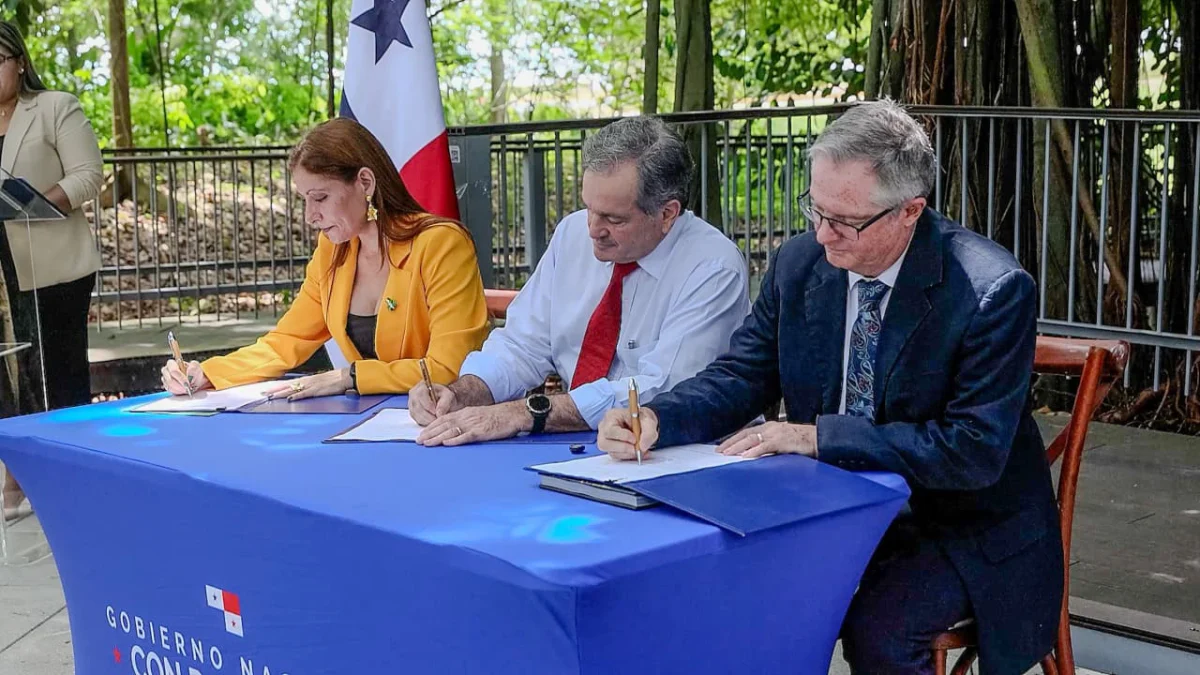
The Republic of Panama, a nation globally celebrated for its exceptional biodiversity and strategically vital geographical position, has officially embarked on a critical journey to evaluate and update its network of Key Biodiversity Areas (KBAs). On May 18, 2026, the Panamanian Ministry of Environment formalized this profound commitment by signing a landmark Memorandum of Understanding (MoU) with the KBA Partnership and the Amphibian Survival Alliance (ASA). This pivotal initiative is poised to significantly bolster Panama’s national conservation efforts and advance its obligations under global environmental accords, particularly the ambitious Kunming-Montreal Global Biodiversity Framework (KMGBF).
The agreement, meticulously negotiated and signed by His Excellency Juan Carlos Navarro, Panama’s Minister of Environment, alongside Dr. Andrew Plumptre, Head of the KBA Secretariat, and Dr. Gina Della Togna, Executive Director of the Amphibian Survival Alliance, marks a strategic and collaborative alliance between national governance and leading international conservation expertise. The KBA Partnership, a robust global collaboration involving major conservation organizations such as BirdLife International, the International Union for Conservation of Nature (IUCN), Conservation International, WWF, and others, provides the essential scientific framework and technical guidance for identifying sites deemed critical to the persistence of global biodiversity. The integral inclusion of the Amphibian Survival Alliance underscores the particular vulnerability of amphibians in Panama, a country disproportionately affected by amphibian declines due to factors like the chytrid fungus, making targeted conservation efforts for these species especially vital.
This comprehensive national KBA assessment represents far more than a mere inventory; it is a foundational and strategic step towards achieving several key targets outlined in the KMGBF. These include Target 3, widely known as the "30×30" goal, which sets an ambitious global objective to effectively conserve and manage at least 30 percent of the world’s terrestrial, inland water, coastal, and marine areas by 2030. By precisely identifying, mapping, and documenting its most biodiverse and ecologically significant sites, Panama will gain the necessary scientifically validated data to inform its spatial planning, guide ecosystem restoration projects, and strategically establish new protected areas or enhance the efficacy of existing ones. Furthermore, the updated KBA network will serve as a direct and robust scientific underpinning for the country’s National Biodiversity Strategy and Action Plan (NBSAP), ensuring that national policies, conservation initiatives, and resource allocation are strategically aligned with the most urgent and impactful biodiversity conservation priorities.
Panama’s Biodiversity: A Global Treasure Under Mounting Pressure
Panama’s unique geological and geographical position as a narrow land bridge connecting the vast continents of North and South America has endowed it with an unparalleled diversity of flora and fauna, firmly establishing it as one of the world’s most biodiverse nations per unit area. Its distinctive S-shaped isthmus encompasses an extraordinary array of ecosystems, ranging from lush tropical rainforests and enigmatic cloud forests to expansive coastal mangroves and vibrant coral reefs that adorn both its Pacific and Caribbean coastlines. This remarkable biological richness supports an estimated 10,000 species of vascular plants, over 1,000 species of birds (including critical migratory pathways), 255 species of mammals, 240 species of reptiles, and 220 species of amphibians, a significant proportion of which are endemic to the region. The country’s dense forest cover, estimated at over 60% of its total land area, provides critical habitat for iconic species such as jaguars (Panthera onca), Baird’s tapirs (Tapirus bairdii), and the majestic national bird, the Harpy Eagle (Harpia harpyja).
However, this invaluable ecological wealth faces increasing and complex threats from a confluence of factors including deforestation, agricultural expansion, unsustainable infrastructure development, and the pervasive impacts of climate change. The rapid pace of economic development, encompassing large-scale infrastructure projects and expanding human settlements, frequently encroaches upon pristine and irreplaceable habitats. The acute vulnerability of Panama’s amphibians, for instance, has been starkly highlighted by the devastating effects of the chytrid fungus (Batrachochytrium dendrobatidis), which has decimated populations of numerous frog species across the country. This crisis underscores the urgent and critical need for targeted, science-based conservation interventions. The precise identification of KBAs allows for a highly focused and efficient approach to protect the last remaining strongholds of these vulnerable species and their essential ecosystems, directing limited resources to where they can have the greatest impact.
The Evolution of Conservation: From IBAs to Comprehensive KBAs

Panama’s enduring commitment to identifying and protecting its most vital natural assets has a significant and well-documented historical precedent, built upon decades of dedicated work by both national and international conservation organizations. The current KBA evaluation and update process is deeply rooted in the pioneering efforts of the Audubon Society of Panama, a venerable and long-standing partner of BirdLife International. In 1995, the Audubon Society of Panama initiated the Important Bird Areas (IBA) Program with crucial funding from the Natura Foundation and in close collaboration with BirdLife International. This foundational program sought to systematically identify and document sites that were critically important for the conservation of bird populations, which often serve as excellent and sensitive indicators of overall ecosystem health and biodiversity.
The culmination of these extensive efforts was the seminal publication of "Important Bird Areas of the Americas" in 2009, a landmark document that brought global visibility and recognition to these critical avian habitats. This publication meticulously recognized 53 global IBAs within Panama, collectively spanning an impressive 2,501,046 hectares, which at the time accounted for nearly 29% of the country’s terrestrial surface. These IBAs were identified based on rigorous scientific criteria, including the presence of globally threatened species, restricted-range species, biome-restricted species, and significant congregations of birds, ensuring their international significance.
The global landscape of conservation standards underwent a significant evolution in 2016 with the publication of the "Global Standard for the Identification of Key Biodiversity Areas." This groundbreaking standard introduced a comprehensive umbrella framework, systematically extending beyond birds to encompass all forms of biodiversity – including mammals, amphibians, reptiles, fish, invertebrates, plants, fungi, and specific ecosystems. The KBA criteria, meticulously developed by a consortium of the world’s leading conservation organizations, provide a robust, scientifically defensible, and globally applicable method for identifying sites that contribute significantly to the global persistence of biodiversity across all taxonomic groups. Following this pivotal development, all 53 of Panama’s previously identified IBAs were officially recognized as KBAs, forming the foundational bedrock upon which the new, expanded, and more comprehensive evaluation process will build. This transition acknowledges the inherent interconnectedness of species and ecosystems, thereby providing a more holistic and integrated approach to conservation planning and implementation.
Establishing the National Coordination Group: A Collaborative Scientific Endeavor
A crucial and immediate step following the MoU signing was the swift formation of the National KBA Coordination Group (GNC) in Panama. On May 19, 2026, merely a day after the formal agreement, key stakeholders and experts convened to discuss and formally establish this indispensable expert collective. The GNC is meticulously designed to be a multi-disciplinary body, bringing together a diverse array of national experts in various species groups (e.g., ornithologists, herpetologists, botanists, mammalogists), ecosystem specialists, and seasoned professionals with extensive expertise in public policy and land-use planning. This broad representation ensures a comprehensive approach to biodiversity assessment.
The primary mandate of the GNC will be to meticulously oversee and strategically guide the technical aspects of the KBA identification and evaluation process. This includes compiling and synthesizing existing biodiversity data, conducting new and targeted field surveys where necessary to fill data gaps, rigorously applying the global KBA criteria to all potential sites, and ultimately ensuring the scientific integrity and robustness of the final KBA designations. In a subsequent and equally vital phase, the GNC will also play a pivotal role in strategizing for the long-term effective conservation and sustainable management of these identified KBAs, actively translating complex scientific findings into clear, actionable policy recommendations for the government and other stakeholders.
Gabriela Toscano, the esteemed Biodiversity Conservation Manager for BirdLife Americas, participated actively in the inaugural GNC meeting, providing crucial insights into the technical aspects and operational functions of such a high-level scientific group. Her direct involvement underscores the significant international support and expertise being leveraged for Panama’s ambitious initiative. Reflecting on the commencement of this pivotal process in Panama, Toscano remarked, "We are witnessing a historic milestone for nature in Panama! The start of this process fills us with joy and optimism, as it represents a great opportunity to unite science and action in favor of the country’s incredible biodiversity." This powerful statement encapsulates the profound sentiment of hope, urgency, and collaborative spirit surrounding the initiative, highlighting the critical fusion of rigorous scientific inquiry with tangible, impactful conservation outcomes.
Broader Implications for National Policy and Global Targets

The updated KBA network will have profound and far-reaching implications for Panama’s national environmental policy and its significant contribution to global conservation targets. By providing a scientifically robust, nationally recognized, and internationally validated map of its most critical biodiversity sites, the Ministry of Environment will be significantly better equipped to strategically integrate conservation priorities into national development planning frameworks. This means that critical decisions regarding infrastructure development, resource extraction, agricultural expansion, and land-use changes can be made with a clear, data-driven understanding of their potential impact on irreplaceable natural assets, promoting more sustainable development pathways.
Furthermore, the KBA update directly and substantially supports Panama’s commitment to the 30×30 target of the KMGBF. While Panama already boasts a significant and commendable network of protected areas, the KBA process will systematically help identify any existing gaps in coverage, ensuring that the most biologically significant areas, including those potentially outside existing protected area boundaries, receive adequate recognition and appropriate levels of protection. This could strategically lead to the expansion of existing protected areas, the judicious creation of new ones, or the effective implementation of other effective area-based conservation measures (OECMs) that demonstrably achieve positive biodiversity outcomes without necessarily being formal protected areas.
Economically, the proactive conservation of KBAs also holds substantial and often underestimated value. Panama’s pristine natural environments attract significant ecotourism, contributing substantially to local economies, creating employment, and providing sustainable livelihoods for communities. Beyond the direct economic benefits of tourism, healthy ecosystems provide invaluable and often irreplaceable services such as the provision of clean water, climate regulation, vital pollination services for agriculture, and natural hazard mitigation against floods and landslides. For a country like Panama, whose economy is heavily reliant on the smooth operation of the Panama Canal, the ecological health and integrity of its vast watersheds, much of which fall within potential KBA areas, is absolutely paramount for maintaining the critical water levels necessary for the Canal’s continuous operation. Thus, investing in KBA conservation is not merely an environmental imperative but a crucial economic one, safeguarding long-term national prosperity and resilience.
The Road Ahead: Challenges and Enduring Opportunities
While the initiation of the KBA update process is undoubtedly a cause for significant optimism and celebration, the road ahead will inherently present a range of challenges that will require strategic foresight and adaptive management. Identifying and formally designating KBAs often involves complex scientific assessments, demanding significant financial resources, substantial human capacity, and advanced technical expertise. Ensuring the long-term effective management, monitoring, and robust protection of these designated sites will require sustained political will, seamless inter-agency collaboration across various government ministries, and active, meaningful engagement with local communities, Indigenous peoples, and private landowners whose livelihoods or land tenure might be affected. Potential conflicts over land use, particularly in areas identified as KBAs but currently utilized for other economic activities, will necessitate careful negotiation, innovative solutions, and equitable benefit-sharing mechanisms that adeptly balance conservation imperatives with sustainable development goals.
However, these foreseeable challenges are significantly outweighed by the immense and transformative opportunities this initiative presents for Panama. The KBA update offers Panama a unique and powerful chance to lead by example in the Central American and Caribbean region, demonstrating how a nation can successfully integrate global conservation standards into its national planning and policy frameworks. It provides an unparalleled opportunity to strengthen national scientific capacity, foster greater public awareness and active engagement in biodiversity conservation, and attract crucial international support and investment for its ambitious conservation efforts. By systematically prioritizing the identification and protection of its Key Biodiversity Areas, Panama is not only safeguarding its invaluable natural heritage for future generations but also contributing significantly and proactively to the global collective effort to halt and ultimately reverse biodiversity loss, ensuring a healthier, more resilient planet for all. The collaborative spirit and shared vision demonstrated by the Ministry of Environment, the KBA Partnership, and the Amphibian Survival Alliance sets a strong and commendable precedent for a comprehensive, scientifically grounded, and ultimately impactful national conservation strategy.
