
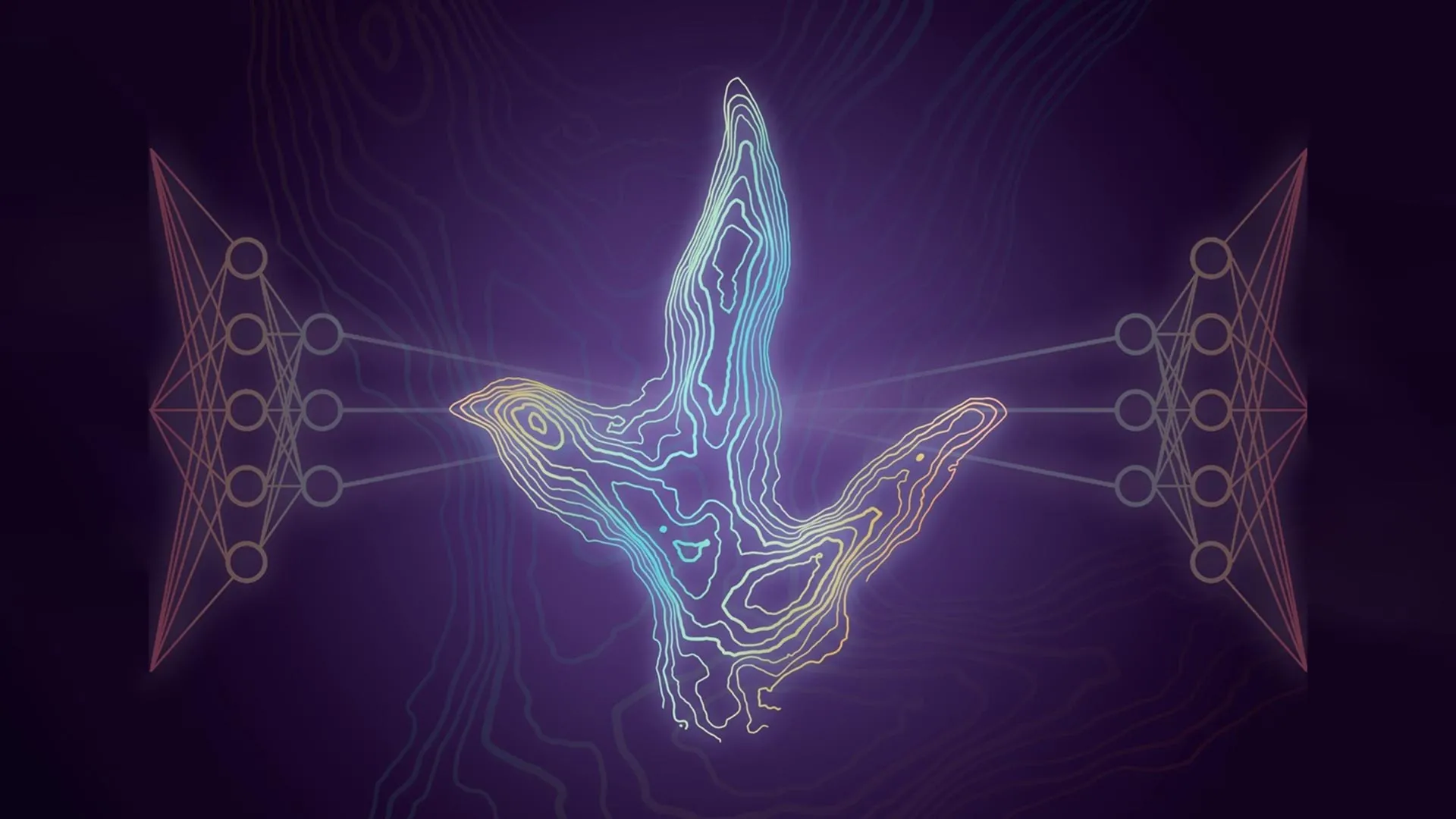
A groundbreaking new application, powered by sophisticated artificial intelligence (AI), is transforming the field of ichnology by providing scientists and the general public with an unprecedented tool to identify dinosaur footprints left behind millions of years ago. This innovative technology promises to unravel mysteries surrounding fossil tracks that have long presented significant challenges to researchers globally, offering a more objective and data-driven approach to understanding ancient ecosystems and evolutionary timelines.
For centuries, the enigmatic impressions left by prehistoric creatures in ancient mud and sand have fascinated paleontologists and enthusiasts alike. These trace fossils, unlike body fossils such as bones or teeth, offer direct evidence of an animal’s behavior, locomotion, and interaction with its environment. However, interpreting these ancient tracks has historically been fraught with debate and uncertainty. Paleontologists have long grappled with attributing specific footprints to their creators, discerning whether a particular track belonged to a swift, meat-eating predator (theropod), a lumbering plant-eating giant (sauropod or ornithopod), or perhaps even an early ancestor of modern birds. The subtle variations in shape, size, and stride preserved in fossilized trackways often lead to protracted discussions within the scientific community, as the identity of the track maker can profoundly influence our understanding of prehistoric biodiversity and paleoecology.
The Enduring Challenge of Ichnology: Deciphering Ancient Footprints
The study of trace fossils, known as ichnology, is a specialized branch of paleontology that focuses on non-body fossil evidence such as burrows, nests, and crucially, footprints. While incredibly valuable, fossilized footprints present unique interpretational difficulties. Unlike skeletal remains that offer definitive anatomical clues, footprints are dynamic records, heavily influenced by a myriad of factors at the moment of their creation and subsequent preservation.
The substrate on which a dinosaur walked, for instance, plays a critical role. A foot pressed into soft, wet mud will leave a different impression than one made in firmer, drier sand, even if made by the same animal. The animal’s gait, speed, and even health can alter a track’s appearance. Furthermore, post-depositional processes, collectively known as taphonomy, introduce additional layers of complexity. Erosion, sediment infilling, compaction, and even the natural decay of organic material can distort the original shape of a footprint over geological timescales. A deep, clear impression might become shallower and less defined, its edges blurred or displaced. This variability means that a single dinosaur species could produce a wide range of footprint morphologies, making definitive identification through traditional, subjective methods exceedingly difficult and often prone to expert bias.
Historically, researchers have relied on comparative anatomy, expert consensus, and manually curated databases linking known skeletal remains to associated trackways. While these methods have yielded significant insights, they often struggle with ambiguous or controversial tracks, leading to protracted debates and sometimes conflicting classifications. The lack of a universally objective standard has been a persistent hurdle in the field, slowing down the pace of discovery and limiting the certainty of conclusions drawn from ichnological evidence.
DinoTracker: Turning Photos into Instant, Objective Analysis
The newly developed DinoTracker app addresses these long-standing challenges head-on by leveraging the power of artificial intelligence. Researchers and even enthusiastic amateur paleontologists can now use a mobile phone to upload a photograph or a detailed drawing of a fossil footprint. The app then processes this input, providing an immediate, data-driven analysis. Through advanced algorithms, the AI evaluates the intricate shape, structure, and subtle features of the track, cross-referencing them against its vast knowledge base to estimate with high probability which type of dinosaur likely made it.
This accessibility marks a significant shift in paleontological research, democratizing the initial stages of analysis and opening avenues for citizen science. Imagine a hiker stumbling upon a previously undiscovered trackway; with DinoTracker, an initial assessment could be made on-site, potentially flagging a significant find for expert follow-up.
Pioneering a New Methodology: AI Training and Feature Recognition
The development of DinoTracker was a collaborative effort, spearheaded by a research team from the Helmholtz-Zentrum research centre in Berlin, in conjunction with the University of Edinburgh. Recognizing the limitations of traditional, manually built computer databases that often linked specific footprints to specific dinosaurs – an approach prone to incorporating human biases, especially when track identity was uncertain or disputed – the team sought a more robust, self-learning solution.
Their approach involved developing advanced machine learning algorithms capable of independently learning the complex variations in dinosaur footprint morphology. The core of this AI system’s intelligence was built upon an extensive training dataset. It was initially trained on nearly 2,000 real fossil footprints, meticulously documented and categorized by human experts. Crucially, this dataset was augmented with millions of additional simulated examples. These simulated tracks were not merely generic computer-generated images; they were meticulously crafted variations designed to reflect realistic taphonomic changes. The researchers modeled how factors like compression, shear, erosion, and edge displacement would alter a footprint’s appearance over geological time, effectively teaching the AI to recognize the ‘signature’ of a dinosaur’s foot even when preserved under imperfect conditions. This innovative use of simulated data is a powerful technique in machine learning, allowing the AI to encounter a far wider range of variations than would ever be possible with real fossil data alone, making it more resilient and accurate when faced with novel or poorly preserved tracks.
During its rigorous training phase, the AI system learned to recognize eight key morphological features that are critical for distinguishing one footprint from another. These features include:
- Toe Spread: The angular divergence between the digits, indicative of foot splay and potentially the animal’s balance or substrate interaction.
- Heel Position: The placement and shape of the heel impression, which can differentiate between bipedal and quadrupedal trackmakers, and offer clues about weight distribution.
- Surface Area Contacted: The total area of the foot that made contact with the ground, providing insights into the animal’s weight, foot anatomy, and the consistency of the substrate.
- Weight Distribution: How pressure was distributed across different parts of the foot, which can indicate gait, posture, and even injuries.
- Digit Length and Proportions: The relative lengths of individual toes, reflecting the underlying skeletal structure.
- Claw Impressions: The presence, absence, or shape of claw marks, a key differentiator between many dinosaur groups.
- Overall Track Shape: The general outline and symmetry of the impression.
- Depth Variation: The differences in depth across the footprint, indicating areas of greater pressure and potential foot movement during the stride.
By analyzing these multifaceted features, the AI developed an intricate understanding of the subtle variations that characterize different dinosaur track makers. Once trained, the system could then compare new, unidentified footprints with its vast knowledge base of known fossil examples, generating a highly probable prediction of the dinosaur group most likely responsible for the tracks.
Validation and Surprising Discoveries
The efficacy of the DinoTracker algorithm was rigorously evaluated against classifications made by human experts. The results were remarkably consistent: the AI matched human expert classifications approximately 90 percent of the time. This high level of accuracy is particularly significant given that the evaluation included species often considered controversial or notoriously difficult to identify through traditional methods, underscoring the AI’s ability to discern patterns beyond the limits of human observation or bias.
Beyond its impressive accuracy, the AI system yielded several surprising and potentially paradigm-shifting findings, challenging long-held assumptions in paleontology.
One of the most profound discoveries came from the analysis of tracks dating back more than 200 million years. The AI detected striking similarities between certain ancient dinosaur footprints and the feet of both extinct and modern birds. This unexpected connection suggests two intriguing possibilities. According to the research team, it could imply that the evolutionary lineage leading to birds emerged tens of millions of years earlier than scientists have previously believed. The conventional view, largely supported by body fossil evidence, places the origin of birds firmly within the Jurassic period, with iconic examples like Archaeopteryx from around 150 million years ago. If the AI’s interpretation is correct, it would necessitate a significant re-evaluation of avian evolutionary history. The alternative explanation, also proposed by the researchers, is that some early dinosaur species happened to possess foot anatomies that closely resembled those of early birds through a process known as convergent evolution – where unrelated species evolve similar traits independently due to similar environmental pressures or lifestyles. Regardless of the exact interpretation, this finding highlights the AI’s capacity to uncover novel hypotheses that might be overlooked by human analysis alone.
The system also provided crucial new clues regarding mysterious footprints discovered on the Isle of Skye in Scotland. These enigmatic tracks, preserved in the muddy edges of an ancient lagoon approximately 170 million years ago, have puzzled paleontologists for decades. The analysis conducted by the AI suggests that these footprints may have been left by some of the oldest known relatives of duck-billed dinosaurs, scientifically known as hadrosaurs. Hadrosaurs were a highly successful group of herbivorous dinosaurs that flourished during the Late Cretaceous period, renowned for their distinctive broad snouts and large dental batteries. Identifying their early relatives on the Isle of Skye would make these among the earliest examples of this significant dinosaur group identified anywhere in the world, offering invaluable insights into their early evolution and geographical distribution. This discovery underscores the AI’s ability to shed light on regional paleontological puzzles that have resisted resolution through conventional means.
Broadening the Horizon of Paleontological Research and Public Engagement
The implications of DinoTracker extend far beyond mere identification. Researchers anticipate that this technology will create unprecedented opportunities to study how dinosaurs lived, moved, and interacted with their environments across the Earth. By providing a faster, more objective, and consistent method for classifying footprints, it will enable scientists to analyze vast datasets of trace fossils more efficiently, leading to a richer understanding of dinosaur paleoecology, biomechanics, and evolutionary patterns. This could include more accurate reconstructions of dinosaur gaits, population densities, migration routes, and even social behaviors, all inferred from their trackways.
Furthermore, a significant aspect of this innovation is its potential to democratize scientific research. By making such a powerful analytical tool accessible to the public, the DinoTracker app empowers amateur paleontologists, students, and dinosaur enthusiasts to actively participate in scientific discovery. Citizen science initiatives, where members of the public contribute to data collection and analysis, have proven incredibly successful in various scientific fields. With DinoTracker, members of the public could contribute valuable data from newly discovered trackways, potentially accelerating the pace of discovery and fostering a deeper appreciation for paleontology. This also serves as an excellent educational tool, allowing students to engage directly with real scientific data and methods.
The study detailing this breakthrough was published in the esteemed scientific journal PNAS (Proceedings of the National Academy of Sciences). Funding for this ambitious project was generously provided by multiple organizations, including the innovations pool of the BMBF-Project: Data-X, the Helmholtz project ROCK-IT, the Helmholtz-AI project NorMImag, the National Geographic Society, and the Leverhulme Trust, highlighting the broad recognition of its scientific merit and potential impact.
Dr. Gregor Hartmann of the Helmholtz-Zentrum research centre emphasized the objective nature of the new method: "Our method provides an unbiased way to recognize variation in footprints and test hypotheses about their makers. It’s an excellent tool for research, education, and even fieldwork." His statement underscores the technology’s versatility and its capacity to serve multiple facets of the scientific endeavor.
Professor Steve Brusatte, Personal Chair of Palaeontology and Evolution at the School of GeoSciences, University of Edinburgh, lauded the study as a pivotal contribution to the field. "This study is an exciting contribution for paleontology and an objective, data-driven way to classify dinosaur footprints – something that has stumped experts for over a century," he remarked. Professor Brusatte’s comments highlight the historical difficulty and the long-awaited solution provided by this AI. He further articulated the profound implications, stating, "It opens up exciting new possibilities for understanding how these incredible animals lived and moved, and when major groups like birds first evolved. This computer network might have identified the world’s oldest birds, which I think is a fantastic and fruitful use for AI." His enthusiasm for the potential discovery of the world’s oldest birds through AI analysis reflects the transformative power of this technology.
The Future of AI in Paleontology and Beyond
The development of DinoTracker is not an isolated event but rather a testament to the growing role of artificial intelligence across various scientific disciplines. From genomics and astronomy to materials science and climate modeling, AI is increasingly being deployed to analyze complex datasets, identify subtle patterns, and generate new hypotheses that human researchers might miss. In paleontology, this application signifies a new era of data-driven discovery, where computational power augments human expertise.
Looking ahead, the methodology employed in DinoTracker could potentially be adapted to other forms of trace fossils, such as burrows or bite marks, or even to the detailed analysis of body fossils themselves, aiding in species differentiation and evolutionary tree construction. The ability to systematically analyze and classify vast quantities of paleontological data with reduced bias promises to accelerate our understanding of ancient life on Earth. As the technology continues to evolve and its datasets expand, DinoTracker is poised to become an indispensable tool, not only for expert paleontologists but also for a global community of curious minds eager to uncover the secrets embedded in the ancient tracks of dinosaurs.
