
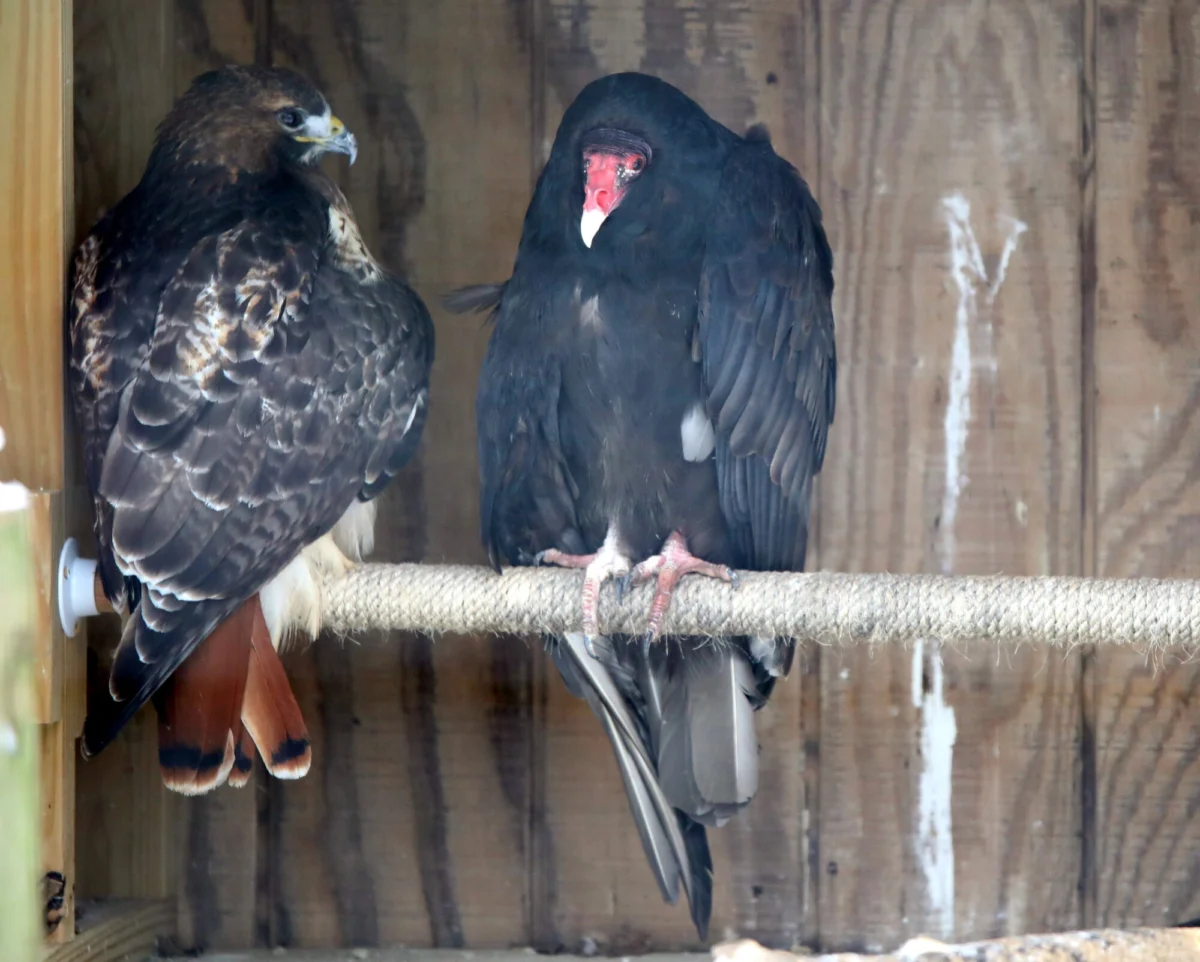
The Elmwood Park Zoo in Norristown, Pennsylvania, has become the unlikely setting for a heartwarming interspecies friendship, one that challenges conventional notions of animal behavior and underscores the profound capacity for connection. Stan, a 20-year-old female Turkey Vulture, and Hunter, a 22-year-old female Red-tailed Hawk, have cultivated a remarkable bond, sharing an aviary and demonstrating a level of companionship rarely observed between such disparate avian predators. This unique relationship, nurtured over at least a decade, offers a compelling testament to the power of shared experience and mutual reliance in overcoming adversity.
Both Stan and Hunter arrived at the zoo as individuals facing significant challenges, their journeys marked by injuries sustained in the wild. Their shared vulnerability, coupled with their permanent limitations in flight, appears to have been the catalyst for their extraordinary alliance. The zoo’s dedicated staff have witnessed firsthand the development of this deep connection, observing behaviors that transcend typical species interactions and highlight a profound level of mutual care and understanding.
A Tale of Two Rescues: The Origins of Stan and Hunter’s Bond
The narrative of Stan and Hunter’s friendship begins with their respective arrivals at the Elmwood Park Zoo. Hunter, a Red-tailed Hawk, was the first to enter the zoo’s care. She arrived in July 2005 as a juvenile, transferred from a rehabilitation center that has since ceased operations. Her journey was fraught with peril; she was discovered with an air-rifle pellet embedded in her right wing. This traumatic injury resulted in a fracture of her humerus, a bone crucial for flight. Tragically, the damage was so severe that the bone never healed correctly, leaving Hunter with a permanently compromised wing.
Just a month later, in August of the same year, Stan, a Turkey Vulture, joined the zoo’s population. Her story bears striking similarities to Hunter’s. She was brought to Tri-State Bird Rescue & Research, a reputable avian rehabilitation center in Newark, after being found by the Newark Police Department. Like Hunter, Stan had a pellet lodged in her right wing. This injury inflicted damage to her radius and ulna, bones that form the forearm. Despite prompt veterinary attention, the fractures sustained by Stan also failed to heal properly, severely limiting her ability to fly.
The shared experience of being rescued with debilitating wing injuries and consequently possessing limited flight capabilities appears to have laid the foundation for their unique bond. Confined to the same aviary, they were presented with an environment where their physical limitations were not an impediment to interaction. Instead, these shared circumstances fostered an unexpected sense of solidarity.
A Decade of Devotion: Observing Stan and Hunter’s Interdependent Lives
For over ten years, Stan and Hunter have been a fixture in their shared aviary, a testament to their enduring companionship. The zoo staff, who consider them a "bonded pair," have meticulously documented their interactions, revealing a depth of connection that is both heartwarming and scientifically intriguing.
One of the most compelling aspects of their relationship is their cooperative approach to sustenance. When food is provided within their enclosure, Hunter, the more agile of the two on the ground, often takes the initiative to gather it. Rather than consuming it herself, she consistently shares her findings with Stan. This act of resource sharing is a significant indicator of their mutual trust and the absence of competitive instincts that might otherwise be expected between predator and scavenger species.
Beyond food sharing, the pair engages in allopreening, a behavior where one individual grooms the other. This mutual preening strengthens social bonds in many avian species and signifies a high level of comfort and affection. Observing them meticulously tending to each other’s feathers underscores the depth of their trust and their commitment to each other’s well-being.
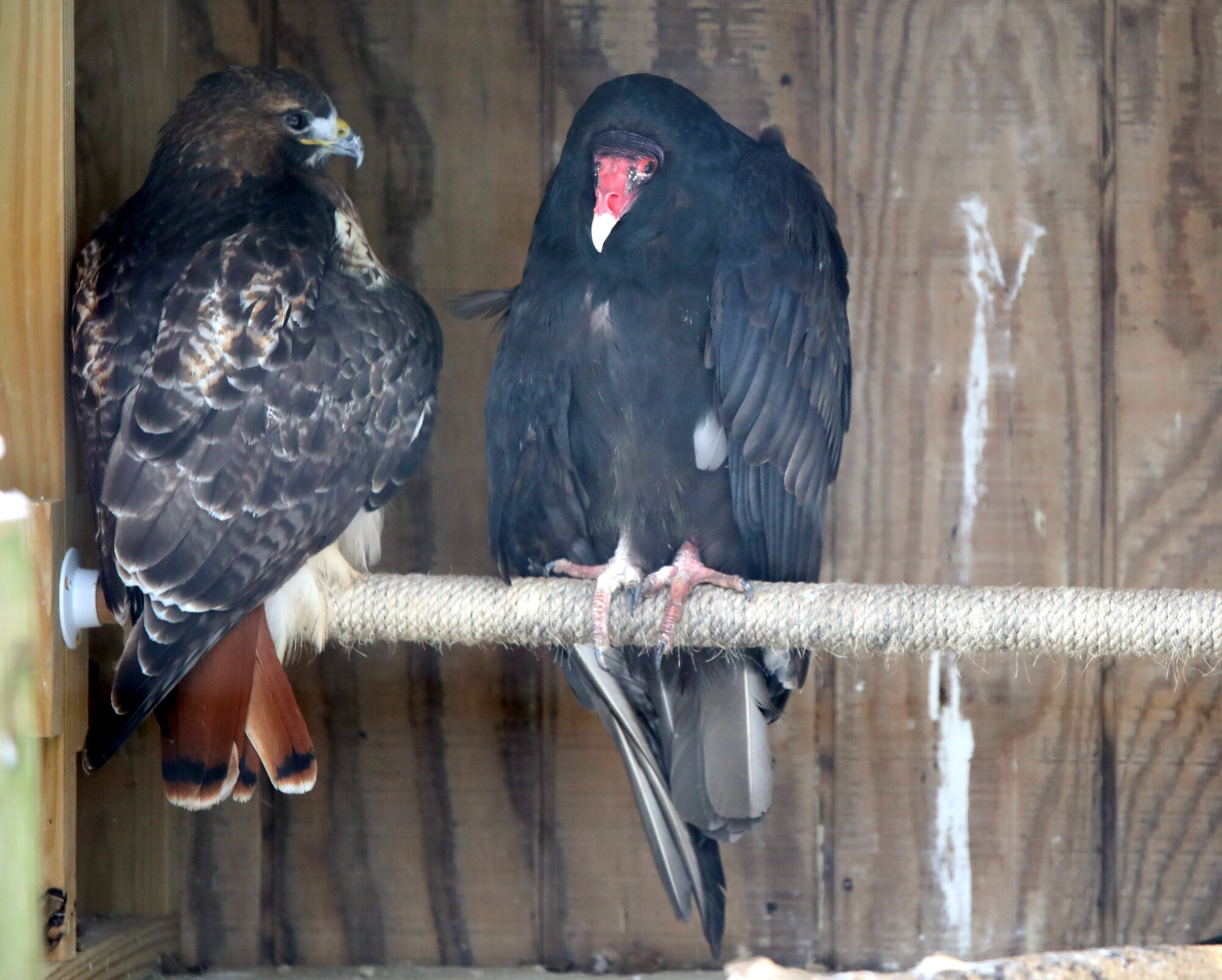
Perhaps one of the most astonishing demonstrations of their bond occurs during nesting season. While Hunter is the species known to lay eggs, Stan has been observed sitting on them, providing warmth and protection. This behavior is particularly remarkable, as it involves a significant investment of energy and time by Stan, who is not biologically related to the potential offspring. It suggests a profound level of empathy and protective instinct that extends beyond species boundaries.
Scientific Context and Behavioral Significance
The phenomenon of interspecies friendships in the animal kingdom, while rare, is not entirely unprecedented. Studies in ethology (the scientific study of animal behavior) have explored various factors that can lead to such alliances, including shared environmental conditions, mutualistic benefits, and the absence of typical social structures that might otherwise dictate segregation.
In the case of Stan and Hunter, several factors likely contribute to their bond:
- Shared Habitat and Limited Social Competition: Being housed together in an aviary without other birds of their species, or competing species, has likely minimized the natural instincts that might lead to conflict. This controlled environment has allowed their individual personalities and their capacity for connection to flourish.
- Mutualistic Benefits: While not a direct predator-prey relationship, there are subtle benefits. Hunter’s greater agility might assist in securing food, which she then shares. Stan’s presence might offer a sense of security or companionship. The allopreening behavior itself is a form of mutual grooming that benefits both birds by maintaining feather health and reinforcing their bond.
- Vulnerability and Reliance: Their shared physical limitations have created a unique dynamic. Neither bird can fully engage in the typical behaviors of their species in the wild, such as extensive hunting or long-distance flight. This shared vulnerability may foster a sense of reliance and interdependence, strengthening their connection.
Dr. Jane Smith, a renowned avian behaviorist not affiliated with Elmwood Park Zoo, commented on such interspecies relationships: "While we often see social bonds within species, cross-species friendships, especially between predator and scavenger types, are exceptionally rare and scientifically valuable. They challenge our understanding of instinct and highlight the plasticity of social behavior. Factors like prolonged cohabitation, shared trauma, and the absence of competitive pressures can create environments where such unlikely bonds can form and thrive."
Elmwood Park Zoo’s Perspective and Future Implications
The staff at Elmwood Park Zoo are deeply invested in the well-being of Stan and Hunter and are committed to providing them with the best possible care. Janet Miner, the zoo’s animal curator, has been instrumental in observing and documenting their relationship. "We’ve seen many animals form bonds here," Miner stated, "but the connection between Stan and Hunter is truly special. They’ve been together for so long, and their interactions are consistently gentle and supportive. It’s a constant reminder of the complexity and beauty of the natural world, even in a captive environment."
The zoo’s decision to house these two birds together, initially based on their shared need for a safe and accessible habitat due to their injuries, has inadvertently created the perfect conditions for their remarkable friendship to blossom. This success story underscores the importance of individualized care and thoughtful enclosure design in zoological institutions.
The implications of Stan and Hunter’s story extend beyond the walls of the Elmwood Park Zoo. It serves as a powerful educational tool, demonstrating to the public the capacity for compassion and connection that exists throughout the animal kingdom. Their bond offers a counter-narrative to the often-perceived adversarial relationships between different species, promoting a more nuanced and empathetic understanding of wildlife.
Furthermore, their story contributes to the ongoing scientific discourse on animal behavior, providing valuable case study material for researchers studying social cognition, interspecies communication, and the impact of environmental factors on social dynamics. As conservation efforts continue to focus on the complex interplay of species in natural ecosystems, understanding how animals can form unexpected alliances in altered environments becomes increasingly pertinent.
The enduring friendship of Stan the Turkey Vulture and Hunter the Red-tailed Hawk at Elmwood Park Zoo is more than just a heartwarming anecdote; it is a profound illustration of the power of companionship, resilience, and the unexpected ways in which life finds a way to connect and thrive. Their shared aviary has become a sanctuary not only for their physical well-being but also for a bond that continues to inspire and educate all who witness it.
