
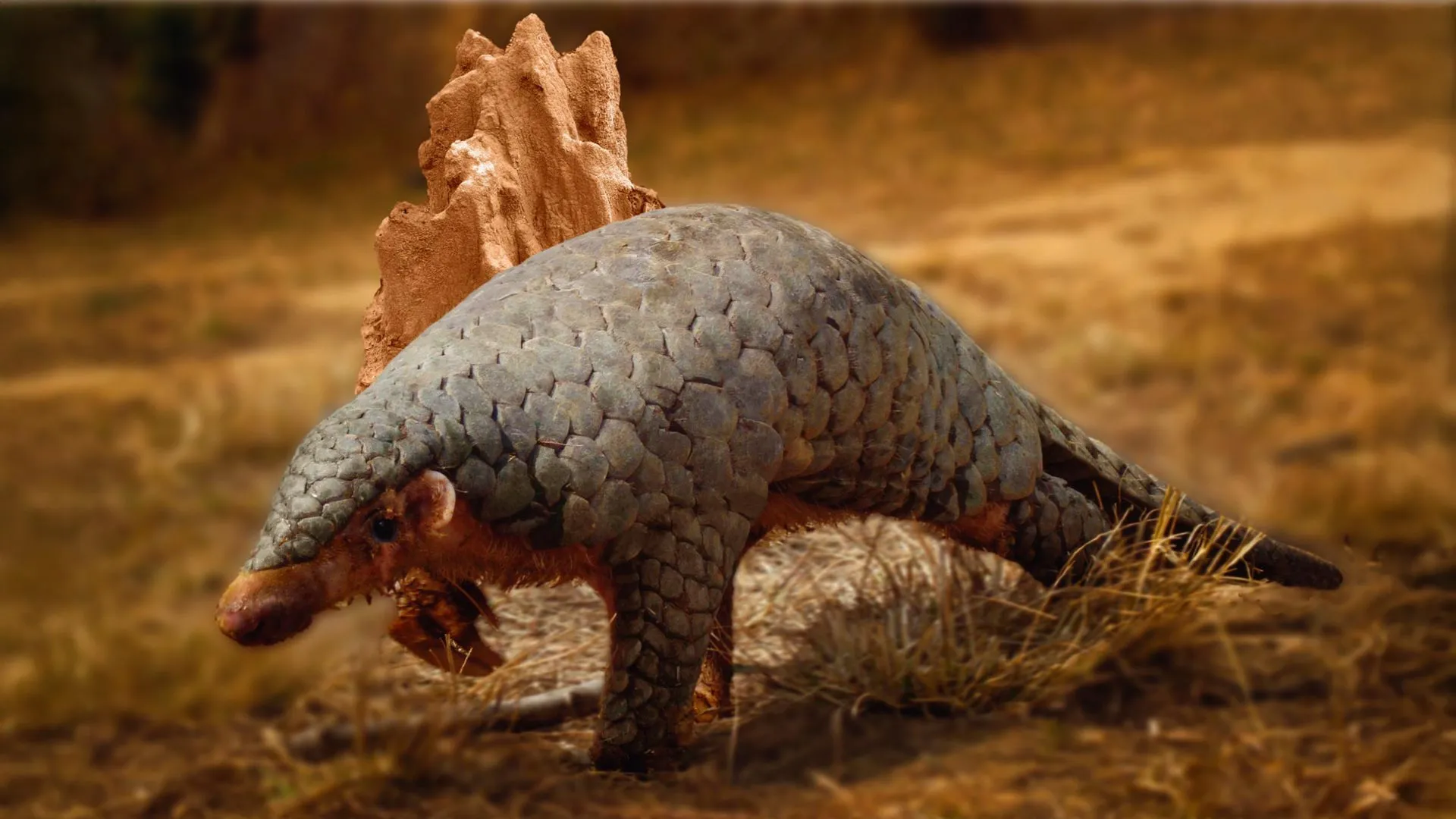
With overlapping, pinecone-like keratin scales and elongated, powerful tails, pangolins look as though they stepped straight out of a prehistoric epoch. These solitary, nocturnal mammals—found exclusively across tropical and subtropical regions of Africa and Asia—play a vital ecological role by consuming millions of ants and termites, thereby regulating insect populations and aerating the soil. Yet, despite surviving millions of years of evolutionary pressure, these vulnerable creatures now face an existential threat entirely of human making. Regarded as the most heavily trafficked mammals on Earth, pangolins are relentlessly targeted by international poaching syndicates, driven by a lucrative black-market demand for their scales, which are utilized in traditional medicine, and their meat, which is considered a delicacy in certain regions.
Now, an international coalition of researchers has confirmed the existence of a previously unrecognized Asian pangolin species, Manis aurita, native to the rugged terrain of Nepal and Northern India. Published in the peer-reviewed journal Communications Biology, the landmark study resolves long-standing ambiguities in pangolin taxonomy. By clarifying how distinct lineages are related, establishing their precise geographical boundaries, and detailing anatomical differences, the findings provide conservationists and law enforcement agencies with a powerful new toolkit to combat wildlife crime, trace illegal trade routes, and refine protection strategies for one of the planet’s most endangered animal groups.
The discovery marks a monumental shift in global conservation biology, emphasizing that accurate taxonomic identification is a fundamental prerequisite for safeguarding biodiversity. Without knowing the exact boundaries of a species, conservation planning risks misallocating resources or mishandling vulnerable animal populations.
Untangling a Complex Evolutionary Web
The recent taxonomic revision of the Himalayan pangolin represents the culmination of years of meticulous detective work, merging modern molecular genetics with historical natural history archives. The scientific unraveling began in earnest during the early 2020s, as researchers started noticing subtle genetic and morphological discrepancies among animals traditionally lumped together under the broad classification of the Chinese pangolin (Manis pentadactyla).
In 2025, an independent research team published findings demonstrating that what was historically classified as a single species actually encompassed two distinct evolutionary lineages. While true Chinese pangolins predominantly inhabit regions within China, a separate population thrives along the Himalayan foothills, spanning parts of Nepal, India, Bhutan, and Myanmar. Initially, researchers designated this mountain-dwelling form as Manis indoburmanica, commonly referred to as the Indo-Burmese pangolin.
However, the formal nomenclature of zoological science is governed by strict rules of priority. Under international biological naming codes, when multiple scientific names are given to the same species, the earliest validly published name takes historical precedence. Simultaneously, a separate international research team—co-led by scientists from the Field Museum, the South China Biodiversity Research Center at Guangzhou University, and the Guangdong Academy of Forestry—had been conducting a decade-long investigation into global pangolin evolution, integrating DNA sequencing with detailed anatomical measurements to map the family tree.
During their extensive review of historical literature and museum records, these researchers encountered references to Manis aurita, a pangolin species originally described and cataloged in 1836. Over the subsequent decades, as taxonomy shifted, M. aurita had been systematically sidelined and demoted to a mere subspecies of the Chinese pangolin. This historical categorization left the scientific community with a complex taxonomic riddle: What was the evolutionary relationship between the newly proposed M. indoburmanica and the long-forgotten M. aurita? Were they geographically isolated variants of the same species, or were they entirely separate taxonomic entities?
Unlocking History: DNA Extraction from 1836
Answering this evolutionary puzzle required accessing genetic material from the distant past. The definitive breakthrough came from the historic halls of the Natural History Museum in London, which houses an extensive repository of taxidermy specimens collected during the colonial era.
Leveraging cutting-edge ancient DNA extraction and sequencing techniques, specialists at the museum successfully isolated and sequenced genetic material directly from the historic type specimen of Manis aurita. Collected in Nepal, this fragile physical specimen has weathered nearly 190 years of curation, dating all the way back to 1836.
When researchers compared the genetic profile extracted from the 19th-century London specimen against modern tissue and blood samples gathered from Himalayan pangolins, the genetic match was absolute. The DNA data proved unequivocally that the animals recently dubbed M. indoburmanica in 2025 were, in fact, living representatives of the exact species first formally documented and named nearly two centuries prior as M. aurita. Because historical priority dictates naming conventions, Manis aurita was officially resurrected as the valid scientific name for the Himalayan pangolin.
This rigorous validation process underscores the irreplaceable value of natural history museums. In an era where modern field biologists frequently struggle to locate elusive, heavily hunted wild populations, historical museum archives provide a vital biological library. They capture a cross-section of genetic diversity across space and time, allowing modern researchers to analyze specimens from habitats that may now be entirely devoid of wildlife.
Anatomical and Geographical Distinctions
Beyond genetic sequencing, the study highlights critical morphological and ecological differences that distinguish Manis aurita from its relative, the true Chinese pangolin. Although the two species share superficial physical similarities, close anatomical analysis reveals clear points of divergence.
According to Dr. Anderson Feijó, the Negaunee Assistant Curator of Mammals at the Field Museum and co-corresponding author of the study, the Himalayan pangolin possesses a measurably larger overall body mass, a more elongated tail, and noticeably smaller external ears compared to the Chinese pangolin. Ironically, the specific epithet aurita—derived from Latin roots—was originally chosen by 19th-century naturalists to highlight the animal’s unique ear morphology, a feature now validated by modern biometric analysis.
Furthermore, the two species are geographically segregated. Their known natural ranges do not overlap, occupying distinct ecological niches separated by topography and climate. For endangered taxa facing intense anthropogenic pressures, understanding precise geographic boundaries is vital. Misidentifying species limits can compromise field surveys, obscure population decline trends, and undermine local conservation laws designed to protect specific habitats.
Strengthening Wildlife Forensics and Anti-Poaching Enforcement
The global illegal wildlife trade operates as a highly organized, multi-billion-dollar enterprise, with pangolins among its most frequent victims. Conservation experts estimate that over a million pangolins have been poached from the wild over the past two decades, driven largely by international demand from East Asia, where their scales are sought for traditional pharmacopeia, despite a lack of clinical evidence supporting their medicinal efficacy.
Combating this illicit trade has historically presented severe enforcement challenges for customs officials and wildlife rangers. Unlike charismatic megafauna such as elephants or rhinos—whose ivory and horns possess unique visual traits—seized pangolin shipments almost universally consist of dried, stripped keratin scales packed into sacks or shipping containers rather than intact carcasses.
"In the marketplaces, you basically only find pangolin scales, not the whole animals, which makes it hard to know which species are being hunted and where they are coming from," explains Feijó. Without intact anatomical specimens, local law enforcement agencies have struggled to determine whether confiscated contraband originated from African pangolins, Chinese pangolins, Sunda pangolins, or the newly resurrected Himalayan species.
The DNA methodologies validated in this study bridge this critical forensic gap. By applying rapid genetic testing protocols to confiscated scale shipments, wildlife forensic scientists can now accurately trace the genetic signature of the product back to its specific species of origin. More importantly, this data can be cross-referenced with geographic distribution maps to pinpoint exact poaching hotspots.
This forensic capability transforms reactive seizures into proactive intelligence. Instead of merely intercepting illicit shipments at borders, international law enforcement agencies can work backward from seized contraband to identify the specific geographic populations and criminal networks driving the slaughter, enabling targeted interventions in source countries like Nepal and India.
Broader Implications for Conservation and Reintroduction
The formal recognition of Manis aurita also holds profound implications for conservation management, captive breeding, and species reintroduction initiatives. Across Asia, various non-governmental organizations and governmental agencies have established rescue and rehabilitation centers for pangolins recovered from poachers. Historically, the absence of clear taxonomic boundaries raised the alarming risk of accidental hybridization or the inappropriate relocation of animals.
For instance, conservationists attempting to restore local wildlife populations might have previously released captive Chinese pangolins into the high-altitude forests of Nepal, unaware that the local ecosystem historically supported a completely distinct evolutionary lineage. Such geographic mixing can dilute local genetic adaptations, introduce novel pathogens, or result in low survival rates for reintroduced animals unsuited to local climatic conditions.
By precisely mapping the physical boundaries and ecological limits of Manis aurita, conservation planners can now design scientifically rigorous reintroduction protocols. Ensuring that the correct species is returned to its native habitat significantly boosts the long-term viability of wild populations.
A Collaborative Scientific Triumph
The realization of this taxonomic breakthrough required a massive collaborative effort, transcending institutional and international boundaries. The research team behind the study brought together leading experts from diverse organizations, including the Field Museum (USA), Guangzhou University (China), Nepal Engineering College at Pokhara University (Nepal), the Chinese Academy of Sciences, the University of Washington, the Smithsonian National Museum of Natural History, the University of Sevilla (Spain), the Guangdong Academy of Forestry, Tribhuvan University (Nepal), Aspect Ecology Oxfordshire (UK), the Chinese Wildlife Forensic Science Service, and the Chengdu University of Traditional Chinese Medicine.
As Narayan Koju, a researcher at Nepal Engineering College and the study’s first author, notes, the findings validate more than five years of continuous field research that began with anomalous field data collected in the Himalayan foothills.
"The confirmation of Manis aurita as a valid species demonstrates the importance of long-term research, international collaboration, and museum collections," Koju stated. "Most importantly, it provides a strong scientific basis for conservation planning, wildlife forensics, and efforts to protect one of the world’s most trafficked mammals from extinction."
Echoing this sentiment, Dr. Yan Hua of the Guangdong Academy of Forestry emphasizes that basic taxonomic research is not merely an academic exercise, but an urgent practical necessity. "This taxonomic clarification provides a crucial scientific basis for combating illegal poaching and lays the groundwork for protecting this cryptic endangered species."
Ultimately, the rediscovery and validation of Manis aurita serves as both a scientific triumph and an urgent reminder. It highlights how much of the natural world remains poorly understood, even among mammals large enough to be readily observed. As global conservationists race against the clock to outpace extinction rates driven by human activity, the fusion of historical museum archives, modern genetics, and international cooperation offers a vital beacon of hope for protecting the earth’s most vulnerable inhabitants before they disappear forever.
