
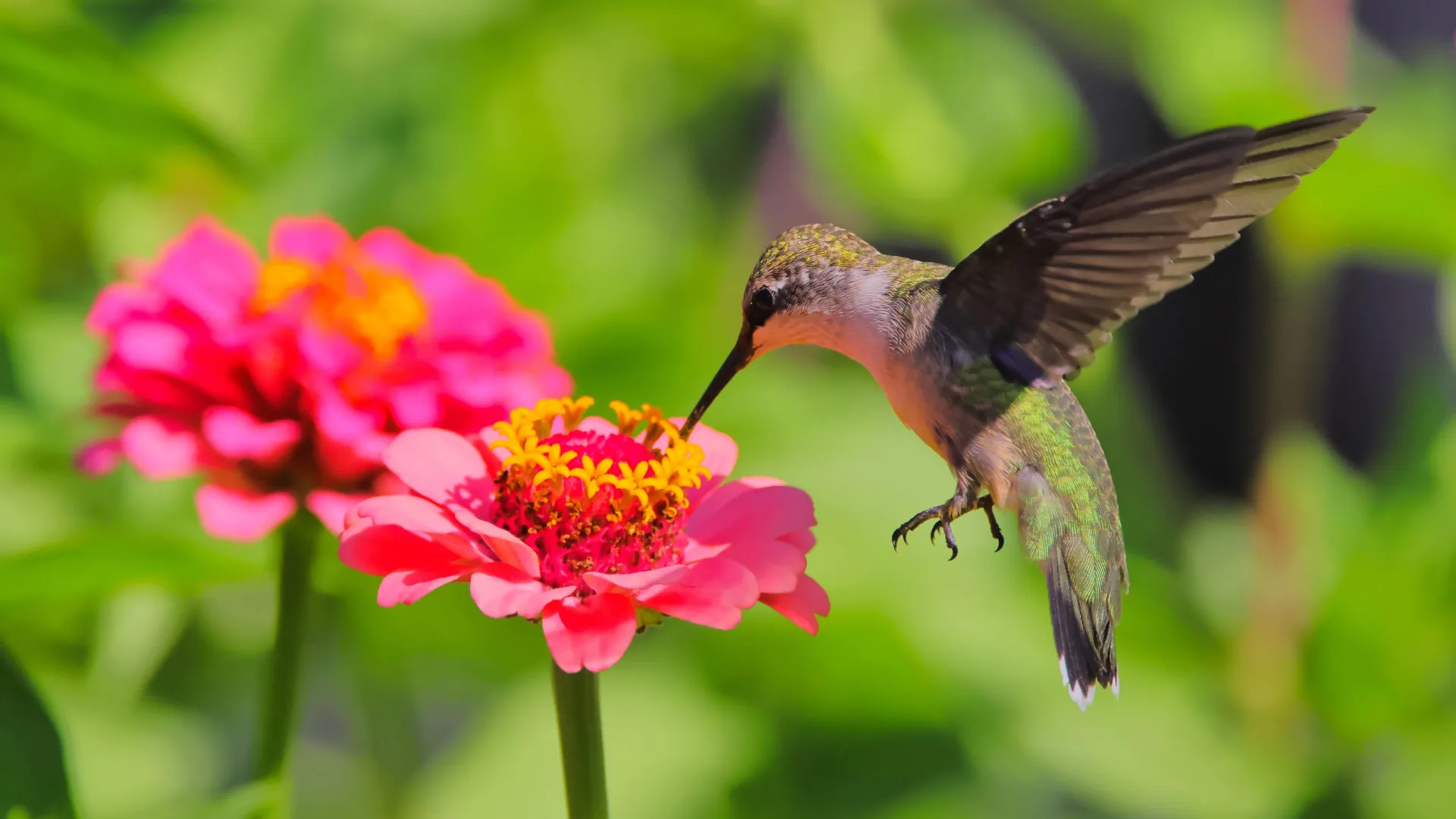
As bees, hummingbirds, and sunbirds dart gracefully from blossom to blossom in a delicate ecological dance, fulfilling their evolutionary duty as vital pollinators, they are unknowingly partaking in a botanical cocktail hour. While these creatures are ostensibly pursuing sugary nectar to sustain their high-energy lifestyles, groundbreaking research has revealed that they are also regularly consuming ethanol. This pervasive natural alcohol, long assumed to be a rarity in fresh floral environments, is actually a standard component of the diets of many nectar-feeding animals, opening a fascinating new chapter in the study of comparative evolutionary biology, animal metabolism, and ecological interaction.
The scope of this phenomenon was brought to light through the first comprehensive, large-scale survey of alcohol content in floral nectar, conducted by a team of biologists at the University of California, Berkeley. Their findings, published in the journal Royal Society Open Science, indicate that naturally occurring ethanol is not an anomaly restricted to overripe, fallen fruit or human-made bird feeders, but is instead a ubiquitous element found in the everyday forage of pollinators across the globe.
Uncovering the Hidden Brew: The UC Berkeley Nectar Survey
The investigation was spearheaded by doctoral student Aleksey Maro and postdoctoral fellow Ammon Corl, working alongside a distinguished team of integrative biology professors and museum curators at UC Berkeley, including Rauri Bowie, Jimmy McGuire, and Robert Dudley. To quantify the presence of alcohol in the wild, the research team collected and analyzed nectar samples from 29 distinct plant species.
Utilizing precise enzymatic assays to measure chemical compositions, the researchers detected ethanol in at least one sample from an overwhelming 26 of the 29 species examined. While the vast majority of these samples contained only trace amounts—likely synthesized as a byproduct of wild yeasts fermenting the simple sugars naturally present in the nectar—the concentrations varied. In one notable instance, a sample reached an ethanol concentration of 0.056% by weight, which is roughly equivalent to a 1/10 proof beverage.
Though these percentages may sound negligible to human sensibilities, the ecological reality of how pollinators consume nectar paints a vastly different picture. Nectar is not merely a supplementary snack for these animals; it is their primary, indispensable fuel source, consumed in staggering quantities relative to their miniature body sizes.
Scaling the Consumption: From Tiny Sips to Human-Equivalent Doses
To understand the real-world impact of these dietary levels, the UC Berkeley team calculated the absolute alcohol intake of various pollinators based on their daily caloric and fluid requirements. Consider the Anna’s hummingbird (Calypte anna), a vibrant and ubiquitous resident of the Pacific coast of North America. These birds possess legendary metabolic rates, requiring them to consume between 50% and 150% of their total body weight in nectar every single day just to stay aloft and maintain their body temperature.
Factoring in these voracious feeding habits, the researchers estimate that an average Anna’s hummingbird ingests roughly 0.2 grams of ethanol per kilogram of body weight daily. To put this figure into a relatable human perspective, this relative intake level is directly comparable to a human adult consuming a standard alcoholic drink every day.
Despite this regular and chronic exposure, these creatures do not exhibit the typical, debilitating signs of inebriation. The secret lies in their hyper-accelerated biology. "Hummingbirds are like little furnaces. They burn through everything really quick, so you don’t expect anything to accumulate in their bloodstream," explained Aleksey Maro. Because their metabolic engines process sugars and liquids at astonishing speeds, the ethanol is broken down and oxidized long before it can disrupt their central nervous systems or compromise their flight mechanics.
A Chronology of Discovery: Feeding Trials and Metabolic Markers
This latest study did not emerge in a vacuum; it represents the culmination of several years of systematic inquiry into the intersection of animal behavior, diet, and ethanol. The research lineage traces back through a series of carefully designed experiments and physiological analyses conducted across the Berkeley campus.
Earlier phases of the research program involved field experiments utilizing artificial feeders placed outside the office of Professor Robert Dudley. In these trials, researchers offered Anna’s hummingbirds sugar water laced with varying concentrations of alcohol. The results demonstrated a clear behavioral threshold: the birds were largely indifferent to, and readily consumed, solutions containing up to 1% alcohol by volume. However, once concentrations crossed the 2% threshold, the hummingbirds exhibited a marked behavioral shift, visiting the feeders about half as often.
"Somehow they are metering their intake, so maybe zero to 1% is a more likely concentration that they would find in the wild than anything higher," Dudley noted, highlighting the sophisticated sensory mechanisms these birds possess to evaluate their food sources.
Further strengthening the case for regular alcohol consumption and processing, a separate study led by former UC Berkeley graduate student Cynthia Wang-Claypool analyzed the feathers of wild birds, including Anna’s hummingbirds. The laboratory analysis detected ethyl glucuronide—a definitive biochemical byproduct of ethanol metabolism—embedded within the feather structures. This discovery confirmed that the birds are not simply passing the alcohol through their systems; they are actively metabolizing it in a physiological pathway strikingly similar to that utilized by mammals.
Cross-Species Comparisons: From Honeybees to Tree Shrews
To contextualize the findings regarding nectar-feeding birds, the UC Berkeley team broadened their analytical lens to compare ethanol intake across a diverse spectrum of animal taxa. Because comprehensive field-feeding data can be challenging to capture, the researchers focused their comparative framework on two specific hummingbird species in the Americas and three species of sunbirds in South Africa. Sunbirds, which feed extensively on native flora such as the honeybush (Melianthus major), occupy an ecological niche in Africa functionally identical to that of hummingbirds in the Western Hemisphere.
When evaluating daily dietary ethanol across species based on standard metabolic scaling, the researchers found that nectar-feeding birds ingest between 0.19 and 0.27 grams of ethanol per kilogram of body weight each day when foraging on native flowers. Interestingly, the team’s feeder experiments suggested that Anna’s hummingbirds foraging on heavily fermented sugar water in artificial settings may ingest even higher amounts—averaging roughly 0.30 grams per kilogram daily—than they typically encounter in pristine wild habitats.
Placing these avian metrics into a wider biological context yielded surprising comparisons. Among the animals analyzed, the pen-tailed tree shrew recorded the highest relative daily alcohol intake, clocking in at an impressive 1.4 grams per kilogram of body weight, largely due to its penchant for the fermented nectar of bertam palms. Conversely, the European honeybee sat at the lower end of the spectrum at approximately 0.05 grams per kilogram daily. Meanwhile, fruit-eating chimpanzees and humans consuming a standard daily drink (approximately 0.14 grams per kilogram) fall well within the continuum of animals that routinely process dietary alcohol.
Beyond Intoxication: Behavioral and Physiological Implications
While the absence of overt drunkenness in hummingbirds and bees is clear, researchers emphasize that the presence of ethanol in nectar may carry subtle, yet significant, biological consequences. Nectar is a complex chemical matrix that often contains bioactive secondary compounds, such as plant-derived nicotine and caffeine, which are well-documented to influence pollinator memory, learning, and foraging fidelity. Ethanol may function similarly, acting as an appetitive cue or a mild pharmacological agent.
"We don’t know what kind of signaling or appetitive properties the alcohol has," Maro remarked. "There are other things that the ethanol could be doing aside from creating a buzz, like with humans."
Professor Robert Dudley echoed these sentiments, suggesting that the evolutionary persistence of ethanol in floral resources implies a potential utility rather than merely an unavoidable byproduct. "There may be other kinds of effects specific to the foraging biology of the species in question that could be beneficial," Dudley stated. "They’re burning it so fast, I’m guessing that they probably aren’t suffering inebriating effects. But it may also have other consequences for their behavior."
A Broader Evolutionary Perspective
The publication of these findings in Royal Society Open Science represents a major milestone in a broader, five-year research initiative supported by the National Science Foundation. This extensive project aims to gather comprehensive genetic, physiological, and ecological data from hummingbirds and sunbirds to unravel how these specialized lineages adapt to extreme environmental pressures, high altitudes, sugar-dense diets, and environments rich in naturally fermented resources.
The implications of this research extend far beyond the immediate behavior of garden birds and bees. They challenge long-held anthropocentric assumptions about how animals interact with alcohol and suggest that the human physiological response to ethanol may be just one variation of a much more ancient, widespread evolutionary adaptation.
"These studies suggest that there may be a broad range of physiological adaptations across the animal kingdom to the ubiquity of dietary ethanol, and that the responses we see in humans may not be representative of all primates or of all animals generally," Dudley concluded. "Maybe there are other physiological detoxification pathways or other kinds of nutritional effects of ethanol for animals that are consuming it every day of their lives. That’s the interesting thing—this is chronic through the course of the day, but that’s a lifetime exposure post-weaning. It just means that the comparative biology of ethanol ingestion deserves further study."
As researchers continue to probe the chemical complexities of the natural world, it is increasingly clear that the floral banquet is far more nuanced than it appears. Far from sipping pure, innocent sugar water, nature’s most dedicated pollinators are partaking in an ancient, microscopic brew—one that has quietly shaped the evolutionary trajectory of flight, metabolism, and behavior across the animal kingdom for millions of years.
