
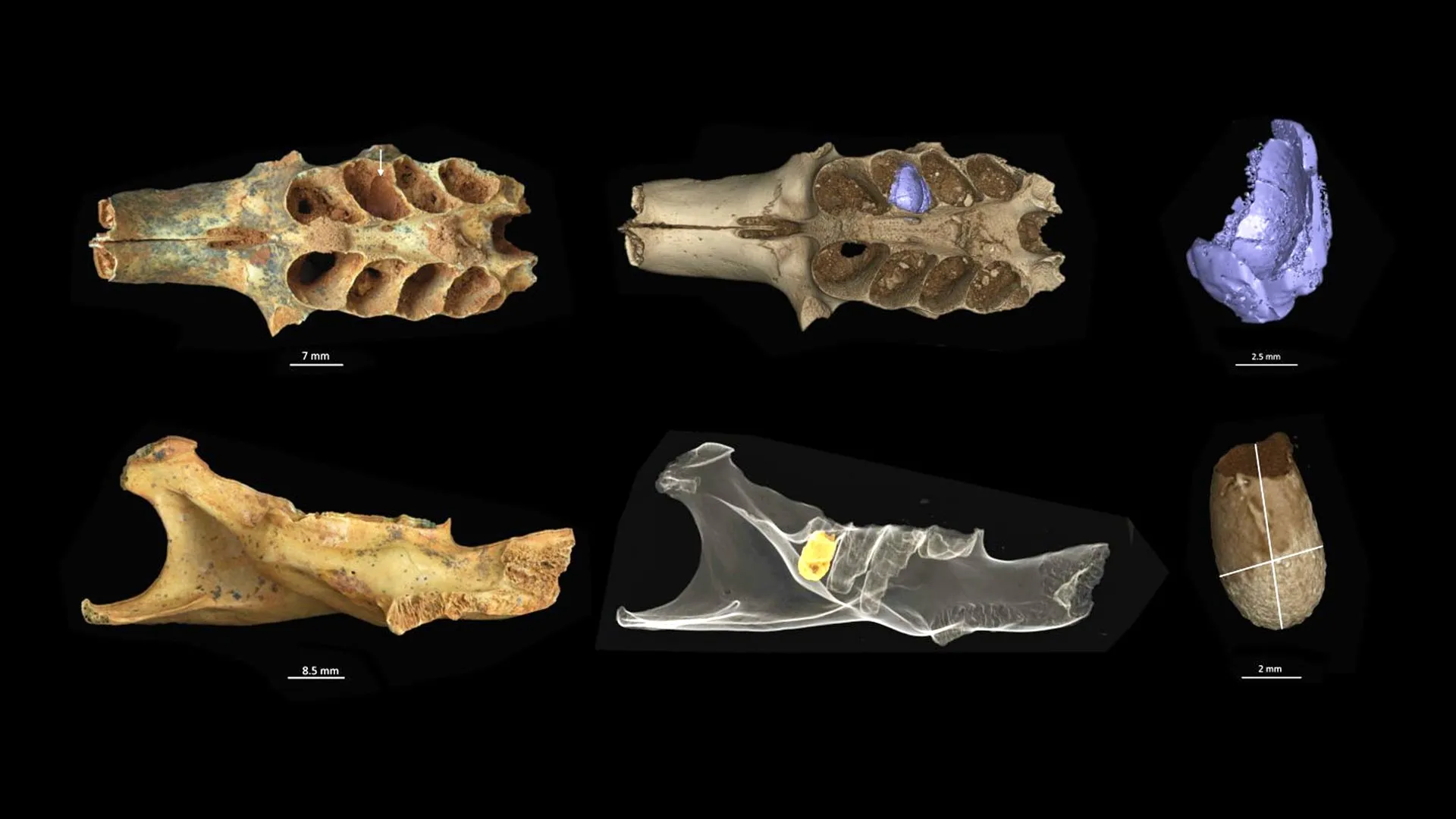
This intriguing paleontological riddle encapsulates a remarkable discovery that unfolded over millennia on the Caribbean island of Hispaniola. It tells a story of ancient predation, geological fortune, and the astonishing adaptability of life, culminating in a finding that redefines our understanding of invertebrate behavior and fossil preservation. The narrative begins thousands of years ago, with a formidable apex predator, the giant barn owl, carrying its prey, a hutia, back to its cavernous roost. This was no isolated event; the cave served as a long-term larder, a silent repository where countless meals were consumed, and the skeletal remnants of the unlucky rodents accumulated. Eons later, a tiny burrowing bee, facing environmental pressures on the harsh, rocky surface, found an ingenious solution for survival deep within this ossified debris, transforming fossilized remains into secure nurseries for its young.
Hispaniola’s Ancient Ecosystem and the Giant Predator
The island of Hispaniola, shared today by Haiti and the Dominican Republic, was once home to a vibrant and unique ecosystem, largely isolated from continental influences. Among its most impressive inhabitants was Tyto pollens, an extinct species of giant barn owl. Unlike its modern relatives, Tyto pollens was a colossal bird, standing nearly a meter tall, with a wingspan that would have dwarfed any contemporary owl. As a dominant nocturnal predator, it played a crucial role in regulating the island’s ancient fauna. Its preferred prey included various endemic rodents and ground sloths, with hutias being a staple.
Hutias, represented in this discovery by species likely related to the extinct Quemisia gravis, were large, caviomorph rodents endemic to the Caribbean. They filled ecological niches similar to rabbits or guinea pigs in other parts of the world. These creatures, often slow-moving and terrestrial, made easy targets for the powerful talons of Tyto pollens. The owl’s habit of returning to the same cave over generations to feed its young created vast accumulations of disarticulated bones and teeth – a paleontologist’s treasure trove, and, as it turned out, a future architect’s blueprint. The Cueva de Mono in the southern Dominican Republic, the site of this extraordinary discovery, served precisely this purpose, becoming a natural archive of ancient Hispaniolan life.
The meal, for the hutia, ended swiftly. Its remains, picked clean by the owlets, were left scattered across the cave floor, gradually covered by fine, clay-rich silt. This sediment, washed in from the karst landscape above, provided the perfect conditions for fossilization, preserving the bones and teeth for millennia. It was into this deep past that the burrowing bees, much later, arrived, driven by instinct and environmental necessity, searching for a place to build their nests among the debris.
The Unveiling: A Discovery Through Diligence
The initial breakthrough came through the meticulous work of Lazaro Viñola Lopez, then a doctoral student at the Florida Museum of Natural History. His specific interest lay in the hutia species found in Cueva de Mono, which was relatively rare elsewhere on the island. While excavating thousands of fossils from the cave, a site recognized as a long-term feeding ground for giant barn owls, Viñola Lopez made an observation that would eventually rewrite a chapter in paleoecology.
"Usually, when collecting fossils, you get all the sediment out of the alveoli while cleaning the specimen," Viñola Lopez recounted. However, his careful attention to detail led him to deviate from this standard practice. Instead of immediately cleaning every fossil, he paused to inspect them closely. It was during this painstaking examination that he noticed something peculiar within the tiny, empty sockets where hutia teeth once resided – known as alveoli. One cavity, in particular, stood out. Its inner surface was unusually smooth, a stark contrast to the rough, porous texture of bone. This subtle difference, easily missed by a less observant eye, hinted at a story far more complex than a mere bone fragment.
The discovery’s significance lies not just in what was found, but in how it was found. The delicate nature of the trace fossils, or ichnofossils, meant that standard cleaning procedures could have inadvertently destroyed the evidence. Viñola Lopez’s decision to inspect before cleaning proved pivotal, demonstrating the invaluable role of careful fieldwork in uncovering the subtle narratives preserved in stone.
Scientific Scrutiny and Revelation: Wasps or Bees?
Viñola Lopez initially believed he had seen something similar during a previous excavation. "I’d seen something similar in Montana when I was collecting dinosaur fossils in 2014," he recalled. In that instance, he and his colleagues had found wasp cocoons intermingled with dinosaur fossil material. Based on this prior experience, his initial hypothesis was that the smooth-walled structures in the hutia mandibles were fossilized wasp nests. He even mused, "it would be nice to write a short paper reporting the occurrence of these wasp nests in the mandibles."
He shared this idea with his colleague, Mitchell Riegler, also a doctoral student at the museum. Riegler, initially, was less enthusiastic. "I was like, Lazaro, that’s a niche project, and I have a lot of other things to do," he admitted, highlighting the common challenges of juggling multiple research priorities in academia. The idea remained on the back burner for a while, until Riegler accepted a challenge from a former advisor: to write a scientific paper within a week. This seemingly trivial academic game provided the unexpected impetus to revisit the intriguing fossils.
As the team began to delve deeper, reviewing existing research on ichnofossils – trace fossils that record the activity of ancient organisms, such as footprints, droppings, or nests – they encountered a crucial discrepancy. While some wasps do create nests, their construction typically involves chewed plant material mixed with saliva, resulting in a rough, fibrous interior. The structures found within the hutia fossils, however, were distinctly smooth.
This critical detail prompted a re-evaluation. Further research into the nesting habits of various burrowing insects revealed that bees, particularly certain solitary species, often line their nests with a waxy, waterproof secretion. This secretion hardens to create a polished, smooth interior, providing protection and stability for their developing larvae. The evidence was compelling: they had not been studying wasp nests, but rather the exceptionally preserved nests of ancient burrowing bees. This correction immediately elevated the discovery from an interesting observation to a finding of profound scientific significance.
Unprecedented Behavior: Why This Matters
The revelation that these were bee nests, and not wasp nests, made the discovery far more remarkable. The scientific literature contained only one other known instance of burrowing bees nesting inside a cave environment. However, what made the Hispaniolan finding truly unprecedented was the bees’ specific method of nesting: they were using pre-existing fossil structures – the empty alveoli of hutia jaws, the pulp cavities of sloth teeth, and even the neural canals of hutia vertebrae – without altering them.
Previous reports described bees drilling into human bones, demonstrating a capacity for using hard substrates. Yet, the passive occupation of naturally formed cavities within fossilized bone, repurposing ancient biological architecture as ready-made nurseries, was unheard of. This represents an extraordinary example of behavioral adaptation, offering a unique window into the paleoethology (ancient animal behavior) of these insects. It illustrates how environmental pressures can drive species to exploit novel resources and opportunities, even those spanning geological timescales.
The implications for paleoecology are significant. It suggests a level of opportunistic resourcefulness in ancient invertebrates that was previously unappreciated. Furthermore, this discovery provides a rare instance of direct evidence for the nesting behavior of ancient insects, which are typically underrepresented in the fossil record due to their delicate nature. The exceptional preservation conditions within the cave, combined with the structural integrity of the fossilized bones, created a perfect storm for this unique taphonomic (the study of decay and fossilization) event.
Echoes of Ancient Life: Further Evidence
Recognizing the immense importance of their findings, the research team, now comprising Viñola Lopez and Riegler, expanded their study. They consulted with experts in modern bee biology and reviewed extensive scientific literature to ensure the accuracy and context of their conclusions. Viñola Lopez even returned to the Cueva de Mono, examining its geological layers to better understand the chronological sequence of events and the environmental conditions that facilitated such remarkable preservation.
The study’s comprehensive scope revealed that the bees’ nesting sites were not confined solely to hutia jaws. In one instance, a bee nest was meticulously preserved within the pulp cavity of a sloth tooth. Tree sloths were once common inhabitants of the Caribbean, but like many of the island’s unique megafauna, they disappeared after the arrival of humans. Another nest was discovered inside a hutia vertebra, utilizing the space that once housed the animal’s spinal cord. These diverse locations underscore the bees’ opportunistic strategy, utilizing any suitable hollow space available within the bone graveyard.
Advanced imaging techniques, specifically CT scans, provided even more astonishing insights. These scans revealed that some of the cavities contained multiple layers of nests. Instead of laboriously digging new tunnels, certain bees demonstrated a tendency to reuse existing ones if they were empty. In a particularly striking example, six distinct nests were found stacked within a single alveolus, arranged one inside another with remarkable precision, akin to a set of Russian nesting dolls. This "re-use" behavior further highlights the resource efficiency and adaptive strategies employed by these ancient insects, maximizing available resources in a challenging environment.
Environmental Drivers: The Karst Connection
The study also provided a compelling environmental explanation for this unusual nesting behavior. The surrounding landscape of Hispaniola is predominantly karst, a type of terrain characterized by soluble bedrock, typically limestone, which is eroded by water. Karst landscapes are famous for their caves, sinkholes, and underground rivers. However, they are also notorious for their lack of stable, deep soil.
"The area we were collecting in is karst, so it’s made of sharp, edgy limestone, and it’s lost all of its natural soils," Riegler explained, adding a personal anecdote to emphasize the harshness of the environment: "I actually fell on it at one point, so I can tell you all about it."
In such environments, any soil that does accumulate on the surface is often quickly washed into the numerous caves and fissures, settling in pockets and depressions. These isolated deposits within the caves may have provided some of the only viable nesting conditions for burrowing bees in the region. Faced with a surface environment that offered little opportunity for traditional ground-nesting, the bees adapted by moving underground, and then, with extraordinary ingenuity, by repurposing the readily available fossilized bones as ideal, ready-made cavities for their brood. This environmental pressure likely drove the evolution of this unique and unprecedented nesting behavior.
Preserving the Past: The Rescue Mission
The invaluable scientific insights gleaned from Cueva de Mono almost did not come to pass. At one point, the cave faced an existential threat when an attempt was made to develop the land, with plans to convert the ancient natural archive into a septic tank. Such development would have irrevocably destroyed the delicate layers of sediment and the fossils they contained, erasing millennia of ecological history.
Fortunately, the plan was ultimately stopped, but not before the research team had to act swiftly. "We had to go on a rescue mission and get as many fossils out as possible, and we got a lot of them," Viñola Lopez stated, underscoring the urgency and dedication involved in salvaging this critical scientific data. This episode serves as a stark reminder of the constant threats faced by paleontological sites globally and highlights the crucial role of researchers and conservationists in protecting these irreplaceable windows into the past. The rescued fossils now form the basis for continued research, promising further revelations from the cave.
Broader Implications and Future Horizons
The work published by Viñola Lopez and Riegler in the prestigious Proceedings of the Royal Society B offers a remarkable testament to the intricate interconnectedness of life across vast stretches of geological time. It demonstrates how a food chain operating thousands of years ago could inadvertently create the conditions for a completely different species to thrive much later, in an entirely unexpected way. This discovery pushes the boundaries of our understanding of adaptation, resourcefulness, and the complex interplay between geology, biology, and behavior.
The research not only provides direct evidence of ancient bee nesting behavior but also sheds light on the specific environmental pressures that drove such adaptations. It underscores the importance of karst environments as unique natural archives, capable of preserving rare and delicate traces of ancient life that might otherwise be lost.
The researchers are continuing their study of other fossils recovered from Cueva de Mono, anticipating additional findings that will further enrich our understanding of Hispaniola’s ancient ecosystems. This ongoing work promises to unveil even more of the cave’s untold stories, revealing how life can adapt in the most unexpected and ingenious ways, leaving behind clues that span millennia, waiting for careful observation to bring them back to light. The tale of the owl, the hutia, and the bee is a powerful reminder that even the smallest traces of the past can hold profound lessons about the resilience and adaptability of life on Earth.
