
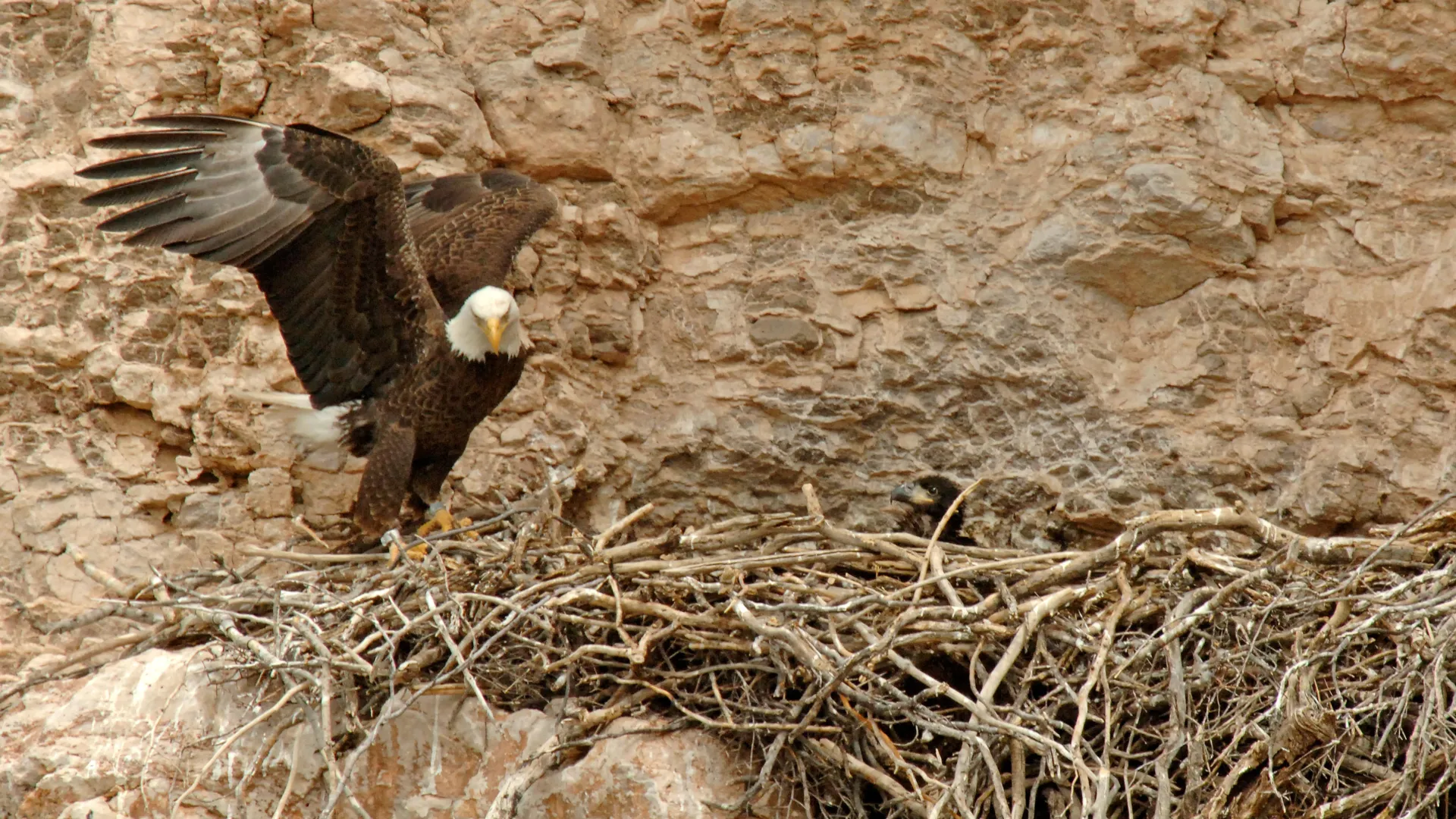
A groundbreaking new study published in the Journal of Raptor Research is challenging long-held assumptions about the migratory patterns of Bald Eagles, revealing that populations from Arizona are embarking on unusual northward journeys, a distinct deviation from the southbound migrations typically observed in temperate regions. The paper, titled "Northward Migrations of Nonbreeding Bald Eagles from Arizona, USA," provides critical insights into the adaptive behaviors of these majestic raptors, particularly in response to environmental shifts. Researchers also documented a singular, compelling case of an eagle that migrated from Arizona to California, a finding that redefines previous understandings of how frequently these birds might disperse from their natal populations. The collective findings underscore the highly exploratory nature of southwestern Bald Eagles, a trait likely honed by the necessity to locate transient food sources, and highlight the urgent need for adaptive conservation strategies as global climates and landscapes continue their relentless transformation. Understanding how wildlife adjusts its movements is paramount for safeguarding vulnerable species and their essential travel corridors.
Unraveling the Mystery of Nonbreeding Eagle Movements
The study, conducted by an Arizona-based research team between 2017 and 2023, meticulously tracked the movements of 24 newly fledged Bald Eagles and two nonbreeding adults. Utilizing advanced satellite transmitters, the researchers were able to map their expansive journeys both within and beyond the state’s borders. While the movements of breeding Bald Eagles in Arizona are relatively well-documented, typically showing them remaining close to their nesting territories for most of the year, a significant knowledge gap has persisted regarding the activities of nonbreeding individuals. This demographic segment, often comprising younger, immature birds, plays a crucial role in population dynamics, and their survival rates can significantly influence the overall health and trajectory of a species. By comparing the movement patterns and survival rates of these nonbreeding eagles with their breeding counterparts, scientists gain a more holistic perspective on the species’ ecological status across its range and the intricate processes that shape population levels.
The tracking devices provided invaluable data, in some instances functioning for up to four years over the seven-year study period, offering an unprecedented glimpse into the life histories of individual birds. Conventional wisdom, even among the scientific community, often posits that North American migratory birds predominantly head south during the nonbreeding season—typically the colder winter months—in search of milder climates and more dependable food sources. However, Arizona’s Bald Eagles present a unique ecological anomaly: their nesting season commences in winter, meaning their nonbreeding period falls during the summer and autumn months. This distinctive temporal inversion of seasonal movement was a key focus for lead author Dr. Caroline D. Cappello, who expressed her intrigue, noting that "northward migratory behavior raises interesting questions about the recent and historical pressures that shape these movement strategies." This counter-intuitive northward push suggests a complex interplay of environmental cues, resource availability, and evolutionary adaptations.
Historical Stopover Sites and Enduring Habitats
A remarkable discovery within the study confirms the enduring ecological significance of specific geographic locations. The tracked eagles frequently utilized many of the same lakes and rivers that had been identified as crucial stopover sites for Bald Eagles in a seminal study conducted in the 1980s. This compelling overlap, spanning multiple decades, strongly supports the hypothesis that these habitats have remained vital gathering points, serving as critical refuges and foraging grounds for successive generations of eagles. Such long-term fidelity to specific sites underscores their irreplaceable value in conservation planning.
Beyond affirming the robust use of the Intermountain Flyway and a pronounced reliance on aquatic ecosystems along their routes, the study also revealed that eagles of varying ages, from fledglings to subadults, undertook migrations extending into the northern U.S. and even southern Canada. Dr. Javan M. Bauder, a coauthor on the study, a USGS researcher, Assistant Unit Leader at the Arizona Cooperative Fish and Wildlife Research Unit, and Assistant Professor at the University of Arizona, emphasized the profound significance of this observation. "Managing and conserving wildlife populations requires that we understand the movement of patterns of individuals of all age classes within those populations," Dr. Bauder stated, highlighting the necessity of comprehensive data for effective stewardship. The research team further noted an interesting developmental trend: as eagles matured, their migration pathways became notably more precise and refined. Most birds tracked for at least two years demonstrated a consistent return to Arizona in the fall of their hatch year after spending the summer months roaming farther north. Researchers speculate that these younger, more exploratory eagles might be capitalizing on seasonal food bonanzas found in northern climes, such as the abundant spawning salmon runs, burgeoning nesting waterfowl populations, or the carcasses of large mammals that become available after winter thaws. Further dedicated research will be essential to definitively ascertain the precise nature of these northern food sources and their role in shaping these unusual migratory patterns.
The Perilous Journeys of Young Raptors
Bald Eagles, like many other raptor species, must navigate a complex array of hazards within an increasingly human-dominated world. The study poignantly illustrated these dangers through the individual journey of one eagle that became a symbol of both the species’ exploratory spirit and its vulnerability. This particular eagle traversed ten U.S. states and four Canadian provinces during her early life, demonstrating an extraordinary range before appearing to settle in northern California. Here, at four years old, she seemed poised to establish a breeding territory, a critical life stage for contributing to population growth. Tragically, her journey was cut short by electrocution, an all-too-common and lethal threat for large birds of prey. Dr. Cappello articulated the profound impact of this loss, explaining that it "underscored the ongoing risks these birds face," and further highlighted the immense challenge of quantifying emigration, a notoriously difficult aspect of population dynamics to measure accurately. Her apparent decision to live and breed in California would have provided an exceptionally rare and valuable insight into the frequency with which Bald Eagles hatched in Arizona disperse to other regions, making her death a significant setback for this particular line of inquiry.
The threats facing young raptors are multifaceted and pervasive. Beyond electrocution, these include poisoning from ubiquitous substances like lead, often ingested from ammunition fragments in carrion, and rodenticides, which bioaccumulate up the food chain. Collisions with rapidly expanding infrastructure, such as wind turbines, pose another significant danger, as do the continuous pressures of habitat loss and degradation. Compounding these existing threats is the overarching uncertainty introduced by a rapidly changing climate, which can alter food availability, disrupt breeding cycles, and shift suitable habitats. By studying raptors across every stage of their life cycle, from the initial exploratory journeys of young birds to the established patterns of breeders, scientists can develop evidence-based recommendations. These recommendations are crucial for identifying and protecting the most critical stopover sites, informing land-use planning, and advocating for modifications to human infrastructure, including the redesign of electrical systems, to enhance the survival prospects for Bald Eagles and other large raptors.
The Broader Implications for Conservation in a Changing World
This study’s findings resonate far beyond the immediate context of Arizona’s Bald Eagles, offering a microcosm of the challenges and adaptations facing wildlife globally. The observed northward migration, a departure from traditional patterns, suggests a flexible behavioral response to environmental pressures, potentially including climate-induced shifts in resource availability or habitat suitability. Such adaptability, while indicative of resilience, also creates new demands for conservation strategies that must themselves be flexible and forward-looking.
The research team strongly advocates for future investigations into route fidelity. As Dr. Cappello noted, "if consistent patterns exist it could help focus conservation efforts on specific, high-use areas along their migratory route." Identifying these consistent corridors would allow for targeted protection efforts, ensuring the viability of these newly recognized northward paths. Furthermore, the study highlights the critical importance of comparative research, urging scientists to analyze these Arizona Bald Eagles against other wildlife populations that exhibit northward migration from the southern fringes of their ranges. Such comparative studies could illuminate the universal tradeoffs, costs, and benefits associated with this specific migration strategy, providing a broader theoretical framework for understanding how species adapt to environmental change.
The recovery of the Bald Eagle from near extinction in the mid-20th century, largely due to the ban of DDT and the protections afforded by the Endangered Species Act, stands as one of conservation’s greatest success stories. Yet, this new research serves as a stark reminder that even recovered populations face novel threats and require ongoing vigilance and adaptive management. The insights gained from tracking individual eagles, understanding their exploratory behaviors, and identifying their vulnerabilities provide the scientific bedrock upon which future conservation efforts must be built. As human development continues to reshape natural landscapes and the climate crisis intensifies, research like this, which meticulously documents and analyzes wildlife movements, is not merely academic; it is an indispensable tool for designing resilient conservation strategies that can protect our planet’s biodiversity for generations to come. The northward flight of Arizona’s Bald Eagles is a powerful symbol of nature’s adaptability, but also a call to action for humanity to match that adaptability with innovative and sustained conservation commitment.
