
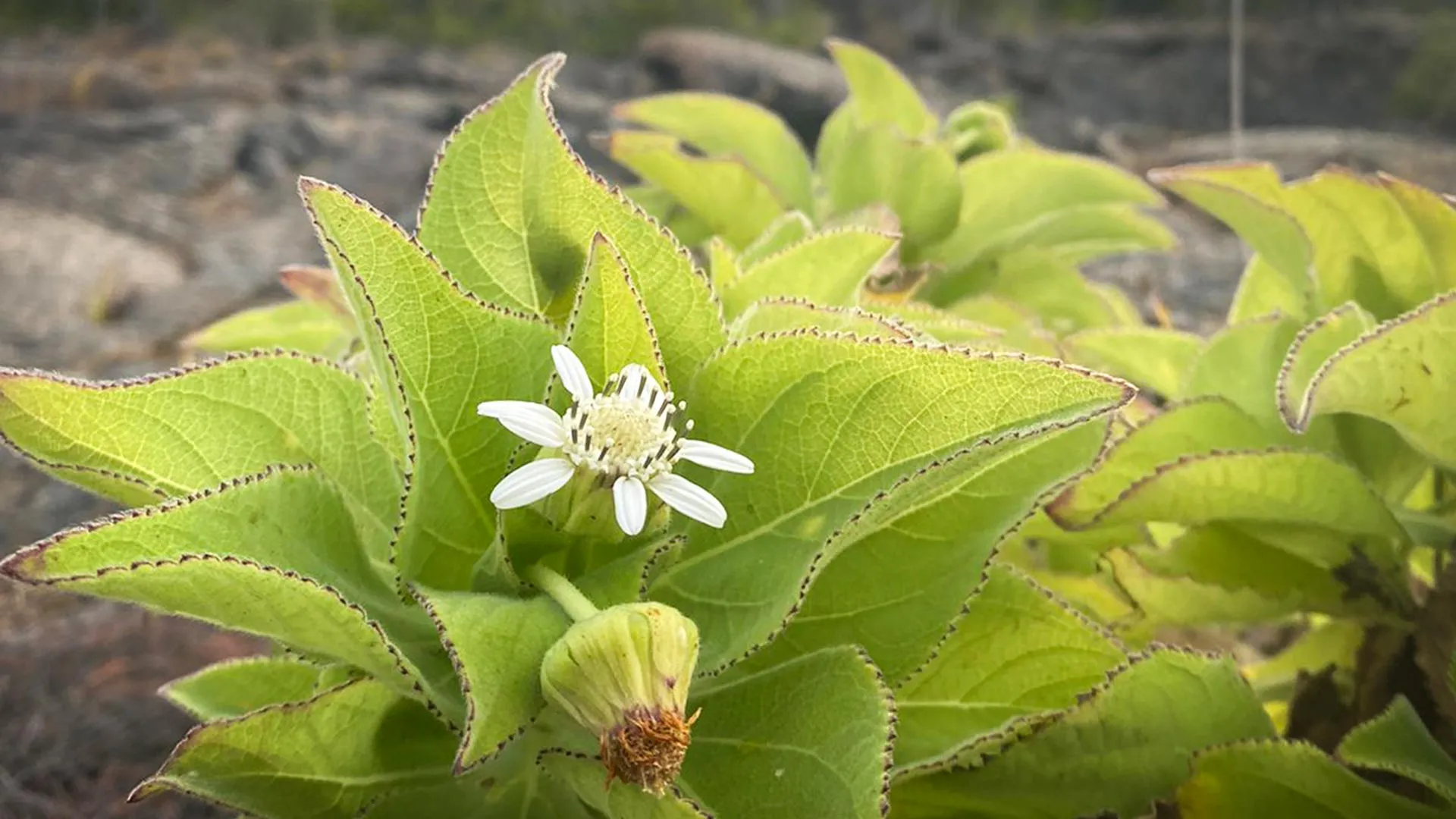
Nearly two centuries after Charles Darwin set foot on the volcanic shores of the Galápagos Islands aboard the HMS Beagle, the remote archipelago continues to serve as a vital living laboratory for evolutionary biology. While history often remembers Darwin’s voyage through his meticulous collection of finches and mockingbirds—specimens that fundamentally altered human understanding of life on Earth by inspiring the theory of evolution by natural selection—the famous naturalist also gathered a wealth of botanical treasures. Among them were plant specimens that would later help science identify entirely new lineages, including four species of Scalesia, a genus unique to the islands and commonly known as the Galápagos giant daisies.
In a landmark study recently published in the scientific journal Nature Communications, an international research consortium has cast new light on these remarkable plants. By sequencing the complete genomes of every known Scalesia species, the scientists have uncovered profound insights into how complex physical traits evolve rapidly. The findings not only offer a modern parallel to Darwin’s iconic finches but also reveal a surprising twist in how nature achieves similar physical adaptations through entirely different genetic mechanisms, opening a new chapter in the study of adaptive radiation and parallel evolution.
A Rapid Evolutionary Explosion in an Isolated Archipelago
The genus Scalesia represents one of the most striking examples of adaptive radiation in the botanical world—a process by which a single ancestral species rapidly diversifies into a multitude of forms to exploit various ecological niches. Arriving from mainland South America relatively recently in geological terms, the ancestors of Scalesia encountered an archipelago of diverse, isolated microclimates. Over the course of the past one million years, every currently existing species of Scalesia emerged, radiating across contrasting habitats that range from misty, humid highland forests to scorching, arid lowlands.
The physical diversity within this single genus is extraordinary. Depending on the species and its specific habitat, a Scalesia plant can manifest as a low-lying shrub or grow into a towering tree that dominates the forest canopy. Yet, perhaps the most visually striking variation among the plants lies in their foliage. Leaf structures vary dramatically across the genus, ranging from large, smooth, and entire margins to small, deeply lobed configurations adorned with intricate, serrated edges.
For decades, botanists and evolutionary biologists recognized these variations as clear adaptations to environmental pressures, particularly water conservation and thermal regulation. In hot, dry lowlands, complexly lobed leaves are believed to help plants minimize moisture loss while releasing excess heat more effectively than broad, flat leaves. However, the precise genetic machinery driving these adaptations remained a persistent mystery until the advent of modern high-throughput genomic sequencing technologies.
Decoding the Genome: Parallel Evolution in Action
To uncover the biological underpinnings of these adaptations, the large international research team—featuring scientists from the Royal Botanic Gardens, Kew; the Norwegian University of Science and Technology (NTNU) University Museum; the University of California, Davis; the University of Copenhagen; the Charles Darwin Foundation; the University of Georgia, Athens; the University of British Columbia; and several other institutions—embarked on an ambitious genetic mapping project.
The researchers analyzed the complete nuclear genomes of every recognized Scalesia species. The results of this genomic sweep yielded a fascinating narrative. The data showed that deeply lobed leaves evolved independently multiple times across separate, distinct branches of the Scalesia family tree. This phenomenon is a textbook example of parallel evolution, wherein distinct lineages independently arrive at similar biological solutions when confronted with comparable environmental challenges.
Yet, the genetic investigation revealed an unexpected plot twist. While the physical end-result—the deeply lobed leaf structure—was remarkably consistent across different species adapting to arid environments, the underlying genetic pathways were not.
"Even more surprising was that each time this trait evolved, it did so through different genes—even though all of them belong to the same biological system controlling leaf development," noted Vanessa Bieker, a researcher at the Royal Botanic Gardens, Kew, and the first author of the published study.
Rather than relying on a single, highly conserved "master gene" to dictate leaf morphology, evolution in Scalesia appears to operate on a more distributed scale. The process recruits an entire network of interacting genes, tweaking various components within that broader system to achieve similar physical outcomes. This discovery provides evolutionary biologists with a remarkably clear picture of how complex, multi-genic traits can repeatedly emerge across unrelated populations or divergent branches of the same family tree, showcasing the inherent flexibility and creativity of natural selection.
Unveiling Hidden Biodiversity and Ongoing Speciation
Beyond clarifying the mechanisms of parallel evolution, the comprehensive genomic analysis suggests that the evolutionary narrative of the Galápagos giant daisies is far from concluded. The genetic data revealed that populations residing within the same nominal species often display substantial genetic divergence. Having been physically and ecologically isolated from one another for prolonged periods, these distinct groups are accumulating genetic differences that indicate ongoing speciation.
In essence, numerous Scalesia populations currently classified under broader species umbrellas may actually represent distinct, fully realized evolutionary lineages that science has yet to formally recognize or describe. This active, ongoing diversification highlights the dynamic nature of the Galápagos ecosystem, where geological isolation and environmental heterogeneity continue to drive the engine of evolution in real time.
"More than 150 years after Darwin’s work on the Galápagos transformed our understanding of life on Earth, these islands continue to reveal new biology," remarked Professor Michael D. Martin of the NTNU University Museum, highlighting the enduring scientific relevance of the archipelago.
Implications for Modern Conservation Strategies
The revelation that Scalesia harbors a wealth of hidden, undescribed lineages carries significant implications for conservation management in the Galápagos National Park. Traditionally, conservation units have been defined based on established taxonomic classifications—recognizing distinct species as discrete targets for protection. However, if individual populations within a single species are following independent, isolated evolutionary trajectories, treating them as uniform groups may leave critical biodiversity unprotected.
The study’s authors argue that these genetically distinct populations should be managed as individual conservation units. By recognizing and preserving these separate evolutionary lineages before they are formally named or fully understood, conservationists can better safeguard the evolutionary processes that generate and sustain the unique ecosystems of the Galápagos. This shift in perspective underscores a broader trend in modern conservation biology: moving beyond the preservation of static species to actively protecting the dynamic evolutionary potential of wild populations.
A Legacy Rooted in Discovery
The new insights into Scalesia serve as a poignant reminder of the interconnected history of the Galápagos Islands and the foundations of modern biological science. When Charles Darwin explored the archipelago in the autumn of 1835 aboard the HMS Beagle, his scientific focus was famously drawn to the mockingbirds of San Cristóbal and Santiago, and later, the diverse finches collected across various islands. Yet, his botanical collections were equally foundational.
Among the plant specimens Darwin pressed and shipped back to the United Kingdom, seventy-four years would pass before experts fully cataloged them, ultimately using seventy-eight of those historical samples to identify species entirely new to science. That historical harvest included four distinct species of Scalesia.
Today, as contemporary researchers deploy advanced genomic tools to read the ancient and modern DNA written within these giant daisies, they are continuing a scientific journey that began nearly two centuries ago. By bridging the gap between nineteenth-century natural history and twenty-first-century molecular biology, the study of Scalesia reaffirms the Galápagos Islands’ status as an irreplaceable crucible of evolution, continually offering new lessons on how life adapts, diversifies, and persists in a changing world.
