
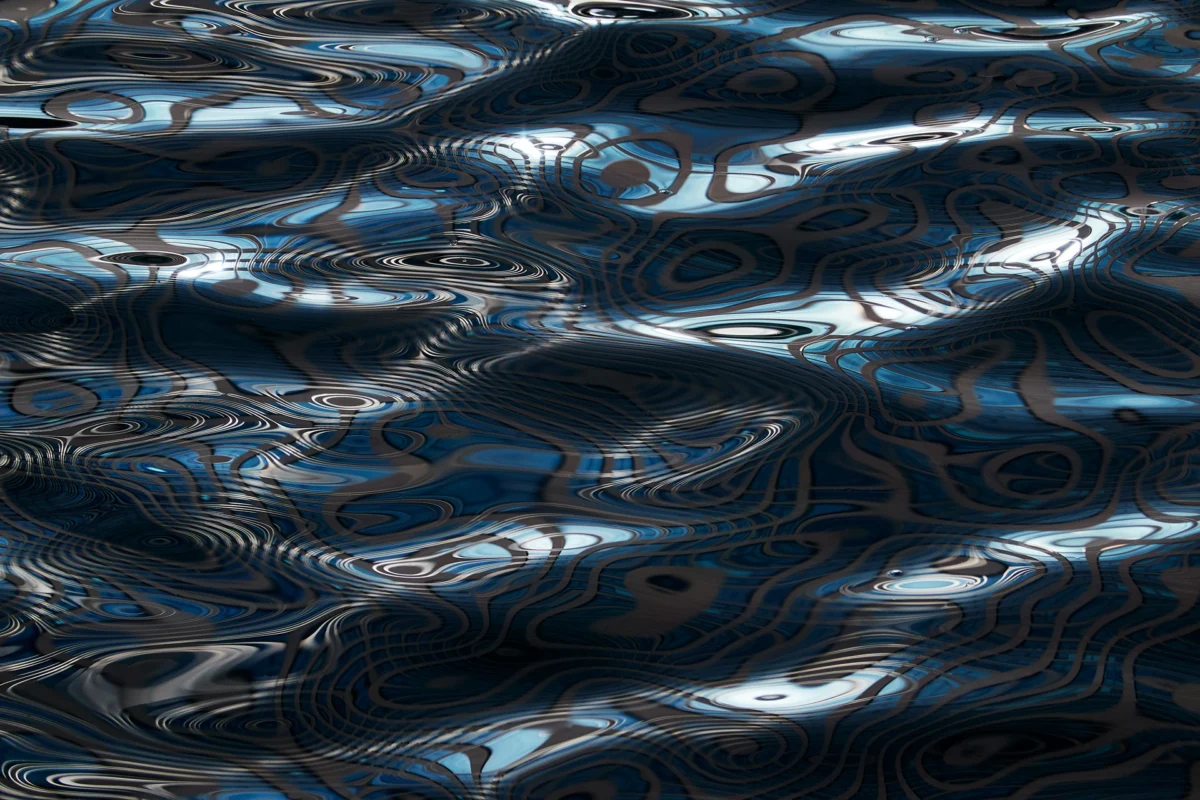
For nearly two decades, contemporary landscape and abstract photography has been heavily influenced by the accessibility of remote, dramatic wilderness. From the jagged peaks of Patagonia to the volcanic shores of Iceland, the pursuit of the untouched frontier has become a standard metric for artistic validity in the medium. However, a quiet counter-movement led by urban nature photographers challenges this geographical exclusivity. Among them, creators working within densely populated metropolitan environments are demonstrating that profound, gallery-quality art can be forged within arm’s reach of the urban core. A prime example of this paradigm shift is the Fleeting Reflections portfolio, a long-term artistic endeavor centered entirely on the industrial docks of London’s Canary Wharf financial district.
At first glance, observers frequently mistake these complex, painterly compositions for digital composites crafted in advanced editing suites like Adobe Photoshop. In reality, the images are captured entirely in-camera through the physical interplay of natural light, structural architecture, and fluid dynamics. By utilizing a combination of single frames and carefully synchronized in-camera multiple exposures, the artist harnesses light bouncing off towering glass facades, refracting through steel infrastructure, and breaking across the volatile surface of urban waterways. This body of work has steadily gained international acclaim, culminating in multiple published volumes and high-profile gallery exhibitions across the United Kingdom.

Defining the Three Pillars of Urban Abstract Photography
The methodology behind Fleeting Reflections rejects the modern obsession with camera gear specifications, sensor megapixels, and specialized lens variants. Instead, the project’s long-term viability rests upon three foundational concepts: accessibility, repeatability, and patience. Industry analysts and photography educators often point to these three elements as the missing links for practitioners suffering from creative burnout in saturated nature photography markets.
Rather than waiting for annual leave allocations or funding costly expeditions to remote nature reserves, the creator of Fleeting Reflections focused exclusively on a single square mile of water surrounded by corporate office towers in East London. This localized approach upends the conventional wisdom that meaningful nature and abstract photography requires isolation from human civilization.
Accessibility as a Catalyst for Creative Depth
The first pillar, accessibility, argues that proximity to a subject is vastly superior to exoticism. In the context of modern landscape photography, creators often spend up to ninety percent of their time traveling, securing permits, or battling adverse logistics, leaving only a fraction of their energy for actual image-making.

By contrast, an accessible subject allows a photographer to visit a location spontaneously—during a forty-minute lunch break, under heavy rain, or during unfavorable mid-day lighting conditions that conventional landscape guidelines advise against. In Canary Wharf, inclement weather conditions such as persistent drizzle transform the water’s surface into the visual equivalent of hammered metal, opening up textures and color palettes that would remain invisible to photographers tied to strict travel schedules. This high-frequency exposure to a single location fosters an intimate familiarity, allowing the creator to move past superficial compositions and study the micro-behaviors of light and wind.
Repeatability and the Infinite Variability of Urban Waterscapes
The second pillar, repeatability, addresses the paradox of photographing the exact same geographic coordinates repeatedly over a span of years. Critics might question how a single urban dock can sustain a decade-long art project without descending into visual redundancy.
The answer lies in the inherent dynamism of fluid mechanics and atmospheric conditions. The docks of Canary Wharf are never genuinely identical from one moment to the next. On calm, windless mornings, the water surface acts as a mirror, pulling long, glassy ribbons of color from the towering office structures above. Conversely, gusty afternoon winds fracture those architectural reflections into serrated, chaotic waveforms reminiscent of historic scientific data visualizations.

Furthermore, transient elements introduce continuous variety. Passing marine vessels smear sharp geometric reflections into hand-drawn abstract strokes, while microscopic layers of environmental residue, such as trace surface diesel, create fleeting iridescent interference patterns that vanish within minutes. By treating the environment not as static architecture, but as a living behavioral subject, the photographer can execute thousands of exposures of the same physical space while producing entirely unique visual outcomes.
Patience: The Unglamorous Engine of Fine Art Photography
The third and most demanding pillar is patience, functioning as both a physical discipline during field capture and a mental discipline during post-production. Modern digital cameras equipped with rapid burst rates can capture micro-moments of splashing water and shifting light in fractions of a second, but recognizing the precise convergence of rhythm, color, and structural tension requires prolonged engagement.
Field sessions frequently span up to four hours at a single fixed coordinate, yielding as many as 3,000 frames of what an uninitiated passerby would perceive as a single unchanging scene. This rigorous physical endurance is mirrored during the editing phase. Working on high-resolution displays, the creator sifts through thousands of nearly identical digital files, enforcing an exceptionally low acceptance rate.

Post-processing philosophy within the project remains strictly conservative. Utilizing software such as Capture One, adjustments are limited to global alterations of levels, clarity, sharpness, and contrast. Digital manipulation, such as warping shapes or introducing artificial elements in Photoshop, is strictly avoided. This adherence to documentary integrity ensures that every abstracted form visible in the final print genuinely occurred in the physical world.
Chronology of a Decade-Long Project
The evolution of Fleeting Reflections followed a deliberate, unhurried timeline that underscores the value of long-term artistic commitment:
- 2010–2016: The initial conceptualization and intensive field capture phase. For over six years, the photographer returned weekly to the Canary Wharf docks, quietly accumulating a vast archive of images without pursuing commercial publication or public exhibition.
- 2017: The project reached its first major commercial milestone with the publication of the debut monograph, Fleeting Reflections, released by independent publisher Triplekite. This release was accompanied by a prominent solo exhibition at the Greenwich Gallery.
- 2019: Building on the critical reception of the first volume, a second major London exhibition was hosted at the Anise Gallery, broadening the project’s audience within the contemporary fine art community.
- 2023: The publication of Fleeting Reflections II, marking the culmination of over a decade of continuous documentation and cementing the project as a comprehensive study in urban natural abstraction.
Broader Implications for Contemporary Photographers
The commercial and critical success of the Fleeting Reflections series offers a valuable counter-narrative for modern photography enthusiasts facing the financial and environmental pressures of global travel. By demonstrating that compelling fine art can emerge from mundane, highly accessible locations like industrial canals, urban harbor walls, or suburban drainage basins, the project democratizes high-end nature photography.

Industry analysts note a growing fatigue among fine art collectors regarding hyper-saturated, homogenized wilderness imagery generated by global tourism hubs. Art buyers and gallery curators increasingly value authenticity, personal proximity, and deep regional knowledge over geographic distance.
Ultimately, the Canary Wharf project serves as a reminder that the quality of a photograph is determined less by the majesty of the subject than by the depth of the artist’s attention. As urban centers continue to expand, the intersection of architecture, natural light, and fluid dynamics offers an inexhaustible canvas for creators willing to invest the necessary time, accessibility, and patience.
