
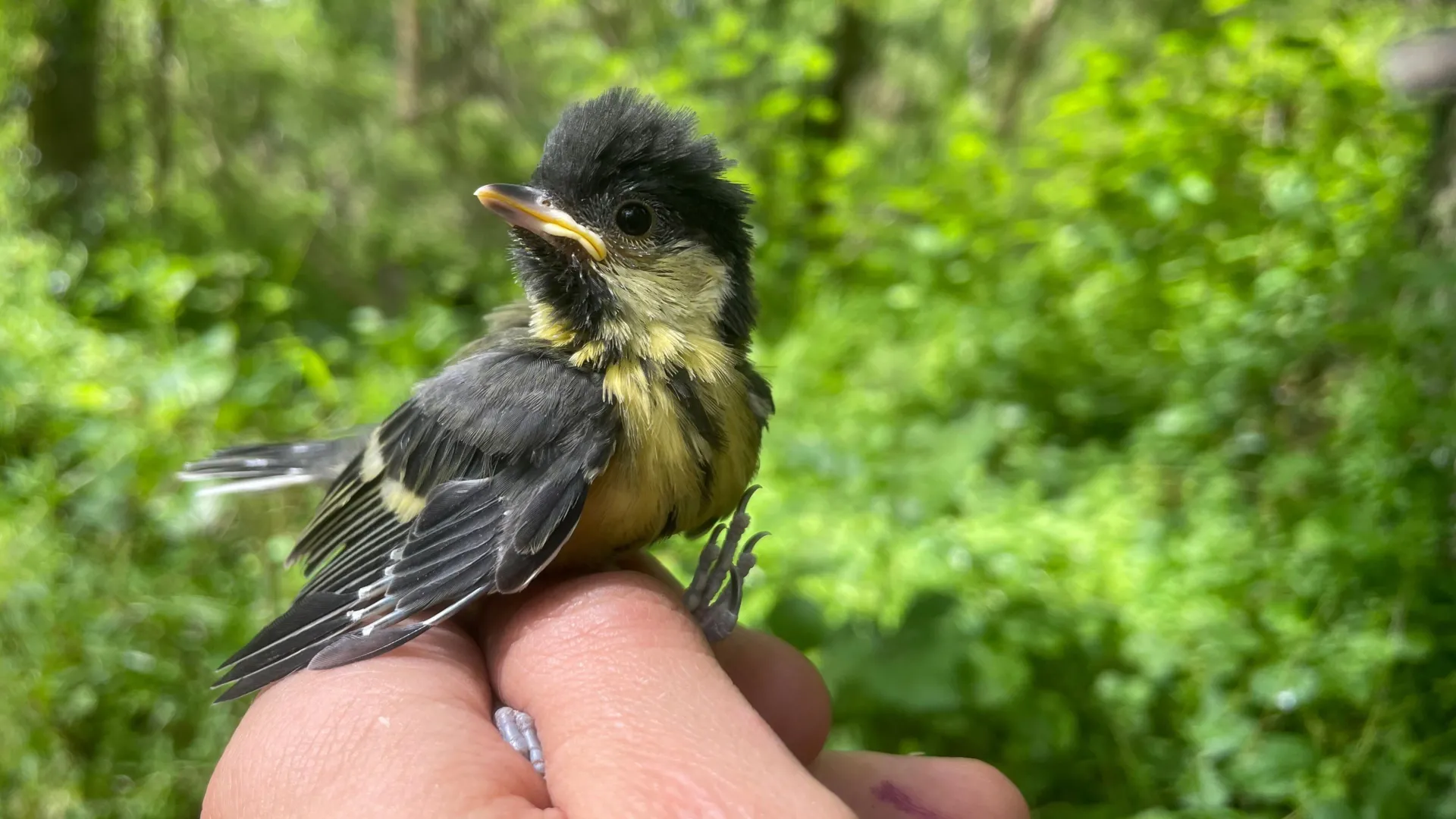
The resilience of Britain’s native woodland bird populations is facing an unprecedented test as shifting climate patterns introduce severe environmental pressures during critical developmental windows. According to a landmark study published on March 11 by researchers at the University of Oxford, sudden cold spells and heavy rainfall significantly impair the growth trajectories and long-term survival rates of young great tits across the United Kingdom. The comprehensive research, which draws upon an extraordinarily rich repository of ecological data, indicates that while climate change continues to destabilize traditional seasonal weather patterns, great tits that initiate their breeding cycles earlier in the spring may successfully insulate their offspring from the most severe physiological consequences of these volatile meteorological events.
The findings provide a nuanced look at the multi-layered vulnerabilities confronting avian species in rapidly warming ecosystems. While avian adaptability has historically allowed great tits to adjust their breeding calendars in response to rising global temperatures, the intensification of extreme weather events threatens to outpace this evolutionary plasticity. Scientists emphasize that the delicate synchronization between hatching periods and peak food availability is increasingly disrupted by erratic cold fronts and torrential downpours, compounding the pressures faced by vulnerable nestlings during their formative weeks of life.
Six Decades of Data: Unlocking the Wytham Woods Dataset
At the heart of the Oxford study is an unusually robust and continuous dataset spanning six decades of field observation. Researchers meticulously analyzed 60 years of historical records encompassing more than 80,000 individual wild great tits residing within the storied confines of Wytham Woods in Oxfordshire. This monumental biological record was cross-referenced with high-resolution daily meteorological archives, allowing scientists to reconstruct the exact climatic conditions experienced by developing broods over generations.
To evaluate the direct physiological impacts of weather volatility, the research team isolated the coldest, wettest, and warmest days occurring within each successive breeding season. By tracking these extreme meteorological events against critical developmental milestones, scientists measured their precise frequency during the sensitive chick-rearing phase. A primary metric in this evaluation was the body mass of nestlings at the point of fledging—the moment young birds leave the nest—which serves in ornithology as one of the most reliable predictors of post-fledging survival and overall recruitment into the adult breeding population.
The chronological breadth of the Wytham Woods dataset offers an invaluable lens through which long-term ecological shifts can be observed. Over the past sixty years, researchers have tracked how the local great tit population has progressively advanced its laying date to match the earlier emergence of caterpillars, their primary dietary staple. However, this shift into earlier spring months has inadvertently increased the exposure of early broods to sudden, late-season cold snaps, creating a complex trade-off between securing adequate food supplies and avoiding thermal stress.
The Lethal Combination of Cold, Rain, and Heat
The empirical analysis yielded stark insights into how specific weather phenomena impact nestling physiology at different stages of early life. The study revealed that severe cold events during the first week post-hatching pose an acute threat to survival. During this initial neonatal window, newly hatched chicks lack the physiological capacity for effective thermoregulation due to the complete absence of insulating feathers. Consequently, when ambient temperatures plummet, nestlings are forced to divert metabolic energy away from somatic growth and structural development merely to generate internal body heat and maintain baseline core temperatures.
As the chicks mature and progress through the nestling phase, the primary environmental hazard shifts from cold temperatures to heavy rainfall. Prolonged downpours severely impede the foraging efficiency of parent birds, limiting their ability to leave the nest in search of sustenance. Furthermore, torrential rain exerts a direct mechanical effect on the canopy ecosystem, dislodging caterpillars from leaves and drastically reducing the abundance of the high-energy prey required to fuel the rapid growth rates of growing broods.
Compounding these individual hazards, the study identified a synergistic multiplier effect when intense heat coincides with heavy rainfall. Under these specific meteorological conditions, the impact on nestling development becomes catastrophic. In such instances, fledging mass can plummet by as much as 27%, a deficit that falls disproportionately upon broods that hatch later in the breeding season when local environmental conditions are already deteriorating.
Lead researcher Devi Satarkar, a specialist within the Department of Biology at the University of Oxford, underscored the precarious balance governing these ecological interactions. "In the Wytham population, great tits have adjusted to warmer springs by breeding earlier to track peak abundance of their main prey, caterpillars," Satarkar explained. "This overall earlier laying is beneficial, buffering them against many impacts of extreme weather—but it also exposes them to cold spells early in the season. Even small early-life deficits can have large implications for survival. It will only get tougher for birds to keep up as extreme weather increases in frequency and intensity with climate change."
The Paradox of Mild Warmth in British Woodlands
While extreme cold and heavy rainfall presented clear, predictable threats to nestling development, the study uncovered a surprising counter-trend regarding warm temperature extremes. Contrary to the assumption that high temperatures universally induce heat stress in developing organisms, the researchers discovered that moderate warmth during the nesting phase was positively correlated with increased fledging weights.
This phenomenon highlights important regional distinctions in how climate impacts wildlife. In southern European ecosystems, such as the Mediterranean basin, summer heatwaves frequently exceed 35 degrees Celsius, causing severe thermal stress, dehydration, and mortality among nestling birds. However, the warm extremes recorded in Oxfordshire are relatively mild by comparison, rarely crossing into dangerous thermal thresholds for native woodland species.
Elaborating on this unexpected finding, Satarkar noted that moderate thermal peaks can actually confer developmental advantages under specific conditions. "Extreme weather events are affecting wild bird populations in complex ways," she stated. "The level of warmth we see in these heat extremes in Oxfordshire might boost growth because it can increase insect activity and visibility—making caterpillars easier to find—while letting parents forage more and reducing nestlings’ thermoregulatory costs. The high water content in caterpillars also helps against dehydration. This contrasts sharply with hotter regions like the Mediterranean, where similar events can exceed 35 degrees Celsius and harm nestlings."
Despite these localized benefits, the advantages of warm extremes are strictly contingent on timing. Broods that hatch earlier in the spring derive maximum benefit from these thermal windows, capitalizing on abundant caterpillar populations while temperatures remain within safe, non-lethal parameters. Conversely, late-nesting broods experience harsher environmental filters, producing fledglings that weigh approximately one-third less than their early-season counterparts, even when exposed to identical ambient maximum temperatures of 16 to 17 degrees Celsius.
Temporal Advantages and the Protective Value of Early Breeding
The overarching narrative emerging from the six-decade dataset centers on the adaptive significance of phenological timing—specifically, the capacity of certain breeding pairs to initiate reproduction ahead of traditional seasonal schedules. By shifting their breeding calendars forward, early-nesting great tits establish a crucial temporal buffer against the increasingly unpredictable volatility of modern spring weather.
Over extended periods, the cumulative weight of extreme cold events and heavy rainfall exerts a persistent downward pressure on the probability that young birds will survive the transition to adulthood. While warm extremes offer modest, localized counter-benefits, they are insufficient to fully offset the systemic risks posed by unseasonal cold and storms. Consequently, early breeding acts as a primary behavioral shield, protecting developing generations from the worst ecological consequences of climate-induced meteorological disruption.
Conservation biologists and ornithologists viewing the study’s conclusions suggest that these behavioral adaptations, while successful thus far, operate within finite biological limits. As global greenhouse gas emissions continue to drive systemic climatic instability, the frequency and severity of anomalous weather events are projected to accelerate, testing the evolutionary limits of avian phenotypic plasticity.
Broader Implications for Wildlife Conservation and Habitat Management
The implications of the Oxford study extend far beyond the theoretical understanding of avian ecology, offering actionable insights for contemporary conservation strategy. As climate change intensifies weather extremes across Northern Europe, researchers stress the necessity of shifting conservation paradigms toward microclimatic monitoring and localized habitat management.
Traditional conservation frameworks have often focused on broad-scale habitat preservation without accounting for the fine-grained environmental variations that influence nesting success at the individual woodland level. By understanding how microclimates—such as canopy cover density, local windbreaks, and nestbox micro-sitings—buffer developing chicks against sudden thermal drops or driving rain, conservationists can design more effective protective interventions.
Practical applications of these findings include targeted forestry practices that enhance structural diversity within commercial and native woodlands, ensuring that foraging parents have access to sheltered micro-habitats during periods of inclement weather. Additionally, the strategic placement and thermal insulation of artificial nestboxes can be optimized to mitigate the physiological toll of early-season cold snaps on neonatal broods.
Looking ahead, the research team at the University of Oxford plans to maintain continuous monitoring of the Wytham Woods great tit population. Future research phases will aim to determine whether the moderately warm extremes currently observed in Oxfordshire will eventually escalate into damaging heatwaves as global temperatures continue their upward trajectory. By maintaining this multi-generational surveillance, scientists hope to secure vital data needed to forecast the resilience of forest bird communities in a rapidly changing world.
