
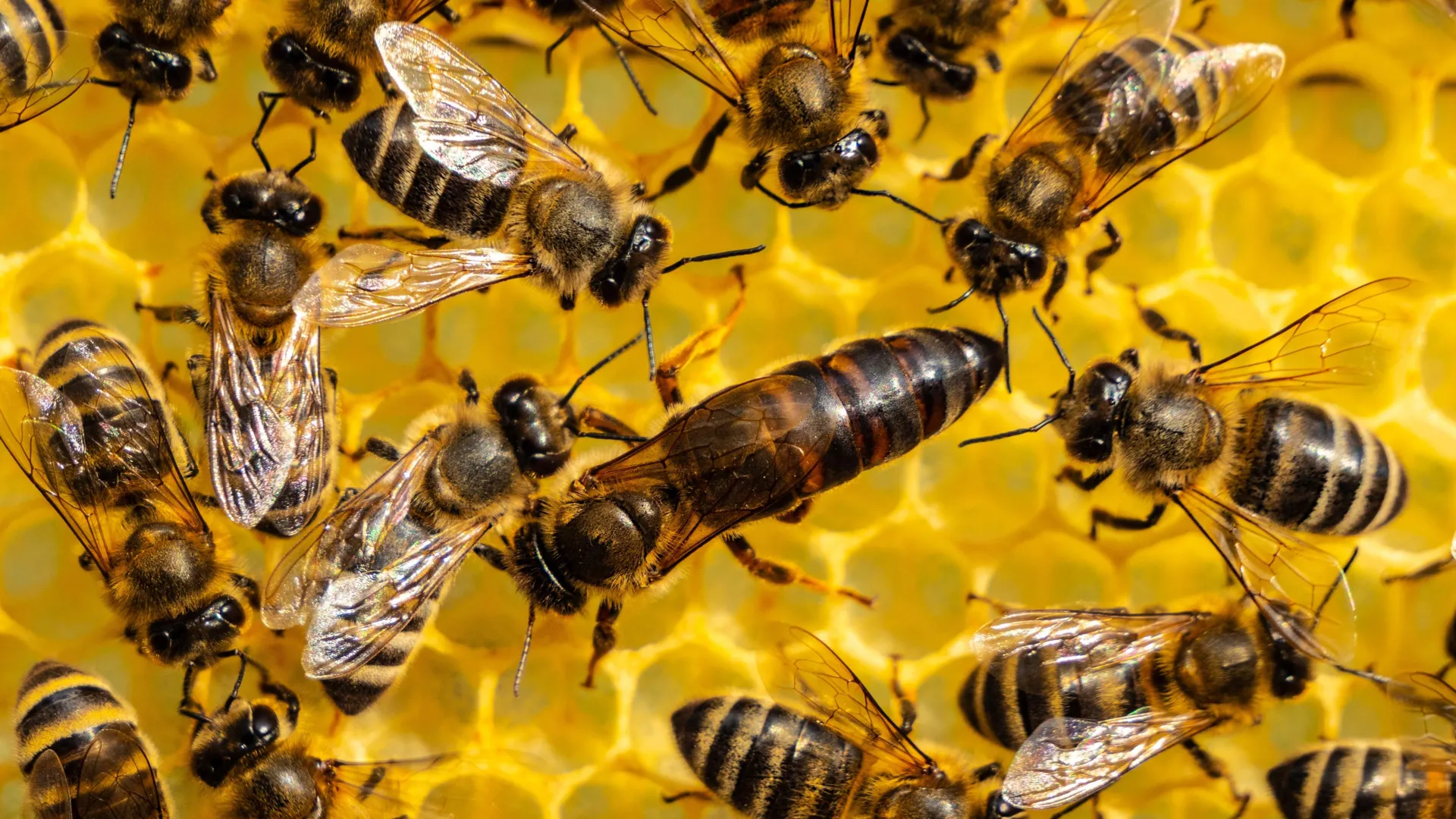
For generations, apiculturists and entomologists have viewed honeybee colonies as marvels of synchronized biological engineering, where the division of labor forms a sophisticated shield against environmental hazards. Worker bees have long been recognized as the ultimate guardians of the hive, acting as a chemical and biological filter that intercepts toxins, processes incoming pollen and nectar, and protects the vulnerable reproductive core of the society. However, a groundbreaking study published in the journal Current Biology has upended long-held assumptions about internal hive dynamics, revealing that when the worker-bee defense mechanism fails, honeybee queens deploy a desperate biological strategy of their own to survive: they offload accumulated pesticides directly into their eggs.
Led by researchers at the University of California, Davis, in collaboration with the Lawrence Livermore National Laboratory and the U.S. Department of Agriculture’s Agricultural Research Service, the study provides the first definitive evidence of how far a queen bee must go to mitigate her own chemical burden. The discovery introduces the concept of maternal offloading to honeybee toxicology, suggesting a hidden, insidious mechanism that may contribute to the phenomenon known as colony collapse disorder. As agricultural demands intensify and chemical use remains a staple of modern farming, understanding the delicate physiological balancing act within the hive has never been more critical to global food security.
The Anatomy of Hive Defense and Worker Limitations
To understand the gravity of the new findings, one must examine the traditional hierarchy of a honeybee colony. A single queen bee sits at the center of this social structure. Capable of laying between 1,500 and 2,000 eggs per day, she is the sole engine of the colony’s generational continuity. Without her sustained output, a colony inevitably collapses. Surrounding her is a court of worker bees tasked with feeding, grooming, and shielding her from the harsh realities of the outside world.
For decades, scientists believed this retinue of worker bees provided an impenetrable barrier against environmental contaminants. Worker bees forage over vast landscapes, returning to the hive laden with nectar and pollen that frequently carry residues of agricultural pesticides. Before these substances can reach the queen or the developing larvae, worker bees process the food, effectively filtering out a significant portion of the harmful chemical load and depositing the residue into the structural wax of the honeycomb.
Yet, this biological filtration system is not absolute. According to Angela Encerrado-Manriquez, the lead author of the study and a recent Ph.D. graduate from UC Davis, the capacity of worker bees to protect their sovereign has a definitive breaking point. As continuous exposure to pesticides accumulates over time, the workers’ filtering mechanism becomes overwhelmed. When this threshold is breached, the chemical burden spills over into the hemolymph and internal tissues of the queen herself.
It is at this critical juncture that the queen activates her internal fallback mechanism. Faced with mounting toxicity, the queen funnels the absorbed chemical compounds directly into her ovaries, transferring the poisons into the yolks of the eggs she lays. This process—maternal offloading—effectively purges the queen’s system of lethal elements, but it does so by passing the toxic baton directly to the next generation.
Inside the Laboratory: Simulating the Hive Ecosystem
Replicating and tracking the complex chemical pathways within a living honeybee colony presents extraordinary scientific challenges. To overcome these hurdles, the interdisciplinary research team developed innovative experimental systems known as "nanocolonies." These miniaturized, highly controlled environments were engineered to replicate the vital functional dynamics of a full-scale beehive while allowing for precise tracking of chemical movements.
Each nanocolony consisted of a conical plastic container fitted with a netted bottom for ventilation, housing precisely one queen bee alongside sixty worker bees. This micro-ecosystem was then subjected to a controlled dietary regimen. The bees were provided with water, pollen, and sugar syrup intentionally contaminated with methyl parathion, a widely studied organophosphate pesticide. Crucially, the pesticide was tagged with a low-level radioactive marker, allowing researchers to trace its microscopic journey through the bodies of the insects and the architecture of the hive.
The deployment of advanced technology was essential for the success of the project. Researchers at the Lawrence Livermore National Laboratory utilized biological accelerator spectrometry, a state-of-the-art technique capable of detecting radioactive isotopes at extraordinarily minute concentrations. Bruce Buchholz, an LLNL scientist and co-author of the study, emphasized the precision of the method. The team intentionally utilized pesticide concentrations that were non-lethal and environmentally relevant—mirroring the exact levels of chemical exposure bees routinely encounter in agricultural landscapes.
The experimental timeline revealed a progressive degradation of the colony’s initial defensive shield. On the very first day of exposure, the worker bees demonstrated remarkable efficiency, filtering out approximately 95 percent of the incoming pesticide and successfully diverting it into the surrounding honeycomb matrix. However, as the days progressed and the cumulative chemical load increased, the system began to strain. By the tenth day of continuous exposure, the filtration efficiency of the worker bees dropped to 86 percent. This diminishing return exposed the vulnerability of the colony over time, proving that chronic, low-level exposure is far more insidious than acute, short-term poisoning.
Broader Implications for Agriculture and Food Security
The implications of these findings extend far beyond academic entomology, striking at the heart of modern agricultural practices and environmental management. Honeybees are not merely producers of honey; they are vital ecological pollinators responsible for the successful reproduction of roughly one-third of the human diet. From almonds and apples to blueberries and broccoli, commercial agriculture relies heavily on the stability and health of managed honeybee colonies.
Sascha Nicklisch, senior author of the paper and an associate professor in the Department of Environmental Toxicology at UC Davis, highlighted the alarming prospect of a biological tipping point. When pesticides accumulate within the queen to such a degree that her eggs become heavily contaminated, embryonic development is severely compromised. The eggs may fail to hatch, or the resulting larvae may exhibit developmental defects and shortened lifespans, undermining the workforce needed to sustain the hive.
This dynamic introduces a new paradigm for understanding colony collapse disorder, a syndrome that has baffled researchers and devastated beekeeping operations worldwide for decades. Rather than pointing to a single catastrophic event, the research suggests a slow, creeping accumulation of chemical burdens. Over time, this cumulative stress wears down the colony from the inside out, creating a delayed-action mechanism where the remedies employed by the queen ultimately sabotage the hive’s future generations.
The findings carry an urgent message for beekeepers, commercial growers, and integrated pest management planners. Agricultural protocols often evaluate pesticide safety based on acute toxicity thresholds—measuring whether a specific dose kills a bee within 24 to 48 hours. This study demonstrates that sub-lethal, long-term exposure carries hidden physiological costs that standard toxicity tests routinely overlook. As colonies expand and bees actively forage across treated fields, the invisible accumulation of chemicals continues unabated, threatening the structural integrity of hives long after the initial spraying has ceased.
Future Horizons and Unanswered Questions
As the scientific community digests these revelations, the research team is already looking toward the horizon to address the numerous questions left unanswered by the initial study. Chief among these is the question of chronicity and capacity: exactly how long can a queen continue to offload toxins into her eggs before her own reproductive organs fail entirely? Furthermore, researchers are eager to determine whether maternal offloading is a uniform response across all chemical classes, or if different pesticides—such as neonicotinoids, pyrethroids, and fungicides—trigger distinct physiological pathways in the queen.
Answering these questions will require sustained collaboration between academic institutions, national laboratories, and agricultural agencies. The groundwork laid by this study—supported by funding from the USDA’s National Institute of Food and Agriculture, the Non-Assistance Cooperative Agreement program, the PAm-Costco USA Scholarship program, and the University of California National Laboratory Fees Research Program—underscores the necessity of multidisciplinary science in tackling complex ecological challenges.
Ultimately, the discovery that honeybee queens practice maternal offloading paints a vivid picture of adaptation under extreme anthropogenic pressure. It reveals an insect society pushing back against the chemical tide, utilizing every biological tool at its disposal to survive in a modified world. Yet, it also serves as a sobering reminder of the limits of resilience. As agricultural chemicals continue to permeate natural ecosystems, even the most sophisticated evolutionary defenses have a breaking point—one that, if crossed, threatens not just the individual hive, but the broader stability of global food production.
