
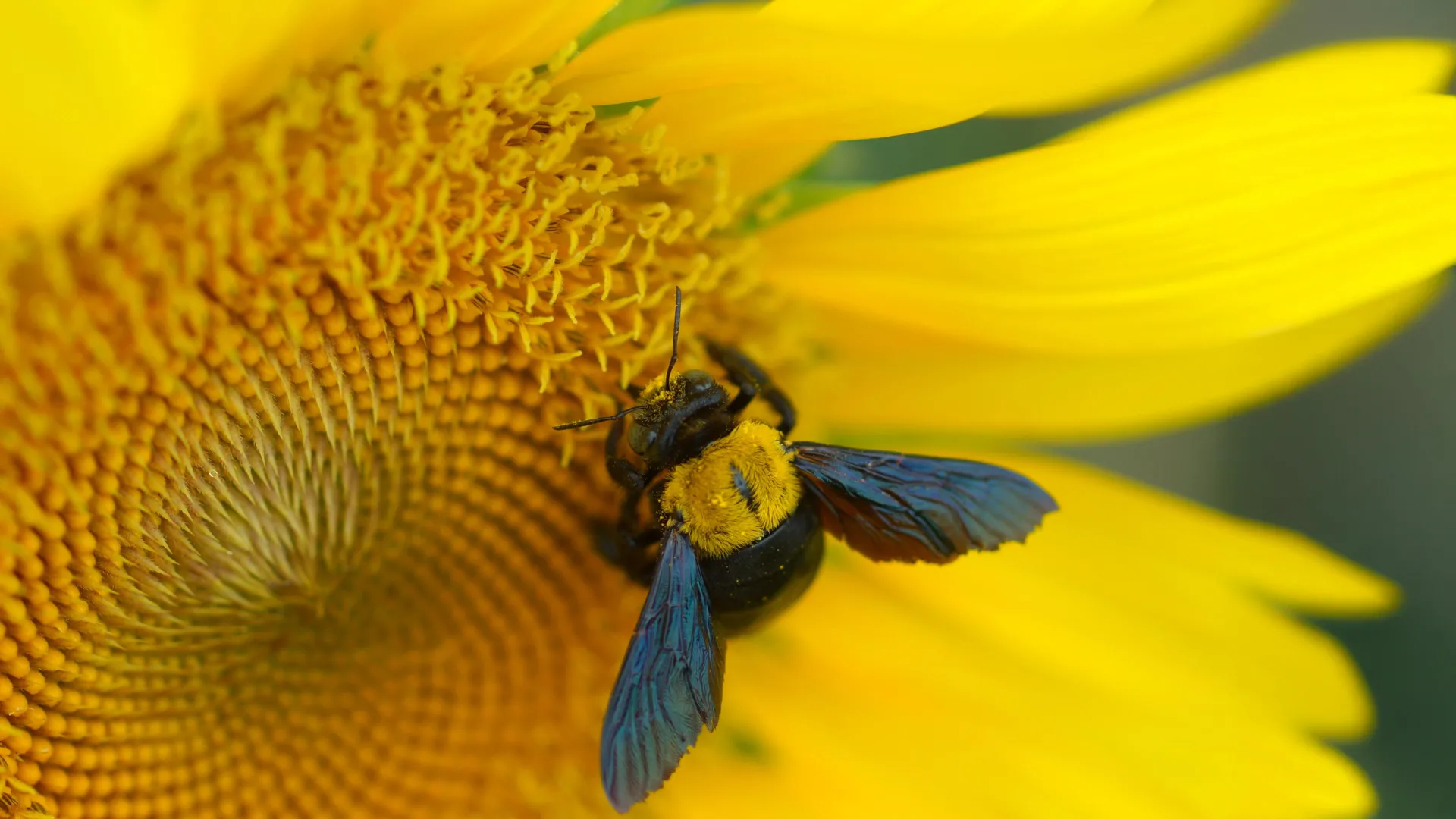
Recent scientific findings published in the prominent journal Nature Communications have shed light on an escalating ecological crisis, revealing that native bee species reliant on plant stems for their nesting habits face the most immediate and severe threats from anthropogenic climate change. While much of the global conversation surrounding pollinator decline has historically focused on habitat fragmentation, pesticide use, and introduced pathogens, this comprehensive multi-institutional study underscores the profound physical vulnerabilities imposed by rising ambient temperatures and microclimate dynamics.
The investigation, which spanned the vast and varied landscapes of eastern mainland Australia from tropical northern territories down to cooler southern temperate zones, evaluated the thermal tolerances of 95 distinct native bee species. The research team comprised specialists from a powerhouse consortium of Australian academic institutions, including Macquarie University, The University of Sydney, La Trobe University, Flinders University, the University of Wollongong, Adelaide University, and The University of Queensland. By systematically analyzing how heat tolerance has evolved across these diverse taxa, the consortium aimed to construct a predictive framework for assessing which populations are most susceptible to rapid environmental warming.
The Anatomy of Vulnerability: Nesting Behaviors and Thermal Exposure
To fully comprehend the implications of the study, one must understand the ecological diversity of Australia’s native bee population, which boasts approximately 1,700 recognized species. Unlike the European honeybee (Apis mellifera), which lives in large, highly managed social colonies inside hives or hollows, the vast majority of Australia’s native bees are solitary or semi-social creatures with highly specialized life cycles and nesting strategies.
According to the research, these native bees generally fall into three distinct architectural categories when it comes to rearing their young: species that excavate burrows deep into the earth; species that utilize pre-existing cavities in wood, such as tree hollows and fallen timber; and species that establish their nests inside slender plant stems or small natural hollows within twigs.
Lead author Dr. Carmen da Silva, a Research Fellow within the Pollinator Futures Research Centre at Macquarie University in Sydney, emphasized that a bee’s microhabitat dictates its exposure to lethal thermal limits. "Bees that nest underground can hide from extreme heat," Dr. da Silva explained. "As a result, they don’t experience temperatures as high as those that live above ground, particularly species that live in thin plant stems that offer very little insulation from the heat outside."
This lack of thermal buffering means that stem-nesting species operate in precarious thermal margins. Because thin plant stems absorb and radiate heat rapidly during peak daylight hours, these insects are subjected to intense microclimatic spikes that far exceed ambient air temperatures. Consequently, stem-nesting species appear to possess the lowest physiological and behavioral capacity to escape unfavorable environmental conditions, placing them directly on the frontline of climate change impacts.
Geographic Realities: The Tropical Disadvantage
Beyond nesting architecture, the study uncovered a compelling geographic pattern that challenges traditional assumptions about heat adaptation. Conventional ecological theory might suggest that species native to tropical regions—where baseline temperatures are naturally higher—would be better pre-adapted to handle a warming planet. However, the data revealed precisely the opposite trend.
Bee species inhabiting regions closer to the equator exhibited heightened vulnerability to climate warming. Senior author Dr. Vanessa Kellermann, Senior Lecturer in the Department of Ecology, Plant and Animal Sciences at La Trobe University, noted that this discovery underscores the immense complexity inherent in ecological forecasting.
"Predicting which species will be vulnerable to climate change is one of the biggest challenges in ecology," Dr. Kellermann stated. "We found bee species with the highest heat tolerance were not necessarily the safest from warming, because many of them already live in extremely hot environments."
This phenomenon points to a critical threshold effect in evolutionary biology: organisms operating near their upper thermal limits often have narrow physiological safety margins. Even species that have successfully evolved robust physiological adaptations to withstand high heat find themselves with diminishing room for error as greenhouse gas emissions drive global temperatures into uncharted territory. When baseline temperatures consistently hover near an organism’s critical thermal maximum, even a minor heatwave can trigger catastrophic population crashes.
The Broader Economic and Ecological Stakes
The implications of declining native bee populations extend far beyond the conservation status of individual insect species; they strike at the foundational stability of both natural ecosystems and multi-billion-dollar agricultural industries.
Bees are universally recognized as premier pollinators, facilitating the reproduction of flowering plants that form the base of terrestrial food webs. In natural Australian bushland, native flora—from eucalyptus forests to delicate understory shrubs—is inextricably linked to specialized native pollinators that have co-evolved over millions of years. The loss of these key species threatens to trigger cascading trophic collapses, altering plant communities, reducing seed sets, and ultimately impacting the herbivores and omnivores that rely on them for sustenance.
Simultaneously, the agricultural sector faces significant economic exposure. While exotic honeybees manage a large share of commercial crop pollination worldwide, tropical and subtropical native bees play an indispensable, irreplaceable role in fertilizing high-value specialized crops. Dr. da Silva highlighted the economic reliance on these wild pollinators, noting that tropical native bees are vital for the successful commercial production of crops such as macadamia nuts, avocados, mangoes, and lychees. Any sustained decline in wild bee populations directly threatens yields, food security, and the economic viability of horticultural enterprises operating throughout Australia’s warmer latitudes.
Methodological Rigor and the Path Forward
The research published in Nature Communications represents a significant methodological step forward in conservation physiology. By evaluating a broad taxonomic cross-section of 95 species across wide latitudinal gradients, the research team moved beyond localized case studies to establish broad, macro-ecological patterns.
However, the authors are quick to point out that the breadth of knowledge regarding Australia’s native bees remains strikingly limited. Co-senior author Dr. Ros Gloag, Senior Lecturer in Evolutionary Biology in the School of Life and Environmental Sciences at the University of Sydney, emphasized the urgent need for continued, intensive research into insect behavior and biology.
"We still know so little about most of Australia’s amazing native bees," Dr. Gloag remarked. "This study helps us recognise that having a better understanding of native bee behavior is key to identifying the greatest threats to their wild populations."
This sentiment is echoed widely within the broader scientific community. Entomologists and conservation biologists note that effective policy interventions—such as targeted habitat preservation, the creation of microclimate refugia in agricultural landscapes, and the restriction of land-clearing practices that remove dead timber and hollow stems—cannot be implemented effectively without precise data on how different species interact with their physical environments.
Implications for Global Conservation Strategies
While the study focuses specifically on eastern mainland Australia, its conclusions carry profound implications for global conservation frameworks. As global mean temperatures continue to rise in alignment with Intergovernmental Panel on Climate Change (IPCC) projections, microhabitat vulnerability assessments must become a standard component of biodiversity conservation.
Traditional conservation planning has frequently prioritized macro-habitat protection—such as establishing national parks or wildlife corridors—without accounting for the microclimatic realities experienced by ground-dwelling versus cavity- or stem-nesting organisms. The findings from Macquarie University and its partner institutions suggest that conservation strategies must be refined to protect structural microhabitats, such as retaining standing dead trees, preserving diverse understory plant communities with varying stem architectures, and mitigating localized heat island effects in agricultural transition zones.
Furthermore, the revelation that tropical species face disproportionate risks upends the outdated assumption that tropical biodiversity is inherently buffered against warming trends. Conservation bodies operating in equatorial regions worldwide may need to re-evaluate their risk matrices, prioritizing investments in thermal refuges and shade management for sensitive pollinator taxa.
As the scientific community digests these findings, the message to policymakers, land managers, and agricultural producers is clear: safeguarding the future of global food production and native biodiversity requires looking beyond the macro-landscape and paying meticulous attention to the microscopic worlds inhabited by the planet’s most industrious pollinators. Without proactive intervention to protect vulnerable stem-nesting species from the compounding pressures of rising temperatures and habitat degradation, the silent hum of Australia’s ecosystems faces an uncertain and perilous future.
