
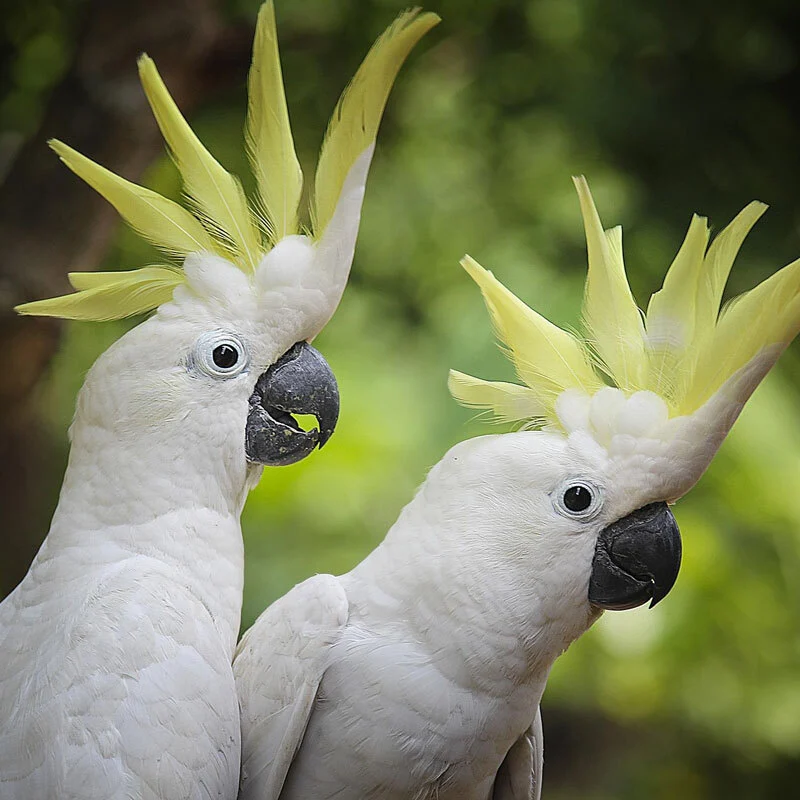
In a fascinating revelation about the cognitive abilities of avian species, a recent study has demonstrated that wild cockatoos exhibit complex social learning behaviors, mirroring human tendencies to observe and adopt new trends before fully engaging. The research, published in the esteemed journal PLOS Biology, sheds light on how information and novel behaviors can propagate through bird communities, particularly in urban environments where adaptation is key to survival. This intricate social dynamic underscores a surprising level of intelligence and influence within these feathered populations, challenging long-held perceptions of bird cognition.
The study, spearheaded by a multidisciplinary team of five researchers from prominent institutions including the University of Konstanz in Germany, The Australian National University, the University of California Davis, and The University of Sydney in Australia, delved into the behavioral adaptations of wild parrots. Their primary focus was to unravel the mechanisms by which these birds develop an inclination to try novel food sources, a critical skill in ever-changing urban ecosystems. The findings suggest that these intelligent birds do not impulsively embrace new culinary experiences but rather engage in a cautious, observational approach, much like their human counterparts.
The Observational Advantage: How Cockatoos Learn New Foods
The core of the research involved a meticulously designed experiment utilizing sulfur-crested cockatoos, a species known for its adaptability and intelligence. Researchers introduced a novel food item – almonds in their shells – which were dyed in distinct colors: blue and red. These colored almonds were presented to a group of four trained birds, acting as early adopters. The experimental setup was designed to simulate a scenario where a new resource becomes available, and the social dynamics surrounding its adoption are observed.
The results were striking. After a period of observation, cockatoos that witnessed the trained birds consuming the colored almonds readily accepted them without significant hesitation. This initial adoption was not immediate for all birds. In separate roosts located further from the initial experimental setup, the birds were initially reluctant to try the novel food. However, the dynamic shifted dramatically when a bird from the first, experimental roost, which had already adopted the colored almonds, arrived at these hesitant roosts. Within mere minutes of this social transfer of information, the birds in the new roost began to emulate the behavior, sharing in the consumption of the colored almonds. This highlights the critical role of social cues and trusted individuals within the flock in facilitating the spread of new behaviors.
This phenomenon, termed social learning, is a fundamental mechanism for acquiring knowledge and skills across many species, including humans. It allows individuals to benefit from the experiences of others, reducing the risks and costs associated with trial-and-error learning. For wild animals, especially those navigating complex urban landscapes, the ability to quickly learn about new food sources, identify potential dangers, or adapt to changing environmental conditions can be a matter of survival.
A Timeline of Adaptation: From Observation to Widespread Adoption
The experiment continued for a total of 20 days. Over this period, the researchers meticulously monitored a total of 349 sulfur-crested cockatoos across five distinct roosting sites. By the end of the experimental phase, a significant majority of these birds were actively consuming and seemingly enjoying the colored almonds. This widespread adoption was not a spontaneous event but a direct consequence of the social learning processes observed throughout the study.
An intriguing parallel to human developmental psychology emerged when analyzing the age demographics of the adapting birds. The study found that younger cockatoos were significantly quicker to embrace the new behavior of eating the colored almonds compared to their older flock members. This suggests that younger individuals, often more flexible and open to new experiences, acted as initial innovators, setting the stage for the wider flock. The older birds, conversely, exhibited a more cautious approach, opting to observe the actions of their younger counterparts before engaging in the novel behavior. This indirect influence, where the younger generation’s actions pave the way for the older generation’s acceptance, is a subtle yet powerful demonstration of social influence within the flock.
This developmental aspect of social learning is a well-documented phenomenon in human societies. Children and adolescents often lead the adoption of new trends in fashion, technology, and social media, with older generations gradually following suit. The study’s findings in cockatoos suggest that similar cognitive and social mechanisms may be at play across vastly different species.
The Ripple Effect: Proximity and the Speed of Change
The study further revealed that the geographical proximity of roosting communities played a crucial role in the speed of behavioral diffusion. Roost communities that were geographically closer to each other demonstrated a faster adoption rate of the new food preference. This implies that increased social interaction, facilitated by proximity, accelerates the spread of information and innovation within the broader cockatoo population. This interconnectedness of social groups, where the adoption of a new behavior in one community can rapidly influence neighboring communities, underscores the fluid and dynamic nature of social learning in wild populations.
This finding has significant implications for understanding how populations respond to environmental changes. In urban areas, where resources may fluctuate and new challenges emerge frequently, the ability of a species to quickly adapt through social learning can be a key factor in its resilience. The study’s authors noted that the "ongoing societal behavioral changes of a group can lead to a wider acceptance of like behavior by others." This continuous feedback loop of observation, adoption, and diffusion ensures that beneficial behaviors can spread efficiently throughout a population.
Broader Implications: Intelligence Beyond Expectations
The research on cockatoos’ social learning behaviors carries profound implications for our understanding of animal intelligence. It moves beyond simply recognizing individual problem-solving abilities and delves into the complex social cognition that governs group behavior. This study provides compelling evidence that birds are not merely instinct-driven creatures but possess sophisticated cognitive mechanisms that allow them to learn, adapt, and innovate through social interaction.
The ability of these wild parrots to learn from observation, wait for cues from peers, and adapt their behaviors based on the actions of others demonstrates a level of social sophistication previously thought to be exclusive to primates. This research contributes to a growing body of scientific literature that is progressively redefining our perception of animal minds, highlighting their capacity for complex thought processes and social dynamics.
Furthermore, the parallels drawn between cockatoo behavior and human trend adoption invite further interdisciplinary research. Understanding how social information is processed and transmitted in different species can offer valuable insights into the evolution of social cognition and the fundamental principles of learning. It also underscores the importance of considering the social environment when studying animal behavior and conservation efforts.
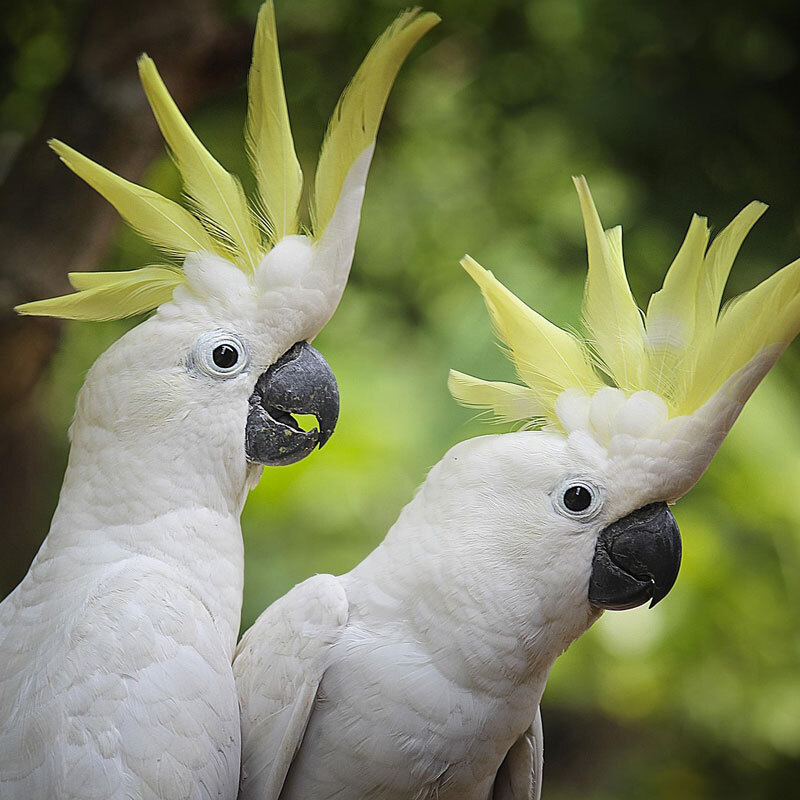
The study’s authors cautiously suggest that their findings offer a glimpse into the intricate social lives of these birds, demonstrating that their behavior is not simply reactive but also influenced by social cues and learned experiences. This research serves as a powerful reminder of the complex cognitive worlds inhabited by many species and the ongoing need for scientific exploration to fully appreciate the depth of animal intelligence and social dynamics. The image of cockatoos meticulously observing each other before trying a new almond, with crests raised in attentive observation, paints a vivid picture of a society actively engaged in learning and adaptation, a behavior that resonates deeply with our own human experience.
