
Every spring, the Platte River valley in Nebraska undergoes a transformation that defies simple description. As the frost recedes, hundreds of thousands of Sandhill Cranes descend upon the river, turning the shallow, braided channels into a cacophony of prehistoric calls and a mesmerizing display of avian behavior. This phenomenon, recognized globally as one of nature’s most significant migrations, brings thousands of visitors to the Iain Nicolson Audubon Center at Rowe Sanctuary. However, the seamless orchestration of these guided crane experiences—which facilitate public engagement with this ecological marvel—is not the result of nature alone; it is the product of a massive, coordinated effort led by a dedicated flock of volunteers.
The Scale of the Migration and the Sanctuary’s Role
To understand the necessity of the volunteer corps, one must first appreciate the scale of the event they support. The Central Platte River Valley serves as the primary staging area for nearly 80% of the world’s population of Sandhill Cranes. During their migration, these birds rely on the river’s unique topography—wide, shallow channels with low-lying sandbars—to roost safely from predators overnight.
Rowe Sanctuary, managed by the National Audubon Society, acts as a critical steward for this habitat. The sanctuary’s mission extends beyond mere preservation; it focuses on education and public access. Every March and early April, the facility transitions from a quiet conservation site into a bustling hub of scientific observation and public tourism. Managing this influx of visitors, while simultaneously ensuring the birds remain undisturbed by human activity, requires a logistical operation that spans months of preparation and requires roughly 30 active volunteer roles to be filled on a daily basis throughout the peak of the season.
The Chronology of Preparation
While the migration itself peaks in the spring, the "Crane Season" at Rowe is a year-round operational cycle. The preparation for the upcoming 2027 season, for instance, begins well in advance.
Pre-Season (October – January):
The operational calendar for volunteers begins long before the first crane touches down. In the autumn months, the focus shifts to logistics and recruitment. Prospective volunteers must navigate an onboarding process that includes application reviews and background checks. This period is also when housing requests are finalized. For those planning to contribute during the 2027 season, the deadline for housing inquiries occurs between October and early November 2026. This early window is essential, as on-site accommodations are limited and highly sought after by those traveling from across the country.
The Build-Up (December – February):
By mid-December, the focus shifts to the hard work of site maintenance. Volunteers are integral to ensuring that the infrastructure is ready for the harsh conditions of the Platte River spring. This includes the maintenance of the sanctuary’s physical facilities, the cleaning of observation blinds, and the installation of specialized equipment. One of the most critical tasks is the installation of bird-approved red lighting along the trails and within the observation blinds. These lights are calibrated to preserve the night vision of the cranes, ensuring that the human presence remains as low-impact as possible. Furthermore, volunteers engage in rigorous training to lead educational programming, ensuring that every guest receives accurate scientific information.
The Operational Season (March – April):
Once the migration begins, the sanctuary operates at high capacity. The 30 daily volunteer positions are diverse and require a variety of skill sets. Some volunteers serve as frontline ambassadors in the gift shop, while others act as field guides, escorting guests to discovery stations and managing the flow of traffic to and from the blinds. Education remains a priority; volunteers frequently conduct workshops, field trips, and lectures that explain the biological significance of the migration.
Data and Impact Analysis
The impact of the volunteer program is measurable in both human and ecological terms. From an administrative standpoint, the use of a volunteer-management system like Volgistics allows the sanctuary to coordinate hundreds of individual shifts with precision. By filling these roles with volunteers rather than relying solely on full-time staff, the sanctuary can keep the cost of public access programs sustainable while maintaining a high staff-to-guest ratio.
Economically, the crane migration is a significant driver for the local Nebraska economy. A 2018 study by the University of Nebraska at Kearney estimated that the crane migration generates over $14 million in local economic activity annually. By facilitating these experiences, volunteers are essentially acting as the gatekeepers for an eco-tourism industry that supports local hotels, restaurants, and small businesses.
Furthermore, the volunteers provide a crucial service in crowd control and ethical tourism. Without the constant guidance provided by informed volunteers, the risk of human-wildlife conflict—specifically the flushing of birds from their roosts—would be significantly higher. Volunteers ensure that the "Leave No Trace" principles are upheld, protecting the energy-intensive rest that the cranes require to successfully complete their journey to breeding grounds in Canada, Alaska, and Siberia.
The Volunteer Experience: Community and Camaraderie
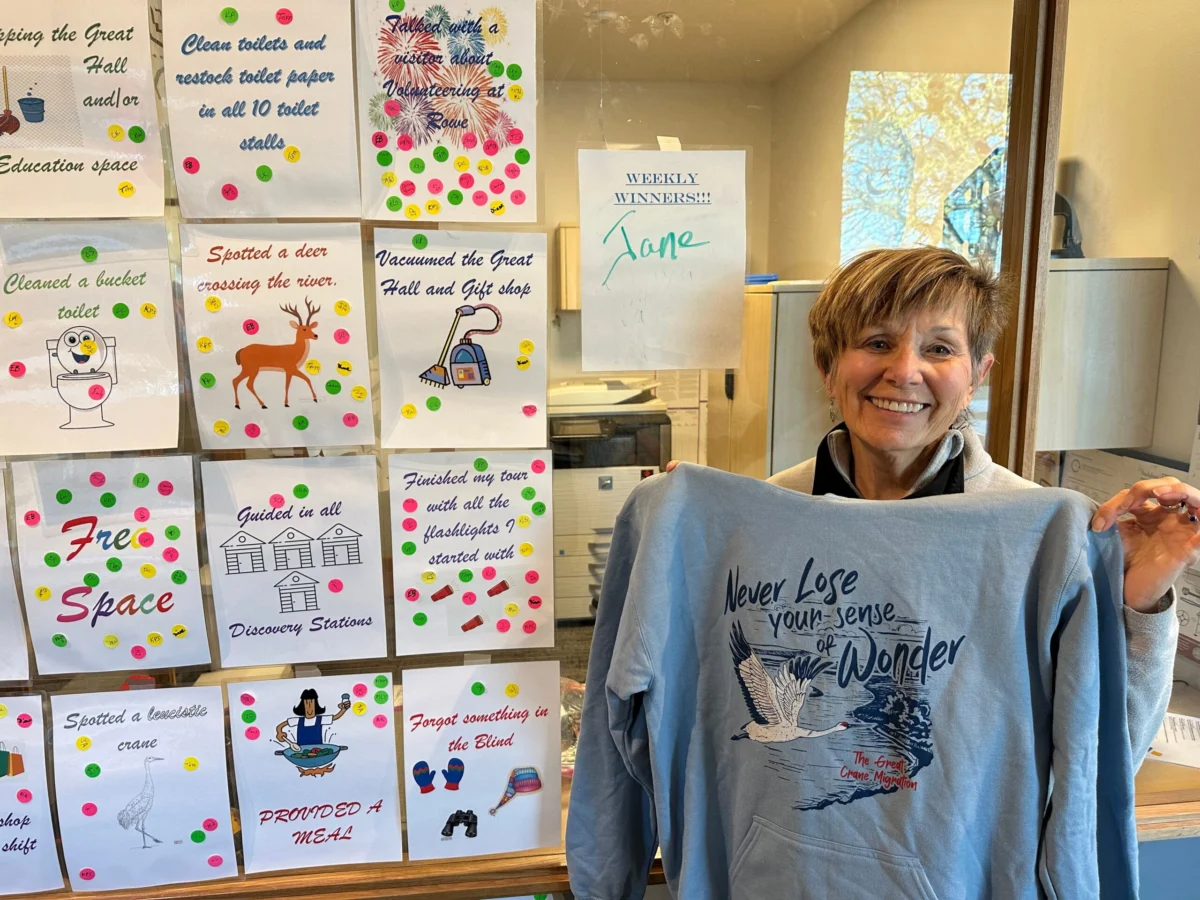
The retention rate of the Rowe Sanctuary volunteer program is high, driven by a culture that prioritizes community. Because the work is demanding, the sanctuary fosters an environment of mutual support. Activities such as "Volunteer Bingo," communal meals, and shared living spaces create a social fabric that extends beyond the professional duties of the season.
April M., a veteran volunteer at the sanctuary, highlights the dual nature of the experience: "After two years of coming to Rowe Sanctuary as a guest, it was incredibly rewarding to return as a volunteer! Between seeing the cranes every day, to making a lasting impact on a guest’s vacation, or a bucket list adventure, I was proud to lend a hand where I could and enjoyed spending time with the staff and volunteers."
This sentiment is common among those who return. The transition from observer to participant allows individuals to move from a passive appreciation of nature to an active role in conservation. This "craniac" community, as they are sometimes affectionately called, often returns year after year, providing institutional knowledge that helps the sanctuary adapt to changing environmental conditions and evolving guest needs.
Onboarding and Future Participation
For those interested in contributing to the 2027 season, the process is structured to ensure that volunteers are well-prepared for the challenges of the Platte River environment.
- Application and Screening: The initial step requires a formal application submission and a mandatory background check.
- Coordination: Upon approval, applicants work with the volunteer coordinator, Katie Moore. This stage is designed to match individual skills and interests with specific organizational needs, whether that is public speaking, administrative support, or field operations.
- Training: Volunteers are integrated into the Volgistics software, which serves as the central nervous system for scheduling. This digital training ensures that even as new volunteers arrive each week, the transition is seamless.
- Deadlines: Prospective volunteers for 2027 must ensure their applications are submitted no later than December 15, 2026.
Broader Implications for Conservation
The volunteer model at Rowe Sanctuary serves as a blueprint for other conservation organizations. By involving the public directly in the work of the sanctuary, the organization creates a powerful constituency for the protection of the Platte River. Volunteers leave the sanctuary not only with memories of the migration but with a deeper understanding of the water rights, habitat restoration, and climate challenges facing the region.
The migration of the Sandhill Cranes is a fragile spectacle. It is vulnerable to changes in river flow, land development, and environmental shifts. By maintaining a robust volunteer force, Rowe Sanctuary ensures that it can respond to these threats with both public awareness and active stewardship. The volunteers who stand in the dark, red-lit blinds in the pre-dawn cold are not just helping to run a season; they are participating in a legacy of conservation that has preserved one of the world’s greatest natural wonders for generations. As the sanctuary looks toward the 2027 season and beyond, the role of these dedicated individuals remains the most vital component in the effort to keep the cranes coming back to the Platte.
