

Dr. Irene Pepperberg, a renowned researcher in animal cognition, has detailed her innovative approach to maintaining a strong bond with her African grey parrot, Griffin, during periods of travel. While no virtual interaction can fully replicate in-person companionship, Pepperberg has found that video calls, when strategically employed, significantly mitigate the emotional distance that can arise when she is away from her laboratory and her avian companion. This practice, initially an experimental idea, has evolved into an essential tool for managing Griffin’s well-being and reinforcing their established relationship.
Pepperberg, who has dedicated her career to understanding the cognitive abilities of parrots, particularly through her work with the iconic Alex, now aged 75, has consciously adjusted her travel schedule. Previously undertaking as many as three trips per month, she has reduced this to approximately one trip monthly, though unpredictable conference schedules can lead to exceptions. Despite this reduction, her absences still necessitate a strategy to assure Griffin that he has not been forgotten by his primary caregiver. The research team diligently attends to Griffin’s daily needs, but Pepperberg emphasizes the importance of personal reassurance from her.
The feasibility of these video calls is heavily influenced by her location. Within the United States, time zone differences are generally manageable, typically within a three-hour window, allowing for calls before Griffin’s 8 PM bedtime. However, international travel presents significant logistical challenges. Locations such as Dubai, with an eight-hour time difference, or Japan, a thirteen-hour difference coupled with international dateline complexities, drastically narrow the available communication windows. In some instances, Pepperberg has resorted to using internet "hotspots" from colleagues’ vehicles to establish a connection, highlighting the dedication involved in maintaining this crucial link. These impromptu calls have also provided colleagues with the unexpected pleasure of interacting with Griffin.
The Science and Sensory Experience of Virtual Communication
The precise nature of Griffin’s perception of video calls remains an area of ongoing scientific curiosity. Parrots possess the ability to see in the ultraviolet spectrum, a capability far exceeding human vision. Standard smartphone cameras, optimized for human visual perception, may not fully capture the nuances of Griffin’s visual world. Pepperberg postulates that human faces, unlike the vibrant, often UV-reflective plumage of parrots, likely exhibit minimal ultraviolet components, suggesting that Griffin may be seeing a reasonably accurate representation of her on screen.
Furthermore, the auditory recognition of Pepperberg’s voice through a digital medium is not definitively understood. It is possible that Griffin associates the sounds emanating from the device with her presence, given that she is the sole individual initiating video calls with him. Regardless of the precise sensory interpretation, Griffin’s consistent behavior of leaning in to “kiss” the screen indicates a positive engagement with the interaction. He also appears to comprehend the limitations of the virtual presence, refraining from requesting physical “tickles” from the phone, demonstrating an understanding that she is not physically present. This adaptive behavior suggests a degree of cognitive processing regarding the nature of the communication.
Quantifying the Impact: Beyond "Nothing"
While acknowledging that video calls cannot substitute for direct, physical interaction, Pepperberg is unequivocal about their value. In her presence, Griffin receives a minimum of one hour of daily tactile stimulation, including preening and extended sessions, alongside shared quiet moments during his afternoon snacks. These deeply relational activities are beyond the scope of a brief video call. However, Pepperberg firmly asserts that a video call is demonstrably superior to having no contact at all.
The tangible benefits of these calls are evident upon her return. Pepperberg notes a significant reduction in the "cold wing" treatment – a behavior where parrots may aloofly ignore their returning caregiver. If such a response does occur, its duration is considerably shortened. This suggests that the continued virtual connection serves to maintain the emotional equilibrium between Pepperberg and Griffin, easing the transition period upon her return. Consequently, Pepperberg often structures her travel days to accommodate these brief communication windows, even when logistical hurdles are substantial.
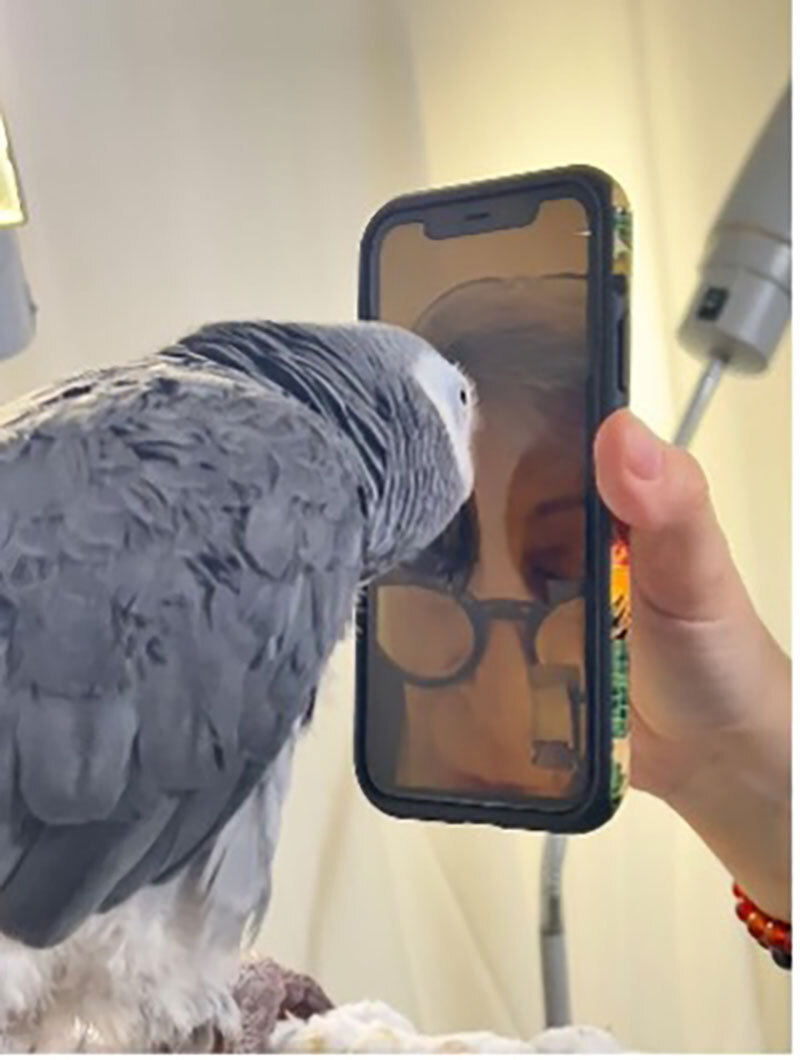
This practice echoes the broader human experience during periods of enforced physical separation, such as the COVID-19 pandemic. While virtual communication, including Zoom calls, could never fully replace the solace of a physical embrace, the ability to share news and see familiar faces provided a vital lifeline, making periods of isolation more bearable. Pepperberg’s experience with Griffin illustrates a similar principle in interspecies relationships, where technology can serve as a bridge to mitigate the emotional impact of absence.
Supporting Data and Research Implications
The cognitive research conducted by Dr. Pepperberg, particularly with Alex and subsequently with Griffin and Athena, has consistently demonstrated the remarkable intelligence and complex emotional lives of African grey parrots. Studies have documented their capacity for vocal learning, abstract reasoning, and the understanding of concepts such as quantity, color, and shape. The current application of video calls to maintain social bonds can be viewed as a real-world extension of this research, highlighting the importance of social connection for animal welfare and cognitive health.
Research in animal behavior often emphasizes the detrimental effects of social isolation on an animal’s psychological state. Prolonged separation from primary caregivers can lead to increased stress, anxiety, and behavioral problems. By proactively implementing video calls, Pepperberg is not only ensuring Griffin’s emotional well-being but also contributing to a broader understanding of how technology can be used to support animal welfare in domestic and research settings.
The success of Pepperberg’s approach with Griffin could serve as a model for other pet owners and institutions that house intelligent, social animals. For instance, zoos and animal sanctuaries could explore similar strategies for maintaining connections between keepers and animals during periods of staff absence or when animals are temporarily relocated. This could be particularly relevant for animals that form strong individual bonds, such as primates, elephants, and certain bird species.
Future Directions and Broader Impact
The long-term implications of this practice extend beyond individual animal welfare. As technology continues to advance, the fidelity and accessibility of video communication will likely improve. Future research could explore the optimal frequency, duration, and content of virtual interactions for different species and individual animals. Investigations into the specific visual and auditory cues that are most effective in conveying presence and reassurance could further refine these methods.
Moreover, the ethical considerations surrounding the use of technology in animal care are becoming increasingly important. Pepperberg’s approach, rooted in her deep understanding of avian cognition and welfare, provides a responsible framework for such applications. It underscores the principle that technology should augment, rather than replace, genuine connection and should always prioritize the animal’s well-being.
The ongoing narrative of Dr. Pepperberg and Griffin serves as a compelling testament to the enduring power of the human-animal bond and the adaptive capacity of both species. It highlights how scientific inquiry, combined with a profound sense of care, can lead to innovative solutions that enrich the lives of sentient beings, even across the barriers of physical distance. The story of Griffin’s video calls offers a hopeful glimpse into a future where technology and compassion work in tandem to foster deeper understanding and connection with the animal kingdom.
