
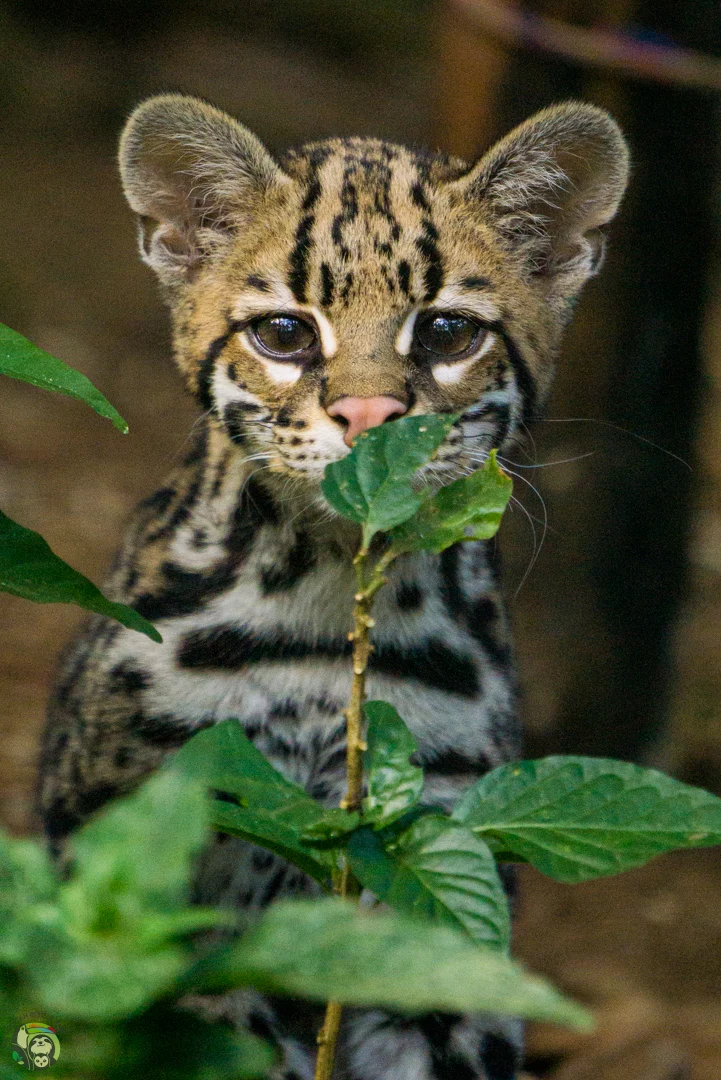
When visitors observe animals at zoos or wildlife sanctuaries moving back and forth in a repetitive, methodical pattern—tracing an invisible line along a fence or enclosure perimeter—they are witnessing a phenomenon known as pacing. While casual observers might interpret this behavior as simple restlessness, boredom, or boundless energy, behavioral scientists and wildlife rehabilitators recognize it as a significant indicator of psychological distress. At institutions such as the Toucan Rescue Ranch, decoding these physical manifestations is central to daily operations, providing essential insights into the psychological well-being of displaced wildlife.
Defining Stereotypic Behavior in Captive Wildlife
Pacing is classified broadly as a stereotypic behavior: a repetitive, unvarying movement pattern that serves no obvious adaptive or functional purpose. In zoological and sanctuary environments, this behavior frequently manifests as an animal walking a continuous route along a boundary line, repeatedly spinning in circles, swaying from side to side, or navigating the exact same physical trajectory within its enclosure for hours at a time.
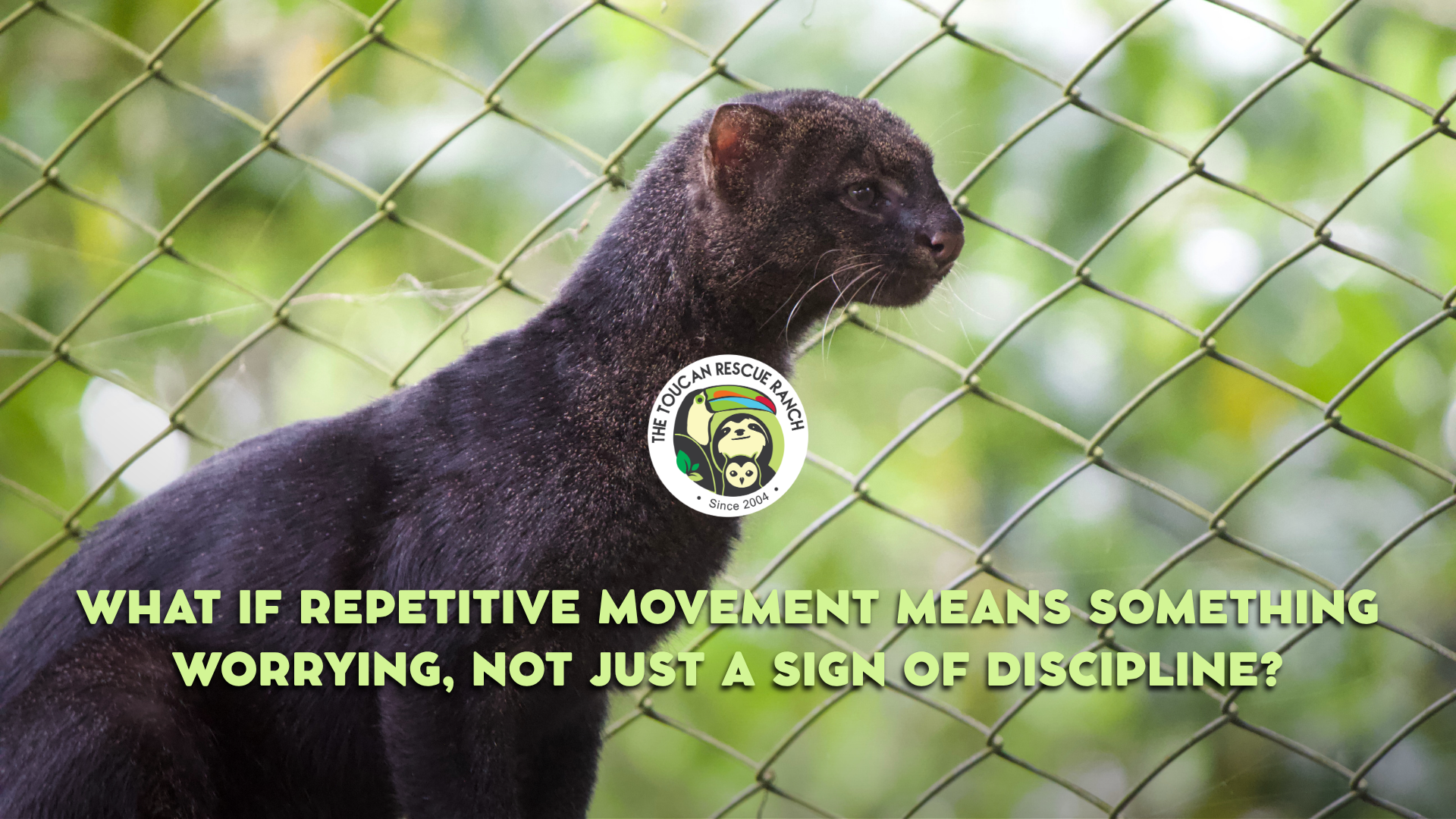
These behaviors are documented predominantly among wild animals housed in captivity, particularly when engineered environments fail to replicate the vast spatial and structural complexity of natural ecosystems. Apex predators and wide-ranging species—including jaguars, pumas, bears, wolves, and smaller carnivores like ocelots and grisons—are exceptionally vulnerable. The fundamental challenge of captive wildlife management lies in an inherent architectural paradox: no artificial enclosure can simultaneously provide total physical security and the limitless freedom characteristic of a natural habitat. Consequently, managing institutions must rely heavily on environmental enrichment strategies to bridge this gap.
The Etiology of Pacing: Neurological and Environmental Roots
Pacing is not an innate behavior with which animals are born; rather, it develops progressively over time as a maladaptive response to chronic stress, frustration, and the suppression of natural instincts. In natural habitats, wild animals navigate expansive territories, engage in complex social hierarchies, hunt or forage for sustenance, and inhabit dynamic environments that constantly stimulate their sensory faculties.
When captive enclosures significantly restrict these parameters, animals face severe limitations in stimulation and behavioral expression. Rather than neutralizing these evolutionary drives, unmet instincts find alternative outlets through repetitive motor patterns. Neuroscientific research indicates that stereotypic behaviors share neural pathways with human anxiety and obsessive-compulsive disorders. While pacing may initially offer a minor degree of self-soothing or psychological relief by releasing nervous energy, it ultimately serves as an outward symptom of fundamental environmental deprivation.
One of the most complex challenges in behavioral rehabilitation is persistence. Once a stereotypic behavior becomes firmly established in an animal’s routine, it is notoriously difficult to reverse. Even when an individual is relocated to a state-of-the-art habitat with advanced enrichment, pacing patterns can persist for years out of sheer habit. This reality underscores the vital importance of early intervention, proactive enrichment programs, and thoughtful enclosure design. Preventing the onset of stereotypic behaviors is exponentially more effective than attempting to eliminate them after they have become ingrained.
Diagnostic Indicators: What Pacing Communicates
Behavioral specialists evaluate chronic pacing as a composite signal communicating specific deficiencies in a captive animal’s environment or care regimen:
- Spatial and Structural Inadequacies: Enclosures that lack vertical complexity—such as climbing branches, water features, varied substrates, and hidden retreat spaces—fail to satisfy the psychological and physical needs of complex wildlife species.
- Chronic Stress and Isolation: Separation from conspecifics, particularly for animals removed prematurely from wild adult populations or housed in solitary conditions, frequently induces chronic psychological strain.
- Thwarted Evolutionary Drives: A feline predator programmed by evolution to spend hours stalking and hunting prey cannot simply deactivate its predatory drive because a natural food source is absent. When these powerful internal directives have no functional outlet, stereotypic behaviors frequently fill the vacuum.
The Crucial Distinction: Healthy Anticipation Versus Stereotypic Pacing
A critical competency for wildlife caretakers is differentiating between pathological stress responses and normal, healthy behavioral patterns. Not all repetitive movement indicates distress.
Many species exhibit heightened, repetitive movement immediately prior to scheduled feeding times. Known as anticipatory behavior, this phenomenon occurs across a wide taxonomic spectrum, including felids, raptors, and primates. It is the behavioral equivalent of a domestic dog spinning in circles upon hearing the rattle of its food bowl.
This form of pacing is fundamentally distinct from stereotypic stress behavior in several ways:
- Duration and Context: Feeding-time anticipation is brief, tied directly to a predictable, impending event, and resolves immediately once the food is delivered.
- Accompanying Indicators: It is typically accompanied by positive arousal markers, such as bright eyes, alert posture, and species-specific vocalizations.
- Frequency: Unlike chronic pacing, which persists throughout the day regardless of external stimuli, anticipatory pacing ceases entirely once the goal-directed stimulus is received.
Mitigation Strategies and the Impact of Environmental Enrichment
Leading wildlife rescue and rehabilitation facilities prioritize comprehensive behavioral assessments to identify and mitigate the root causes of stress. Modern mitigation involves targeted environmental enrichment—a multidisciplinary approach designed to stimulate natural behaviors through novel objects, complex foraging challenges, and sensory variation. Furthermore, establishing appropriate social groupings and maintaining attentive, professional husbandry staff are vital components of maintaining behavioral health.
Public and corporate support plays an indispensable role in funding these initiatives. Contributions through symbolic animal adoptions, educational workshops, and corporate volunteer programs directly enable the construction of advanced, science-backed enclosures. For instance, collaborative corporate volunteer efforts have recently funded specialized habitats equipped with state-of-the-art enrichment features for species such as grisons, directly improving their daily welfare.
Ultimately, the successful rehabilitation of rescued wildlife requires restoring equilibrium to both mind and body, ensuring that animals can find peace within their managed surroundings. Through continuous monitoring, innovative habitat design, and dedicated community support, conservation organizations continue to refine the standards of captive animal welfare worldwide.
