
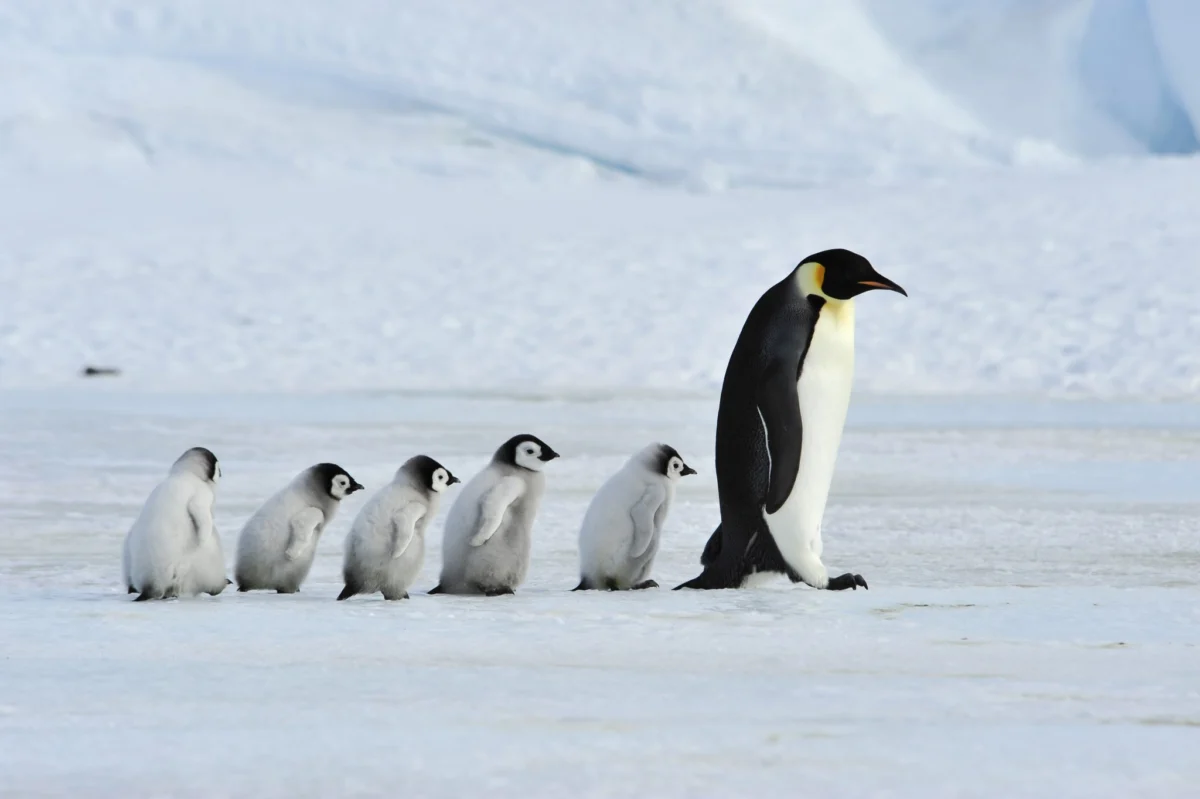
BirdLife International’s latest Red List assessment has delivered a stark warning from the planet’s southernmost reaches, officially uplisting the iconic Emperor Penguin (Aptenodytes forsteri) from ‘Near Threatened’ to ‘Endangered’ on the IUCN Red List of Threatened Species. This significant reclassification underscores the catastrophic and accelerating impact of climate change on one of Earth’s most resilient and beloved species, triggering urgent calls for international governmental action to protect their rapidly diminishing habitat. The international conservation community is now pressuring governments to designate the Emperor Penguin as an Antarctic Specially Protected Species during the upcoming 48th Antarctic Treaty Consultative Meeting (ATCM) in Hiroshima this May.
A Dire Warning from the Antarctic
As the official Red List Authority for birds, BirdLife International, in collaboration with the IUCN SSC Penguin Specialist Group, meticulously reassesses the global extinction risk of avian species. This rigorous process helps to pinpoint species in gravest peril and highlights where conservation efforts are, or are not, making a difference. The recent assessment for the Emperor Penguin paints a grim picture, unequivocally identifying climate change as the primary driver behind the species’ precipitous decline. The assessment projects a catastrophic halving of the global Emperor Penguin population by the 2080s, primarily due to the erratic and severe decline in sea ice persistence across the Antarctic region.
The decision to uplist the Emperor Penguin to Endangered reflects a consensus among leading ornithologists and climate scientists regarding the species’ precarious future. Rob Martin, Red List Team Manager at BirdLife International, who spearheaded this crucial reassessment, voiced profound concern: “The Emperor Penguin’s shift from Near Threatened to Endangered is a worrying signal of the reach of climate change impacts into the most remote parts of the globe. Future projections for the species robustly point to severe reductions over the rest of this century.” Martin emphasized the species’ absolute reliance on the Antarctic habitat for every critical stage of its life cycle—breeding, moulting, and feeding—a dependence that is becoming increasingly perilous as ice patterns grow less predictable and their vital habitat shrinks.
The Relentless March of Climate Change
Emperor Penguins are uniquely adapted to thrive in the harshest environment on Earth, yet their very existence hinges on the stability of Antarctic sea ice. This ‘fast ice’ – sea ice anchored to the coastline, ocean floor, or grounded icebergs – serves as their indispensable platform for raising chicks and undergoing their annual moult. During moulting, penguins shed their old feathers and grow new ones, losing their waterproofing in the process and making them highly vulnerable to the frigid waters. An early break-up of this fast ice can be devastating, often leading to mass mortalities among chicks that have not yet developed their waterproof plumage or learned to swim.

Satellite imagery analysis provides concrete evidence of this ongoing crisis. Between 2009 and 2018 alone, a period of just nine years, an estimated 10% of the Emperor Penguin population was lost, equating to more than 20,000 adult penguins. This decline is directly attributed to the premature break-up and loss of sea ice, a phenomenon that has intensified dramatically, reaching record lows since 2016. The years following have continued to challenge previous records, with 2022 and 2023 witnessing unprecedented reductions in Antarctic sea ice extent, further accelerating the habitat loss for these vulnerable birds. Scientific observations, such as the catastrophic breeding failure documented at the Halley Research Station colony in 2016 and 2017, where thousands of chicks perished due to early sea ice collapse, serve as tragic real-world examples of the projections coming to pass.
The Fragile Ecosystem of Fast Ice
The Emperor Penguin’s breeding cycle is exceptionally long, spanning from April to December. Pairs trek far inland onto the stable fast ice to lay a single egg, which the male incubates for over two months, enduring the brutal Antarctic winter without food. Once hatched, chicks require several months to fledge, growing their insulating feathers and building strength. Throughout this critical period, the integrity of the fast ice is paramount. It protects them from predators, provides a stable platform for their colonies, and offers access to foraging grounds.
However, rising global temperatures, driven by anthropogenic greenhouse gas emissions, are directly impacting the formation and stability of this crucial habitat. Warmer ocean waters and changes in atmospheric circulation patterns are contributing to less extensive and less stable sea ice. When the fast ice breaks up too early in the breeding season, before chicks are mature enough, the consequences are fatal. Chicks fall into the icy ocean, unable to survive the cold or swim effectively. The increasing frequency of these devastating events, once rare, is a direct consequence of a rapidly changing climate, pushing the species closer to the brink.
A Chronology of Concern: Tracking the Decline
The journey of the Emperor Penguin on the IUCN Red List reflects a growing awareness of their vulnerability. Initially assessed as ‘Least Concern,’ increasing scientific scrutiny and climate data led to their reclassification as ‘Near Threatened’ in the early 21st century. This shift recognized the emerging threats posed by environmental changes, even as definitive population data remained challenging to acquire across their remote Antarctic range. The current uplisting to ‘Endangered’ signifies a critical acceleration of these threats, confirming that the earlier concerns were not only warranted but underestimated.
The past decade, in particular, has seen a convergence of alarming trends:

- 2009-2018: A documented 10% population decline, translating to over 20,000 adult penguins lost.
- 2016 onwards: A period of unprecedented and sustained record lows in Antarctic sea ice extent, impacting numerous breeding colonies.
- 2022-2023: Continued record-breaking low sea ice, with experts noting the lowest recorded sea ice extent since satellite monitoring began in the late 1970s.
- Ongoing: Population modelling, incorporating a wide range of future climate scenarios (such as those outlined by the Intergovernmental Panel on Climate Change – IPCC), consistently predicts severe population reductions. These models, which account for various emission pathways, robustly indicate that without drastic and immediate reductions in global greenhouse gas emissions, Emperor Penguin populations will continue their rapid decline throughout this century. The scientific community’s consensus on these projections reinforces the urgency of the current reclassification.
The Imperative for International Action
The dire assessment for the Emperor Penguin arrives at a critical juncture for international environmental policy. Governments from signatory nations to the Antarctic Treaty will convene in May for the 48th Antarctic Treaty Consultative Meeting (ATCM) in Hiroshima, Japan. This annual meeting is the primary forum for overseeing and shaping environmental protection policies for the Antarctic continent and its surrounding ocean. BirdLife International, by providing this updated Red List assessment, aims to directly inform decision-making at this crucial assembly.
A central plea from BirdLife International and a growing coalition of conservation groups is for the ATCM to formally designate the Emperor Penguin as an Antarctic Specially Protected Species (ASPS). Martin Harper, CEO of BirdLife International, articulated this urgent call to action: “Penguins are already among the most threatened birds on Earth. The Emperor Penguin’s move to Endangered is a stark warning: climate change is accelerating the extinction crisis before our eyes. Governments must act now – starting by designating the Emperor Penguin as an Antarctic Specially Protected Species this May.”
The designation as an ASPS would not merely be symbolic; it would impose legally binding obligations on all Antarctic Treaty member governments. These obligations would compel nations to actively prevent actions that directly harm or disturb Emperor Penguins and their critical habitat. This would include stricter regulations on tourism, scientific research activities, and any other human presence in areas vital to penguin survival. While the primary threat remains climate change, an ASPS designation would offer a crucial layer of immediate protection, allowing for better management of localized human impacts and reinforcing the species’ importance on the international stage. It would also elevate the species’ profile, fostering greater scientific research and monitoring efforts.
Broader Implications: Penguins as Climate Sentinels
The plight of the Emperor Penguin extends far beyond a single species; it serves as a powerful, living barometer for the health of our planet, particularly the fragile polar regions. As "climate sentinels," these majestic birds offer an unambiguous message about the profound and far-reaching consequences of global warming. Their decline is not an isolated event but a critical indicator of wider ecological destabilization within the Antarctic ecosystem.
Ecologically, the loss of Emperor Penguins could have cascading effects on the Antarctic food web. They are a significant consumer of krill, fish, and squid, playing a vital role in regulating these populations. A substantial reduction in their numbers could alter predator-prey dynamics, potentially impacting other species that rely on the same food sources or that are preyed upon by the penguins’ predators (such as leopard seals and orcas).

More broadly, the rapid warming of the Antarctic, evidenced by the unprecedented sea ice loss, carries global implications. The stability of polar ice caps influences global sea levels and ocean currents, which in turn affect weather patterns and climate systems worldwide. The collapse of an apex predator like the Emperor Penguin signals that fundamental changes are occurring at a speed and scale that threaten to unravel entire ecosystems. As BirdLife International aptly puts it, "Birds are our compass. Their health reveals the health of our world." The Emperor Penguin is emphatically pointing towards a future where the Antarctic, and by extension the global climate, faces severe destabilization if humanity fails to urgently decarbonize its economies.
The Path Forward: Hope Through Policy and Global Effort
The reclassification of the Emperor Penguin to Endangered is a sobering call to action, but not a call to despair. It underscores the urgent need for a two-pronged approach: immediate, localized protection measures coupled with ambitious, global climate action. The upcoming ATCM in Hiroshima presents a tangible opportunity for governments to demonstrate their commitment to environmental stewardship by adopting the ASPS designation. This would not only offer a lifeline to the Emperor Penguin but also send a powerful message about the international community’s resolve to protect the unique and irreplaceable biodiversity of Antarctica.
However, the long-term survival of Emperor Penguins, and indeed countless other species, hinges on the world’s ability to transition rapidly away from fossil fuels and achieve net-zero greenhouse gas emissions. The scientific consensus is clear: without abrupt and dramatic reductions in emissions, the trajectory for the Emperor Penguin, and for the planet’s climate, remains grim. The decision in May, and the subsequent actions of governments and individuals worldwide, will determine whether this iconic species endures as a symbol of Antarctic wilderness or becomes another tragic casualty of an unfolding extinction crisis. The collective responsibility to safeguard these magnificent birds, and the planet they call home, has never been more evident.
