
A new collection of recently released books offers enthusiasts and general readers alike a profound journey into the diverse and captivating world of avian life, just in time for summer exploration. From the deep evolutionary past of dinosaurs to the intricate workings of avian minds, the historical battles for conservation, and the surprising linguistic influence of birds, these titles provide rich material for contemplation whether on a sun-drenched beach or during a quiet staycation. These selections cater to a broad spectrum of interests, promising to enrich understanding and appreciation for the feathered inhabitants of our planet.
Unearthing Avian Origins: From Dinosaurs to Modern Birds
The evolutionary lineage connecting birds to their dinosaur ancestors represents one of the most remarkable scientific discoveries of recent decades, fundamentally reshaping our understanding of life on Earth. Paleontologist Steve Brusatte’s The Story of Birds offers a meticulously researched and engaging narrative that transports readers across more than 100 million years of Earth’s history, chronicling the epic journey from formidable ancient reptiles to the diverse avian species we observe today. The revelation that birds are, in essence, surviving dinosaurs—specifically, descendants of small, feathered theropods—has moved from a once-radical hypothesis to widely accepted scientific consensus, underpinned by a wealth of fossil evidence.
Brusatte’s work illuminates the Jurassic and Cretaceous periods, vividly depicting a world where early birds, distinct from their reptilian cousins, took to the skies, hunted, and engaged in complex social behaviors. This era saw the emergence of avian traits such as feathers, hollow bones, and specialized respiratory systems, which were crucial for flight and survival. Fossils like Archaeopteryx, discovered in the 19th century, provided early clues, showcasing a mosaic of reptilian (teeth, long bony tail) and avian (feathers, wishbone) characteristics. More recent discoveries, particularly from China’s Liaoning Province, have unearthed thousands of exquisitely preserved feathered dinosaurs, cementing the evolutionary link and revealing a stunning array of transitional forms. These fossils demonstrate that feathers initially evolved for insulation or display before being co-opted for flight, a classic example of exaptation in evolution. Brusatte expertly reconstructs the daily lives of these ancient birds, detailing their hunting strategies, mating rituals, and interactions with colossal dinosaurs, painting a picture that is both scientifically rigorous and captivatingly imaginative. The book serves not only as a historical account but also as a testament to the ongoing scientific endeavor to piece together the planet’s ancient past.
The Nuances of Avian Intelligence
Complementing the historical perspective, Louis Lefebvre’s A Bird’s IQ delves into the cutting-edge research on avian cognition, challenging preconceived notions about the intellectual capacities of birds. For centuries, the term "bird-brained" was synonymous with stupidity, a misconception now thoroughly debunked by extensive scientific study. Lefebvre, a prominent biologist, distills complex research into accessible prose, revealing the sophisticated problem-solving abilities, memory, and communication skills present across a wide range of avian species.
The book explores the well-documented intelligence of corvids (crows, ravens, jays) and parrots, species long recognized for their cognitive prowess. Corvids, for instance, are known for their tool-making and use, their ability to plan for the future, and their understanding of cause and effect. New Caledonian crows, in particular, have been observed fashioning hooks from branches to extract insects, a behavior indicative of advanced cognitive processing. Parrots, beyond their remarkable mimicry abilities, demonstrate complex social learning, numerical comprehension, and even theory of mind in some cases. However, Lefebvre extends the discussion beyond these "usual suspects," highlighting the unexpected cognitive achievements of species like herons and pigeons. Herons, for example, have been observed using bait (such as bread crumbs or insects) to lure fish, a sophisticated form of tool use that requires foresight and understanding of prey behavior. Pigeons, often dismissed as mere urban dwellers, exhibit impressive navigational skills, complex pattern recognition, and the ability to learn abstract rules, challenging their simplistic perception.
The implications of this research are profound. Understanding avian intelligence not only provides insights into the diverse manifestations of cognition in the animal kingdom but also encourages a re-evaluation of our anthropocentric views on intelligence. It underscores that intelligence is not a monolithic trait but a spectrum of adaptive capabilities shaped by evolutionary pressures, allowing species to thrive in their specific ecological niches. Lefebvre’s work serves as a compelling argument for respecting the intricate mental lives of birds and recognizing their sophisticated adaptations.
The Human-Bird Connection: Language, Art, and Emotion
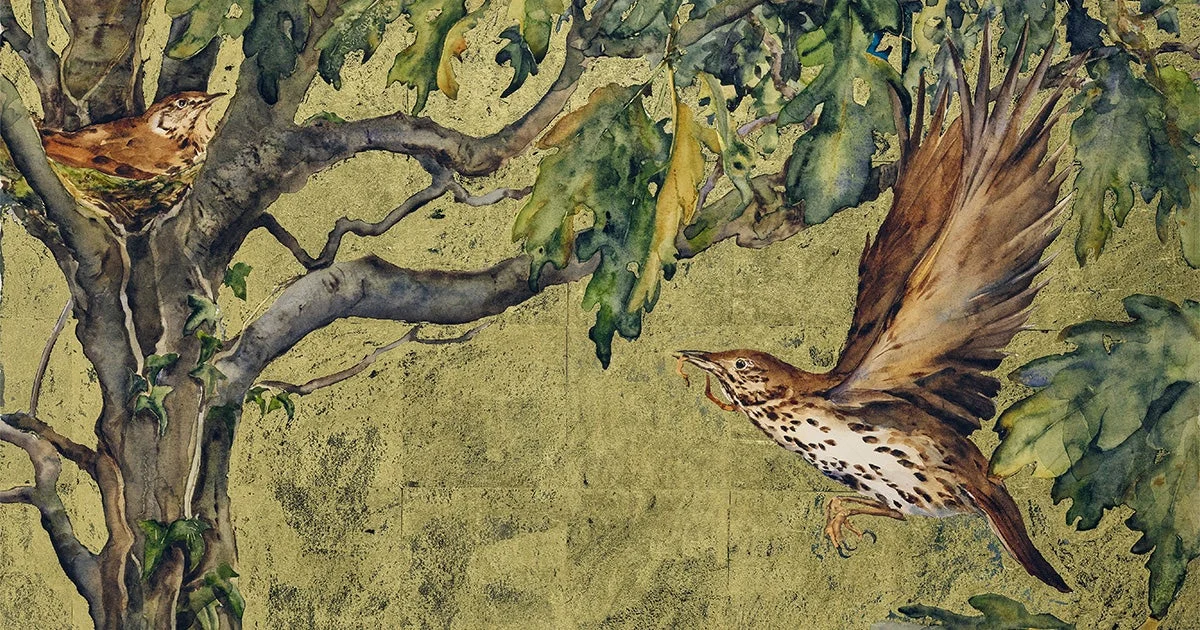
The relationship between humans and birds extends beyond scientific inquiry, deeply embedding itself in culture, language, and artistic expression. Robert Macfarlane and Jackie Morris, renowned for their previous collaborations on the themes of language and nature, return with The Book of Birds. This lyrical collection of short odes celebrates 49 threatened bird species native to the United Kingdom, where the authors are based. Organized around seven "wonders" of avian life—from the delicate architecture of eggs to the epic journeys of migration—the book is a poignant tribute to these creatures, enriched by Morris’s exquisite watercolor portraits.
Macfarlane and Morris’s work resonates with a growing concern over the loss of biodiversity and the increasing estrangement of humans from the natural world. Their previous books, The Lost Words and The Lost Spells, focused on the erosion of nature-related vocabulary from children’s dictionaries, arguing that losing the words for natural phenomena leads to losing the ability to perceive and care for them. The Book of Birds continues this mission, using evocative language and stunning art to rekindle a sense of wonder and connection. Each ode is both informative and deeply personal, inviting readers to appreciate the unique beauty and ecological significance of species facing environmental pressures. For instance, the section on migration not only describes the incredible physical feats involved but also evokes the deep emotional and existential questions these journeys provoke. The choice of UK native species, many of which are familiar to American readers, grounds the work in a specific geography while speaking to universal themes of vulnerability and resilience.
Further exploring the linguistic intersection, Jeremy Withers’s Birding English makes a bold claim: that the history of the English language can be traced through 50 birds. This entertaining compendium of micro-essays proves surprisingly convincing, revealing the profound and often overlooked influence of birds on our vocabulary and grammar. Withers delves into etymological curiosities, showing how bird behaviors and characteristics have shaped common words and phrases. For example, a chapter linking Florida Scrub-Jays to verbal insults explores the evolution of derogatory terms. Another charming essay traces the history of punctuation through the Red-winged Blackbird, offering a fresh perspective on grammatical conventions. The book addresses perennial questions for birders, such as the inconsistent hyphenation of species names, providing historical context and linguistic rationale. Readers will discover the avian origins of words like "haggard," derived from the term for a wild, untamed hawk.
Birding English is satisfying both as a sweeping overview of linguistic history and as a treasure trove of fun facts. It highlights how the observation of birds—their calls, flights, plumage, and habits—has not only inspired poets and artists but also subtly molded the very fabric of our communication. The book underscores that language is a living entity, continually shaped by our interactions with the environment, and birds have played a far more significant role in this evolution than many might realize.
The Fierce Battles for Conservation: A Historical Account
While today most birds in the United States enjoy strict protection under state and federal law, this was not always the case. James H. McCommons’s The Feather Wars provides a compelling and often sobering account of the first major fight to protect birds in America. The book meticulously charts a period from the wanton feather-harvesting and "shotgun ornithologists" of the Gilded Age to the landmark legislation of the early 20th century that still underpins American conservation efforts.
The late 19th century witnessed an environmental crisis driven by the fashion industry’s insatiable demand for feathers to adorn women’s hats. This trend led to the slaughter of millions of birds, pushing many species, particularly egrets and other wading birds, to the brink of extinction. Market hunters, often referred to as "shotgun ornithologists" by critics, indiscriminately killed birds in staggering numbers. For instance, it’s estimated that in Florida alone, hundreds of thousands of birds were killed annually for their plumes, with some species seeing population declines of over 90%.
Against this backdrop of ecological devastation, a nascent conservation movement began to coalesce. McCommons highlights the crucial role played by women’s organizations, notably the early Audubon societies, which advocated fiercely against the feather trade. These groups, often led by influential women like Harriet Hemenway and Minna B. Hall, organized boycotts and lobbied legislators, leveraging public sentiment to drive change. The book details the legislative battles, the impassioned arguments, and the eventual triumph of conservationists. Key milestones include the Lacey Act of 1900, which prohibited the interstate transport of illegally harvested wildlife, and the Migratory Bird Treaty Act of 1918, which established federal protection for migratory birds. These acts were revolutionary, shifting the paradigm from unchecked exploitation to government-mandated protection.
The Feather Wars not only provides a comprehensive chronology of these events but also offers critical background context, explaining the economic drivers of the feather trade, the scientific awakening to ecological interconnectedness, and the evolving public consciousness regarding environmental responsibility. The book serves as a powerful reminder that conservation victories are often hard-won, requiring sustained advocacy and legislative action. Its implications extend to contemporary challenges: even with robust legal frameworks, birds continue to face unprecedented threats from climate change, habitat loss, and pollution, underscoring the ongoing need for vigilance and adaptation in conservation strategies.
Lessons in Caregiving from the Animal Kingdom
Elizabeth Preston’s The Creatures’ Guide to Caring offers a unique and engaging exploration of parenting strategies across the animal kingdom, providing fascinating insights for anyone involved in caregiving. Preston, a science journalist and a parent herself, is uniquely positioned to investigate the evolutionary roots and marvelous diversity of animal care, approaching the topic with both scientific rigor and empathetic understanding.
The book showcases a remarkable array of parental behaviors, from the cooperative breeding of certain bird species to the elaborate male incubation rituals seen in others, and the surprising parenting styles of creatures as diverse as clownfish and cassowaries. For instance, while many bird species exhibit biparental care, others, like the phalaropes, see males taking sole responsibility for incubation and chick-rearing. The emperor penguin endures extreme Antarctic conditions to incubate its single egg, a testament to profound parental dedication. Preston details the strategic choices animals make—when to lay eggs, how many to produce, whether to stay with young, or even engage in brood parasitism (though the focus here is on direct caregiving). The underlying evolutionary pressures driving these varied strategies are explored, demonstrating how different environments and life histories have shaped the intricate dance of animal care.
The Creatures’ Guide to Caring is a delightful and thought-provoking read. It not only entertains with fascinating facts about animal behavior but also prompts readers to reflect on the universal aspects of caregiving, attachment, and the sacrifices inherent in raising offspring. By examining the biological and behavioral mechanisms of animal parenting, the book subtly offers new perspectives on human caregiving roles, highlighting both the uniqueness of human familial structures and our shared biological imperatives with the broader animal kingdom. The book is an excellent resource for parents, educators, and anyone interested in ethology and the rich tapestry of life.
Conclusion: A Summer of Avian Discovery
This curated selection of new releases collectively represents a vibrant and timely contribution to avian literature. Each book, in its distinct approach, deepens our understanding of birds, whether through the lens of deep evolutionary history, intricate cognitive science, the lyrical beauty of nature writing, the surprising links to language, or the critical history of conservation.
For the dreamer, Macfarlane and Morris provide an artistic and emotional connection to vulnerable species. For the dino enthusiast, Brusatte offers a thrilling scientific journey back in time. McCommons’s work provides crucial historical context for conservation, reminding us of past struggles and triumphs. Preston offers a unique perspective on caregiving, drawing lessons from the diverse strategies of the animal kingdom. And for the wordsmith, Withers unveils the hidden avian influences embedded within our language. Lefebvre completes the intellectual journey, revealing the astonishing complexity of avian minds.
These books collectively underscore the profound and multifaceted role birds play in our world—as subjects of scientific inquiry, muses for art and language, indicators of environmental health, and teachers of life’s fundamental lessons. They are more than just summer reads; they are invitations to engage deeply with the natural world, fostering a greater appreciation, understanding, and ultimately, a renewed commitment to the conservation of avian life for generations to come. The diverse perspectives offered by these authors ensure that every bird-lover, regardless of their specific interest, will find something to intrigue, educate, and inspire.
