
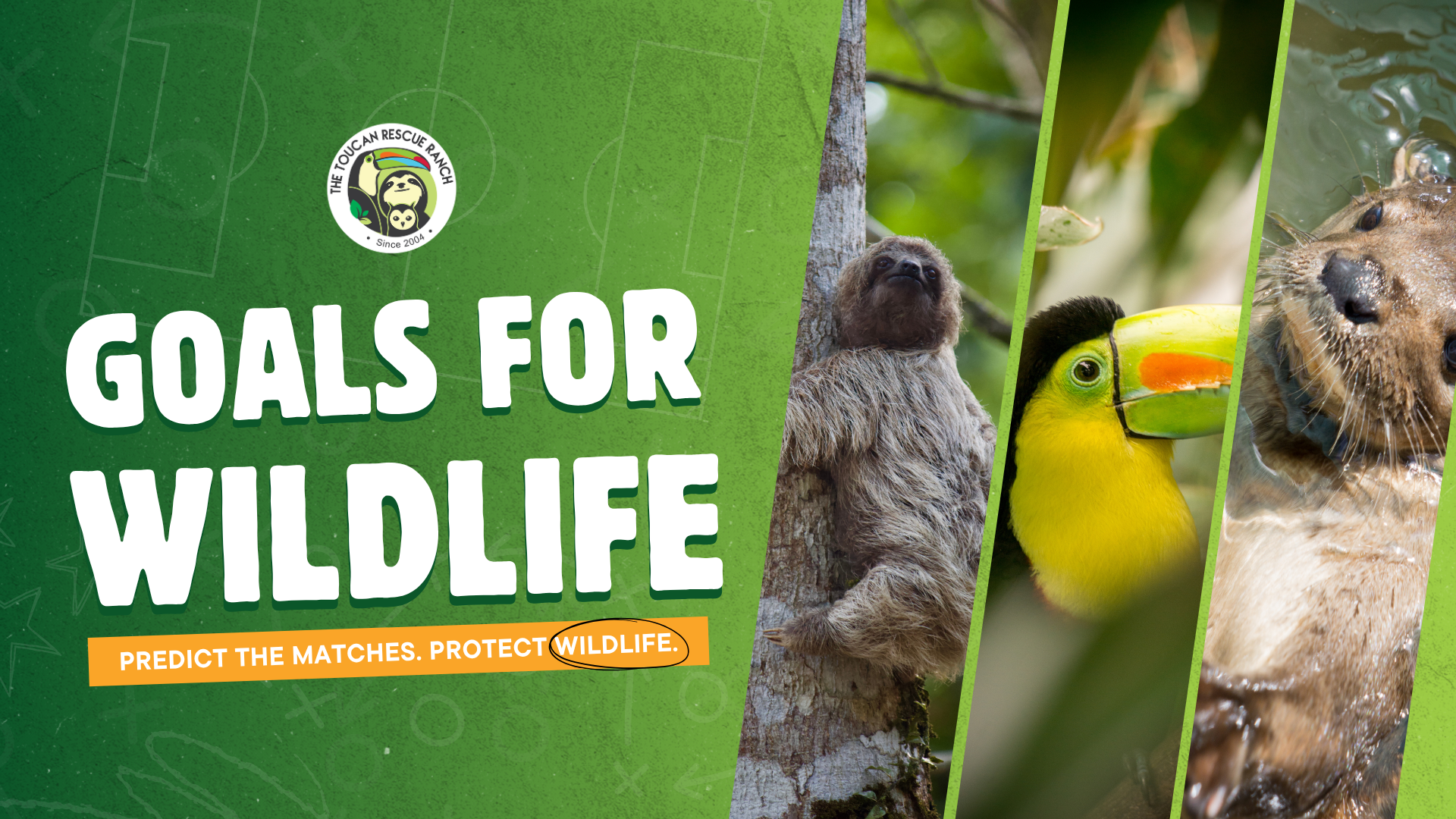
The intersection of global sports culture and environmental stewardship has found a new focal point with the launch of the Goals for Wildlife initiative, a philanthropic campaign designed to leverage the excitement of the FIFA World Cup to support biodiversity conservation. Spearheaded by the Toucan Rescue Ranch (TRR), a renowned wildlife rehabilitation center based in Costa Rica, the campaign invites football enthusiasts and conservationists alike to participate in a gamified fundraising effort. While the Costa Rican national team’s presence on the pitch varies by tournament cycle, the nation’s wildlife remains a constant fixture of global importance, requiring a dedicated "team" of supporters to ensure the survival of its most vulnerable species.
The Goals for Wildlife program operates on a unique model of "philanthropic gamification," where participants make predictions on match results throughout the World Cup tournament. In doing so, they provide critical financial support for the lifesaving care of rescued animals. This initiative comes at a pivotal time for conservation organizations, which are increasingly seeking innovative ways to engage the public and secure sustainable funding in an era of fluctuating donor interest.
The Mechanics of the Goals for Wildlife Challenge
The campaign is structured to mirror the competitive and collaborative spirit of a professional football tournament. Participation is divided into a three-step process designed to maximize engagement and impact.
First, interested individuals join the challenge by making a donation through the official Goals for Wildlife campaign page. These contributions serve as the "entry ticket" to the competition, with all proceeds directed toward the medical and nutritional needs of animals currently housed at the Toucan Rescue Ranch.
Upon entering, participants are randomly assigned to one of six wildlife teams. These teams represent flagship species that are central to the rescue center’s mission, such as sloths, toucans, owls, and spider monkeys. This team-based approach fosters a sense of community among donors, as they are no longer just individual contributors but members of a collective effort to propel their assigned species to the top of the leaderboard.
The final stage involves the prediction of match results. Throughout the World Cup, participants receive prediction forms where they can guess the outcomes of upcoming fixtures. Points are awarded based on the accuracy of these predictions, creating a dynamic environment where the leaderboard shifts as the real-world tournament progresses.
A Dual-Point System for Maximum Impact
The Goals for Wildlife initiative distinguishes itself through a scoring system that rewards both sporting intuition and financial generosity. Teams earn points through two primary channels:
- Match Predictions: Participants who accurately forecast the results of World Cup matches earn points for their assigned wildlife team. This encourages consistent engagement throughout the month-long tournament, keeping the cause of conservation at the forefront of participants’ minds.
- Donations: While predictions drive the competitive aspect, direct donations are the primary engine for point accumulation. This ensures that the ultimate "winner" of the challenge is the team that garners the most tangible support for its real-world counterparts.
As funds are raised, they are immediately earmarked for specialized care. For the Toucan Rescue Ranch, this includes emergency veterinary treatments, the purchase of specialized milk formulas for orphaned mammals, habitat enrichment to prepare animals for life in the wild, and the maintenance of high-tech release sites where animals are monitored as they transition back into their natural ecosystems.
Contextualizing the Mission: The Toucan Rescue Ranch
To understand the stakes of the Goals for Wildlife campaign, one must look at the work of the Toucan Rescue Ranch. Founded in 2004, the organization has evolved from a small rescue center for birds into a sophisticated multi-species rehabilitation facility. Costa Rica, despite its small geographic footprint, holds nearly 5% of the world’s biodiversity. However, this biological wealth faces constant threats from habitat fragmentation, illegal pet trade, and human-wildlife conflict, such as power line electrocutions and road accidents.
The ranch operates on a "Rescue, Rehabilitate, and Release" philosophy. For many animals, the journey begins in the intensive care unit (ICU), where veterinarians manage trauma and disease. Following medical stabilization, animals move to outdoor enclosures designed to mimic their natural habitats. Here, they undergo "wildlife school," learning the essential skills of foraging and predator avoidance before being released into protected private reserves. The Goals for Wildlife campaign provides the "fuel" for this complex and costly pipeline.
Chronology of Conservation and Sport
The timing of the Goals for Wildlife initiative aligns with the peak of global football fever, a period when billions of viewers tune in to watch the world’s most popular sport. Historically, environmental NGOs have found success in "piggybacking" on major cultural events to amplify their message.
The campaign’s timeline follows the standard World Cup progression:
- The Pre-Tournament Phase: Recruitment of participants and initial fundraising.
- The Group Stage: Initial predictions and the first major surge in team points.
- The Knockout Rounds: High-stakes predictions where accuracy can dramatically shift the leaderboard.
- The Final: The culmination of the challenge, where the "Wildlife Champion" is crowned based on the total points from both predictions and donations.
By following this chronology, the Toucan Rescue Ranch ensures a sustained narrative that keeps donors invested for weeks rather than hours, a strategy that has proven effective in building long-term donor loyalty.
Supporting Data: The Economics of Wildlife Care
The necessity of campaigns like Goals for Wildlife is underscored by the high costs associated with professional wildlife rehabilitation. Data from the Toucan Rescue Ranch highlights the financial demands of their operations:
- Specialized Nutrition: A single orphaned sloth can require hundreds of dollars in specialized goat milk and supplements before it is old enough to eat solid leaves.
- Medical Procedures: Orthopedic surgeries for animals hit by vehicles or injured in falls can cost upwards of $1,000 per procedure, including anesthesia and post-operative imaging.
- Release Monitoring: The use of VHF radio collars or GPS trackers to ensure the survival of released animals is a significant investment, with individual collars often costing between $500 and $2,000.
In the previous year alone, TRR handled hundreds of admissions. Without the influx of capital from creative initiatives like Goals for Wildlife, the capacity of such organizations to respond to emergencies would be severely limited.
Official Perspectives and Broader Impact
While official statements emphasize the fun and competitive nature of the challenge, the underlying tone is one of urgency. Representatives from the Toucan Rescue Ranch have noted that the goal is to turn "passive fans into active protectors." By framing conservation as a "team sport," the organization breaks down the barrier between the public and the often-intimidating world of environmental science.
The broader implications of this campaign extend beyond the borders of Costa Rica. The Goals for Wildlife model serves as a blueprint for other NGOs worldwide. It demonstrates how "cause-related marketing" can be effectively applied to the sports industry. As the world faces a biodiversity crisis, the ability to tap into the $500 billion global sports market represents a significant opportunity for the non-profit sector.
Incentives and Recognition: The Prize Structure
To maintain momentum, the campaign offers a tiered prize structure for the winning teams and top individual predictors. These incentives often include:
- First Place (Wildlife Champion): Recognition as a primary sponsor of a specific animal’s release, along with exclusive digital content and merchandise.
- Second and Third Place: Commemorative items and certificates that acknowledge the participants’ role in the conservation effort.
However, as the organizers frequently remind participants, the ultimate reward is the successful release of an animal back into the rainforest. Each "goal" predicted and each dollar donated contributes to a larger victory: the preservation of the "lungs of the planet" and the incredible creatures that inhabit them.
Conclusion: A Win for Both Sides
The Goals for Wildlife initiative represents a sophisticated blend of entertainment and altruism. By aligning the high-stakes world of football with the high-stakes mission of wildlife rescue, the Toucan Rescue Ranch has created a platform that resonates with a global audience. Whether or not a participant’s favored national team takes home the trophy, the success of this campaign ensures that Costa Rica’s wildlife—and the ecosystems they support—come out on top. As the tournament progresses, every match becomes more than just a game; it becomes a step toward a more sustainable and biodiverse future.
