
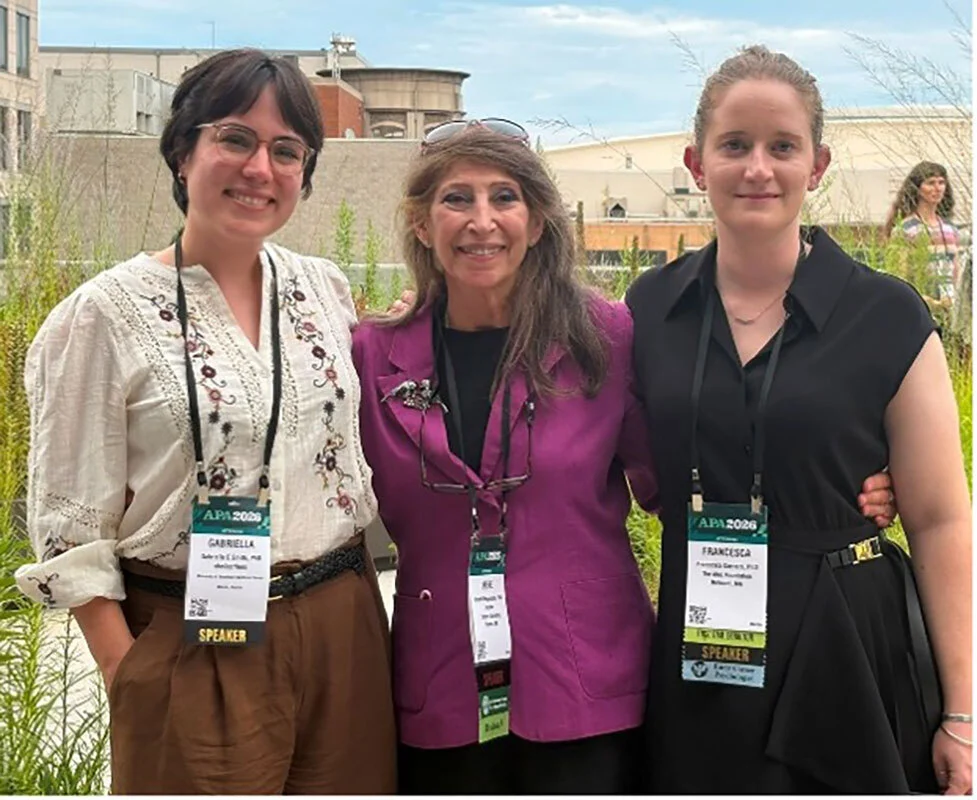
The year 2026 marks a milestone in the field of animal psychology as Dr. Irene Pepperberg, a pioneering researcher in the study of avian intelligence, celebrates nearly 50 years of groundbreaking inquiry. Recently honored with two prestigious lifetime achievement awards—one from the Coller-Dolittle Foundation and another from Division 3 (Experimental Psychology) of the American Psychological Association (APA)—Dr. Pepperberg has also been elected to serve a three-year term as a Member-At-Large for the APA’s Division 3. While these accolades serve as a formal recognition of her individual contributions, Dr. Pepperberg insists that the true legacy of her work lies in the collective efforts of the human and nonhuman subjects who facilitated nearly five decades of research into the minds of parrots.
A Chronology of Scientific Persistence
The genesis of Dr. Pepperberg’s work dates back to June 1977 at Purdue University. Working with her most famous research subject, an African Grey parrot named Alex, Pepperberg sought to challenge the prevailing mid-20th-century scientific dogma that categorized avian intelligence as strictly instinctual or mimicry-based. In an era where funding for such niche studies was scarce, her initial research faced significant institutional skepticism.
The early years were characterized by a lack of formal laboratory space and minimal financial backing. Through the support of department heads like Peter Waser and Struther Arnott, Pepperberg utilized borrowed facilities, relying on a rotating cohort of undergraduate volunteers to implement the "model/rival" technique. This methodology, inspired by the studies of Dietmar Todt, involved a human trainer modeling a behavior for a second human, which served as a social incentive for the parrot to participate in the learning process. By the early 1980s, the empirical success of Alex—who demonstrated the ability to identify colors, shapes, and materials—secured a small but vital grant from the National Science Foundation, establishing a precedent for avian linguistic research.
Geographic and Institutional Evolution
The trajectory of the laboratory has mirrored the broader challenges of academic research, characterized by frequent transitions across various prestigious institutions. Following her tenure at Purdue, Pepperberg moved the project to Northwestern University, where she served as a visiting assistant professor. This period was critical for the welfare of her subjects, as she navigated complex veterinary crises, including treating Alex for aspergillosis, a severe fungal infection, with the assistance of specialists like Dr. Greg Harrison.
Subsequent relocations to the University of Arizona, the MIT Media Lab, and Brandeis University allowed for a continuous expansion of the research program. These transitions required the integration of new research subjects—including birds named Kyaaro, Alo, Arthur, and later, Athena—alongside an evolving team of graduate students and laboratory managers. During her tenure at the Radcliffe Institute, Pepperberg benefited from significant academic and financial support, which provided a stable environment for the longitudinal studies that define her career.
Following the passing of Alex in 2007 and Arthur shortly thereafter, the lab transitioned to Harvard University’s Department of Psychology. The collaboration with the Harvard Vision Lab and researchers such as Susan Carey facilitated a shift toward more complex investigations into visual cognition and problem-solving. This period was further marked by the logistical challenges of the COVID-19 pandemic, which necessitated a temporary relocation of the lab’s operations to a private residence, ensuring the continuity of the research. Today, the project maintains its operations under an affiliation with Boston University, housed in a specialized facility in Somerville.
Supporting Data and Methodological Impact
The methodology pioneered by Dr. Pepperberg has fundamentally altered how cognitive scientists approach non-primate intelligence. By moving beyond traditional operant conditioning, the lab demonstrated that African Grey parrots possess the capacity for numerical concepts, categorization, and even an understanding of abstract logical relationships.

Data collected over these five decades indicate that these birds can successfully:
- Categorize by attribute: Identifying objects based on color, shape, and material composition.
- Demonstrate numerical competence: Understanding the concept of "zero" and basic additive principles.
- Engage in vocal communication: Using labels to request specific items rather than merely mimicking sounds.
These findings have significant implications for the field of evolutionary psychology. By demonstrating that cognitive functions once thought unique to primates and cetaceans exist in avian species, Pepperberg’s research has forced a re-evaluation of the evolutionary development of the vertebrate brain. The "model/rival" technique remains a standard reference point for comparative psychologists seeking to understand the social dimensions of intelligence across species.
The Human Infrastructure of Research
Reflecting on the recent symposium at the American Psychological Association, where she presented alongside colleagues such as Dr. Gabriella Smith and Dr. Francesca Cornero, Pepperberg emphasized that the stability of her research was maintained by a network of dedicated individuals. From research assistants like Alana Carroll to lab managers such as Suzanne Gray, who managed operations during the transition between Cambridge and Waltham, the lab’s success has been a team-based endeavor.
The logistical burden of maintaining a laboratory for avian cognition—which requires 24/7 care for the animals, specialized nutrition, and continuous social interaction—is often invisible in published scientific papers. Pepperberg notes that the "army of individuals" who have contributed to this project have often balanced personal sacrifices with the intense demands of daily data collection. This acknowledgment extends to the donors and family members whose patience provided the financial and emotional bedrock necessary to sustain a multi-decade inquiry.
Broader Implications and Future Outlook
The recognition of Dr. Pepperberg’s work by the APA and the Coller-Dolittle Foundation serves as more than a retrospective on her career; it marks the maturation of avian cognition as a serious, high-impact field of study. As the scientific community continues to explore the limits of non-human intelligence, the groundwork laid by Pepperberg’s lab provides a framework for future studies.
The ongoing research at the Boston University-affiliated site continues to investigate the cognitive thresholds of Grey parrots. By bridging the gap between historical data and contemporary behavioral science, the lab remains at the forefront of the field. The implications of this work extend to animal welfare, as improved understanding of avian cognition leads to better enrichment programs for both laboratory and companion parrots.
As she begins her term as Member-At-Large for the APA’s Division 3, Dr. Pepperberg’s focus remains on fostering the next generation of researchers. The transition from a small, underfunded project at Purdue to a recognized pillar of psychological science underscores the importance of institutional patience and the value of interdisciplinary collaboration. While the "Perils of Pauline" nature of her career—marked by frequent moves, funding uncertainties, and personal obstacles—has been challenging, the scientific output remains a testament to the persistence of collaborative inquiry.
In closing, the awards recently bestowed upon her are, by her own account, a reflection of the cumulative efforts of nearly 50 years of personnel. The legacy of her lab is not found solely in the accolades of 2026, but in the thousands of data points collected, the dozens of students mentored, and the fundamental shift in how the global scientific community perceives the cognitive complexity of the avian mind. The work continues, supported by a new generation of dedicated assistants and the enduring lessons learned from the birds who first challenged our understanding of intelligence.
