
The integration of companion parrots into human living spaces has fundamentally altered the structural and psychological environment of the contemporary household. While pet ownership is often viewed through the lens of human stewardship, avian behavioral specialists and longitudinal studies suggest that the cognitive complexity of the Psittaciformes order—parrots—creates a reciprocal power dynamic that frequently shifts domestic authority toward the bird. As these highly intelligent animals adapt to human settings, they engage in behavioral patterns that effectively manage, regulate, and redefine their domestic surroundings. Following previous reports on the initial five pillars of avian influence, this analysis details five additional mechanisms through which parrots exert control over their environments, supported by behavioral data and owner reporting.
The Regulation of Domestic Circadian Rhythms
A primary mechanism of avian influence is the synchronization of the household schedule. Parrots are inherently social animals that rely on flock dynamics to maintain security and stability. When kept in a domestic setting, the human family becomes the surrogate flock. According to data from the Avian Welfare Coalition, parrots exhibit high sensitivity to lighting and environmental cues, which dictates their hormonal and activity cycles.
This biological necessity translates into a rigid daily schedule for human caretakers. The "flock call"—a vocalization used by wild parrots to locate group members—is frequently deployed in domestic settings to alert owners that the day has begun. Data indicates that over 75% of parrot owners report their birds initiate morning routines, often well before the owner’s desired wake-up time. This regulation extends to mealtimes and sleep schedules, where the parrot acts as a biological clock. Owners who attempt to deviate from this established routine often face vocal protests or behavioral changes, effectively compelling the human to adhere to the bird’s schedule rather than the reverse.
The Evolution of Domestic Quality Assurance Protocols
The psychological profile of a parrot is characterized by a high degree of neophilia—an attraction to new stimuli—balanced by a deep suspicion of environmental instability. In the wild, this trait is essential for identifying food sources while avoiding predators. In the home, it manifests as a rigorous, and often unsolicited, quality-control inspection process.
When a human resident introduces a new piece of furniture or decor, the parrot perceives it as an environmental anomaly. Behavioral observations show that parrots will systematically investigate new objects, often displaying intense focus or, conversely, aggressive avoidance. This role of "Home Decor Inspector" forces owners to account for the bird’s aesthetic and safety standards. If an object is deemed "suspicious," the bird may engage in prolonged displays of agitation or vocal disapproval. This forces humans to either remove the item or engage in a slow, monitored desensitization process to gain the bird’s approval, proving that domestic aesthetics are subject to avian veto power.
Repurposing Domestic Waste as Environmental Enrichment
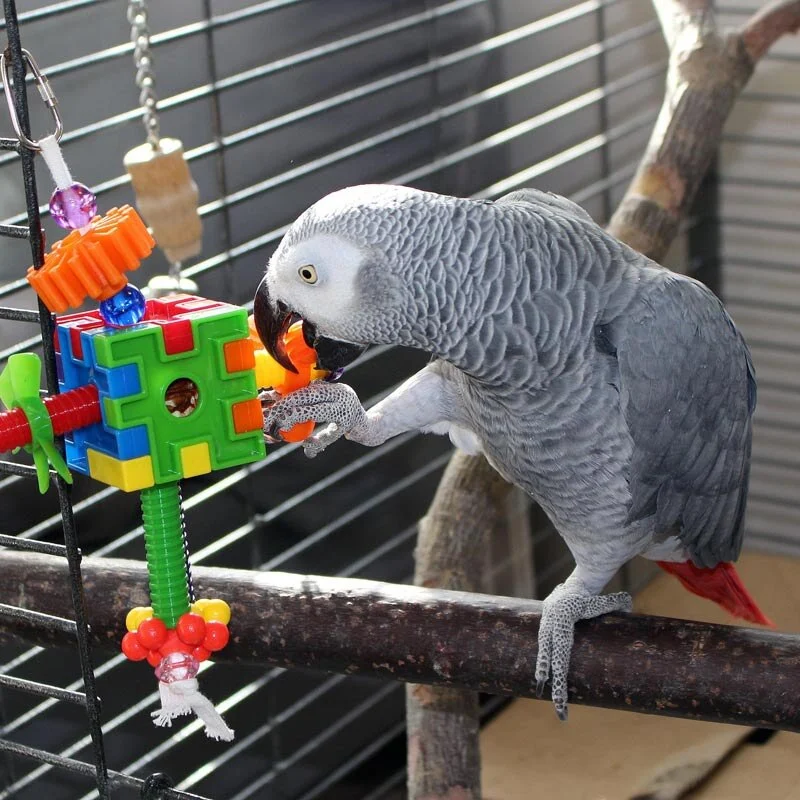
One of the most observable shifts in consumption habits within bird-owning households is the transformation of the recycling bin into a supply depot for enrichment materials. Behavioral science in captive animal care emphasizes the importance of foraging and shredding activities to prevent stress and feather-plucking. Because commercial bird toys are often expensive and destroyed rapidly, owners frequently look to household refuse.
Research into environmental enrichment indicates that parrots derive significant psychological benefits from "destructible" objects, such as paper towel rolls, packing cardboard, and untreated paper bags. This behavioral need has forced a shift in the human perspective regarding waste. The modern parrot steward no longer views these items as trash, but as essential tools for the bird’s mental health. This pivot demonstrates a significant change in household resource management, where the bird’s requirements dictate the retention and utility of everyday materials that would otherwise be discarded.
Compulsory Participation in Human Labor
The social nature of parrots makes them highly intolerant of exclusion. In the wild, flock members remain in close proximity for safety and social bonding. This instinct manifests in the home as a refusal to observe human activity from a distance. Whether an owner is attempting to operate a computer, read, or perform household chores, the parrot typically interprets these tasks as collective ventures.
This "group project" mentality is a documented source of both engagement and friction. Studies on human-animal interaction (HAI) suggest that this behavior is a manifestation of the parrot’s desire for social validation and cognitive stimulation. When an owner engages in a task, the bird views the activity as an opportunity for engagement. By perching on laptops or inspecting laundry, the bird disrupts the human’s workflow, necessitating a re-evaluation of how tasks are performed. The human is essentially forced to incorporate the bird into their workspace, a phenomenon that has become increasingly documented in the era of remote work.
The Revaluation of Economic Worth
Perhaps the most distinct indicator of a parrot’s influence is the subversion of the human concept of value. In consumer economics, the worth of a product is generally tied to its cost, durability, and aesthetic appeal. In the context of parrot ownership, these metrics are completely inverted. A toy that costs fifty dollars and lasts for months may be ignored, while a simple cardboard box is treated as a high-value asset.
This discrepancy highlights the difference between human economic values and avian functional values. For a parrot, the value of an object is determined by its "shredability" and the sensory feedback it provides. Owners frequently report that their birds prefer inexpensive or improvised items over premium, commercially manufactured products. This reality forces owners to abandon the notion of price as an indicator of quality, instead adopting the bird’s pragmatic, experience-based valuation. This shift effectively places the bird in the position of lead consumer, dictating what is truly "valuable" within the household.
Context and Broader Implications
The phenomenon of birds "running the household" is not merely anecdotal; it reflects a broader shift in how humans perceive their relationship with companion animals. As scientific understanding of avian intelligence has grown—with studies confirming that some parrot species possess cognitive abilities comparable to human toddlers—the expectation for mutual respect and behavioral accommodation has increased.
Historically, birds were viewed as decorative pets confined to cages. Today, the professional consensus among avian veterinarians and behavioral consultants is that parrots require high levels of social interaction and environmental agency to maintain health. The "takeover" of the household is, in many respects, a positive indicator of the bird’s integration into the family unit.
However, this dynamic carries significant implications for household management. Prospective owners are increasingly advised by organizations such as the Association of Avian Veterinarians (AAV) to anticipate these behavioral shifts. The necessity of adjusting schedules, prioritizing environmental enrichment, and accepting the constant presence of a highly opinionated companion requires a long-term commitment that differs significantly from the care requirements of more passive pets.
Ultimately, the domestic parrot acts as an agent of change within the home. By challenging human routines, defining the value of resources, and mandating social inclusion, these birds transform the household into a shared space of negotiation. While the human may provide the resources, the parrot serves as the primary arbiter of the domestic environment, ensuring that the household remains a place of constant, albeit sometimes chaotic, engagement. The evolution of this human-avian relationship serves as a testament to the enduring impact of companion animals on our daily lives, illustrating that in a home shared with a parrot, the traditional hierarchy of owner and pet is frequently, and quite intentionally, inverted.
