
The diversity of human language, characterized by a complex tapestry of regional dialects and linguistic nuances, often acts as a significant barrier to effective communication between disparate groups. Yet, amidst this complexity, humans rely on a core set of primitive, non-verbal signals—such as an urgent shout or a frantic wave—that bypass linguistic barriers to communicate immediate danger. Recent scientific investigations suggest that this phenomenon is not unique to humanity. A groundbreaking 2025 study, conducted by a collaborative team of researchers from Cornell University, the Doñana Biological Station in Spain, and several international institutions, has identified an analogous system within the avian world. The findings suggest that evolution has hardwired certain bird species with an innate ability to recognize and interpret cross-species alarm calls, functioning as a universal language of survival.
The Evolutionary Context of Avian Communication
For decades, ornithologists have grappled with the question of how vocalizations evolve. Charles Darwin, in his seminal observations on animal behavior, posited that birds likely developed an innate capacity to produce and interpret vocal signals as a mechanism for collective defense. While it is widely accepted that many birds learn complex songs through social interaction and imitation, the 2025 study provides compelling evidence that beneath these learned behaviors lies a foundational, genetically encoded system of communication.
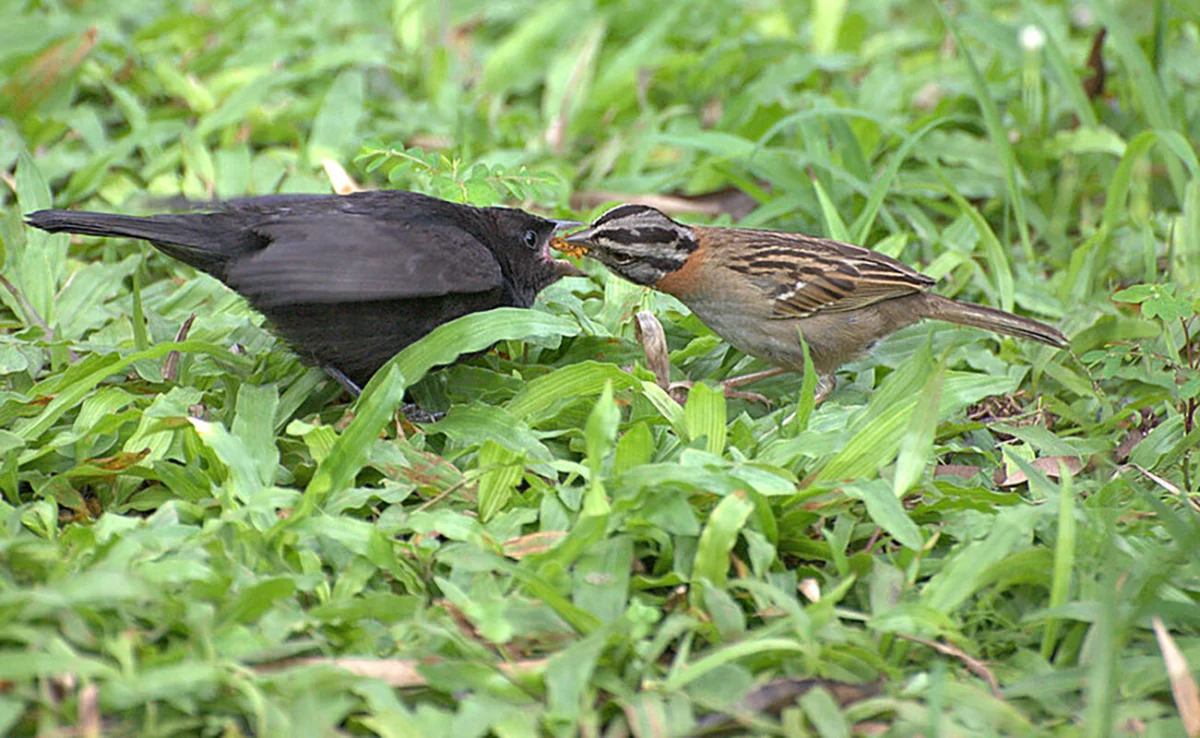
The research focused on the complex and often adversarial relationship between host birds and brood parasites. Brood parasitism is an evolutionary strategy in which a bird species, such as a cuckoo or a cowbird, lays its eggs in the nest of another species. This allows the parasitic adult to outsource the energetic and temporal costs of incubation and chick-rearing. The host, unaware of the deception, often raises the parasite’s offspring at the expense of its own. In many documented instances, the parasitic chick—which often hatches earlier or grows faster—will actively eject the host’s eggs or hatchlings from the nest, ensuring a monopoly on parental care. This high-stakes interaction has created a powerful evolutionary pressure for host species to develop detection and alarm systems.
Chronology of the Research and Methodology
The investigation was launched in response to observations of how diverse bird species respond to the intrusion of known brood parasites. The research team analyzed 21 distinct species of birds across a global landscape, spanning Asia, Australia, Europe, and North America. By focusing on birds that have never shared a geographic range and thus had no opportunity to learn vocalizations from one another, the researchers sought to isolate innate behavior from learned experience.
The study methodology involved controlled playback experiments. Researchers played specific "whining" alarm calls—vocalizations historically associated with the approach of a brood parasite—to various host species. The results were consistent: despite the lack of shared history or environmental context, the birds responded with near-universal recognition. They exhibited immediate defensive behaviors, such as mobbing or increased nest vigilance, signaling an inherent understanding that the vocalization indicated an existential threat to their brood.
Supporting Data and Comparative Analysis
The data collected during the study offers a compelling insight into the consistency of these signals. Among the 21 species examined, the structural components of the "parasite-warning" alarm call remained remarkably similar. Acoustic analysis revealed that the frequency, duration, and cadence of the warning signals shared a high degree of mathematical correlation across species that are not closely related.
This suggests that the "whining" alarm serves as a functional acoustic template. When a bird hears this specific frequency modulation, its brain—even without prior exposure—identifies it as a warning. The research team noted that this behavior mimics the way human infants react to certain universal emotional expressions, such as the sound of a scream or a cry of pain. These findings suggest that the cognitive architecture required to process these signals may be deeper and more ancient than previously thought, potentially dating back millions of years.

Official Perspectives and Scientific Implications
The implications of this study are far-reaching, particularly in the fields of behavioral ecology and evolutionary biology. Dr. Elena Rodriguez, a lead researcher on the project, noted in an associated press release that the findings represent a "paradigm shift in how we understand cross-species communication." According to the research team, these alarm calls function as a biological "lingua franca."
"What we are seeing is not merely a mimicry of sounds, but a sophisticated, evolved response to environmental pressures," said a representative from the Doñana Biological Station. "If these signals were learned, we would expect to see vast regional variations based on local predator populations. Instead, we see a striking uniformity that points toward an inherited, genetic trait."
Furthermore, the study suggests that these signals are self-reinforcing. As birds successfully utilize these calls to defend their nests, the trait is selected for through natural selection. Birds that possess the innate ability to recognize these warnings are more likely to successfully rear their offspring, thereby passing the genetic markers for this "universal" understanding to the next generation.
Broader Implications for Wildlife Conservation and Cognition
Beyond the immediate biological findings, the research raises intriguing questions about the evolution of intelligence. The comparison between avian communication and human linguistic development is not intended to suggest that birds possess language in the human sense of syntax or abstract grammar. However, it does highlight that both groups have developed shorthand systems to maximize survival in complex environments.
The study also provides a new lens through which to view biodiversity loss. As habitats become fragmented and species populations decline, the disruption of these natural warning systems could have cascading effects on ecosystem stability. If a species loses the ability to recognize the warning calls of its neighbors, it may become increasingly vulnerable to parasitic pressures or predation. Understanding these signals is therefore not only a matter of academic interest but a vital component of conservation biology.
Future Research Directions
While the 2025 study provides a robust foundation for the theory of innate avian communication, the researchers emphasize that much remains to be explored. Future work is expected to focus on the neurological mechanisms that allow for the processing of these sounds. By utilizing neuroimaging techniques on avian subjects, scientists hope to map the specific brain regions that activate when a bird hears an alarm call, further solidifying the connection between these acoustic signals and internal behavioral triggers.
Additionally, the team plans to expand the study to include a wider range of avian families, including those that do not typically face brood parasitism, to determine if these "universal" signals are recognized by birds that have no evolutionary history with parasitic threats. This will help clarify whether the ability is a broad avian trait or one that is specifically triggered by the presence of brood parasites.
In conclusion, the research underscores the profound interconnectedness of species. The avian world, often viewed through the prism of its beautiful and complex songs, also possesses a hidden layer of utilitarian communication that transcends geographic and biological boundaries. These findings remind us that the natural world is a deeply layered environment where signals of danger and survival are not bound by the limitations of species, but are instead woven into the very fabric of evolutionary history. As we continue to decode the language of nature, we gain a deeper appreciation for the complex, silent, and often invisible systems that sustain life on Earth.
