
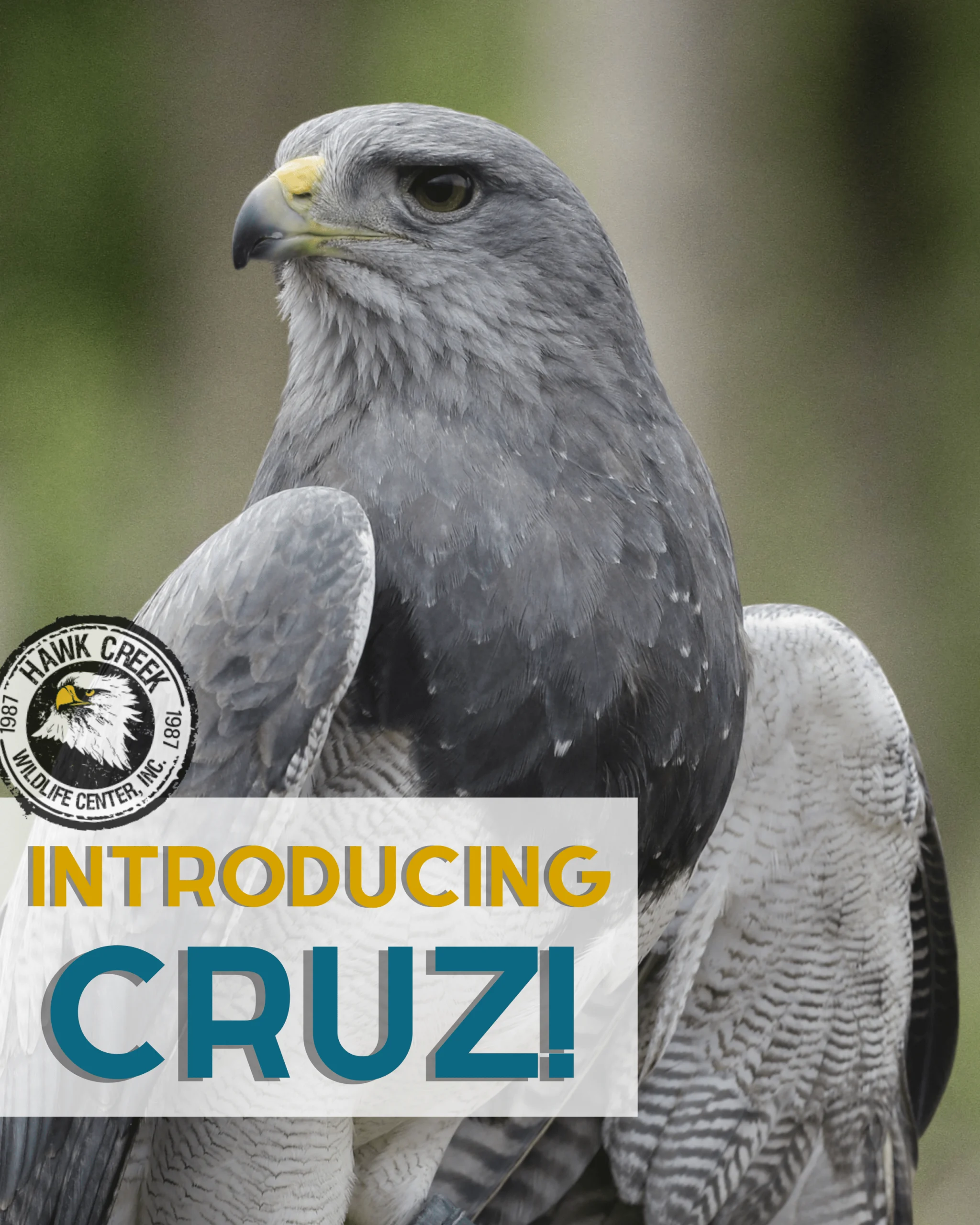
Hawk Creek Wildlife Center has officially announced the arrival of its newest avian resident, a Black-chested Buzzard-eagle (Geranoaetus melanoleucus) affectionately named Cruz. This acquisition marks a significant milestone for the center, which has spent the last several years expanding its educational programming to include rare and understudied raptor species from across the globe. Cruz, a representative of a species known by several regional monikers including the Chilean Blue Eagle, Patagonian Eagle, and Gray Buzzard Eagle, serves as a living ambassador for the high-altitude ecosystems of South America.
The integration of Cruz into the Hawk Creek facility is the direct result of a long-standing strategic partnership with Sia: The Comanche Ethno-Ornithological Initiative, an Oklahoma-based organization dedicated to the preservation of eagle species and the integration of indigenous ecological knowledge with modern scientific practice. This collaboration is designed to increase public awareness regarding the survival challenges faced by apex predators in rapidly changing climates.
A Profile of the Black-chested Buzzard-eagle
The Black-chested Buzzard-eagle is a large, powerful raptor that commands a significant presence in the open mountainous regions and plateaus of South America. Despite its common name, the bird is biologically distinct from the eagles of the Northern Hemisphere, belonging to the Accipitridae family. Ornithological research indicates that these birds are highly adapted to life in high-elevation corridors, particularly along the Andes mountain range.
Data regarding the species’ dietary habits highlights its role as a critical regulator of local ecosystems. The birds are known to be opportunistic hunters, patrolling the skies for hours at a time. Their primary prey includes small mammals such as degus—a species of rodent native to the Chilean matorral—and invasive European hares. The presence of these eagles in their native habitat helps manage the populations of non-native lagomorphs, which often threaten local agricultural stability.
While the species is currently classified as "Least Concern" by the International Union for Conservation of Nature (IUCN), conservationists emphasize that they remain "understudied." As development encroaches upon the high-altitude plains of South America, the need for baseline data on nesting habits, migratory patterns, and genetic diversity has become increasingly urgent. Cruz’s presence at Hawk Creek provides researchers and the public a unique vantage point to study these behaviors in a controlled, educational setting.
The Partnership: Sia and Hawk Creek
The collaboration between Hawk Creek and Sia: The Comanche Ethno-Ornithological Initiative represents a broader trend in wildlife management: the alignment of institutional resources with specialized conservation expertise. Sia, led by Waha Thuweeka, known professionally as William "Two-Raven" Voelker, has become a pivotal player in international raptor conservation.
Voelker’s work with the Comanche Ethno-Ornithological Initiative emphasizes the intersection of tribal sovereignty, cultural heritage, and avian conservation. By facilitating the movement of rare raptors to institutions like Hawk Creek, Sia ensures that these animals serve a dual purpose: they are ambassadors for their species and symbols of the cultural significance raptors hold in diverse human histories.
This partnership has previously resulted in the successful relocation and integration of other rare raptors, including Jara, a Short-toed Snake Eagle (Circaetus gallicus), and Onyx, a Verreaux’s Eagle (Aquila verreauxii). These birds, which are rarely observed in the United States, provide visitors with an opportunity to witness species that are geographically and ecologically distant from typical North American raptors like the Bald Eagle or the Red-tailed Hawk.
Chronology of Institutional Expansion
The arrival of Cruz is the latest step in a multi-year growth strategy implemented by Hawk Creek. Since 2019, the center has sought to diversify its educational collection to emphasize global biodiversity rather than focusing exclusively on domestic species.
- 2019: Hawk Creek initiates contact with Sia to discuss the potential for long-term collaborative conservation projects.
- 2021: The arrival of Jara, the Short-toed Snake Eagle, marks the first successful international partnership with the Oklahoma-based initiative.
- 2022: Educational programming is expanded to include a new "Global Raptor" exhibit, featuring the Verreaux’s Eagle, Onyx.
- 2023: Infrastructure upgrades at the facility are completed, allowing for the specialized care required for South American high-altitude raptors.
- May 2024: Cruz is formally introduced to the community, with plans for a featured appearance at the upcoming Wild Earth event.
This timeline reflects a deliberate, measured approach to wildlife acquisition, prioritizing the health and psychological well-being of the raptors above rapid exhibit expansion.
Broader Implications for Raptor Conservation
The presence of these international species in the United States carries significant implications for wildlife education and conservation funding. When the public is exposed to animals that they would never encounter in the wild, the emotional connection to global conservation efforts typically strengthens. This phenomenon, often referred to as "charismatic megafauna advocacy," suggests that institutions like Hawk Creek act as vital nodes in the global effort to protect biodiversity.
Furthermore, the integration of indigenous expertise, as demonstrated by the partnership with Voelker, addresses a gap in traditional western conservation models. By incorporating traditional ecological knowledge—such as historical nesting site data or prey migration observations—conservationists can build more robust protection plans for raptors whose habitats are under threat from urbanization and climate-induced vegetation changes.
According to preliminary reports from the Hawk Creek management team, the educational impact of these rare eagles has been measurable. Since the introduction of the international species collection, the center has seen a marked increase in inquiries regarding global conservation status and requests for information on how local communities can support international wildlife funds.
The Wild Earth Event: A Call to Action
The public will have the opportunity to engage directly with these conservation themes at the upcoming Wild Earth event, scheduled for May 13. The centerpiece of the event will be a keynote address by William "Two-Raven" Voelker. The presentation is expected to cover a range of topics, including the challenges of maintaining genetically diverse captive populations, the ethics of keeping non-native species for educational purposes, and the role of indigenous-led initiatives in the modern environmental movement.
Event organizers state that the goal of the Wild Earth event is to transform the public’s view of eagles from mere national symbols to vital, interconnected components of a global ecosystem. Attendees will be invited to observe the raptors under the guidance of expert handlers and learn about the specific conservation status of the species housed at the facility.
"Our objective is to move beyond simple observation," a spokesperson for Hawk Creek noted in a recent press release. "We want our visitors to understand that the survival of a Black-chested Buzzard-eagle in the Andes is inextricably linked to the same environmental challenges we face here in the United States. Through the expertise provided by Sia, we are bridging that gap."
Analysis: The Future of Captive Conservation
The model established by Hawk Creek and Sia offers a potential blueprint for other wildlife centers. By moving away from competitive or isolated exhibition models, these organizations are leveraging a "conservation network" approach. This ensures that the costs and responsibilities of maintaining rare species are shared, and that educational outreach is amplified through a unified, expert-led narrative.
However, the approach is not without its critics in the broader scientific community. Some researchers argue that the transport and housing of non-native raptors pose potential biosecurity risks, and that resources spent on these animals could be better utilized in the field within their native countries. Addressing these concerns, the management at Hawk Creek maintains that their partnership with Sia includes rigorous protocols for quarantine, genetic monitoring, and a commitment to international conservation funding, ensuring that the net impact remains positive for the species as a whole.
As Cruz settles into his new environment, the focus remains on his role as a bridge between the South American highlands and the North American public. With the Wild Earth event approaching, the facility anticipates a high level of community interest, signaling that the public remains deeply invested in the stories of individual animals and the broader mission of global species preservation.
