
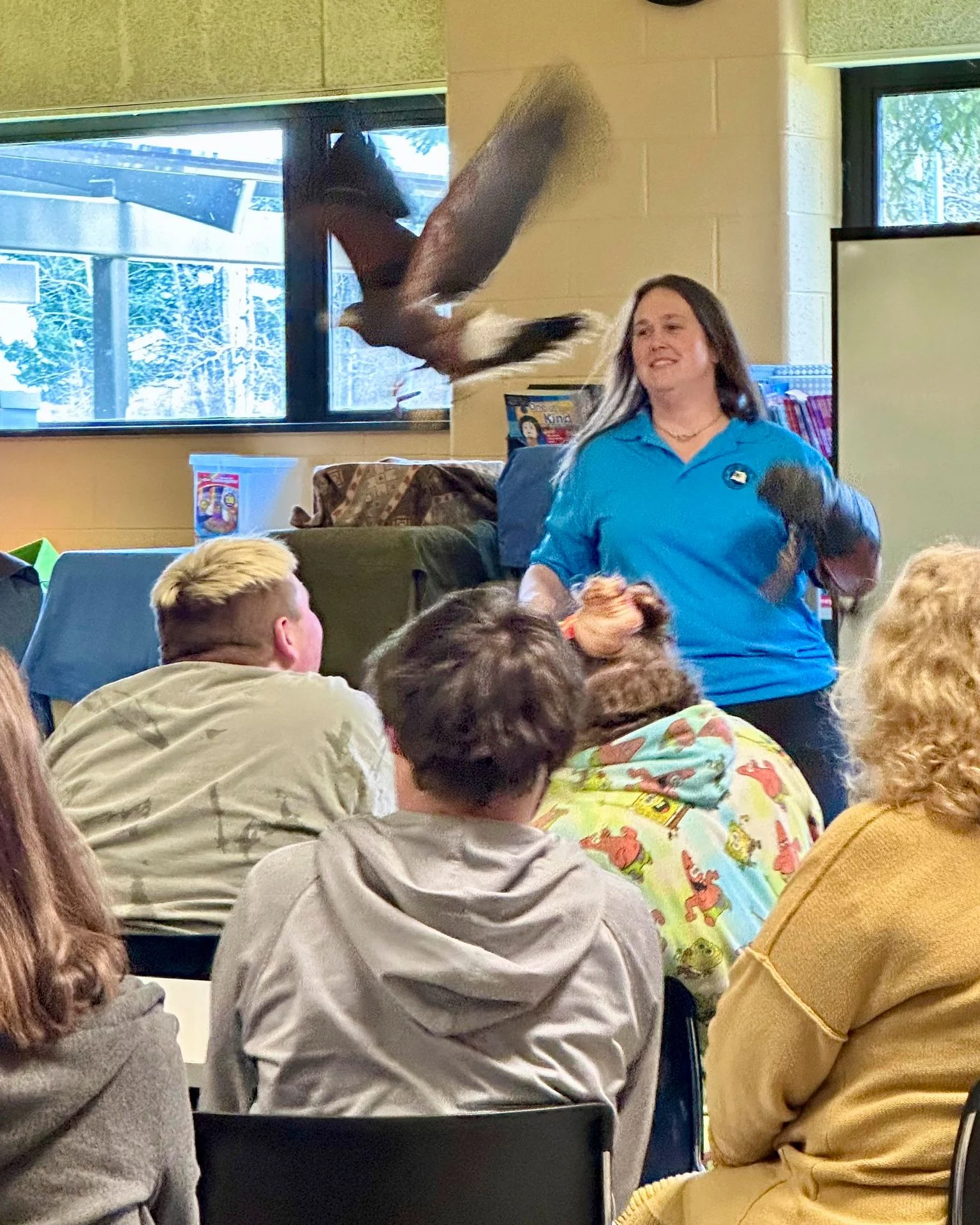
The intersection of specialized education and environmental advocacy reached a new milestone this week as the Hawk Creek Wildlife Center conducted an immersive outreach program at the Hewes Educational Center. By bridging the gap between classroom theory and real-world biological observation, the event provided students with a rare opportunity to interact directly with avian, mammalian, and reptilian species. This initiative highlights a growing trend in pedagogical strategies that emphasize experiential learning to foster ecological stewardship among youth.
A Curriculum of Conservation
The partnership between Hawk Creek Wildlife Center and the Hewes Educational Center is designed to move beyond traditional textbook learning. Naturalists from the center visited the campus with a curated selection of animals to demonstrate the complexities of natural habitats, predator-prey dynamics, and the critical role these species play in global biodiversity.
For students at the Hewes Educational Center, this visit was more than a passive demonstration. It was a structured educational encounter. The wildlife naturalists led discussions on species-specific adaptations, focusing on how raptors, mammals, and snakes navigate their respective ecosystems. The program’s curriculum aligns with broader science education standards, emphasizing the importance of conservation, the threats posed by habitat loss, and the ethical responsibility humans have toward wildlife preservation.
Chronology of the Educational Visit
The day’s proceedings followed a carefully structured timeline to ensure both animal welfare and student engagement were prioritized:

- Morning Setup and Briefing: Wildlife naturalists arrived early to prepare the indoor staging area, ensuring the animals were acclimated to the environment and that safety protocols for both the students and the creatures were in place.
- Introduction to Avian Predators: The session commenced with a detailed look at raptor anatomy. Students were introduced to the physical characteristics that make these birds apex predators, such as binocular vision and specialized talons.
- Interactive Demonstration: The highlight occurred during the live flight demonstration, where a raptor was guided in a controlled path directly over the students. This provided a visceral, real-time look at wing mechanics and silent flight capabilities.
- Mammalian and Reptilian Studies: Following the raptor flight, the naturalists introduced a series of mammals and reptiles, discussing their specific niches. Students were encouraged to ask questions regarding diet, nocturnal behavior, and the importance of these species in controlling pest populations and maintaining ecological balance.
- Closing Q&A and Advocacy Discussion: The session concluded with a dialogue on how students can contribute to local conservation efforts, such as participating in citizen science projects or supporting wildlife rehabilitation centers.
Supporting Data on Wildlife Education
The efficacy of live-animal educational programming is supported by various studies in environmental psychology and education. Research consistently suggests that children who have direct, supervised interactions with animals show a significant increase in "empathy toward nature." According to the Association of Zoos and Aquariums (AZA), outreach programs are instrumental in dismantling misconceptions about misunderstood species, particularly reptiles and raptors.
In terms of regional impact, organizations like the Hawk Creek Wildlife Center serve as essential hubs for environmental literacy. With thousands of species currently threatened by climate change and industrial development, the role of public education is critical. Data indicates that when students are exposed to conservation success stories early in their academic careers, they are statistically more likely to pursue careers in environmental science, biology, or veterinary medicine.
The Role of Hawk Creek Wildlife Center
Hawk Creek Wildlife Center, a non-profit organization, has long served as a pillar of the community by operating as both a rehabilitation facility and an educational institute. The center’s mission—"Fostering Compassion, Saving Species, Restoring Balance"—is reflected in their rigorous outreach schedule. By taking the wilderness to the classroom, they minimize the logistical barriers that often prevent schools from visiting large-scale zoological parks or nature preserves.
The naturalists who led the Hewes Educational Center session are trained professionals who manage the daily care of the center’s permanent residents. Their ability to provide real-world insights into the rehabilitation process—such as how a raptor might come to be in human care due to injury—adds a layer of authenticity to the students’ learning experience.
Broader Impact and Educational Implications
The implications of such programs extend far beyond a single day of excitement. Integrating live wildlife into the classroom environment serves three primary functions:

- Engagement and Retention: Complex biological concepts, such as evolutionary adaptation, are often difficult to grasp through diagrams alone. Seeing a live animal exhibit these traits creates a mnemonic anchor for students, leading to higher rates of information retention.
- Combating "Nature Deficit Disorder": As modern lifestyles become increasingly digital, students often experience a lack of connection to the natural world. Direct encounters help mitigate this, encouraging a more mindful approach to environmental interaction.
- Ethical Development: By discussing the threats facing the species presented, educators can cultivate a sense of ethical responsibility. When students understand that their actions, such as waste reduction or protecting local green spaces, have direct consequences for wildlife, they become more conscientious citizens.
Perspectives on Wildlife Advocacy
While the primary focus of the visit was educational, the underlying message was one of advocacy. The wildlife naturalists emphasized that every animal, regardless of how intimidating it may seem, serves a purpose in its ecosystem. For instance, the inclusion of snakes in the presentation was a deliberate effort to correct common phobias and explain their vital role as natural pest controllers.
Educators at the Hewes Educational Center noted that the enthusiasm displayed by the students was palpable. By witnessing a raptor in flight—an animal typically seen only from a great distance—the students were able to experience the "awe factor" that often precedes a lifelong interest in conservation.
Looking Toward the Future
The success of the event at the Hewes Educational Center serves as a template for future collaborations. As schools continue to seek ways to make STEM (Science, Technology, Engineering, and Math) education more dynamic, partnerships with organizations like the Hawk Creek Wildlife Center will likely become even more prominent.
Furthermore, the financial support model of these organizations—relying on donations and program fees—underscores the importance of community involvement. Every individual or corporate donation helps maintain the habitats, veterinary care, and food supplies required to keep these animals healthy and capable of serving as "ambassadors" for their wild counterparts.
In conclusion, the visit by the Hawk Creek Wildlife Center to the Hewes Educational Center was a demonstration of the power of experiential learning. By providing a safe, controlled environment where students can observe and learn from animals, the program has successfully planted the seeds of curiosity and compassion. As these students progress in their education, the memory of that raptor soaring overhead—and the knowledge gained about the natural world—will remain a foundational element of their understanding of the delicate, interconnected web of life on Earth. Organizations like Hawk Creek continue to ensure that the next generation is not only informed about the state of our planet but is actively equipped to protect it.
