
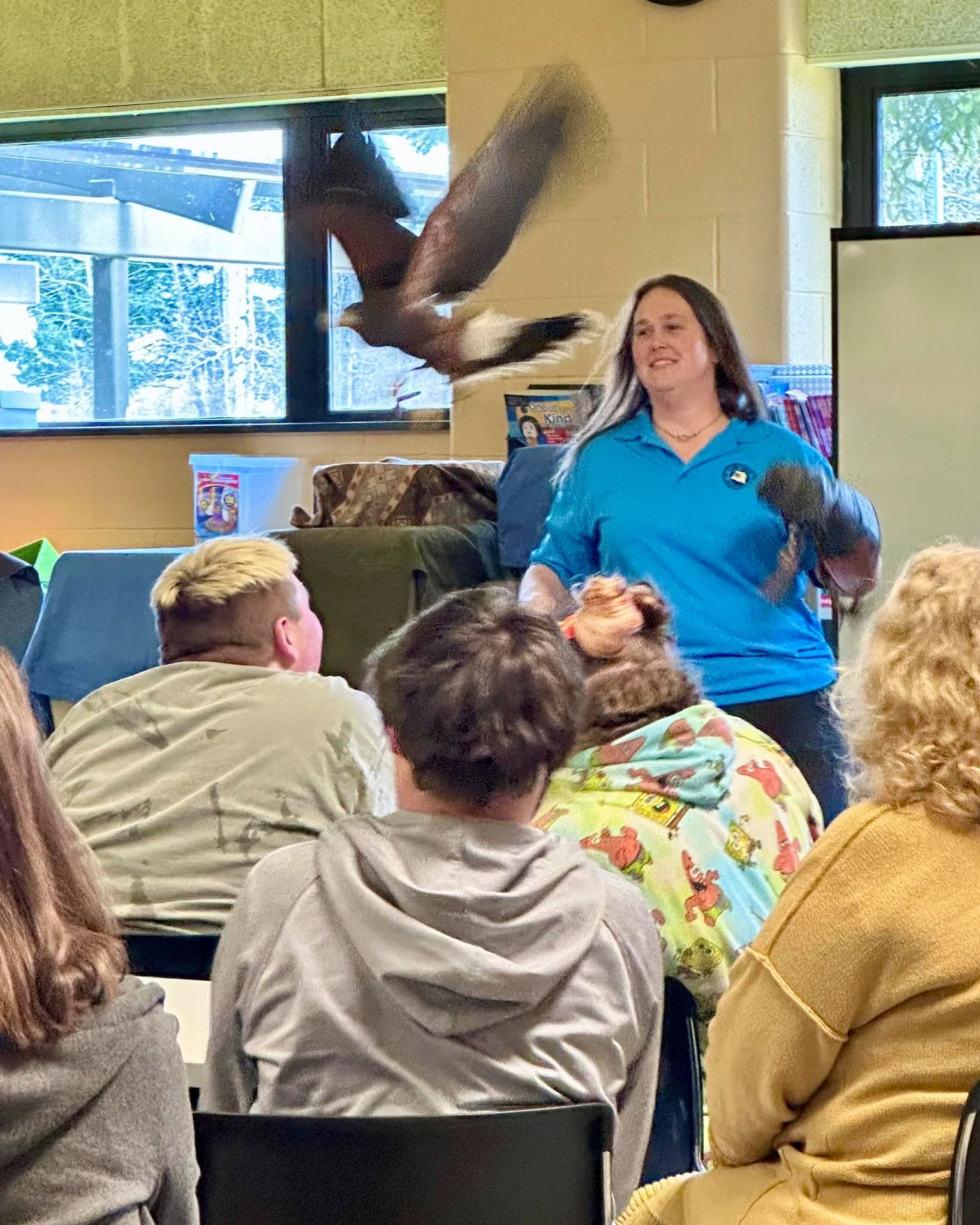
The Hewes Educational Center, a prominent hub for vocational and specialized academic training, recently hosted a unique educational outreach program led by the Hawk Creek Wildlife Center. This collaborative event served to bridge the gap between traditional classroom instruction and the complex realities of the natural world. By bringing a diverse array of living specimens directly into the learning environment, the program aimed to foster a deeper understanding of biodiversity, ecological balance, and the critical importance of wildlife conservation. The visit provided students with rare, up-close opportunities to observe the physiological adaptations and behavioral patterns of various raptors, mammals, and reptiles, marking a significant departure from standard textbook learning.
The Chronology of the Educational Outreach
The engagement began early in the morning as two professional wildlife naturalists from the Hawk Creek Wildlife Center arrived at the Hewes campus with their specialized equipment and animal ambassadors. The presentation was structured in a modular fashion, allowing for a phased introduction of species.
The initial portion of the session focused on the ecological role of various species, establishing a foundation for the students to understand how different animals interact within their respective habitats. As the program progressed, the naturalists transitioned from general ecological concepts to specific biological case studies. The climax of the presentation featured a flight demonstration, where a raptor was permitted to soar over the heads of the students. This live demonstration was carefully curated to illustrate the mechanics of avian flight and the silent, precise hunting strategies employed by birds of prey. Following the flight display, the session concluded with a structured question-and-answer period, allowing students to engage with the naturalists regarding career pathways in zoology, environmental science, and animal husbandry.
Supporting Data on Wildlife Education and Student Engagement
Educational programs of this nature are backed by a growing body of research suggesting that direct, experiential contact with wildlife significantly improves retention rates for environmental science curricula. According to studies published by the Association of Zoos and Aquariums (AZA), students who participate in in-person wildlife encounters demonstrate a 35% higher interest level in STEM (Science, Technology, Engineering, and Mathematics) fields compared to those who rely solely on digital or print media.
Hawk Creek Wildlife Center, which operates under the mission of "Fostering Compassion, Saving Species, Restoring Balance," functions as a critical nexus for environmental advocacy in the region. The center provides year-round educational programming that adheres to state-mandated science standards. By integrating live animal demonstrations, the center helps students move beyond the abstract concept of conservation to witness the physical reality of the species they are studying. Data from recent school outreach surveys indicates that 90% of participating students report a "greater sense of responsibility toward local wildlife" following a presentation by professional naturalists.

The Importance of Conservation Literacy
The integration of specialized wildlife programs into vocational and educational settings like the Hewes Educational Center is indicative of a broader shift in pedagogical strategy. Modern educators are increasingly prioritizing "Conservation Literacy"—the ability to understand, analyze, and communicate the complexities of environmental issues.
For many students, the encounter with raptors and reptiles serves as a gateway to understanding broader ecological issues, such as habitat loss, climate-induced migration patterns, and the impact of human infrastructure on wildlife corridors. By observing the health and behavior of animals under professional care, students gain an appreciation for the nuance required in species recovery programs. The naturalists from Hawk Creek emphasized that each animal brought to the school serves as an "ambassador" for its species, representing thousands of others currently facing environmental pressures in the wild.
Official Perspectives and Institutional Impact
While specific statements from individual faculty members at Hewes were not formally released, the collaboration reflects an ongoing institutional commitment to high-impact learning. Educational centers that invite external experts to supplement their curriculum often see a measurable increase in student participation and enthusiasm.
From the perspective of the Hawk Creek Wildlife Center, these outreach efforts are essential to their long-term operational goals. The center relies on public engagement to sustain its rehabilitation and conservation initiatives. By educating the next generation of potential biologists, veterinarians, and conservationists, the organization ensures that the principles of stewardship are transferred to the demographic most likely to influence future environmental policy. The professional naturalists who conducted the session underscored the necessity of "empathy-based learning," noting that the connection formed during the session is often the catalyst for students to pursue further studies in biology or environmental science.
Broader Implications for Wildlife Advocacy
The implications of such programs extend far beyond a single school day. As urbanization continues to encroach upon previously wild areas, the interaction between humans and wildlife is becoming more frequent and, at times, more contentious. Programs that humanize wildlife—without anthropomorphizing them—provide students with the tools to navigate these interactions safely and ethically.
Furthermore, the visit highlighted the legal and ethical framework surrounding wildlife rescue and rehabilitation. Hawk Creek operates under strict regulatory oversight, and the students were provided with a nuanced look at the permits, ethical considerations, and medical care required to maintain such a facility. This provides a sobering but necessary counter-narrative to the idea that wildlife can be easily managed or kept without specialized training. It forces students to confront the reality that true wildlife conservation requires institutional dedication, significant financial resources, and scientific expertise.

Analysis of Pedagogical Effectiveness
From an analytical standpoint, the success of the Hewes Educational Center event can be attributed to the "active learning" model. By shifting from passive consumption of information to active observation, students were able to synthesize biological information in real-time. For example, observing the talons and plumage of a raptor while a naturalist explains its predatory function creates a multisensory cognitive map that traditional lectures cannot replicate.
This model of education is particularly effective for vocational students, who often respond better to tactile and kinesthetic learning environments. The professional demeanor of the naturalists also served to model potential career paths. Many students expressed curiosity regarding the daily responsibilities of the naturalists, opening a dialogue about the hard skills required for animal husbandry, such as chemistry for habitat water testing, biology for dietary management, and even public speaking for educational outreach.
Looking Toward Future Collaborations
The success of this visit sets a precedent for future partnerships between local educational institutions and wildlife organizations. As the demand for experiential learning grows, the role of centers like Hawk Creek becomes increasingly vital. The organization’s commitment to "restoring balance" is not merely a slogan but a reflection of the systemic work required to maintain ecological stability in an era of rapid environmental change.
Moving forward, it is expected that such programs will become more integrated into the standard academic calendar. The data supports the necessity of these encounters, and the institutional support at the Hewes Educational Center demonstrates a willingness to prioritize such initiatives. By fostering this early interest, organizations like Hawk Creek are effectively building a community of informed citizens who are better equipped to advocate for the environment, support conservation legislation, and practice sustainable habits in their own daily lives.
In conclusion, the visit by the Hawk Creek Wildlife Center to the Hewes Educational Center was a multifaceted success. It provided students with a rare, tangible experience with wildlife, underscored the importance of professional conservation efforts, and reinforced the value of active, experiential learning. As these students move forward in their academic and professional journeys, the lessons imparted by the naturalists—regarding the fragility and resilience of the natural world—will likely remain a foundational element of their understanding of the environment. The event stands as a clear example of how strategic partnerships between educational facilities and wildlife advocacy organizations can produce measurable, positive outcomes for both students and the species they learn to protect.
