
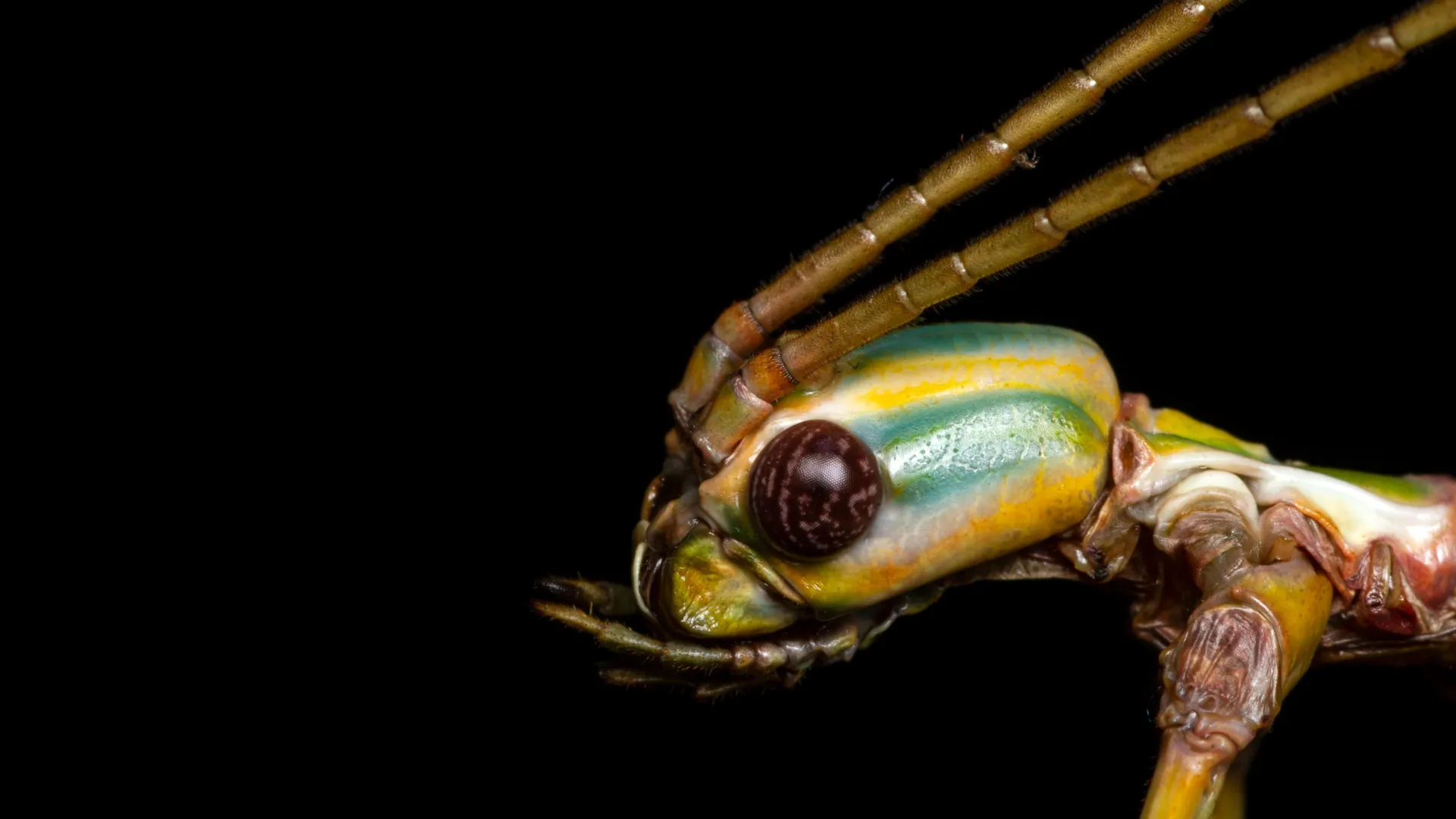
In an extraordinary testament to the vast, uncharted expanses of Australia’s endemic biodiversity, a team of researchers at the University of Sydney has identified two previously unrecognized species of large stick insects. The discovery, which also involves the formal restoration of a third species lost to taxonomic misidentification for decades, fundamentally alters our scientific understanding of the genus Anchiale. Published in the peer-reviewed journal Austral Entomology, the findings prove that even among some of the most frequently photographed, widely observed, and heavily studied macro-invertebrates on the Australian continent, distinct evolutionary lineages continue to hide in plain sight.
The research was spearheaded by a dedicated team at the Aola Richards Sydney Insect Hub, working in tandem with the Molecular Ecology, Evolution and Phylogenomics Laboratory. Lead author Dr. Braxton Jones, a Postdoctoral Research Associate at the university, characterized the taxonomic overhaul as a complex exercise in forensic biology. By peeling back layers of historical misclassification, the research team demonstrated that insects previously lumped into just two broadly defined species actually represent a diverse complex of five distinct species. Distributed natively from the northern rivers of New South Wales, across the expansive coastal ecosystems of Queensland, and deep into the tropical rainforests of northern Australia, these masters of camouflage are far more ecologically complex than previously understood.
The Path to Discovery: A Multidisciplinary Taxonomic Investigation
To arrive at these groundbreaking conclusions, the research team eschewed traditional, morphology-only taxonomy in favor of an integrative approach. Modern taxonomy rarely relies on physical appearance alone, especially in groups prone to convergent evolution and phenotypic plasticity. Instead, Dr. Jones and his colleagues combined cutting-edge molecular DNA analysis with rigorous morphological examination of historical museum specimens, fresh field surveys across eastern Australia, insights from captive-bred colonies, and thousands of crowd-sourced data points contributed by amateur naturalists.
For decades, the taxonomy of Australian Phasmatodea—the scientific order encompassing stick and leaf insects—has suffered from historical oversights. Early naturalists working during the colonial and post-federation eras often described new species based on limited physical specimens, frequently failing to account for natural variations in color, size, and gender dimorphism within a single species. As a result, distinct evolutionary lineages were frequently synonymized, while others were shoehorned into overly broad species categories.
By applying contemporary genomic sequencing techniques to both fresh tissue samples and century-old museum type specimens, the University of Sydney team was able to untangle genetic boundaries that had remained obscured for generations. This multi-pronged methodology allowed researchers to validate geographic distributions, analyze reproductive traits, and map out phylogenetic trees with unprecedented precision.
Unveiling Anchiale mabiensis and the Mystery of the Lidlike Egg
Among the most significant revelations of the study is the formal scientific description of Anchiale mabiensis, a newly minted species discovered within the confines of Queensland’s critically endangered Mabi rainforest on the Atherton Tablelands. This ecosystem, characterized by complex semi-evergreen vine thickets, is a biodiversity hotspot that has suffered severe historical clearing for agriculture, leaving behind only fragmented remnants of its original expanse.
Anchiale mabiensis possesses a remarkably specialized reproductive adaptation that immediately set it apart from its congeners during the investigation. Female specimens produce eggs featuring a highly unusual, distinctive structural lid—a biological cap-like feature known scientifically as an operculum or capitulum-adjacent structure, but exhibiting a morphology entirely unprecedented in any known stick insect species or its closest phylogenetic relatives. While stick insect eggs commonly feature a plug-like structure called a capitulum to attract ants for seed-dispersal-like behaviors (myrmecochory), the specialized lid discovered on the eggs of Anchiale mabiensis points toward unique, highly localized evolutionary pressures within the Mabi forest canopy, the precise ecological function of which remains an active subject of ongoing research.
In addition to Anchiale mabiensis and the second newly isolated species, the research team successfully resurrected a third species that had been erroneously synonymized and unrecognized for decades. One of the study’s most astonishing breakthroughs centered on a large, robust stick insect species that has long been a familiar sight to both professional entomologists and amateur bug enthusiasts alike. Through the synthesis of DNA profiling and comprehensive ecological data, researchers proved that this familiar insect had been fundamentally misidentified in scientific literature for over half a century. It has now been officially reclassified and elevated to distinct species status as Anchiale robusta.
The Role of Citizen Science in Modern Entomology
One of the most remarkable narrative threads surrounding this taxonomic revision is the paradoxical reality of the discoveries: they occurred despite—and in some ways because of—an unprecedented volume of baseline data generated by the public. Prior to the formal publication of the study, more than 1,000 distinct citizen science observations concerning these large stick insects had been logged and uploaded to digital biodiversity platforms such as iNaturalist and the Atlas of Living Australia (ALA).
These digital repositories allow everyday hikers, wildlife photographers, and nature enthusiasts to upload geo-referenced photographs of flora and fauna, creating a massive, crowdsourced database of ecological distribution. For entomologists, these platforms serve as an invaluable early-warning system and geographic map, highlighting population clusters, behavioral anomalies, and shifting ranges that might otherwise take decades of targeted field expeditions to uncover.
Dr. Jones emphasized that the contributions of citizen scientists were instrumental in guiding the research team toward key geographic collection sites. However, he also underscored the profound disconnect between public familiarity and formal scientific documentation.
"Taxonomy is often a bit like detective work," Dr. Jones remarked, reflecting on the arduous process of untangling the genus. "Even among some of Australia’s most photographed and frequently reported insects—creatures that people encounter in their backyards or post pictures of online daily—we are still finding species that have completely escaped formal scientific recognition."
The realization that iconic, large-bodied insects can hide in plain sight for generations serves as a humbling reminder of the limits of current biological inventories. If prominent, easily observable macro-invertebrates can evade accurate classification, the hidden diversity among Australia’s microscopic insects, arachnids, and fungi is likely staggering in scale.
Agricultural and Forestry Implications: Beyond Pure Taxonomy
While the motivations behind the research were fundamentally rooted in evolutionary biology and systematic taxonomy, the practical real-world implications of the findings extend directly into Australian agriculture, biosecurity, and commercial forestry management.
Historically, certain large Australian stick insects have occasionally experienced population explosions, transitioning from quiet canopy-dwellers into disruptive, plague-like swarms. During these periodic outbreaks, massive congregations of herbivorous stick insects can strip vast swathes of foliage from eucalyptus forests and commercially managed plantations, posing significant economic threats to timber production and native forest health.
Before this study, foresters and agricultural land managers attempting to mitigate these outbreaks were operating under a flawed taxonomic framework. Because populations responsible for periodic defoliation events were treated as a single, homogenous species, pest management strategies lacked the nuance required to address species-specific behaviors, reproductive rates, and localized vulnerabilities.
By demonstrating that the pest-associated insect complex actually comprises multiple distinct species, the University of Sydney research provides land managers with a critical diagnostic tool. Different species within the Anchiale genus may possess vastly different life cycles, host-plant preferences, natural predators, and environmental thresholds. Accurately distinguishing between these species allows conservationists and pest control authorities to design targeted, ecologically sensitive management protocols that protect commercial forestry assets without indiscriminately disrupting broader forest ecosystems.
Furthermore, the study’s geographic sweep highlighted yet another potential candidate for formal description: a mysterious stick insect population native to the remote Cape York Peninsula in far northern Queensland. While researchers strongly suspect this population represents an entirely new, undescribed species, they have exercised scientific restraint, noting that additional physical specimens and genetic material must be collected and analyzed before a formal taxonomic description can be published.
Conservation Urgency in an Era of Environmental Crisis
Against the backdrop of these exciting taxonomic discoveries lies an urgent conservation warning. Australia is internationally recognized as a megadiverse continent, housing thousands of endemic plant and animal species found nowhere else on Earth. However, these unique ecosystems are facing unprecedented anthropogenic pressures, including accelerated habitat fragmentation, catastrophic bushfires fueled by climate change, invasive species encroachment, and agricultural expansion.
Dr. Jones issued a stark reminder regarding the race against time that modern taxonomists face. "These findings demonstrate the profound importance of protecting threatened ecosystems and documenting Australia’s extraordinary biodiversity before we lose species without us ever having even discovered them," he stated.
The destruction of micro-habitats like the Mabi rainforest—which has been reduced to a fraction of its pre-settlement footprint—means that specialized endemic insects such as Anchiale mabiensis may be highly vulnerable to localized extinction events. If a species’ entire global distribution is restricted to a few remaining pockets of old-growth forest, a single severe weather event, disease outbreak, or clearing initiative could wipe it out permanently before science even knows it exists.
Funding and Institutional Support
The successful execution of this complex, multi-year study was made possible through targeted public and institutional investment in foundational Australian science. Primary financial backing for the research was provided by the Australian Biological Resources Study (ABRS) through a National Taxonomy Research Grant administered by the Commonwealth Department of Climate Change, Energy, the Environment and Water (DCCEEW). Additional financial support was channeled through a prestigious CSIRO postgraduate scholarship, enabling deep molecular and field-based investigations.
Such grants represent a vital financial lifeline for taxonomic research—a scientific discipline that is frequently underfunded relative to high-profile medical or technological fields, despite serving as the foundational baseline for all ecological conservation and environmental management.
As the scientific community digests the implications of the revised Anchiale phylogeny, the University of Sydney research team plans to continue scouring museum archives and remote field sites across the continent. Their work serves as a powerful reminder that the age of discovery is far from over. In the sun-drenched eucalyptus canopies and dense tropical rainforests of Australia, millions of silent, six-legged inhabitants are still waiting to tell their evolutionary stories—provided we possess the scientific curiosity and political will to listen before they disappear.
