
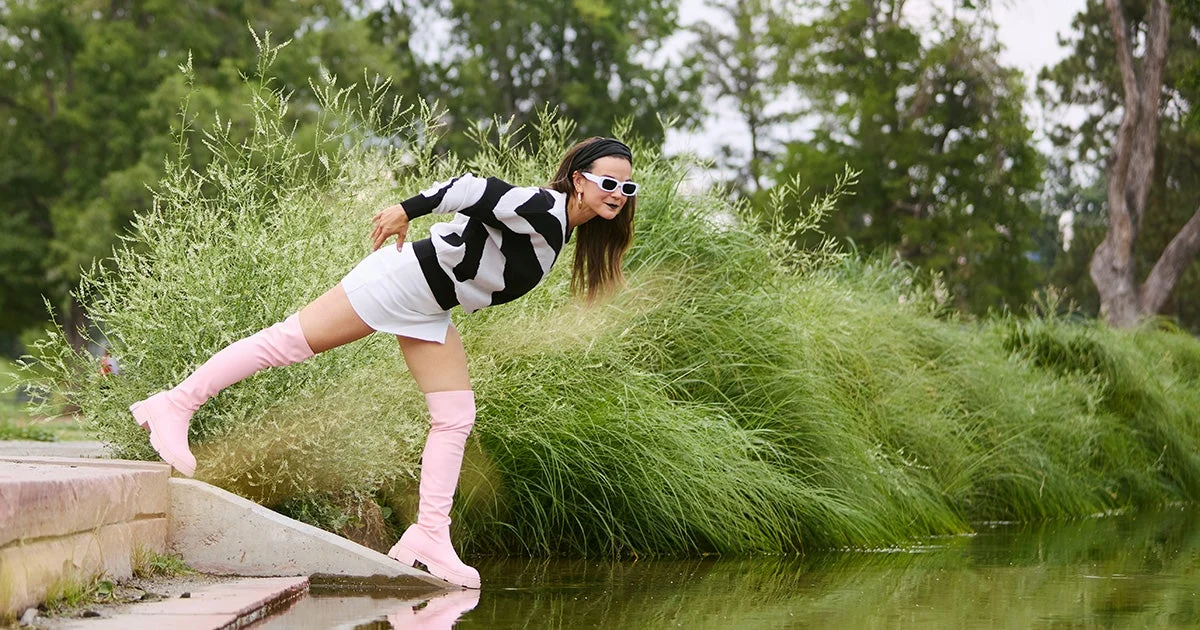
The intersection of ornithology and personal style has recently moved from niche hobbyist circles into the broader cultural zeitgeist, driven by a growing appreciation for the aesthetic diversity of the avian world. As global interest in birding reaches record levels—with organizations like the National Audubon Society reporting significant growth in membership and community engagement over the last decade—enthusiasts are seeking creative ways to express their passion beyond the traditional binoculars and field guide. At the forefront of this movement is Dori Edwards, the communications manager for Denver Audubon, whose recent viral digital content has provided a blueprint for translating the complex visual language of bird plumage into accessible, sustainable, and highly stylized fashion.
The phenomenon, which has gained significant traction on platforms such as Instagram and TikTok, suggests that the vast biological diversity of the world’s 11,000-plus bird species offers a near-infinite palette for personal expression. By utilizing the principles of "field marks"—the specific, identifying characteristics that birders use to distinguish species—individuals are successfully crafting outfits that serve as both a nod to biodiversity and a legitimate exercise in creative fashion design.
The Evolution of Bird-Inspired Aesthetics
The tradition of fashion drawing inspiration from the natural world is not new; however, the contemporary approach championed by Edwards represents a shift from luxury couture—often criticized for the historical use of real plumage—to a more egalitarian, DIY-focused methodology. This shift mirrors the broader "slow fashion" movement, which emphasizes the reuse of existing garments and the procurement of sustainable, low-cost accessories over the consumption of mass-produced, trend-driven clothing.
The trend gained momentum throughout 2025 and into 2026, as social media algorithms began to prioritize educational, niche-interest content. Edwards, who documented her process of creating "avian ensembles," found that her followers were not merely interested in the final aesthetic result, but in the methodology of the design process. Her work functions as a bridge between scientific observation and creative performance, demonstrating that a deep understanding of natural history can inform functional and expressive design choices.
Strategic Methodology: The Three Pillars of Avian Styling
According to Edwards, the key to a successful bird-inspired look lies in a disciplined, three-step approach that prioritizes observational skills, resourcefulness, and intentional accessorizing.
1. Deciphering Field Marks for Fashion
The first pillar of this methodology is rooted in the fundamental skill of birding: identifying field marks. In ornithology, field marks are the distinct patterns, colors, or physical traits—such as a specific wing bar, an eye ring, or a beak shape—that allow a birder to confirm an identification. When applied to fashion, this requires the practitioner to isolate the most iconic visual element of a species and translate it into a wearable element.
For example, when attempting to emulate the appearance of a Mallard, the focus should not necessarily be on the totality of the bird’s plumage, which would be difficult to replicate without a full costume. Instead, focusing on the duck’s most recognizable physical feature—the rugged, bright orange feet—allows the wearer to anchor the entire outfit around a pair of bright orange combat boots. This approach allows for a "subtle nod" that is recognizable to fellow birders while remaining stylish and functional for everyday life.
2. Reverse-Engineering from Personal Wardrobe
The second pillar challenges the necessity of purchasing new items. By examining one’s existing wardrobe, an individual can reverse-engineer a costume based on patterns or color schemes that are already present. Given the sheer scale of global avian diversity, there is a statistical likelihood that any given item of clothing—be it a polka-dotted cardigan, a striped scarf, or a neon-colored jacket—matches the plumage of at least one of the 11,000 known bird species.
Edwards cites the example of a green cardigan with white polka dots. Rather than purchasing a costume, she used a search-based verification process to identify a bird species—the Green Catbird, a member of the bowerbird family—that matches that specific visual profile. This method transforms a standard garment into an educational tool, effectively turning the wearer into a mobile ambassador for their chosen species.
3. The Utility of Strategic Accessories
The final pillar emphasizes the role of modular accessories. A collection of low-cost, high-impact items—such as colored beanies, tinted sunglasses, or bandannas—can drastically alter a wearer’s profile. This is perhaps the most accessible entry point for beginners. A set of red-tinted sunglasses, for instance, can act as the defining feature for a vast array of species, from the Common Loon to the Roseate Spoonbill. This strategy maximizes versatility, allowing one to transition from an everyday look to a more explicit costume with minimal financial investment.
Broader Implications for Environmental Engagement
The implications of this trend extend beyond mere aesthetics. By turning personal style into a medium for environmental advocacy, enthusiasts are creating new avenues for public engagement with wildlife conservation. As the public becomes more visually attuned to the distinct characteristics of specific birds, there is a corresponding increase in curiosity regarding their habitats, migratory patterns, and the ecological threats they face.
Industry analysts suggest that the rise of "nature-inspired fashion" is a direct response to a growing desire for authentic connection in a digitized world. As climate change continues to impact avian populations globally, the visibility of bird-themed fashion serves to keep these species at the forefront of the public consciousness. Denver Audubon, among other regional birding chapters, has noted that this creative engagement has successfully reached younger, more diverse demographics who may not have otherwise engaged with traditional birding literature or membership drives.
Sustaining the Movement: A Future-Forward Outlook
The methodology proposed by Edwards is inherently sustainable. It discourages the "fast-fashion" cycle of buying single-use costumes for holidays or events, advocating instead for a long-term approach to wardrobe management. By encouraging individuals to "keep a curious mind" and to let their personal inspiration guide their sartorial choices, the movement fosters a culture of observation rather than consumption.
Looking forward, the challenge for the birding community will be to maintain this momentum and ensure that the interest generated by these viral trends translates into tangible support for conservation efforts. Organizations are increasingly looking to harness this creative energy, perhaps by hosting workshops or community events where "avian-inspired" fashion is used as a vehicle for storytelling and habitat protection.
Ultimately, the marriage of fashion and ornithology provides a compelling case study in how niche scientific knowledge can be disseminated through creative cultural practices. By breaking down the barriers between the field and the closet, birders like Dori Edwards have provided a replicable, ethical, and intellectually stimulating path for the public to deepen their relationship with the natural world. As we look toward the future of environmental education, such unconventional approaches to advocacy may prove to be just as essential as traditional research and policy efforts in ensuring the long-term survival of the avian species we so admire.
