
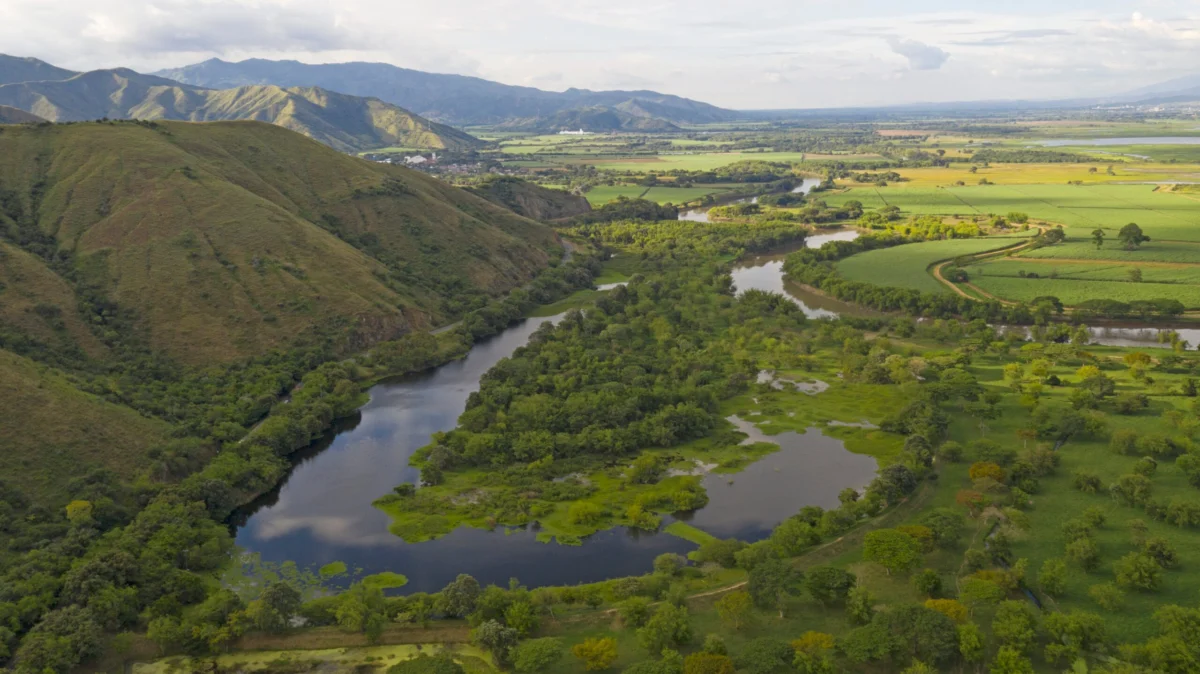
The Cauca Valley, a sprawling biological corridor in southwestern Colombia, has emerged as a global testing ground for a new paradigm in environmental stewardship. Over the past five years, a sophisticated network of conservationists, scientists, agricultural producers, and policymakers has sought to prove that protecting biodiversity is not a sequestered act, but an integrated process that must include productive landscapes, urban centers, and public policy. This initiative, often referred to as a "Blueprint Landscape" by the National Audubon Society and its partners, represents a strategic shift from protecting isolated islands of wilderness to managing entire ecosystems as a singular, connected entity.
The Evolution of the Cauca Valley Strategy
The Cauca Valley is a critical nexus for biodiversity, hosting more than 900 bird species. This includes both colorful Andean endemics and migratory shorebirds that navigate the immense distance between South America and the boreal forests of North America. The genesis of the current conservation framework lies in the recognition that traditional, site-specific preservation—while vital—was failing to address the fragmentation caused by industrial agriculture and rapid urban expansion.
In 2019, Audubon, in coordination with international entities such as BirdLife International, the American Bird Conservancy, and local stakeholders, formalized a roadmap to synchronize conservation efforts across the valley. This approach was designed to move beyond the binary of "nature versus industry," instead promoting a model where productive lands act as buffers and corridors rather than barriers.
Conserva Aves: A Multi-National Catalyst
Central to this transformation is the Conserva Aves initiative, an ambitious, region-wide project launched to accelerate the creation and long-term management of local protected areas. Since its inception, the initiative has successfully advanced nearly 180 locally led projects across nine countries in Latin America and the Caribbean.
In the Cauca Valley, the results are quantifiable: the initiative has facilitated the establishment of the Regional Integrated Management Districts (RIMD) of Alto Calima and Atuncela, securing 19,435 hectares of critical habitat. These sites are not merely fenced-off preserves; they are managed by local organizations and community leaders, ensuring that stewardship is embedded within the socio-economic reality of the region. Funding from the Bezos Earth Fund and the Government of Canada has provided the necessary capital to scale these efforts, transforming 1,600 bird species’ habitats into secure, managed zones.
Technological Innovation in Biodiversity Monitoring
The integration of advanced technology has been a hallmark of the Cauca Valley project. Through the "Escucha Aves" program, the deployment of autonomous acoustic recorders has turned the forests into living laboratories. By utilizing artificial intelligence to parse thousands of hours of audio, researchers and local communities can monitor avian presence and population health with high precision.
This data-driven approach has significantly lowered the financial barrier to long-term monitoring. By empowering local residents to act as "citizen scientists," the project fosters a deeper connection between the community and the environment. This technical democratization ensures that local stakeholders are not just observers, but informed managers of their own natural capital.
Bridging the Gap Between Agriculture and Ecology
Perhaps the most significant challenge in the Cauca Valley is the dominance of large-scale agriculture, which occupies a vast majority of the landscape and accounts for over 70 percent of regional water consumption. Rather than attempting to bypass these interests, the current strategy emphasizes collaborative management.
In partnership with Asocaña, the National Association of Sugar Cane Mills and Growers of Colombia, stakeholders developed the Bird-Friendly Best Management Practices Manual. This guide, which now informs management strategies across nearly 240,000 hectares of sugarcane, provides a blueprint for making industrial farmland more permeable to wildlife. Furthermore, the "Corredor 890" project—an ambitious initiative led by Asocaña to reconnect the Western and Central Andes along the Cauca River—uses the Bird Friendliness Index (BFI). This tool serves as an ecological audit, allowing farmers to track whether their specific land management techniques are successfully supporting local avian populations.
Watersheds and the Economics of Resilience
Water security remains a primary driver for the regional conservation agenda. The Cauca Valley’s mountain slopes are the source of life for the valley floor, necessitating a move toward sustainable livestock systems. In collaboration with Fondo Agua por la Vida y la Sostenibilidad and organizations like CIPAV, the region has pivoted toward silvopastoral systems.
These systems integrate trees, shrubs, and livestock, which improve water regulation and restore habitats while increasing farm productivity. By providing a stable income stream, these practices offer a compelling economic argument for environmental restoration. The recent support from the UK’s Global Centre on Biodiversity for Climate (GCBC) highlights the international recognition of this model as a viable path for climate adaptation and mitigation in tropical regions.
Socio-Cultural Integration and National Policy
The human element of conservation in the Cauca Valley is perhaps its most resilient feature. Audubon has trained over 200 local birding guides, transforming birds from background scenery into a robust engine for eco-tourism. This industry creates an immediate financial incentive for local populations to protect the forests and wetlands that draw international visitors.
Moreover, the educational impact is long-term. By integrating bird conservation into local school curricula and fostering student exchange programs with institutions in the United States, the project is cultivating a new generation of environmental stewards. The Colombia BirdFair, supported by Audubon and local partners like the Asociación Río Cali, has grown into one of Latin America’s most prominent festivals, further cementing the region’s status as a global hub for avian enthusiasts.
At the legislative level, these local successes have cascaded into national action. The development of Colombia’s National Bird Strategy 2030 (ENCA 2030), which involved input from over 2,000 stakeholders including government, academia, and Indigenous groups, is a testament to the influence of the Cauca Valley model. This has translated into regional ordinances that formally recognize birdwatching as a strategic pillar of economic development, providing the necessary policy infrastructure to ensure these initiatives are not merely temporary interventions.
Implications and Future Outlook
The "Blueprint Landscape" model serves as a stark reminder that ecological connectivity is the key to resilience. The tracking of species like the Lesser Yellowlegs, which migrates between Colombia and the North American boreal forest, illustrates that birds operate on a hemispheric scale. Their survival is contingent upon a continuous chain of healthy ecosystems—a reality that the Cauca Valley is now actively mirroring.
The widespread appearance of bird murals across regional towns and cities is a symbolic manifestation of this shift. These public displays are not just decorative; they reflect a profound cultural change where the natural world is once again integrated into the human identity.
As the Cauca Valley continues to scale its operations, the implications for global conservation are clear: the future of biodiversity lies in the synthesis of science, policy, and public participation. By treating conservation as a multi-layered, non-linear process, the region has moved beyond the constraints of traditional environmentalism. The success of this landscape is not defined by any single metric, but by the fact that conservation is no longer a peripheral activity—it has become the very fabric of life for those living within the valley. As these connections continue to solidify, the Cauca Valley provides a replicable, robust framework for addressing the escalating global biodiversity crisis, proving that when diverse roads of action converge, the resulting impact can indeed take flight on a global scale.
