
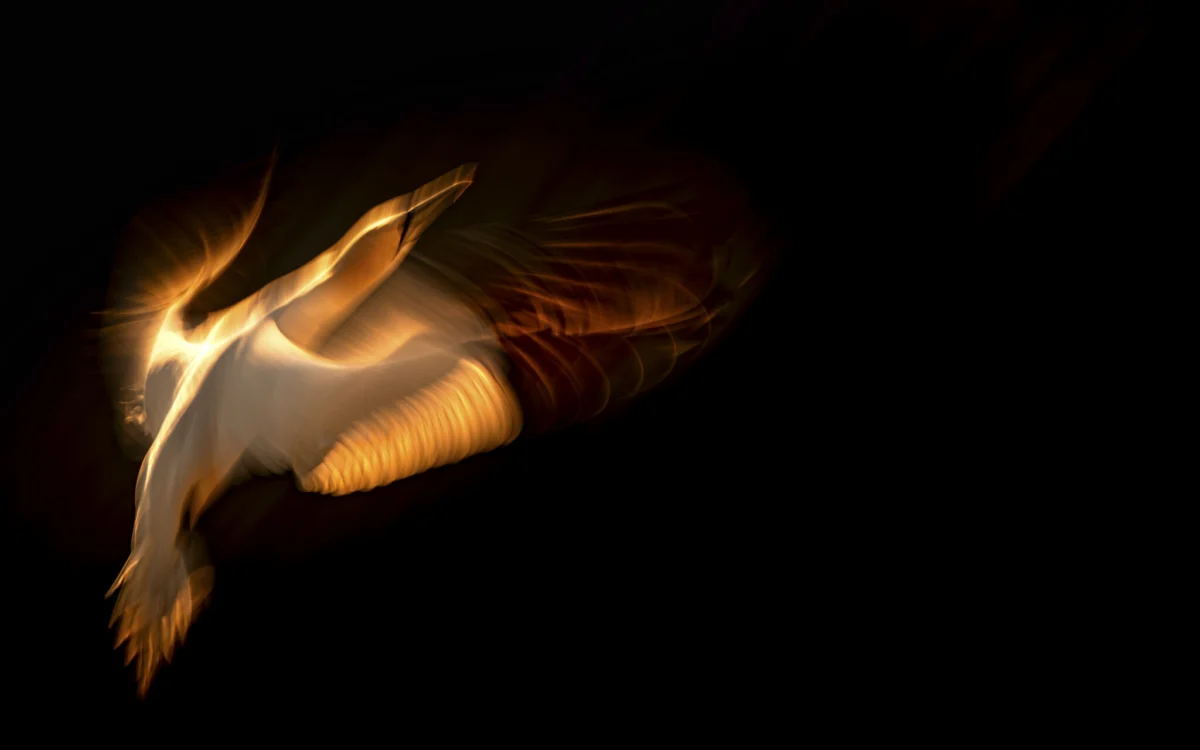
Wildlife photography has long been dominated by an obsession with technical perfection—razor-sharp focus, clinical clarity, and static textbook compositions that freeze animals in sterile vacuums. However, contemporary nature photojournalism is experiencing a profound philosophical shift, one championed by renowned wildlife photographer Rachel Bigsby. Through her striking imagery of marine birds across remote archipelagos, Bigsby challenges the traditional conventions of the medium, advocating instead for an approach she terms “natural artistry.” Her work bridges the gap between documentary recording and emotive visual storytelling, offering audiences not just an anatomical view of a species, but an authentic translation of what it feels like to exist within the wild, tempestuous ecosystems these birds call home.
The Evolution of a Marine Wildlife Photographer

Bigsby’s journey into professional nature photography is rooted in a lifelong immersion in the outdoors, forged well before she ever picked up a digital single-lens reflex (DSLR) camera. Her formative years were shaped by her late grandfather, an experienced naturalist and fisherman who instilled in her a foundational reverence for the environment. Rather than viewing nature as a collection of static facts, she was taught the discipline of deep observation.
This early ecological literacy was reinforced at age six when Bigsby joined the Scout Association, spending weekends navigating rugged trails and learning the practical endurance required to coexist with harsh landscapes. Photography entered her life incrementally, beginning with rudimentary experiments using an iPod camera to capture morning dew and botanical silhouettes. Her trajectory pivoted definitively during an encounter with a Northern Fulmar gliding effortlessly along coastal cliffs. Observing the bird’s mastery of oceanic aerodynamics sparked an intensive period of research that connected the fulmar to the legendary albatross, cementing her lifelong devotion to seabirds.
To gain access to remote, highly protected marine habitats, Bigsby embraced an unconventional path. Rather than relying solely on commercial excursions, she spent formative years volunteering on isolated islands. Her daily routine involved rigorous manual labor—scrubbing composting facilities, clearing bracken during peak summer heat, and repairing weather-beaten infrastructure. This immersive approach provided her with invaluable ecological knowledge. By spending daylight hours working and dusk observing undisturbed colonies, Bigsby developed a nuanced understanding of avian biology, behavior, and micro-meteorology that would later distinguish her photographic portfolio.

Challenging Technical Orthodoxy in Conservation Visuals
Traditional wildlife photography often evaluates success through a rigid technical checklist: high shutter speeds to freeze motion, minimal background distraction, and pristine lighting conditions. Bigsby’s portfolio deliberately subverts these metrics. Her breakthrough artistic moment occurred while photographing an Atlantic Puffin during a period of sub-optimal lighting and slow shutter speeds. The resulting image was technically imperfect—softly focused with a blurred background—yet it captured the golden light piercing the bird’s wings, transforming the subject from a static specimen into a visceral whisper of motion.
This realization—that the wild is inherently chaotic, fluid, and shaped by relentless environmental forces—forced a re-evaluation of her methodology. Rather than waiting for cinematic sunrises or calm air, Bigsby began to collaborate with adverse weather conditions. During a week-long assignment plagued by persistent rain, fog, and heavy mist, she abandoned her frustration and began experimenting with high-key imagery. The dense white fog served as a natural canvas, highlighting the stark contrast and resilient silhouettes of nesting seabirds. This aesthetic choice eventually became a defining signature of her work, proving that atmospheric disturbances are not obstructions to be avoided, but integral components of the emotional reality of marine ecosystems.

The Ecological Imperative and Environmental Context
Beyond artistic expression, Bigsby’s documentation of seabirds carries significant conservation implications. Marine bird populations globally face unprecedented pressures driven by climate change, shifting oceanic food webs, overfishing, and avian pathogens. By framing seabirds within their complex, often harsh environments—surrounded by stormy seas, guano-covered nesting rocks, and dynamic weather fronts—her photography captures the fragility and resilience of these species.
Experts in avian conservation note that visual media plays a critical role in public engagement and policy support. Images that accurately portray the arduous survival realities of seabirds elicit deeper empathy and urgency than clinical studio-style wildlife portraits. Bigsby’s emphasis on environmental context ensures that the viewer recognizes the animal not as an isolated entity, but as an inseparable component of a rapidly changing marine biome. Her close-up studies of European Shag feathers and the synchronized communal behaviors of razorbills on islands like Skomer and Shetland provide researchers and conservationists with evocative visual tools to illustrate biodiversity and habitat interdependence.

Implications for the Future of Nature Photography
As the photographic industry grapples with the ethical implications of digital manipulation and artificial intelligence generation, the value of authentic, field-tested photojournalism has risen exponentially. Bigsby’s philosophy serves as a counterweight to formulaic image-making. By prioritizing patience, behavioral literacy, and emotional resonance over algorithmic perfection, she sets a new benchmark for ethical and artistic integrity in nature documentation.
Industry analysts observe a growing appetite among audiences for documentary work that embraces imperfection and truth. Bigsby’s ethos encourages emerging photographers to abandon rigid rules in favor of intentional storytelling. Her work demonstrates that the most enduring images are those born from deep ecological respect and physical endurance.

Looking forward, the integration of rigorous field science with expressive artistic vision will remain vital for environmental advocacy. Through her ongoing expeditions to remote colonies in New Zealand, the UK, and beyond, Rachel Bigsby continues to document the delicate balance of marine life. Her portfolio stands as a testament to the fact that effective conservation storytelling requires more than advanced camera equipment; it demands the humility to listen to the landscape, the patience to understand its rhythms, and the artistry to translate its raw truth for a wider world.
