
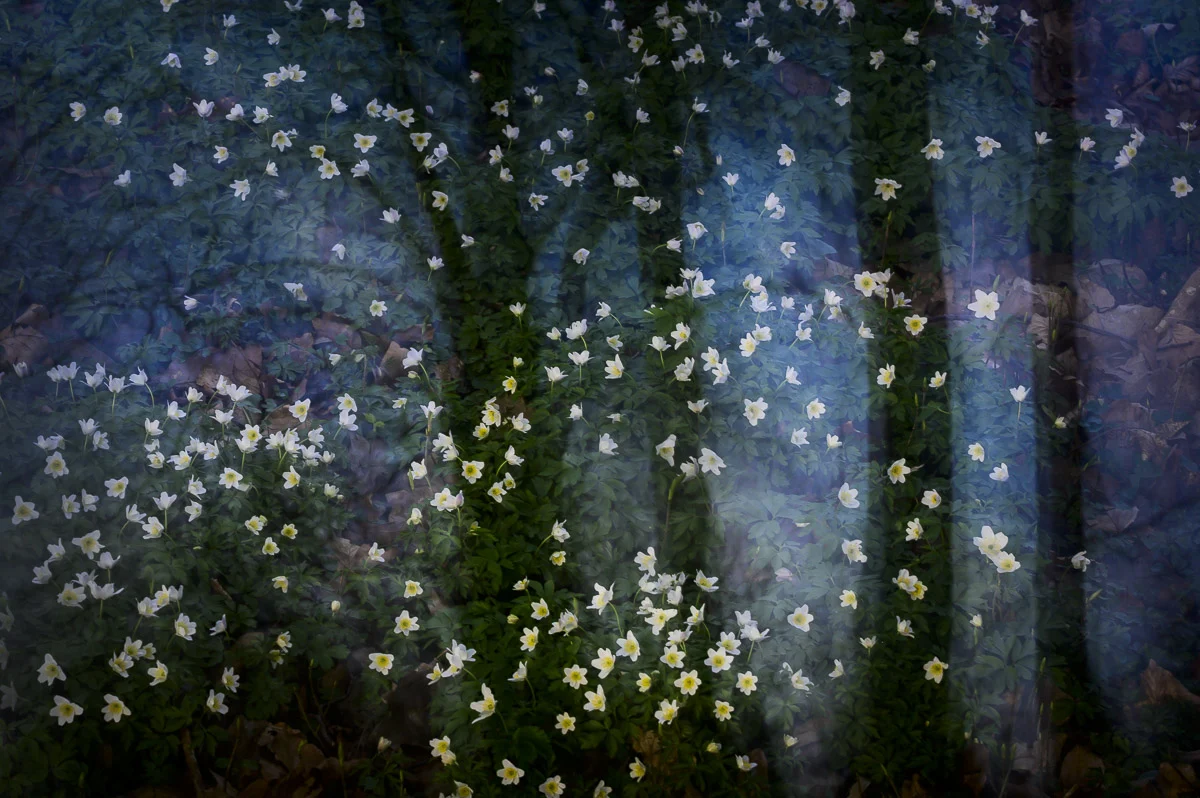
The definition of a successful photograph has long been anchored in tangible outcomes: stark compositional balance, pristine technical execution, and harmonious color grading. While these aesthetic metrics remain foundational to visual arts, contemporary discourse within professional nature photography increasingly highlights the critical, yet frequently overlooked, preliminary phase: the photographer’s dynamic engagement with the environment in real time. Rather than operating from a rigid checklist or a predetermined conceptual blueprint, modern field practitioners are pivoting toward a process-oriented methodology. This approach prioritizes receptivity, environmental adaptability, and the interplay of an interactive triad comprising nature, human perception, and design.

Examining this creative philosophy reveals a fundamental shift away from the traditional pursuit of "target imagery"—pre-conceived visions that photographers often struggle to force upon uncooperative landscapes. Instead, contemporary field strategies emphasize responsiveness to shifting meteorological conditions, erratic wildlife behavior, and stochastic environmental variables. By treating technical proficiency not as a prescriptive rulebook, but as a secondary toolkit that serves a continuously evolving scene, photographers allow room for serendipity, transforming unpredictable elements into the primary drivers of artistic composition.
The Theoretical Framework: Nature, Perception, and Design
At the core of this adaptive methodology lies an interactive triad that dictates how a scene transitions from raw wilderness into a coherent visual narrative. Understanding this framework requires breaking down its constituent components:

- Nature: The foundational provider of the raw, unedited physical reality. It encompasses variable lighting, biological subjects, meteorological shifts, and structural geography. Nature sets the boundaries and the stage, operating entirely independent of human artistic intent.
- Perception: The cognitive filter that determines what stands out within a chaotic environment. Perception acts as a dynamic sorting mechanism, guiding the photographer’s gaze, filtering out visual noise, and continuously shifting the center of gravity as new elements enter the field of view.
- Design: The deliberate, yet flexible, human response to perception. While technical execution (such as shutter speed, aperture manipulation, and lighting supplementation) belongs to design, it remains strictly subservient to the unfolding image rather than a fixed objective.
Crucially, this triad is not linear but iterative. The first captured frame does not conclude the creative process; rather, it serves as immediate visual feedback. This digital or analog output loops back into perception, altering subsequent observations and subtly guiding the next round of creative decisions. Field tests demonstrate that relinquishing absolute control over the final outcome invites chance occurrences, which frequently yield more compelling and authentic results than heavily premeditated compositions.
Chronological Case Studies in Adaptive Fieldwork
To understand how this theoretical triad functions in practice, industry analysts and masterclass instructors frequently point to three distinct field scenarios encountered across varying ecosystems and weather conditions.

Case Study One: The Frost Leaf Phenomenon
The chronology of capturing transient winter phenomena often begins with environmental disruption. Following an unseasonably severe overnight temperature drop, a nature photographer initiated an exploratory excursion without a definitive destination, eventually settling upon a public park pond edged with mature bald cypress trees.
- Initial Assessment: Upon arrival, the water surface was completely frozen, presenting a chaotic array of ice formations, submerged branches, wooden stumps, and sporadic snow patches. A singular, frost-locked leaf caught the initial focus of perception.
- Technical Iteration: The initial exposure captured the intricate crystal structures of the ice, yet the subject leaf remained visually disconnected from its environment. To resolve this structural disjunction, the photographer introduced an off-camera wireless flash placed directly upon the ice to generate low-angle side lighting.
- The Role of Serendipity: Subsequent adjustments—including the integration of an LED fill-light to manage harsh shadows—involved a continuous cycle of testing, rejection, and refinement. During one adjustment, the primary flash unit accidentally shifted, directing its beam straight down into the translucent ice matrix. Reviewing the camera display revealed an immediate transformation: the subject leaf separated distinctly from the surface, while hidden structures trapped beneath the ice plane became abruptly visible. The image evolved instantly from a simple study of a frozen leaf into a complex spatial exploration of light, ice, and organic decay operating as a unified system.
Case Study Two: Backlit Dragonflies and High-Speed Persistence
Capturing fast-moving macro subjects requires an entirely different chronological cadence, heavily reliant on patience, muscle memory, and hardware adaptation.

- Preconception vs. Reality: Arriving at a local wetland with prior memories of successful dragonfly photography, the photographer initially anticipated replicating past results. However, environmental conditions had completely shifted; the primary visual draw was no longer stationary subjects, but backlit reed grass glowing intensely under a low sun.
- Refining Perception: By shifting physical position to isolate the reeds against a darkened background, the photographer established a high-contrast corridor. Simultaneously, transient dragonflies began crossing the frame intermittently. Recognizing that erratic insect behavior defies predictable timing, the practitioner abandoned static viewing in favor of a softened, peripheral gaze.
- Technical Adaptation: Initial continuous-shooting bursts revealed a high failure rate, with subjects consistently falling outside the shallow depth-of-field plane. To correct this, the photographer transitioned to manual focus, intentionally stopping down the camera’s aperture. This trade-off sacrificed background blur for a significantly deeper focal zone, capturing both the stationary reed structure and the flight corridor. After hundreds of rejected frames, persistence aligned focus, position, and light into a single decisive capture.
Case Study Three: Micro-Worlds and the Discovery of Slime Moulds
Fieldwork in densely wooded environments during seasonal transitions often yields initial periods of visual fatigue where subjects fail to command immediate attention.
- The Exploratory Phase: Moving through an autumn forest without a distinct focal point, a photographer captured a series of exploratory frames depicting general woodland flora—trees, fallen leaves, and common macro-fungi. Reviewing the camera display served as real-time feedback, though none of the preliminary compositions possessed artistic weight.
- Automated Revelation: A breakthrough occurred when review of a wider frame revealed microscopic, thread-like structures inhabiting a decaying fungus—specifically, myxomycetes (slime moulds) that had gone completely unnoticed by the naked eye during the initial capture.
- Macro Integration: Dropping to the forest floor, the photographer utilized a specialized macro setup combined with supplementary LED lighting. By manipulating artificial shadows and focal lengths, the tiny biological structures developed distinct focal anchors, proving that technical tools can sometimes perceive environmental details faster and more accurately than human vision alone.
Broader Implications for Modern Photography and Digital Arts
The philosophical shift from prescriptive planning to process-based responsiveness carries significant implications for the broader photography industry. As digital sensor technology, autofocus algorithms, and computational photography advance, there is a growing temptation among practitioners to rely entirely on automated systems to guarantee technical perfection. However, industry critics and master practitioners argue that hyper-automation risks sterilizing the creative output, reducing art to a series of formulaic captures.

By embracing the nature-perception-design triad, photographers reclaim the element of discovery. Statistical analyses of modern nature portfolio submissions indicate an increasing valuation of authenticity and raw environmental interaction over heavily staged or over-processed compositions. When technical proficiency becomes so deeply ingrained that it operates subconsciously, the photographer is freed from mechanical distractions. This technical fluency ultimately allows artists to act as genuine translators of the natural world, rather than mere technicians executing a pre-planned script.
