
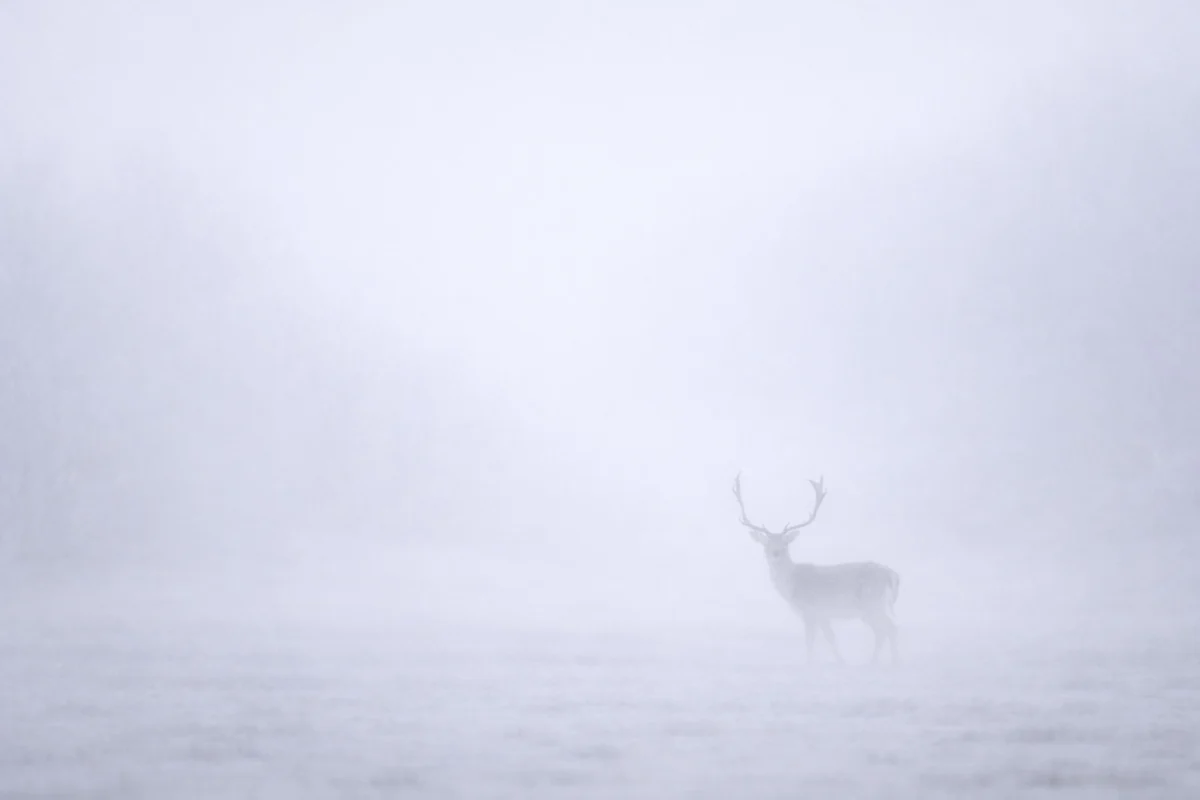
In an era dominated by high-speed digital consumption, hyper-saturated imagery, and an endless stream of visual noise, a distinct counter-movement is quietly taking shape within the realm of nature photography. Photographers are increasingly turning away from complex, hyper-detailed compositions to embrace minimalism, high-key, and low-key aesthetics. This shift represents more than a stylistic choice; it has evolved into a profound exploration of human psychology, environmental stillness, and a deliberate pushback against the fast-paced demands of modern society.
The Rise of Minimalist Nature Photography

Minimalist nature photography is characterized by vast expanses of negative space, muted color palettes, and subjects that occupy a remarkably small percentage of the frame. Whether capturing a fallow deer submerged in heavy valley mist, a solitary fox dissolving into a whiteout snowfall, or a lone swan gliding across obsidian water, the overarching objective is not to document biological precision, but to evoke emotional resonance.
Industry trends indicate a growing appreciation for this genre among fine art collectors, gallery curators, and environmental enthusiasts alike. Rather than competing in the traditional wildlife photography space—which often prioritizes razor-sharp close-ups, telephoto isolation, and dramatic action sequences—minimalist practitioners focus on atmosphere, mood, and restraint.
Psychological Implications and the Need for Cognitive Respite

The pivot toward minimalist aesthetics aligns closely with contemporary psychological research regarding sensory overload and cognitive fatigue. Urbanization, constant digital connectivity, and the acceleration of daily life have been shown to elevate baseline cortisol levels and diminish attention spans.
Environmental psychologists and art therapists note that visual clutter can overstimulate the human nervous system. Conversely, exposure to simplified, low-stimulus environments—even in photographic form—can trigger a parasympathetic nervous response, lowering heart rates and fostering a sense of psychological safety. By stripping away extraneous details, high-key and low-key photography act as a visual sanctuary. White space functions as cognitive breathing room, while deep shadows or bright horizons offer a structured space for rest and reflection.
The Methodology of Stillness: A Chronology of the Craft

The creation of minimalist nature imagery demands a deliberate alteration of standard photographic workflows. The process typically unfolds across several distinct phases:
- Arrival and Disengagement: The initial phase involves entering a natural landscape, often characterized by adverse or transitional weather conditions such as fog, snow, heavy overcast skies, or twilight. Photographers emphasize the necessity of shedding the urgency of daily life upon arrival.
- Extended Observation: Unlike rapid-fire wildlife documentation, minimalist photography relies on prolonged stationary periods. Practitioners report remaining in a single location for hours without actively pressing the shutter, waiting for subtle shifts in light, wind, or wildlife movement.
- Subtraction and Framing: Rather than adding elements to create visual interest, the composition process is defined by subtraction. By stepping back, widening the focal length, and utilizing negative space, the subject is integrated into the broader ecosystem rather than dominating it.
- Post-Processing Restraint: Technical execution remains secondary to emotional fidelity. Adjustments in exposure and contrast are utilized not to enhance saturation or sharpness, but to soften the world, smoothing out distracting textures until only the essential narrative remains.
Industry Perspectives and the Shift in Artistic Philosophy
Curators and contemporary photography critics have observed a notable departure from technical perfectionism toward experiential authenticity. For decades, the benchmark of high-end nature photography was optical sharpness, fast shutter speeds, and maximum ecological proximity. Today, a growing contingent of visual artists is challenging those conventions.

"The value of an image no longer lies solely in how close you got to the subject, but in how deeply you understood the space between you and the subject," notes one contemporary fine art photography analyst. "Minimalism forces the viewer to confront the emptiness, which is rarely empty at all; it is charged with atmosphere, tension, and silence."
This ethos resonates deeply with practitioners who operate independently of commercial trends or algorithmic pressures. Many creators deliberately withhold images that lack internal emotional resonance, prioritizing personal integrity over market demand. This internal validation model challenges the traditional social media metrics economy, which often rewards frequency and visual loudness over subtlety and depth.
Broader Cultural and Environmental Impact

Beyond its artistic and psychological dimensions, minimalist nature photography plays a subtle yet significant role in contemporary environmental discourse. By portraying nature not as a resource to be cataloged or conquered, but as a vast, autonomous entity that demands quietude and respect, these images foster a different kind of ecological awareness.
The emphasis on distance and restraint mirrors ethical wildlife observation practices. By deliberately stepping back and refusing to force proximity, photographers minimize their physical impact on fragile winter habitats where animals such as deer, foxes, and migratory birds are particularly vulnerable to human disturbance.
As society continues to grapple with the mental health tolls of hyper-connectivity, the appetite for silence—both acoustic and visual—is expected to grow. Minimalist nature photography provides a vital bridge between the external world and internal peace. By capturing landscapes that ask nothing of the observer, these works offer a rare and necessary commodity: a place to pause, a moment to breathe, and the reminder that in a noisy world, stillness is a profound form of strength.
