
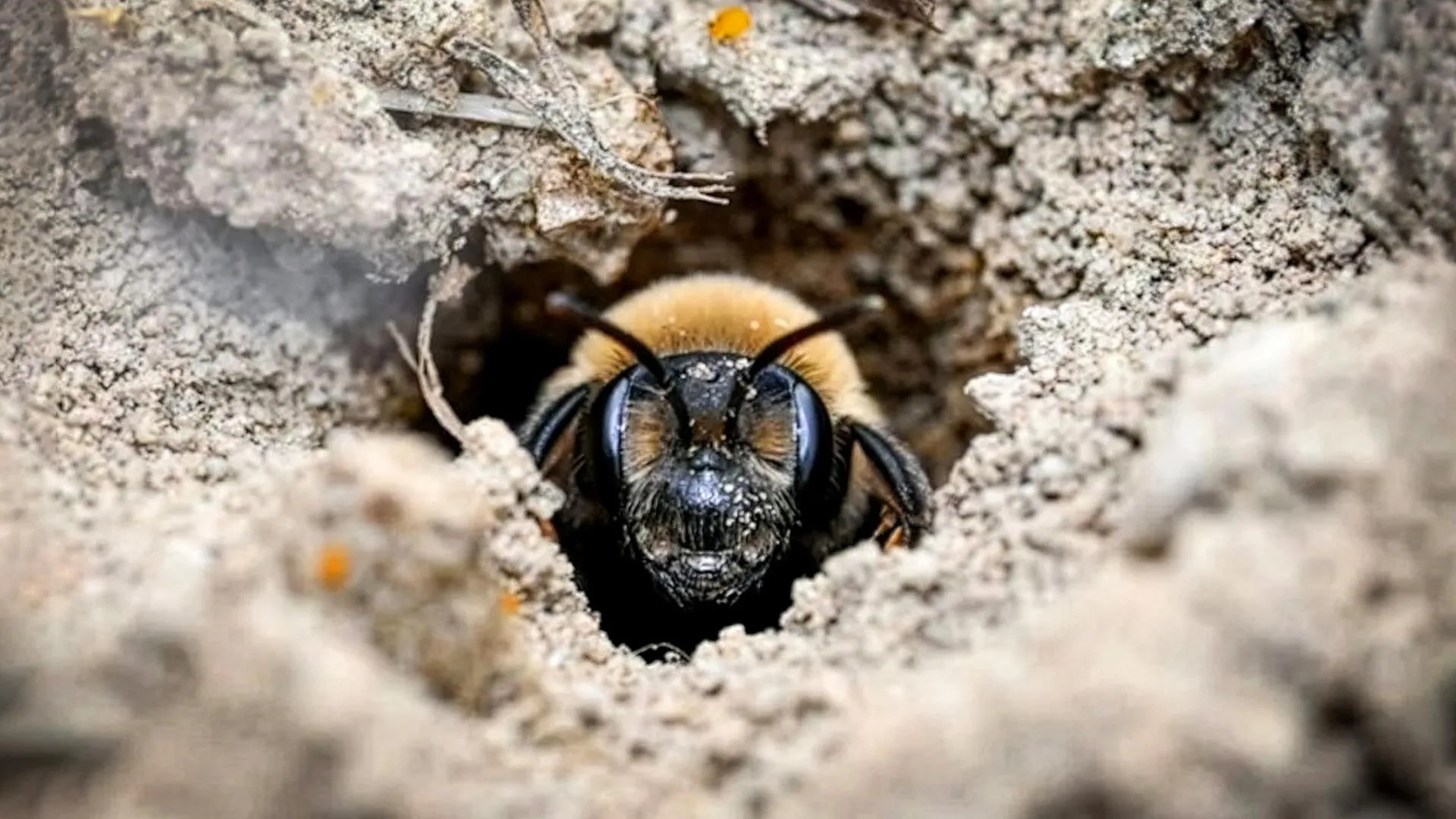
What began as a routine shortcut to circumvent parking fees has evolved into one of the most significant entomological discoveries of the decade. In the spring of 2022, Rachel Fordyce, a laboratory technician at Cornell University’s entomology department, was walking through the historic East Lawn Cemetery in Ithaca, New York, on her way to work. Navigating the quiet grounds to save money on parking near East Hill Plaza, she noticed an unusual phenomenon. The terrain was literally alive with movement. Millions of insects buzzed just above the turf, creating a dense, humming cloud across multiple sections of the property.
Recognizing that something extraordinary was occurring beneath her feet, Fordyce collected a sample of the insects in a standard glass jar and carried them directly to her supervisor, Bryan Danforth, a professor of entomology in Cornell’s College of Agriculture and Life Sciences.
"These are all over the cemetery," Fordyce told him, presenting the specimens.
Upon closer laboratory examination, the insects were definitively identified as Andrena regularis, commonly known as the "regular mining bee." This species is a solitary, wild insect that spends the vast majority of its life cycle beneath the surface of the earth. While individual ground-nesting bees are common across North America, the scale of what Fordyce had stumbled upon was entirely unprecedented. Subsequent scientific investigations revealed that the 1.5-acre cemetery parcel harbors one of the largest and oldest known aggregations of ground-nesting bees ever documented in scientific literature. Researchers estimate the site sustains an astonishing population of approximately 5.5 million individual bees.
To put this subterranean metropolis into perspective, the concentration of pollinators within this single municipal cemetery is roughly equivalent to more than 200 commercial honeybee hives. Furthermore, the insect population inhabiting this 1.5-acre plot exceeds the human population of Manhattan by more than threefold.
The findings of this startling discovery were formally published on April 13 in the peer-reviewed scientific journal Apidologie. Steve Hoge, who conducted the primary research as an undergraduate student in Danforth’s laboratory and graduated in 2024, served as the lead author of the study.
"I’m sure there are other large bee aggregations that exist around the world that we just haven’t identified, but in terms of what is in the literature, this is one of the largest," Hoge remarked regarding the scale of the discovery.
A Century-Old Sanctuary: Chronology and Historical Context
While the scientific community only recently grasped the magnitude of the East Lawn population, archival evidence suggests the bees have maintained this subterranean kingdom for generations. Historical records indicate that Andrena regularis has been active at the cemetery since at least the early decades of the 20th century. Established in 1878, East Lawn Cemetery predates many of the surrounding agricultural developments and modern urban expansions in Tompkins County.
The longevity of the site underscores a growing realization among ecologists: historic, undisturbed cemeteries frequently serve as vital urban and suburban refuges for native biodiversity. Because these grounds are shielded from industrial development, heavy foot traffic, and aggressive chemical treatments, they often preserve micro-ecosystems that have vanished from surrounding agricultural and commercial landscapes.
Keven Morse, the superintendent of East Lawn Cemetery, has spent decades witnessing the rich wildlife sheltered by the nonprofit grounds. Representing a family that has managed the property for 46 years, Morse noted that he has frequently encountered local fauna including deer, wild turkeys, hawks, foxes, and coyotes. Yet, it is the insect life that forms the bedrock of the property’s ecological value.
Despite managing grounds populated by millions of stinging insects, Morse reported a remarkably peaceful coexistence. "And of course, bees," Morse said, noting with amusement that the dense swarms have never once stung him during his decades of maintenance work. The primary operational challenge, he explained, is strictly agronomic. "I just felt bad having to mow in certain areas. There’s probably three or four sections where they really migrate heavy, there’s a lot of them."
Entomologists explain that cemeteries provide nearly ideal nesting conditions for ground-dwelling species. The land is exceptionally peaceful, experiences virtually no heavy mechanical tilling, and remains largely free of the broad-spectrum pesticides that devastate insect populations in commercial farming sectors. Additionally, the soil composition at East Lawn Cemetery heavily favors Andrena regularis, which exhibits a distinct preference for loose, well-drained sandy soils that facilitate effortless excavation. Furthermore, the proximity of Cornell Orchards—situated roughly one-third of a mile away—provides an abundant, reliable source of early-spring blossoms and high-quality pollen essential for the survival of emerging broods.
Understanding the Biology of Solitary Ground-Nesting Bees
The public consciousness overwhelmingly associates bees with honeybees (Apis mellifera), social insects that live in complex colonies governed by a queen, produce honey, and nest in hollow trees or managed wooden boxes. However, honeybees are not native to North America and represent only a tiny fraction of total bee diversity. In reality, approximately 75 percent of all bee species are solitary and nest underground.
"It’s the most common lifestyle for bees," Professor Danforth emphasized, highlighting a massive gap in public and scientific awareness regarding native pollinators.
When Hoge began organizing the research project, he discovered a surprising scarcity of contemporary scientific literature regarding Andrena regularis. One of the most comprehensive biological references available dated all back to 1978, presenting the Cornell team with a rare academic opportunity to thoroughly document the species’ life history, behavioral patterns, and ecological interactions.
Unlike social bees, female Andrena regularis construct individual underground tunnels. Within these subterranean chambers, they deposit eggs alongside carefully provisioned balls of pollen and nectar. The larvae hatch, consume the stored provisions, and develop completely underground before emerging as fully formed adults.
A particularly unusual adaptation of Andrena regularis is its overwintering stage. While the vast majority of solitary bees overwinter as immature prepupae or pupae, this species overwinters as fully developed adults safely tucked beneath the frost line. This physiological trait explains why they erupt from the soil so remarkably early in the spring, perfectly synchronized with the blooming cycle of regional fruit trees.
In New York State, the bees typically emerge in April, timing their appearance to coincide with daytime temperatures consistently reaching approximately 70 degrees Fahrenheit. This emergence is vital for regional agriculture, as Andrena regularis serves as an exceptionally efficient native pollinator for high-value commercial crops, including apples, which represent a signature agricultural commodity for the state of New York.
Methodology: Quantifying a Subterranean Population of Millions
To accurately determine the size of the East Lawn bee aggregation without disrupting the delicate ecosystem, the research team engineered a precise monitoring framework utilizing emergence traps. These devices consist of small, mesh tents covering less than a square meter of ground surface, designed to safely capture insects as they break through the soil and funnel them upward into collection glass jars.
"You capture a whole community of animals coming out of the ground with this approach," Danforth explained regarding the methodology.
Between March 30 and May 16, 2023, researchers deployed 10 emergence traps across various zones of the cemetery. The traps yielded a total catch of 3,251 insects, representing 16 distinct species spanning bees, beetles, and flies. Statistical analysis confirmed that Andrena regularis overwhelmingly dominated the samples, accounting for the vast majority of the collected specimens.
By extrapolating the catch data from the traps across the cemetery’s estimated 6,000 square meters of suitable nesting habitat, the research team calculated a total population range spanning from 3 million to 8 million individual insects, with a statistical mean estimate of 5.5 million bees.
The traps also illuminated fascinating behavioral dynamics regarding the timing of emergence between sexes. Male Andrena regularis emerge from the soil first during warm temperature spikes in early April, lingering near the nesting sites to await the emergence of females several days later.
"The males come out first and wait for the females, so that they have the best opportunities to mate and pass on their genes," Hoge noted.
Ecological Pressures, Parasitism, and Broader Implications
Even within a protected sanctuary like East Lawn Cemetery, life for wild mining bees is fraught with biological competition and evolutionary pressure. The Cornell study documented significant instances of brood parasitism driven by nomad, or "cuckoo," bees belonging to the species Nomada imbricata.
These parasitic insects do not construct their own nests or gather pollen. Instead, female nomad bees loiter near the nesting aggregations, waiting for an Andrena regularis female to complete and provision a subterranean brood cell. Once the host bee departs, the nomad bee slips into the chamber and deposits her own egg. When the resulting parasitic larva hatches, it systematically destroys the host bee larva and consumes the stored pollen and nectar reserves meant for the mining bee’s offspring.
Beyond natural predation and parasitism, the discovery has triggered urgent conversations regarding the conservation of native pollinators. Habitat loss, pesticide use, and climate shifts continue to threaten wild bee populations across North America. Recognizing that similar undiscovered megacolonies may exist across the globe on private or commercial lands, Danforth and his colleagues have launched a global citizen science initiative. The program encourages members of the public to document and report large ground-nesting bee aggregations in their local communities.
"These populations are huge, and they need protection," Danforth concluded. "If we don’t preserve nest sites, and someone paves over them, we could lose in an instant 5.5 million bees that are important pollinators."
The publication of the study represents a collaborative achievement within the Cornell entomology community. Co-authors of the research paper include postdoctoral researchers Jordan Kueneman and Katherine Odanaka, undergraduate students Steve Hoge and Cassidy Dobler, and laboratory technician Rachel Fordyce, whose casual shortcut through a cemetery inadvertently unlocked a microscopic world of millions. Financial backing for the research was provided by the Cornell Atkinson Center for Sustainability, the National Science Foundation, and the Federal Capacity Funds program.
